

The 21 Taras hold a special place in Tibetan Buddhism, where they are honored as different expressions of enlightened compassion, wisdom, and protective activity. For generations, Buddhist practitioners have recited the Twenty-One Praises to Tara as a devotional practice, seeking inspiration to face difficulties with courage, develop compassion, and follow the path toward awakening.
Among these sacred forms, Green Tara is especially well known for her swift, compassionate activity. Her image appears in Buddhist temples, meditation spaces, and home shrines throughout the Himalayan region and beyond. Yet Green Tara is only one part of a much broader tradition. The Twenty-One Taras express many aspects of enlightened activity, with different forms associated with peace, protection, wisdom, prosperity, and the overcoming of obstacles.
In this guide, we explore the meaning of the 21 Taras, the importance of the Twenty-One Praises, the symbolism of Green Tara, and how Tara practice continues to inspire Buddhist communities today.
Who Is Tara in Tibetan Buddhism?
Tara, known in Sanskrit as Tara and in Tibetan as Dolma, is a revered female figure in Mahayana and Vajrayana Buddhism. Her name is commonly associated with liberation, reflecting her role as a compassionate guide who helps beings move beyond fear, suffering, and the difficulties of cyclic existence.
In Tibetan Buddhist traditions, Tara is regarded as a manifestation of enlightened compassion in action. She is not simply a symbol of kindness. Her imagery emphasizes the active response to suffering, reminding practitioners that compassion becomes meaningful when it is expressed through helpful intentions and actions.
Tara is also associated with wisdom, courage, and the ability to meet challenges with a clear mind. Her many forms reflect the different ways enlightened activity is understood and practiced. Some forms emphasize peaceful qualities, while others express powerful protection or the removal of obstacles.
What Are the 21 Taras?
The 21 Taras are a group of sacred forms associated with Tara's enlightened qualities and activities. They are closely connected with the traditional Buddhist devotional text known as the Twenty-One Praises to Tara, which honors her through a series of verses describing her qualities, appearance, and protective power.
The praises are recited in Tibetan Buddhist monasteries and by practitioners around the world. They offer a way to contemplate Tara's different qualities and develop the inner strength, compassion, and wisdom needed on the Buddhist path.
It is important to understand that the 21 Taras are not represented through one universally identical list. Different Buddhist lineages preserve distinct systems of names, colors, forms, and symbolic activities. Some traditions emphasize the individual forms of the 21 Taras, while others focus on the praises as a devotional whole.
Why Are There 21 Taras?
The number 21 is significant because the tradition presents Tara through a cycle of 21 praises and associated forms of enlightened activity. Each praise highlights particular qualities, offering practitioners different ways to contemplate compassion, protection, wisdom, and the overcoming of suffering.
Rather than understanding the 21 Taras as entirely separate beings with unrelated purposes, many practitioners see them as different expressions of Tara's enlightened nature. Their diversity reflects the many circumstances in which compassion and wisdom can be needed.
For this reason, the Twenty-One Praises are more than a list of divine names. They form a devotional practice that encourages practitioners to cultivate positive qualities and develop confidence in the path toward liberation.
The Symbolism and Meanings of the 21 Taras
The following descriptions introduce the principal themes associated with the 21 Taras. They are a thematic guide rather than a definitive one-to-one identification of every praise with a separate named Tara. Specific names, colors, and associations vary across Tibetan Buddhist traditions.
1. Tara the Swift Heroine
This form emphasizes Tara's swift and courageous activity. She symbolizes the ability to respond to difficulties without hesitation and to meet suffering with compassion and determination.
2. The Peaceful Tara
Peaceful Tara represents calmness, harmony, and the easing of inner turmoil. Her symbolism encourages practitioners to cultivate a steady mind and respond to challenges without being controlled by anger or fear.
3. The Golden Tara
Golden Tara is associated with auspiciousness, positive qualities, and the growth of spiritual merit. Gold in Buddhist imagery often conveys sacred value, radiance, and the qualities of awakened wisdom.
4. The Victorious Tara
This form is associated with victory over obstacles and the cultivation of qualities that support spiritual progress. Her symbolism encourages practitioners to overcome harmful habits and strengthen their commitment to the Dharma.
5. Tara Who Proclaims the Sound of Hum
This form is associated with the power of enlightened speech and sacred sound. It reminds practitioners that speech can be used to communicate truth, encourage others, and support wholesome intentions.
6. Tara Victorious Over the Three Worlds
This form symbolizes the overcoming of powerful obstacles and harmful influences. Her imagery represents the strength of enlightened wisdom in the face of conditions that can disturb spiritual practice.
7. Tara Who Subdues Adversaries
This form is associated with overcoming opposition and destructive forces. Its deeper significance can be understood as developing the wisdom and courage to face conflict without being ruled by hatred or resentment.
8. Tara Who Overcomes the Forces of Mara
This Tara represents the overcoming of forces that obstruct awakening. In Buddhist teachings, Mara can symbolize temptation, delusion, and the mental patterns that keep beings bound to suffering.
9. Tara Who Grants Blessings
This form emphasizes generosity, auspiciousness, and the fulfillment of wholesome aspirations. Her symbolism encourages practitioners to cultivate positive intentions and use their opportunities to benefit others.
10. Tara Who Dispels Sorrow
This Tara represents relief from sorrow and the development of inner resilience. Her symbolism invites practitioners to meet suffering with compassion and remember that difficulties can be approached with patience and wisdom.
11. Tara Who Summons Beings
This form is associated with drawing beings toward beneficial conditions and overcoming misfortune. It can be contemplated as an expression of compassionate activity that helps others move toward safety and spiritual understanding.
12. Tara of Auspicious Light
Auspicious light symbolizes clarity, hope, and the positive conditions that support spiritual development. This form encourages practitioners to recognize the value of wisdom and cultivate an outlook grounded in compassion.
13. Tara Who Ripens Positive Qualities
This form is associated with the maturation of spiritual qualities. It reminds practitioners that wisdom, compassion, and understanding develop through consistent practice rather than appearing fully formed overnight.
14. The Frowning Tara
Frowning Tara expresses a more forceful aspect of enlightened activity. Her appearance symbolizes the power to confront harmful influences and protect the conditions needed for spiritual practice.
15. The Great Peaceful Tara
This form represents profound peace and the calming of disturbing emotions. Her symbolism encourages practitioners to develop mental clarity and approach life's challenges with balance and patience.
16. Tara Who Overcomes Attachment
This Tara is associated with overcoming attachment and the confusion that arises from grasping. Her symbolism reflects the Buddhist understanding that freedom becomes possible when people recognize the causes of suffering and gradually loosen their hold on them.
17. Tara Who Accomplishes Bliss
This form is connected with happiness and the positive qualities that support spiritual realization. It points toward a deeper well-being grounded in wisdom, ethical conduct, and compassion rather than temporary pleasure alone.
18. The Victorious Tara
Victorious Tara symbolizes the triumph of beneficial qualities over the obstacles that hinder spiritual growth. Her imagery encourages perseverance, confidence, and dedication to the path of awakening.
19. Tara Who Burns Away Suffering
This form emphasizes the overcoming of suffering and its underlying causes. It encourages practitioners to develop insight into harmful mental patterns and cultivate the wisdom needed to transform their relationship with difficult experiences.
20. Tara, Source of Accomplishments
This Tara represents the accomplishments that arise through dedicated spiritual practice. In Buddhist contexts, these can include the development of wisdom, compassion, discipline, and other qualities that support awakening.
21. Tara Who Brings Qualities to Completion
The final form represents completion and the full development of beneficial qualities. Her symbolism offers a reminder that the Buddhist path involves continued cultivation of wisdom and compassion for the benefit of all beings.
These thematic descriptions are intended to make the tradition more accessible to new readers. For formal practice, the names and detailed symbolism should be studied through the specific lineage and teachings followed by the practitioner.
Green Tara: The Best-Known Form of Tara
Green Tara is among the most widely recognized forms of Tara in Tibetan Buddhism. She is often called the Mother of Liberation and is associated with swift compassionate activity, protection from fear, and the overcoming of obstacles.
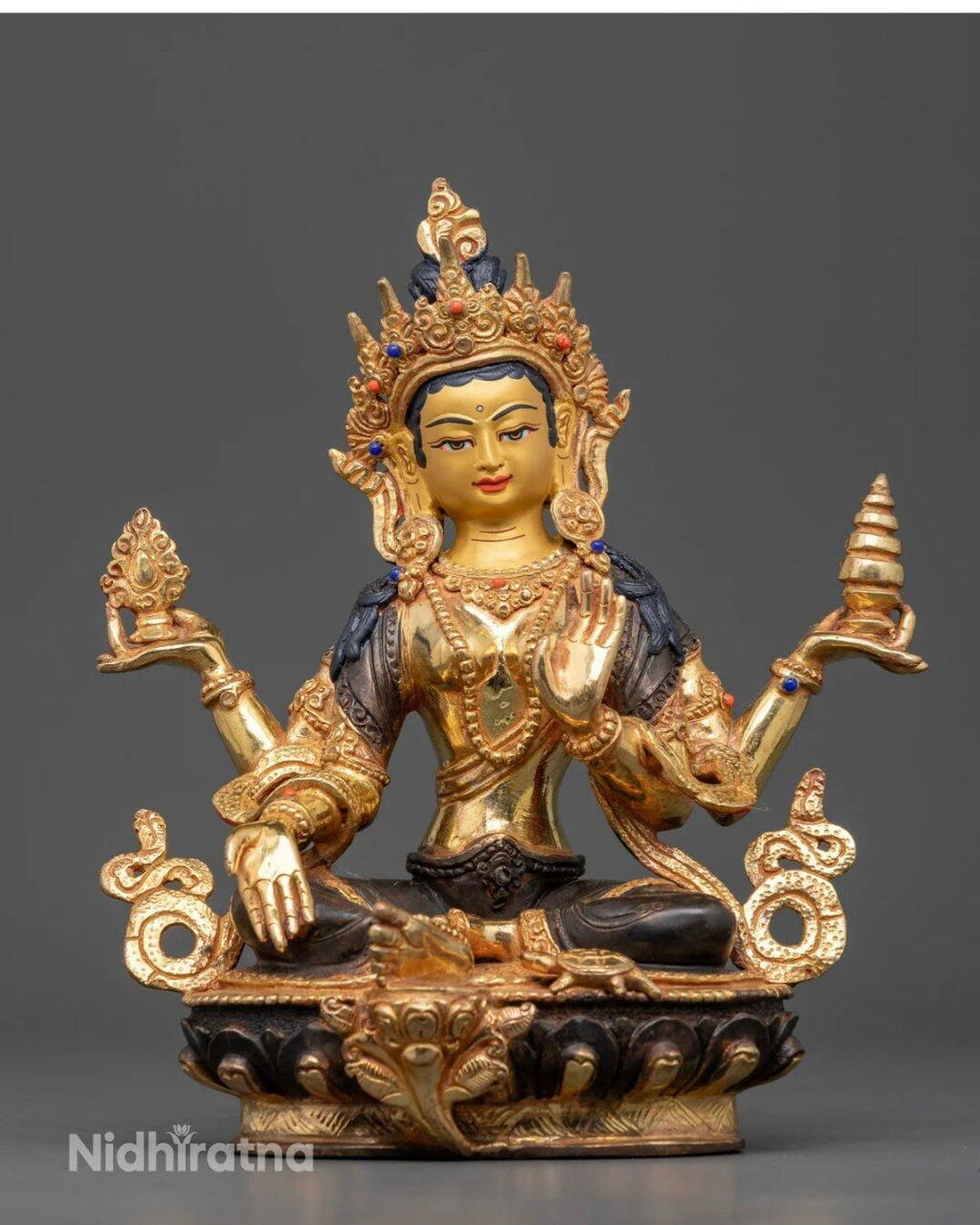
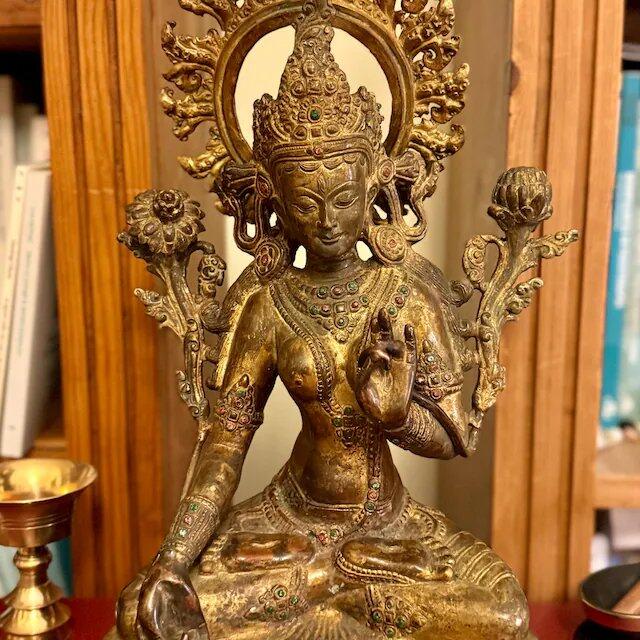
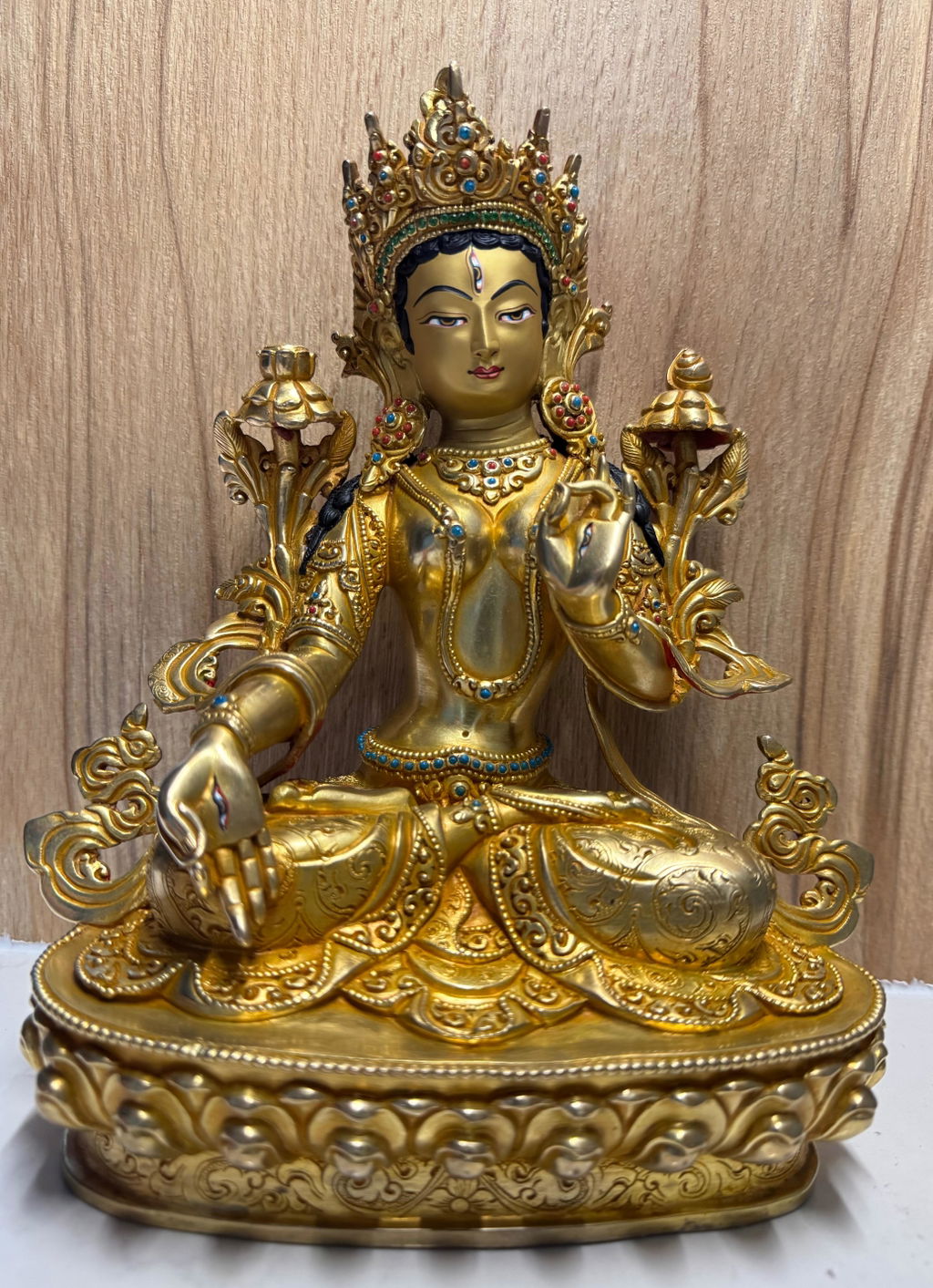
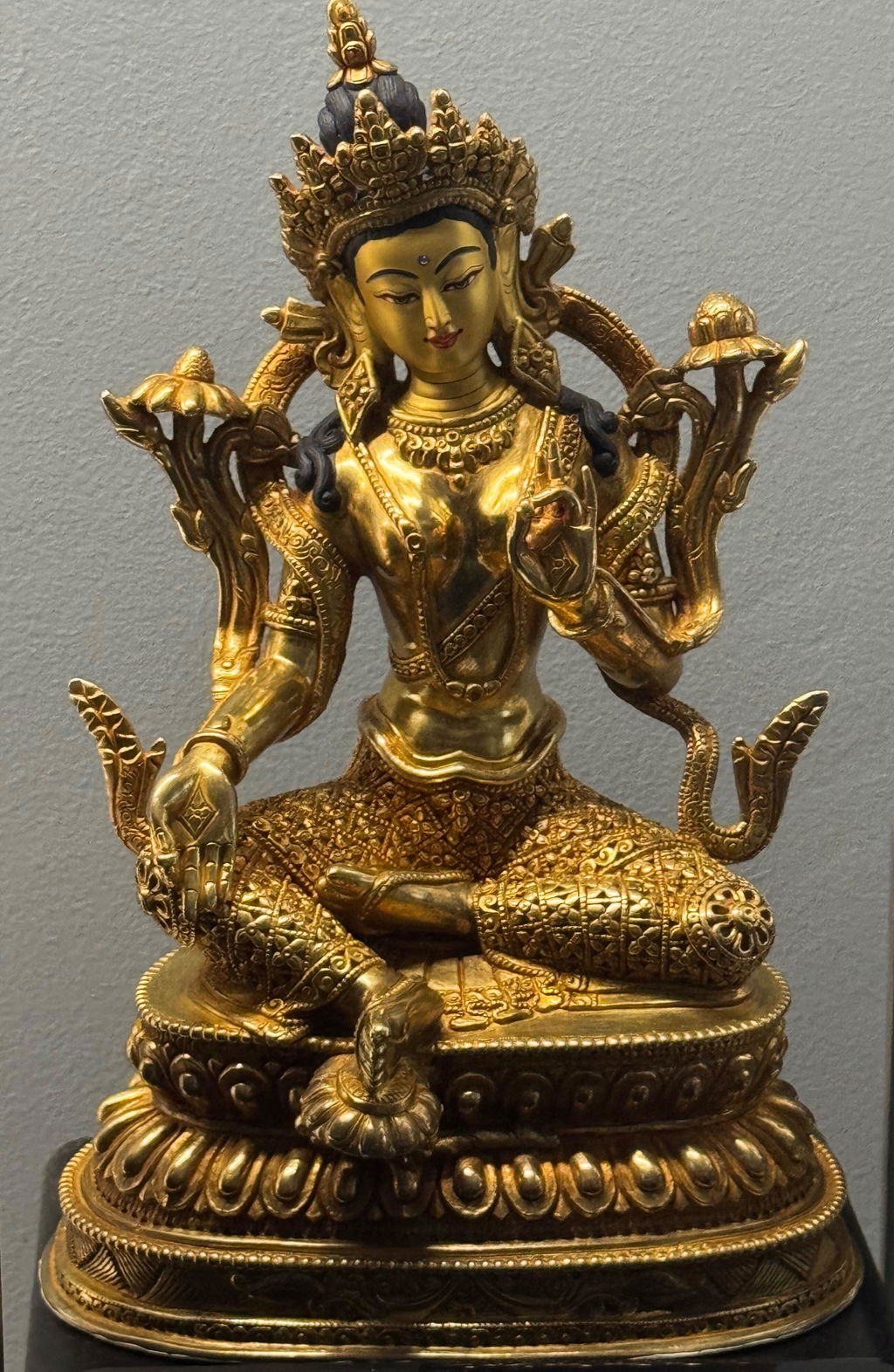
Green Tara is commonly depicted seated on a lotus throne in lalitasana, or a posture of ease. Her left leg is folded while her right leg extends toward the ground, expressing her readiness to respond to the needs of sentient beings.
Her right hand often displays varada mudra, the gesture of generosity and granting, while her left hand holds the stem of an utpala lotus near her shoulder. In many depictions, the lotus bears buds or blossoms that symbolize purity, spiritual potential, and the unfolding of wisdom.
Green Tara's color is associated with active compassion and enlightened activity. Her image reminds practitioners that compassion is not passive. It calls for the courage and willingness to act when others need help.
For those who wish to bring this symbolism into their home shrine or meditation space, a Green Tara statue can serve as a visual reminder of compassionate action, courage, and the intention to benefit others.
White Tara and Her Symbolism
White Tara is another highly revered form of Tara in Tibetan Buddhism. She is commonly associated with long life, healing, peaceful activity, and the cultivation of well-being.
White Tara is often depicted with a peaceful expression, a white-colored body, and seven eyes: the usual two eyes, an eye on the forehead, and an eye on each palm and sole. These eyes symbolize heightened awareness and the ability to perceive suffering with compassionate understanding.
Her imagery differs from Green Tara's more active posture. White Tara is commonly represented in a serene seated position, reflecting tranquility, longevity, and the nurturing qualities of enlightened compassion.
Although Green Tara and White Tara have distinct symbolic associations, both are revered as expressions of Tara's compassionate nature. Their images support different devotional reflections within the broader Tibetan Buddhist tradition.
The Twenty-One Praises to Tara
The Twenty-One Praises to Tara is a cherished devotional text in Tibetan Buddhism. Through its verses, practitioners pay homage to Tara and reflect on her enlightened qualities, forms, and protective activity.
The praises are recited in monasteries, during personal devotional practice, and in group ceremonies. For many practitioners, the recitation provides a familiar structure for prayer and contemplation.
Rather than approaching the text as a promise that every difficulty will immediately disappear, practitioners can understand it as an opportunity to strengthen faith, cultivate positive intentions, and remember the importance of compassion and wisdom when facing life's challenges.
Translations and liturgical arrangements differ. Those who wish to learn the complete text should consult a reliable translation or a qualified teacher from their Buddhist tradition.
The Green Tara Mantra and Its Meaning
The widely known Green Tara mantra is:
Om Tare Tuttare Ture Soha
The mantra is commonly recited as part of Tara devotional practice. Its syllables are traditionally understood in relation to Tara's liberating and protective activity, although detailed explanations vary among teachers and lineages.
In a general devotional explanation, Tare is associated with liberation, Tuttare with protection from fears and obstacles, and Ture with swift action and liberation from suffering. Soha, also written Svaha in Sanskrit transliteration, is a traditional mantra ending.
Practitioners may recite the mantra while meditating, making offerings, or contemplating Tara's qualities. Beginners can start by learning the pronunciation from a reliable teacher or recording and approaching the practice with respect and a sincere intention to cultivate compassion.
What Are the Spiritual Benefits of Tara Practice?
Tara practice is meaningful to many Buddhists because it brings devotion, reflection, and the cultivation of positive qualities together. The traditional benefits associated with Tara vary by lineage and practice, but several themes appear frequently.
- Courage in difficult times: Tara's protective symbolism can remind practitioners to meet fear with courage and a clear mind.
- Compassionate action: Her imagery encourages a willingness to respond to the suffering of others.
- Greater mindfulness: Recitation and contemplation can provide a regular focus for spiritual practice.
- Wisdom and discernment: Tara's different forms encourage reflection on the qualities needed to overcome confusion and harmful habits.
- Devotional connection: Prayer, mantra recitation, and offerings can deepen a practitioner's connection with the Buddhist path.
These are spiritual and devotional understandings, not guaranteed outcomes. Tara practice is generally approached as part of a broader commitment to ethical conduct, wisdom, and compassion.
How to Create a Tara Shrine at Home
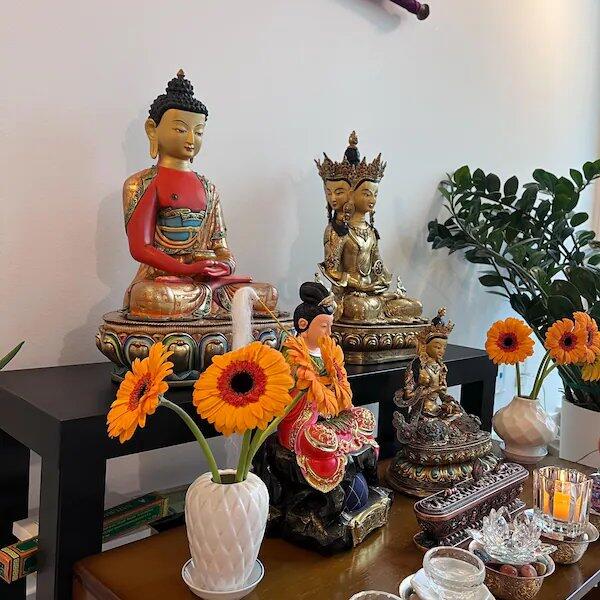
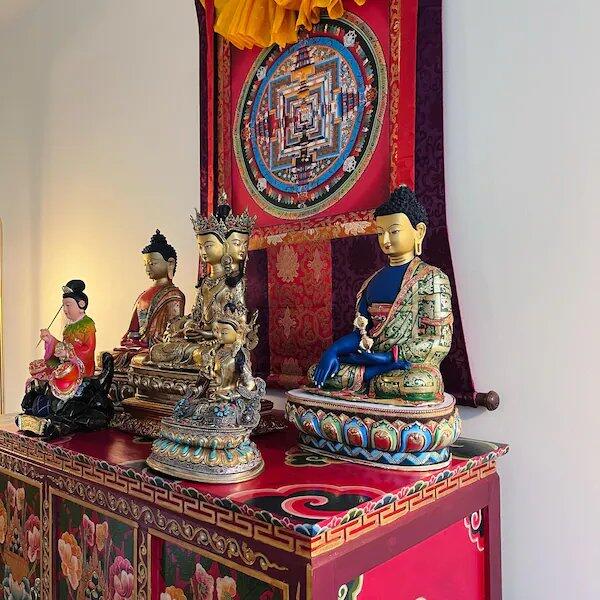
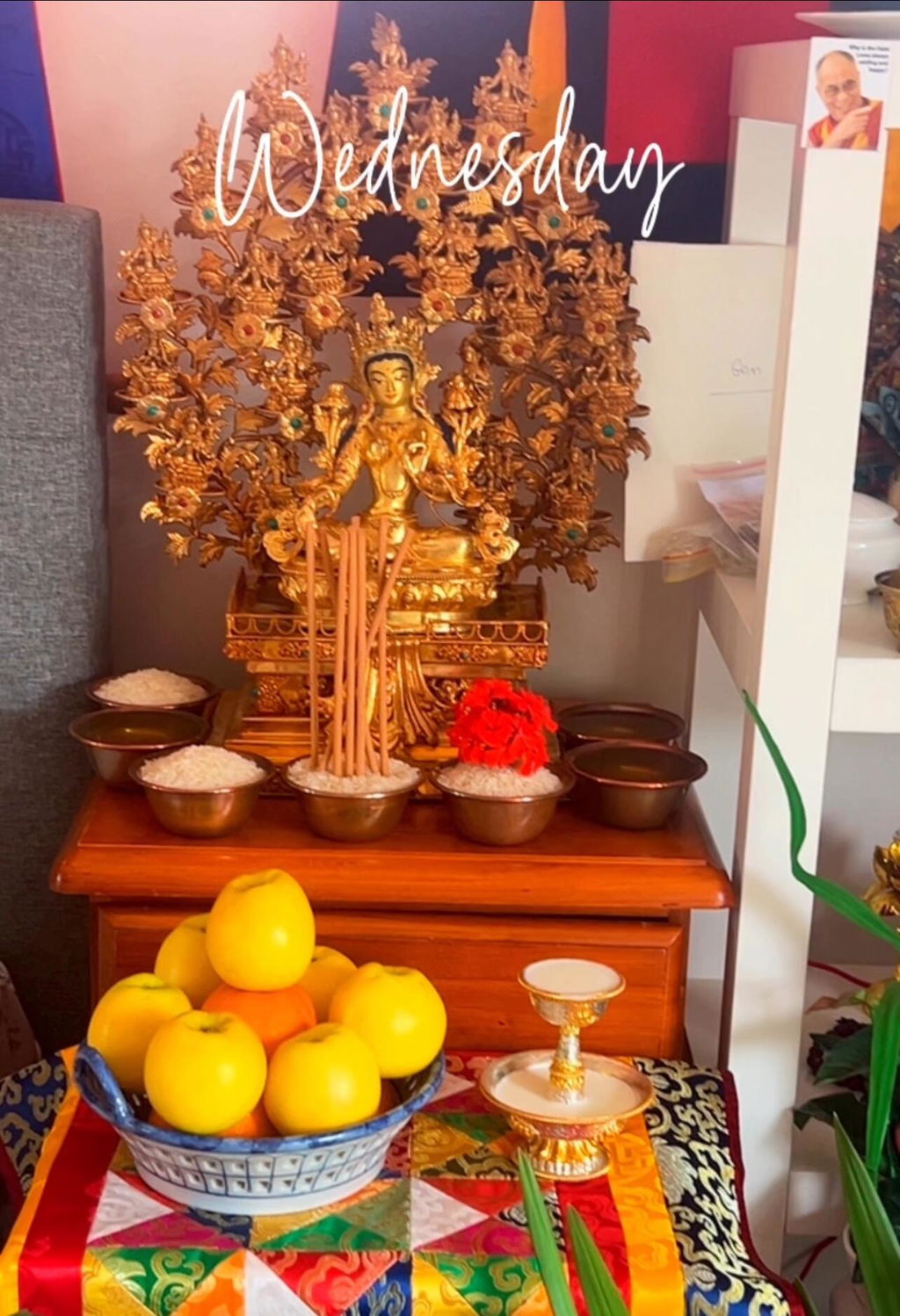
A home shrine can provide a quiet place for prayer, meditation, and reflection. It does not need to be elaborate. A clean, peaceful space arranged with care can be meaningful for both experienced practitioners and those beginning to learn about Tibetan Buddhism.
Choose a clean and peaceful location
Select a stable surface in a quiet area where you can sit comfortably and practice without frequent interruptions. Keep the space clean and treat sacred images respectfully.
Place a Tara statue with care
A Green Tara or White Tara statue may serve as the central image of a shrine dedicated to Tara practice. Choose a statue that suits the available space and reflects the qualities you wish to contemplate.
Add simple offerings if appropriate
Depending on your tradition, you may offer clean water, flowers, incense, or a small light. Follow the guidance of your teacher or community regarding appropriate offerings and daily practices.
Make time for reflection
You may spend a few quiet moments reciting the Green Tara mantra, reading a prayer, or reflecting on compassion and courage. A regular practice can help establish a meaningful connection with the values Tara represents.
Choosing a Green Tara or White Tara Statue
When choosing a Tara statue, consider the form, craftsmanship, materials, and intended setting. Traditional Himalayan Buddhist sculptures may feature lotus thrones, symbolic hand gestures, carefully modeled ornaments, and other details that communicate the deity's identity.
Green Tara is often chosen by practitioners who feel drawn to her symbolism of swift compassionate activity and protection. White Tara may appeal to those who wish to contemplate peace, longevity, and compassionate awareness.
Materials and finishes can also shape the appearance of a statue. Copper sculptures with gold gilding, oxidized finishes, painted details, and semi-precious stones reflect different approaches to Himalayan metalwork. Traditional lost-wax casting and detailed hand-finishing are important parts of this artistic heritage.
At Nidhiratna, we celebrate Nepalese Buddhist art and the craftsmanship of skilled Newari artisans from Patan, Nepal. Explore our collection of Green Tara statues and White Tara statues to discover sculptures inspired by this enduring spiritual tradition.
Frequently Asked Questions About the 21 Taras
Who are the 21 Taras in Buddhism?
The 21 Taras are sacred forms associated with Tara's enlightened qualities and activities in Tibetan Buddhism. They are closely connected with the Twenty-One Praises to Tara, a devotional text honoring her compassion, wisdom, and protective activity.
Are the 21 Taras different goddesses?
They are commonly understood as different forms or expressions of Tara's enlightened nature. The way their names, appearances, and functions are described varies among Buddhist lineages.
What is the difference between Green Tara and White Tara?
Green Tara is especially associated with swift compassionate activity and protection from fear. White Tara is commonly associated with longevity, peaceful activity, and compassionate awareness. Both are revered forms of Tara in Tibetan Buddhism.
What is the mantra of Green Tara?
The widely recited Green Tara mantra is Om Tare Tuttare Ture Soha. Practitioners use it in devotional and meditative practice, with detailed interpretations varying across traditions.
Can beginners pray to Tara?
Many Buddhist communities welcome beginners who wish to learn about Tara and her symbolism. Beginners can start by studying reliable resources, learning simple prayers, and seeking guidance from a qualified teacher when needed.
Where should a Tara statue be placed at home?
A Tara statue can be placed on a clean, stable surface in a peaceful meditation room, home shrine, or dedicated prayer area. Follow the customs of your Buddhist tradition and treat the image respectfully.
Discover the Enduring Meaning of Tara
The tradition of the 21 Taras offers a rich way to understand the many expressions of enlightened compassion in Tibetan Buddhism. Through the Twenty-One Praises, practitioners reflect on courage, wisdom, protection, peace, and the qualities that help them move beyond suffering.
Green Tara's readiness to act and White Tara's peaceful awareness offer complementary reminders of the Buddhist path. Both invite practitioners to approach life with greater compassion, clarity, and care for others.
From devotional prayers to the intricate sculptures created by Himalayan artisans, Tara's presence continues to inspire Buddhist communities across generations. If her symbolism holds special meaning for you, explore Nidhiratna's collection of Green Tara statues and White Tara statues to find a meaningful piece that resonates with your spiritual space.
Share:
Goddess Laxmi: Meaning, Symbolism, Powers and Significance in Hinduism