

Śūnyatā in Buddhism: Understanding the Meaning of Emptiness
Among the most profound and frequently misunderstood teachings in Buddhism is Śūnyatā, commonly translated as “emptiness.” At first glance, the word can sound negative, as though Buddhism teaches that the world, human beings, or our experiences do not exist. Yet Buddhist teachings use Śūnyatā in a much more subtle sense.
Śūnyatā points to the absence of an independent, permanent, and unchanging essence in phenomena. Things exist, function, change, and affect one another, but they do not exist entirely by themselves or from their own independent nature. In Mahayana Buddhism, this insight is closely connected with dependent origination, the principle that phenomena arise through causes, conditions, relationships, and conceptual designation.
Understanding Śūnyatā therefore does not mean denying the world. Instead, it invites us to look more carefully at how things actually exist. Through this deeper understanding, Buddhist practitioners seek to loosen attachment, overcome mistaken views, develop compassion, and move toward liberation from suffering.
What Is Śūnyatā in Buddhism?
The Sanskrit word Śūnyatā (शून्यता) is generally translated as “emptiness.” It comes from śūnya, meaning empty or void, with the suffix -tā, expressing a state or quality.
However, “emptiness” can be misleading if understood as absolute nothingness. In Mahayana Buddhist philosophy, Śūnyatā primarily means that phenomena are empty of inherent existence, or svabhāva. In other words, nothing possesses a completely independent, permanent essence existing solely from its own side.
Consider a simple example: a flower.
A flower depends upon a seed, soil, water, sunlight, air, nutrients, temperature, time, insects, and countless other conditions. It cannot exist independently of these supporting circumstances. Even the concept “flower” depends upon distinguishing it from other things and giving it a name.
The flower certainly exists conventionally. We can see it, smell it, touch it, and observe it growing. Yet when we search for a completely independent “flower essence” existing separately from all causes, conditions, parts, and relationships, such an essence cannot be found.
This is the kind of insight that Śūnyatā encourages us to investigate.
Śūnyatā Does Not Mean Nothing Exists
One of the most important points when studying Buddhist emptiness is this:
Emptiness is not nihilism.
Buddhism does not teach that people, objects, actions, causes, or consequences simply do not exist. Rather, Śūnyatā challenges the assumption that things exist in an independent and permanent manner.
The distinction is essential.
A person exists conventionally. You can speak with someone, experience kindness from them, and recognize their individual personality. But that person is also constantly changing and depends upon a body, consciousness, memories, relationships, food, environment, culture, language, and countless other conditions.
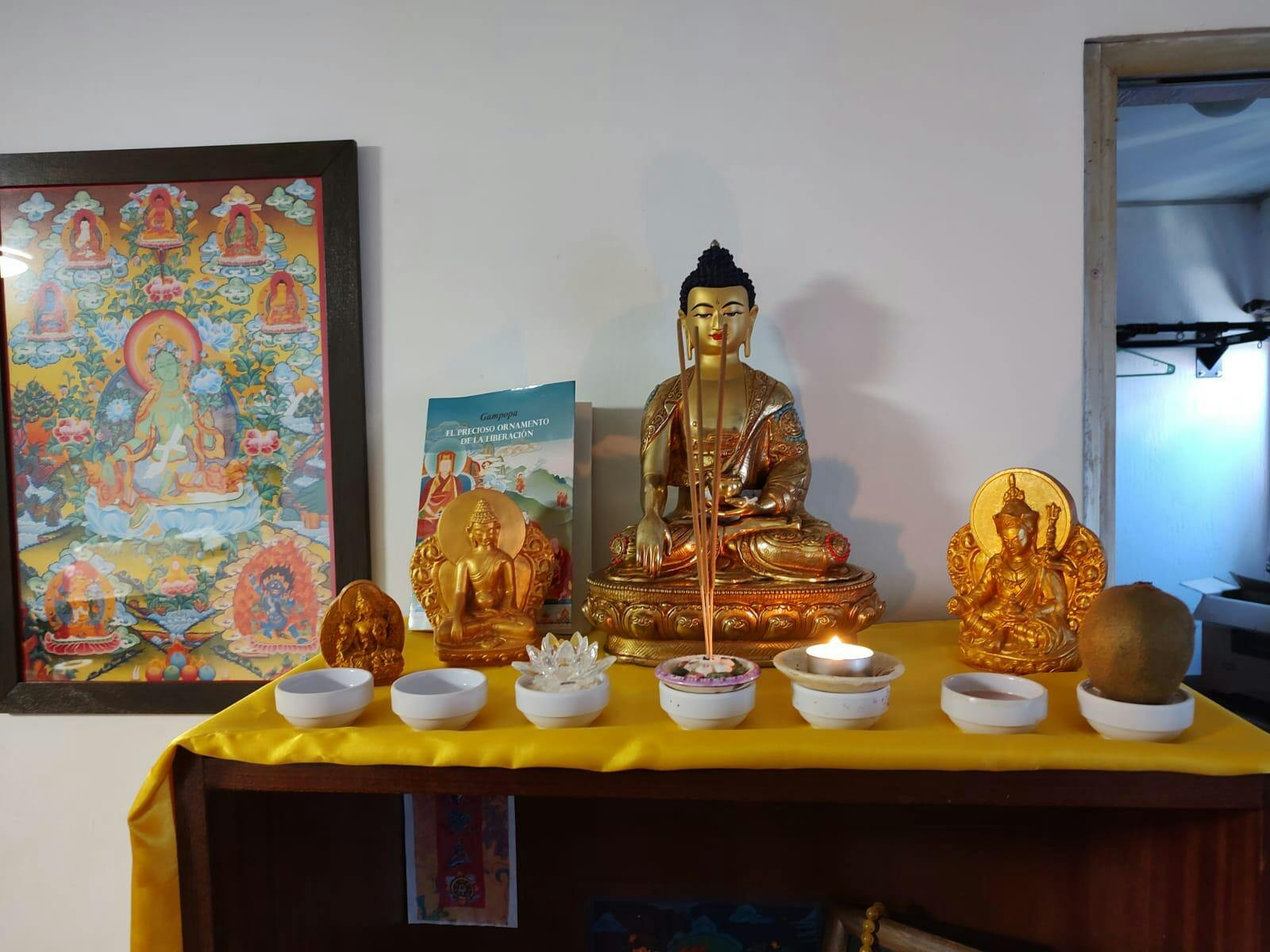
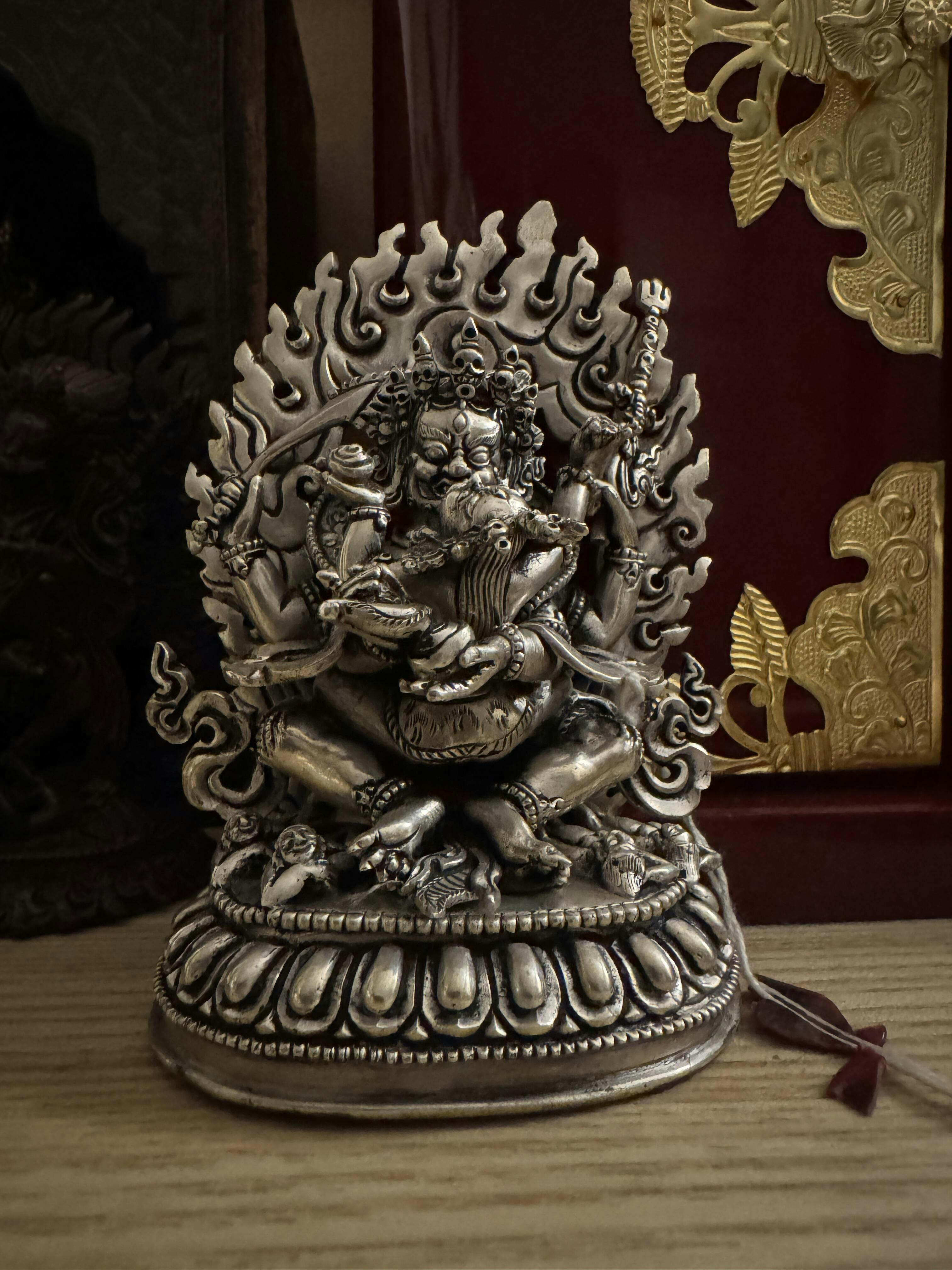
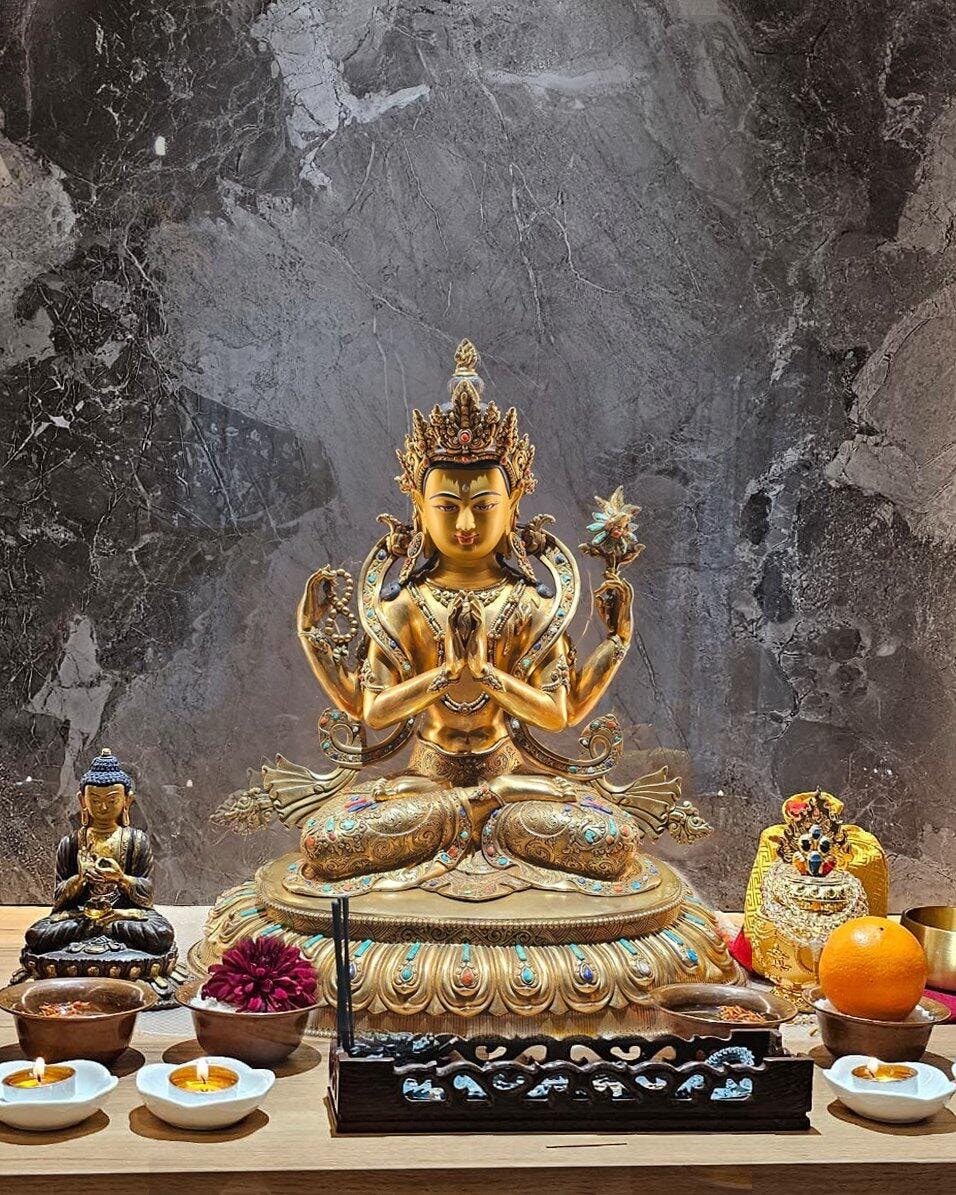
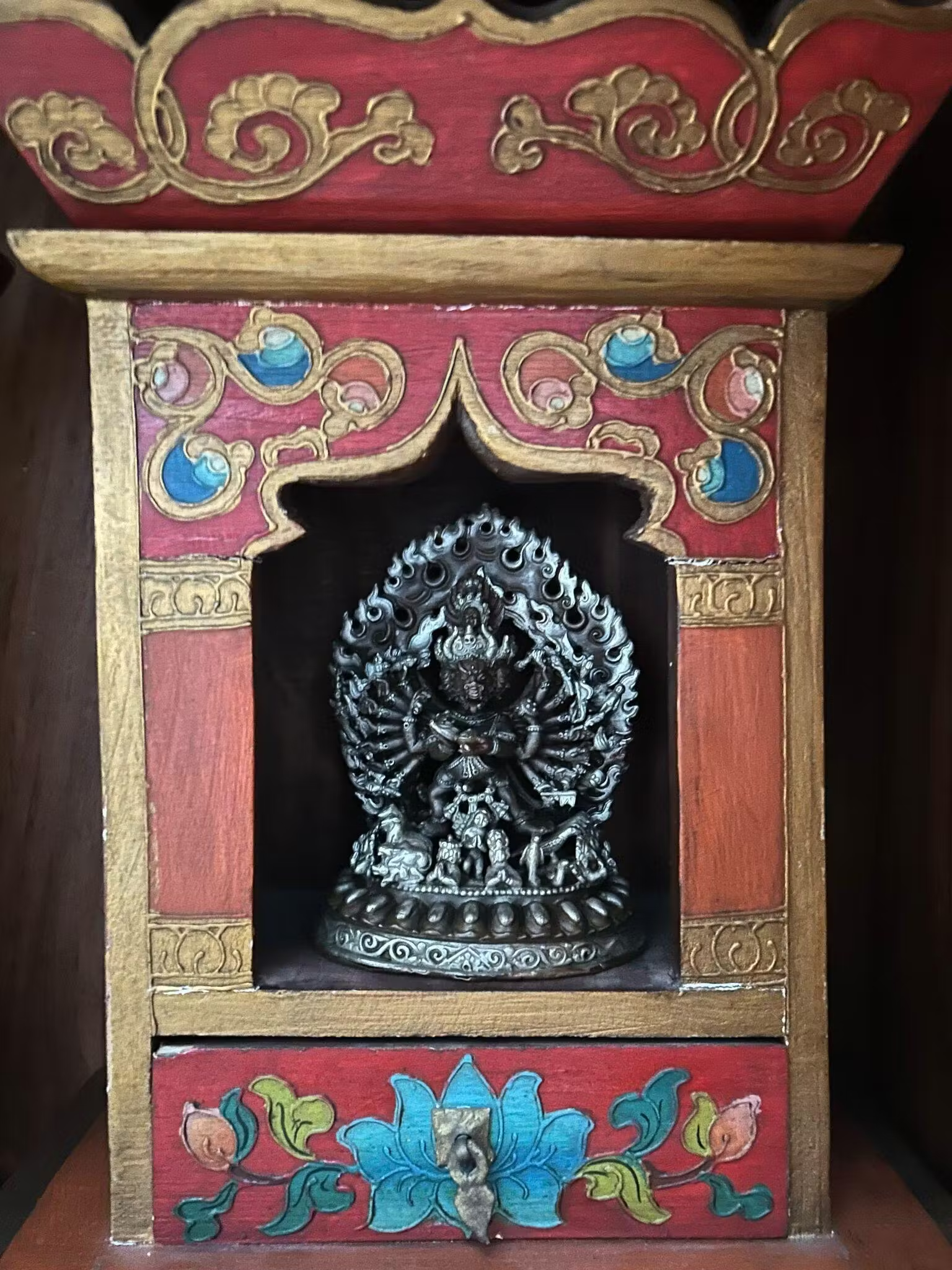
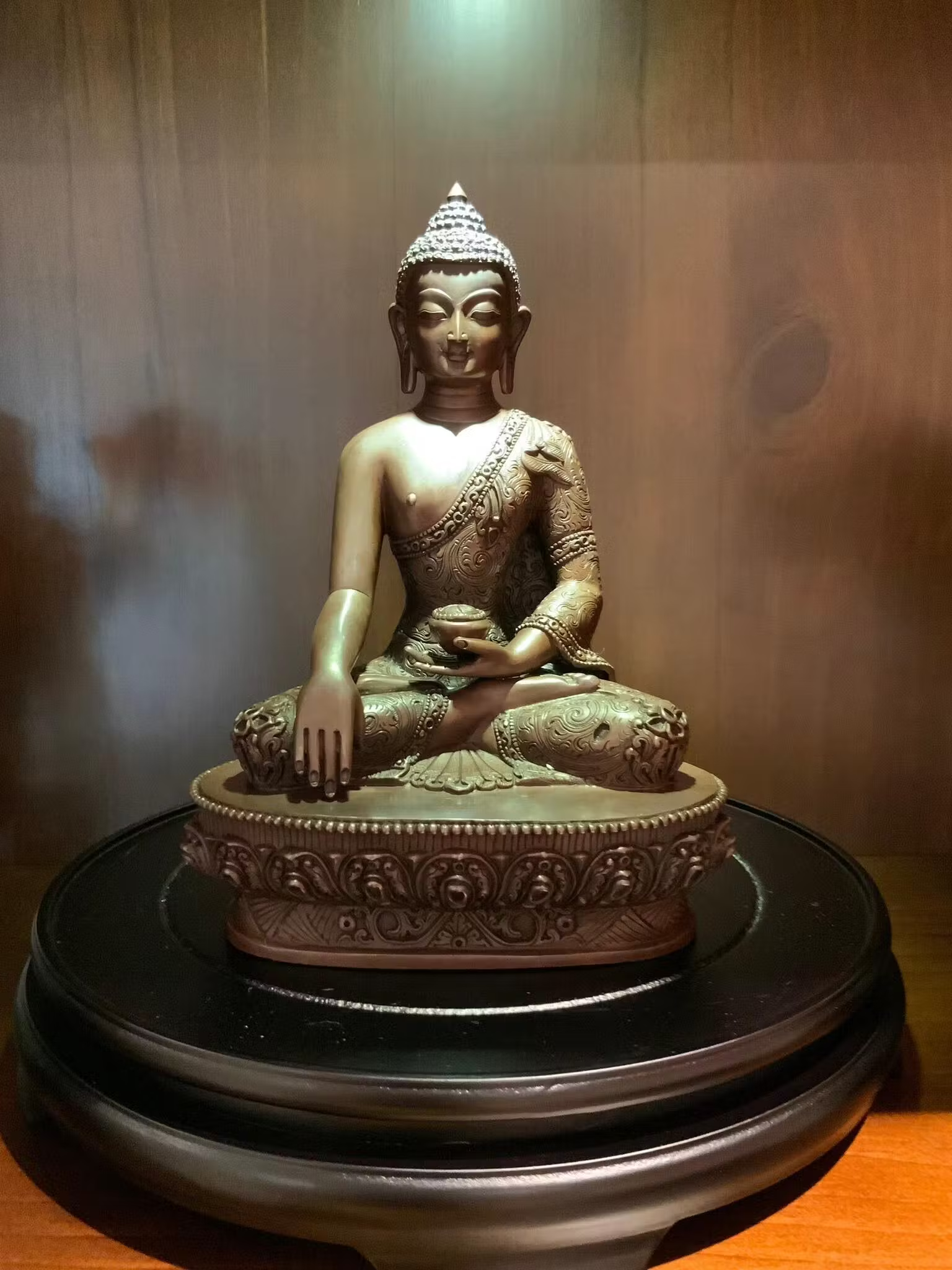
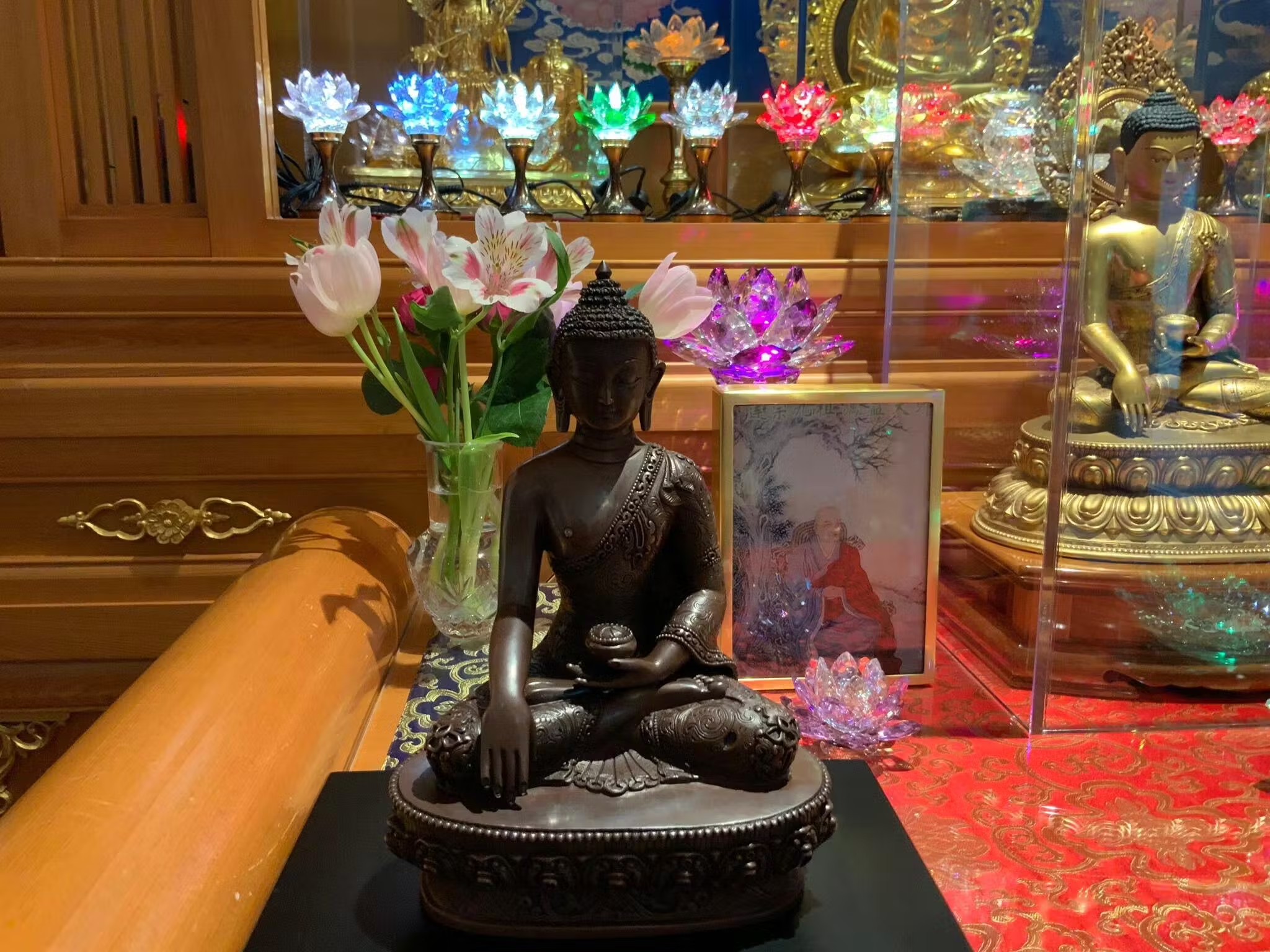
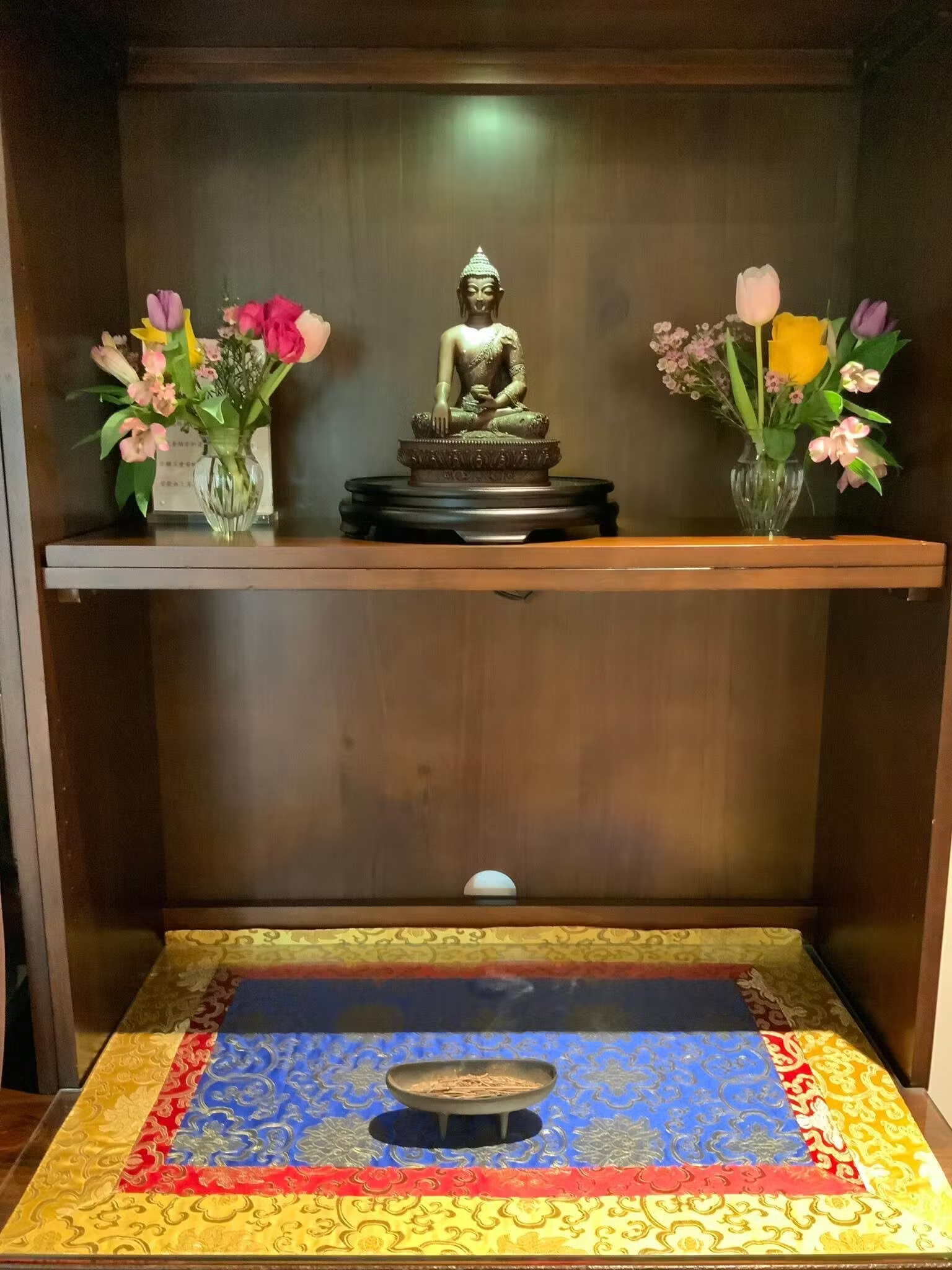
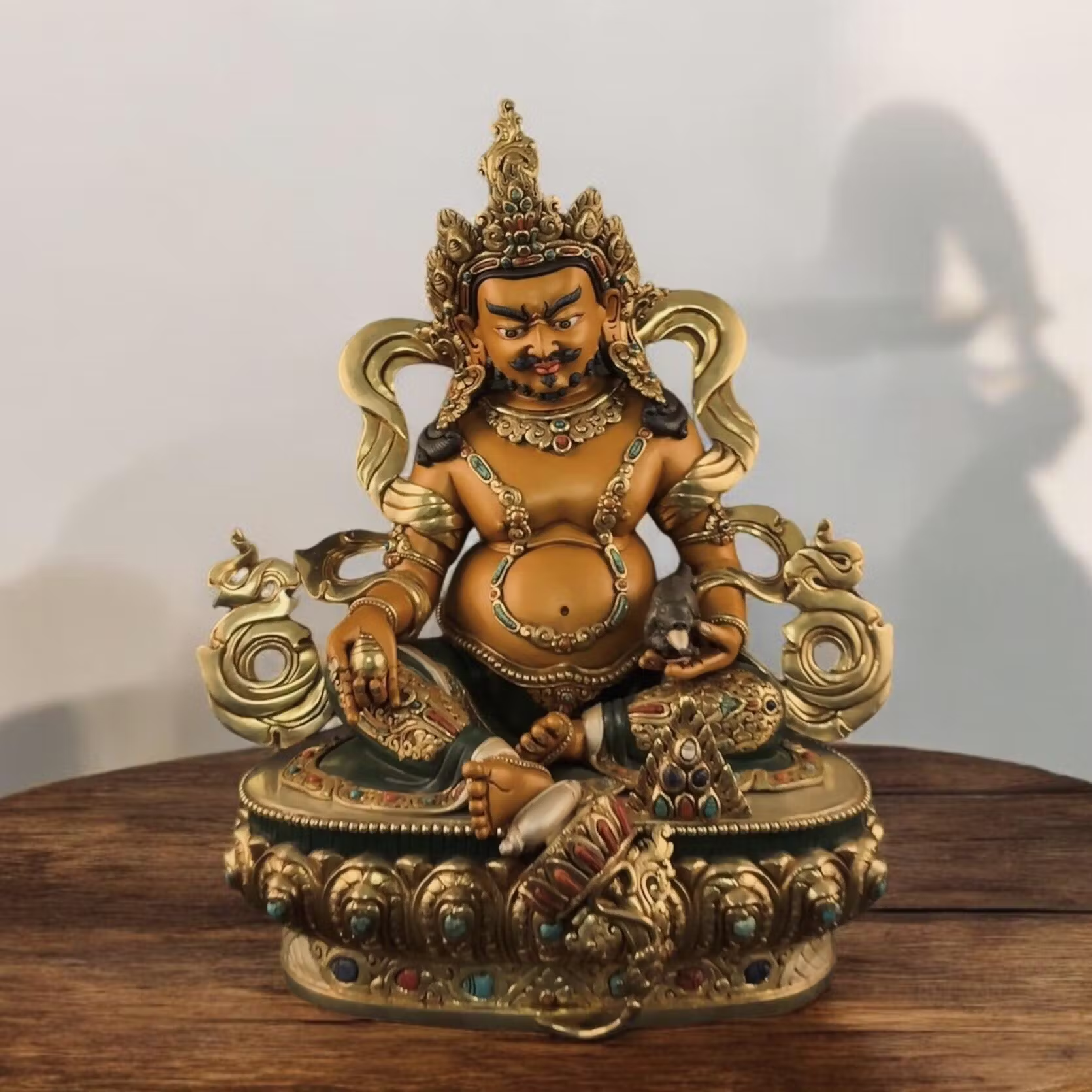
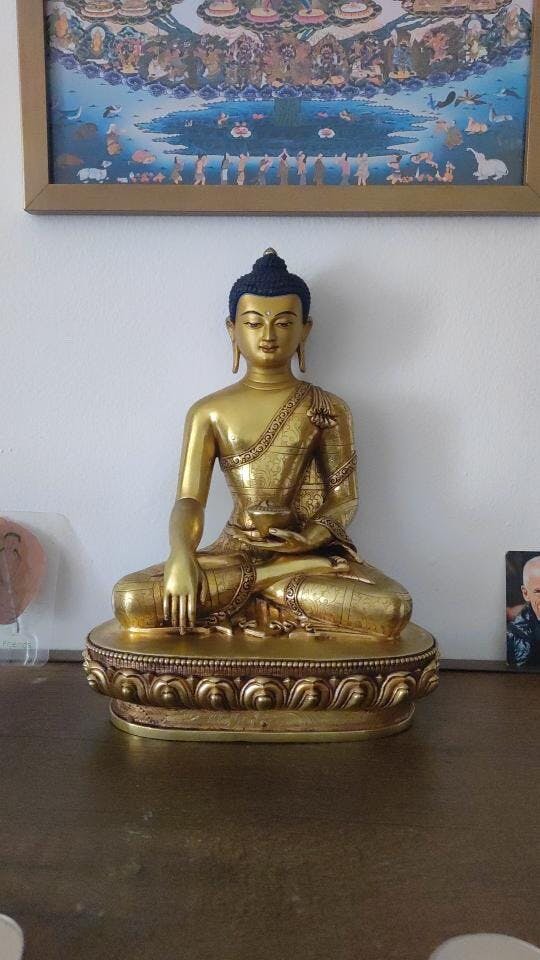
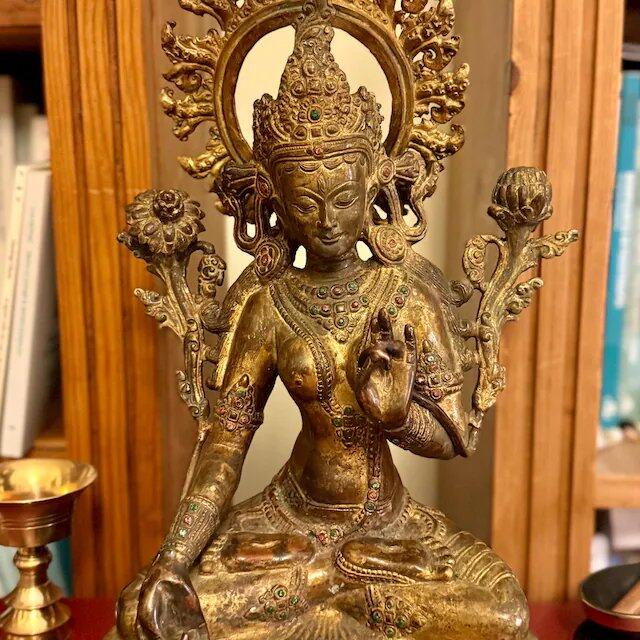
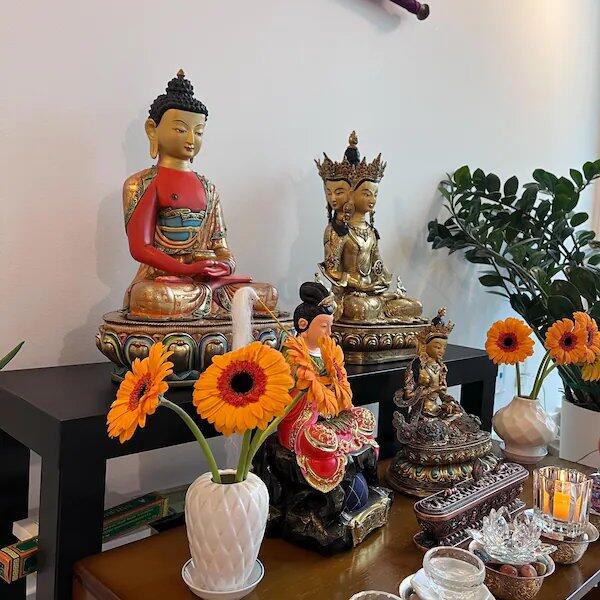
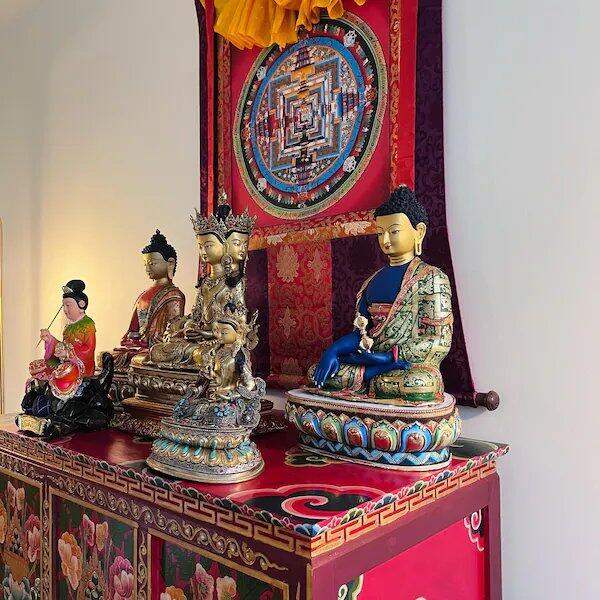
Likewise, a Buddhist statue exists as a physical object made from particular materials and created through the work of artisans. Its meaning, however, also depends upon history, religious teachings, iconography, cultural traditions, devotional practice, and the mind of the person who encounters it.
Śūnyatā asks us to see this web of dependence rather than imagining an isolated and permanent essence.
Śūnyatā and Dependent Origination
The relationship between Śūnyatā and dependent origination (pratītyasamutpāda) is central to Mahayana Buddhist philosophy.
Dependent origination teaches that phenomena arise in dependence upon causes and conditions. Nothing conditioned appears entirely by itself.
Nāgārjuna, one of the most influential philosophers in the history of Mahayana Buddhism, made the relationship between dependent origination and emptiness central to the Madhyamaka tradition. His Mūlamadhyamakakārikā, or Fundamental Wisdom of the Middle Way, presents emptiness as inseparable from dependent arising.
The reasoning can be expressed simply:
Because things arise dependently, they are not independently self-existent.
And because they lack independent existence, they are described as empty.
This does not make them unreal in an ordinary sense. Rather, their existence is relational and conditional.
A tree depends on a seed, soil, water, sunlight, minerals, climate, and time. A house depends on materials, labor, design, tools, land, and human activity. A human life depends upon parents, food, air, relationships, society, and innumerable physical and mental conditions.
Seeing this interconnectedness is one way of approaching Śūnyatā.
Nāgārjuna and the Philosophy of Emptiness
The Indian Buddhist philosopher Nāgārjuna, generally dated to around the second or early third century CE, is one of the most important figures associated with the philosophy of Śūnyatā. His Madhyamaka, or “Middle Way,” became enormously influential throughout later Mahayana Buddhism.
Nāgārjuna examined the idea of svabhāva, often translated as intrinsic nature, inherent existence, essence, or own-being. His philosophical arguments challenge the idea that phenomena possess such an independent nature.
The Middle Way avoids two extremes:
- The belief that things possess permanent, independent existence.
- The belief that nothing exists at all.
Instead, phenomena are understood through dependent origination. They function conventionally while lacking independent essence.
This is why Nāgārjuna's philosophy is not simply a philosophy of “nothingness.” It is an examination of how we mistakenly turn changing, dependent phenomena into apparently solid and independent things through our conceptual habits.
The Middle Way Between Eternalism and Nihilism
Buddhist teachings frequently warn against extreme views.
One extreme is eternalism, the belief that things possess an unchanging and permanent essence.
The opposite extreme is nihilism, the belief that nothing exists or that actions have no meaningful consequences.
Śūnyatā provides a middle way between these extremes.
Things are not permanent, independent entities. Yet neither are they meaningless nonentities. They arise dependently, function within conventional reality, and participate in causes and effects.
This middle way is particularly important because misunderstanding emptiness can lead to nihilism. If someone hears “everything is empty” and concludes “therefore nothing matters,” they have missed the point.
In fact, the opposite can be understood: because things arise dependently, actions and conditions matter.
Śūnyatā in the Heart Sutra
One of the most famous expressions of Śūnyatā appears in the Heart Sutra, one of the central texts of the Prajñāpāramitā, or Perfection of Wisdom, tradition.
The Heart Sutra presents the famous teaching:
“Form is emptiness; emptiness is form.”
This statement is deliberately concise and profound.
“Form” refers to material phenomena and, within the broader Buddhist analysis, represents the conditioned phenomena of experience. Saying that form is empty does not mean that physical matter disappears or becomes nonexistent.
Rather, form is empty of independent inherent existence.
And when the text says emptiness is form, it prevents us from turning emptiness into another kind of absolute substance or separate reality.
The teaching points toward the inseparability of conventional appearance and emptiness.
A flower appears as a flower, yet it is empty of independent essence. Its emptiness does not prevent it from appearing. In this sense, appearance and emptiness are not two completely separate realities.
The Five Aggregates and Emptiness
Buddhism analyzes the person through the Five Aggregates, or skandhas:
- Form (rūpa)
- Feeling (vedanā)
- Perception (saṃjñā)
- Mental formations (saṃskāra)
- Consciousness (vijñāna)
These aggregates together describe important dimensions of embodied and mental experience.
When we investigate them carefully, we do not discover a permanent, independent self existing separately from these changing processes.
The body changes. Feelings change. Perceptions change. Thoughts and mental formations change. Consciousness is experienced through continually changing states.
This connects Śūnyatā with the Buddhist teaching of anātman, or no-self.
Śūnyatā and the Idea of No-Self
The teachings of no-self and emptiness are closely related, although their historical development and philosophical interpretations are not identical across Buddhist traditions.
Early Buddhist teachings emphasize the absence of a permanent self within the aggregates. Mahayana traditions extend this analysis further by examining the status of all phenomena and arguing that they likewise lack inherent existence.
This can have an important psychological effect.
- “This is who I am.”
- “This is permanently mine.”
- “I must always be this way.”
- “That person is permanently my enemy.”
- “My situation can never change.”
Śūnyatā challenges the rigidity behind these assumptions.
If the self is dependent and changing, then identity is not as solid as we often imagine. Likewise, circumstances, relationships, emotions, and difficulties can change.
This does not mean ignoring reality. It means learning to hold reality with less fixation.
Why Is Śūnyatā Important in Buddhism?
Why would such an abstract philosophical teaching matter to everyday life?
Because much of human suffering comes from attachment and fixation.
We grasp at objects, identities, relationships, opinions, achievements, and experiences as though they could provide permanent security.
But everything conditioned changes.
When we believe that changing things must remain fixed, suffering naturally follows.
Śūnyatā helps loosen this grasping by revealing the dependent and changing nature of phenomena.
For example, anger may feel completely solid when we experience it. We may think:
“I am an angry person.”
But anger arises through conditions: memories, interpretations, physical states, expectations, circumstances, habits, and perceptions.
When those conditions change, the anger changes.
The emotion is real as an experience, but it is not an independent, permanent entity.
This understanding can create space between awareness and reaction.
Śūnyatā and Compassion
An important and sometimes overlooked dimension of emptiness is its relationship with compassion.
If beings are not isolated, independent entities but exist through networks of causes and conditions, then our lives are deeply interconnected.
Our food depends upon farmers and countless other people. Our education depends upon teachers and communities. Our emotional development is shaped by relationships. Our actions influence others, who in turn influence us.
Recognizing this interdependence can weaken excessive self-centeredness.
Mahayana Buddhism therefore does not treat wisdom and compassion as competing goals. The wisdom of emptiness and the compassionate activity of the Bodhisattva path are deeply connected.
The Bodhisattva seeks awakening not merely for personal escape but for the benefit of sentient beings.
Śūnyatā and Meditation
Śūnyatā is not merely an intellectual theory.
In Buddhist practice, understanding emptiness can become something to investigate through meditation and contemplation.
A practitioner might begin by observing an experience such as anger.
Instead of immediately identifying with it, one can examine:
- Where does the anger come from?
- What conditions caused it?
- Does it remain unchanged?
- Where is the anger located?
- Can a permanent “anger” be found apart from changing thoughts, sensations, memories, and circumstances?
- What happens when the conditions supporting it disappear?
The purpose is not to force the mind to believe that anger is nonexistent.
Rather, meditation can reveal that the experience is dependent, changing, and without a fixed essence.
The same investigation can be applied to thoughts, identity, desire, fear, and attachment.
How to Understand Śūnyatā in Everyday Life
Relationships
Relationships are not fixed objects. They change according to communication, circumstances, memories, expectations, and actions.
Recognizing this can encourage greater patience and less rigid judgment.
Emotions
Emotions arise through conditions and eventually change.
Understanding their emptiness can help us avoid treating temporary emotional states as permanent definitions of ourselves.
Material Possessions
Objects that appear valuable or meaningful are also dependent upon causes, conditions, human concepts, and circumstances.
This can help reduce excessive attachment without requiring us to reject ordinary life.
Personal Identity
We often define ourselves through professions, achievements, social roles, appearance, beliefs, and memories.
Śūnyatā encourages us to recognize that these identities are conditioned and changeable.
This can create psychological flexibility.
Is Śūnyatā the Same as “Nothingness”?
No.
This is perhaps the most important clarification to remember.
Śūnyatā means emptiness of inherent existence, not absolute nonexistence.
A table can exist conventionally while being empty of an independent essence. A person can exist conventionally while lacking a permanent, independent self. A thought can arise and affect us while lacking an unchanging nature.
The Buddhist Middle Way therefore avoids reducing reality to either absolute existence or absolute nonexistence.
This distinction is also why Nāgārjuna's philosophy should not be casually described as nihilism. His analysis specifically targets the idea of inherent existence rather than simply denying conventional phenomena.
The “Emptiness of Emptiness”
Mahayana Buddhist philosophy takes the teaching one step further with the idea sometimes described as “the emptiness of emptiness.”
This means that Śūnyatā itself should not be grasped as an independently existing substance or ultimate object.
If someone replaces the belief “everything has an essence” with the belief “emptiness itself is an eternal essence,” they have simply created another form of conceptual fixation.
Thus emptiness is best understood as a corrective to mistaken ways of grasping reality, rather than as a new object to grasp.
This is one reason Nāgārjuna's philosophy is so subtle. The teaching is intended to loosen attachment to fixed philosophical positions rather than create another rigid doctrine.
The Two Truths and Śūnyatā
Mahayana Buddhist philosophy also frequently discusses the Two Truths:
- Conventional truth
- Ultimate truth
At the conventional level, people, objects, language, causes, actions, and experiences function in the ordinary world.
At the ultimate level, these phenomena are understood as empty of inherent existence.
These two perspectives are not necessarily two completely separate worlds.
For example, a cup conventionally exists as a cup. We can use it to drink water. But when examined more deeply, the cup depends upon materials, manufacturing, shape, function, designation, perception, and countless conditions.
Its conventional existence does not contradict its emptiness.
Instead, its dependent nature helps explain why it is empty.
Śūnyatā in Tibetan Buddhism
Śūnyatā became especially important within Tibetan Buddhist philosophical traditions, particularly through Madhyamaka interpretations.
Tibetan Buddhist scholars developed extensive analyses of emptiness, dependent origination, the Two Truths, conceptual designation, and the relationship between wisdom and compassion.
Different Tibetan traditions and philosophical schools have developed their own interpretations and methods for presenting these teachings, so it is important not to assume that every Tibetan Buddhist teacher explains Śūnyatā in precisely the same way.
Nevertheless, the recognition that phenomena lack inherent existence remains central to Madhyamaka thought.
Later Tibetan thinkers such as Tsongkhapa placed particular emphasis on understanding emptiness through dependent origination, emphasizing the relationship between the two within the Middle Way approach.
Śūnyatā and the Bodhisattva Path
For Mahayana Buddhism, wisdom alone is not the complete picture.
The Bodhisattva path brings together wisdom (prajñā) and compassion (karuṇā).
Wisdom recognizes the emptiness of phenomena. Compassion responds to the suffering of beings.
From the perspective of emptiness, rigid boundaries between “self” and “other” are seen differently. This does not erase individual differences or conventional relationships. Instead, it reveals how deeply dependent our existence is upon others.
The Bodhisattva therefore works to benefit beings while understanding that the concepts of self, other, giver, receiver, and action are themselves dependently designated.
This union of wisdom and compassionate activity is one of the defining ideals of Mahayana Buddhism.
Why Śūnyatā Can Be Liberating
At its deepest level, Śūnyatā is connected with the Buddhist goal of liberation.
We suffer when we cling to things as permanent, controllable, independent, and ultimately secure.
Yet conditioned phenomena continually change.
When we begin to see that experiences lack the fixed essence we project onto them, grasping can loosen.
A painful experience may still be painful, but we do not necessarily have to add:
“This will always be this way.”
A difficult emotion may arise, but we do not have to conclude:
“This is who I permanently am.”
A conflict may occur, but we do not have to define another person as permanently and essentially “bad.”
In this way, the insight of emptiness can open space for wisdom, patience, compassion, and freedom.
Common Misunderstandings About Śūnyatā
Misunderstanding 1: “Emptiness means nothing exists.”
Correction: Śūnyatā means phenomena lack inherent existence. Buddhism does not simply deny conventional existence.
Misunderstanding 2: “Emptiness means nothing matters.”
Correction: Dependent origination means actions and conditions have consequences. Emptiness does not cancel causality.
Misunderstanding 3: “Śūnyatā is just a philosophical theory.”
Correction: Buddhist traditions treat insight into emptiness as connected with overcoming ignorance and attachment.
Misunderstanding 4: “The self does not exist at all.”
Correction: Buddhism distinguishes between denying a permanent, independent self and denying the conventional person. These are not the same claim.
Misunderstanding 5: “Emptiness is another thing that exists somewhere.”
Correction: Śūnyatā itself should not be turned into an independently existing substance or absolute object of attachment.
How Can a Beginner Study Śūnyatā?
Śūnyatā is one of the more challenging Buddhist teachings, so approaching it gradually is helpful.
Begin with the principle of impermanence. Observe how experiences continually change.
Then study dependent origination and notice how things arise through conditions.
Next, explore no-self and investigate whether an independent, permanent self can actually be located within experience.
From there, Mahayana teachings on Śūnyatā become easier to approach.
It is also valuable to study classical Buddhist texts alongside reliable commentaries rather than relying on isolated quotations from social media or simplified definitions.
Nāgārjuna's Fundamental Wisdom of the Middle Way is particularly important for studying the Madhyamaka approach to emptiness.
Frequently Asked Questions About Śūnyatā
What does Śūnyatā mean in Buddhism?
Śūnyatā means “emptiness” and refers, particularly in Mahayana Buddhism, to the absence of inherent or independent existence in phenomena.
Is Śūnyatā the same as nothingness?
No. Śūnyatā does not mean that nothing exists. It means that phenomena are empty of permanent, independent essence.
Who taught the philosophy of Śūnyatā?
Emptiness has roots in early Buddhist teachings and was extensively developed in Mahayana Buddhism. Nāgārjuna is particularly associated with the systematic philosophical development of Śūnyatā within the Madhyamaka tradition.
What is the relationship between Śūnyatā and dependent origination?
Because phenomena arise through causes and conditions, they do not possess independent existence. Madhyamaka therefore closely connects dependent origination with emptiness.
What does “form is emptiness, emptiness is form” mean?
The famous Heart Sutra statement expresses the inseparability of phenomena and their emptiness. Form is not an independently existing essence, while emptiness is not a separate substance apart from phenomena.
Why is Śūnyatā important for meditation?
Contemplating emptiness can help practitioners examine attachment, identity, thoughts, and emotions without automatically treating them as permanent or independently existing.
Is Śūnyatā important in Tibetan Buddhism?
Yes. Understanding emptiness is central to Tibetan Buddhist philosophical and contemplative traditions, particularly Madhyamaka.
Conclusion: Seeing Reality Through Śūnyatā
Śūnyatā is one of Buddhism's most profound invitations to look beyond appearances and fixed concepts.
It does not ask us to believe that the world is empty in the ordinary sense. Instead, it asks us to examine how we imagine things to exist.
A person is not an isolated, permanent entity. A flower is not independent of its causes and conditions. An emotion is not fixed forever. A thought does not possess an unchanging essence. Even our idea of “self” depends upon continually changing physical and mental processes.
Everything participates in a web of causes, conditions, relationships, and designations.
This is why emptiness and dependent origination are so closely connected.
When Śūnyatā is misunderstood, it can sound bleak or nihilistic. When understood carefully, it can become a teaching of profound freedom. By loosening our grasp on fixed identities and permanent expectations, we may become more open to change, less dominated by attachment, and more responsive to the suffering of others.
In this sense, Śūnyatā is not a teaching about a world devoid of meaning. It is a teaching that frees us from the mistaken belief that things must possess a fixed essence in order to matter.
The deeper one looks, the more clearly the Buddhist Middle Way appears: things arise, function, change, and matter, yet none exists independently or permanently from its own side. Understanding this relationship between appearance, dependence, and emptiness is at the heart of one of Mahayana Buddhism's most transformative teachings.




Share:
Wheel of Life in Buddhism | Bhavachakra Meaning & Six Realms
Vajradhara: Meaning, Symbolism, Iconography & Spiritual Significance