

Vajrapani is one of the most important bodhisattvas in Mahayana and Vajrayana Buddhism, representing the spiritual power and strength of all Buddhas. Known as the Holder of the Vajra, he is revered as a powerful protector of Buddhist teachings and a symbol of the determination needed to overcome ignorance and obstacles on the path to enlightenment. His distinctive imagery, often featuring a thunderbolt scepter, a powerful expression, and a blazing halo, makes him one of the most recognizable figures in Himalayan Buddhist art.
In Buddhist tradition, Vajrapani is closely associated with Avalokiteshvara, the embodiment of compassion, and Manjushri, the embodiment of wisdom. Together, these three bodhisattvas represent the power, compassion, and wisdom of the Buddhas. Vajrapani's fierce appearance is not simply an expression of anger. It represents the forceful compassion and enlightened energy directed toward overcoming the conditions that prevent spiritual awakening.
From his origins in Indian Buddhist traditions to his important place in Tibetan and Himalayan Buddhism, Vajrapani has inspired centuries of religious devotion, meditation practices, and sacred artwork. His image continues to appear in Buddhist temples, monasteries, traditional paintings, and beautifully crafted metal sculptures.
But who is Vajrapani, what does his name mean, and why is he depicted with a vajra and a powerful wrathful appearance? This guide explores Vajrapani's meaning, history, symbolism, iconography, mantra, and cultural significance in Buddhist traditions.
Who Is Vajrapani in Buddhism?
Vajrapani is a bodhisattva associated with the spiritual power, strength, and protective energy of all Buddhas. His Sanskrit name combines two words: vajra, meaning diamond or thunderbolt, and pani, meaning hand or holder. Together, Vajrapani means the Holder of the Vajra.
He is particularly important in Mahayana and Vajrayana Buddhism, where he represents the power that supports the preservation and practice of the Dharma. His role is closely connected with protecting Buddhist teachings and encouraging practitioners to overcome inner and outer obstacles.
Vajrapani is also traditionally associated with the Buddha Shakyamuni. In Buddhist narratives and artistic representations, he appears as a powerful attendant and protector, symbolizing the strength and authority of awakened wisdom.
In Tibetan Buddhism, Vajrapani is revered in both peaceful and wrathful forms. His peaceful representations emphasize the qualities of an enlightened bodhisattva, while his wrathful manifestations express the powerful activity of overcoming ignorance and hindrances.
What Does Vajrapani Mean?

The name Vajrapani comes from the Sanskrit words vajra and pani.
- Vajra: Means diamond or thunderbolt. It symbolizes indestructible wisdom, spiritual strength, and the power to overcome ignorance.
- Pani: Means hand or holder, referring to the vajra carried by the bodhisattva.
Therefore, Vajrapani is commonly translated as the Holder of the Vajra or Thunderbolt Holder.
The name reflects his central symbolic attribute. The vajra represents an indestructible quality of awakened wisdom and the powerful methods used in Vajrayana Buddhism. As its bearer, Vajrapani embodies the strength and enlightened energy associated with the Buddhas.
History and Origins of Vajrapani
Vajrapani has a long history in Indian Buddhist traditions, where he developed into an important bodhisattva and protector figure. His imagery and symbolism evolved over centuries as Buddhist teachings and artistic traditions spread throughout Asia.
Vajrapani in Early Indian Buddhism
In early Buddhist literature and artistic traditions, Vajrapani is associated with the protection and presence of the Buddha. He is frequently described as a powerful attendant who accompanies and protects Shakyamuni Buddha.
His association with the vajra also connects his imagery with older Indian symbolism. The thunderbolt was traditionally associated with Indra, a powerful Vedic deity. Within Buddhist art, the vajra developed a distinct spiritual meaning connected with indestructible clarity, awakened power, and the ability to overcome ignorance.
Historical sculptures from India demonstrate how Vajrapani's appearance developed across different artistic periods. Early representations can show him in relatively peaceful or attendant forms, while later tantric traditions include more elaborate and wrathful manifestations.
Vajrapani in Mahayana Buddhism
As Mahayana Buddhism developed, Vajrapani became increasingly recognized as one of the important bodhisattvas associated with the qualities of Buddhahood.
He is commonly grouped with Avalokiteshvara and Manjushri. Their symbolic relationship represents three essential qualities of enlightened beings:
- Vajrapani: The power and spiritual strength of all Buddhas.
- Avalokiteshvara: The compassion and loving-kindness of all Buddhas.
- Manjushri: The wisdom and understanding of all Buddhas.
This grouping is especially important in Himalayan Buddhist art, where the three figures appear in religious paintings, sculptures, and devotional settings.
Vajrapani in Tibetan and Himalayan Buddhism
Vajrapani holds an important place in Tibetan and Himalayan Buddhist traditions. He is revered as a powerful protector and appears in numerous tantric practices, religious paintings, and traditional sculptures.
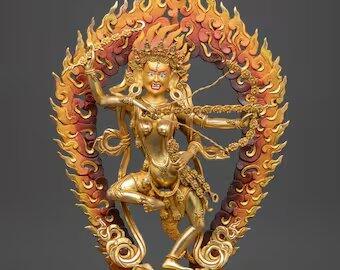
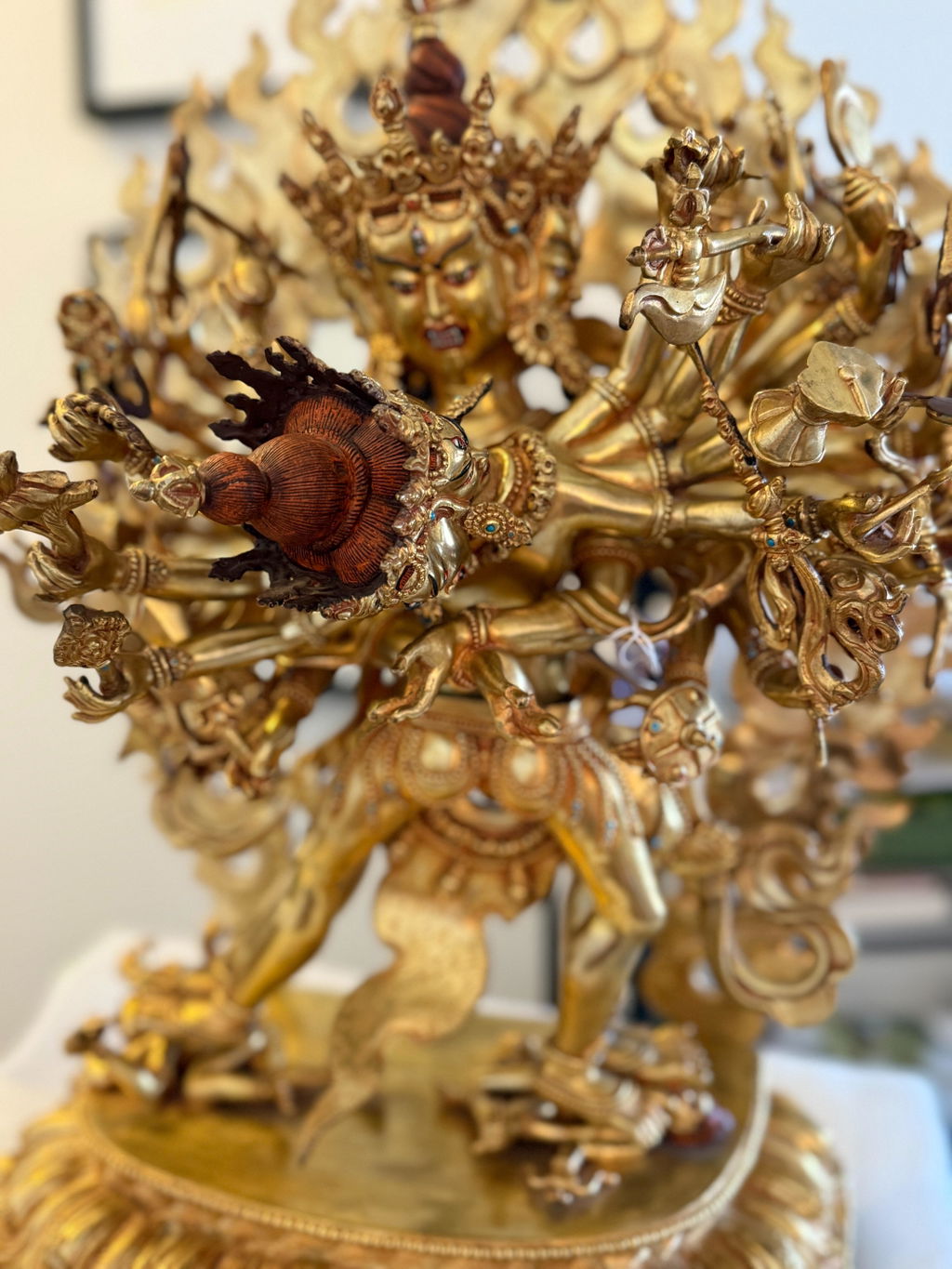
In Vajrayana traditions, Vajrapani is represented in several forms, including peaceful bodhisattva manifestations and powerful wrathful appearances. Some forms are depicted with a raised vajra, a muscular body, flaming hair, multiple eyes, and ornaments associated with wrathful deities.
His imagery became an important part of Tibetan Buddhist art and was also preserved through the artistic traditions of Nepal. Nepalese Buddhist metalwork, particularly the sculpture traditions of the Kathmandu Valley, has contributed significantly to the preservation of Himalayan Buddhist iconography.
What Does Vajrapani Symbolize?
Vajrapani represents enlightened power, spiritual strength, protection, and the determination to overcome ignorance. His artistic attributes communicate these qualities through carefully established Buddhist symbolism.
1. The Vajra: Indestructible Wisdom and Power
The vajra is Vajrapani's most recognizable attribute and the reason behind his name. Traditionally represented as a symmetrical ritual scepter, it symbolizes indestructible wisdom and the powerful clarity that cuts through ignorance.
In Vajrayana Buddhism, the vajra is also associated with the inseparability of wisdom and method. Its strong and balanced form communicates the unchanging nature of awakened awareness.
When held by Vajrapani, the vajra represents his enlightened power and his role in protecting the Dharma.
2. The Wrathful Expression: Fierce Compassion
Many traditional Vajrapani statues feature a fierce facial expression with wide-open eyes, prominent features, and exposed teeth. This wrathful appearance represents powerful enlightened activity rather than ordinary anger.
It symbolizes the determination to overcome ignorance, harmful tendencies, and obstacles that interfere with spiritual development. His expression communicates protective strength and the force of compassion directed toward liberation.
3. The Blazing Halo: Enlightened Energy
In many wrathful representations, Vajrapani is surrounded by a blazing halo or an aureole of flames. These flames symbolize the transformative power of enlightened wisdom and the removal of ignorance.
The surrounding fire also emphasizes his dynamic and powerful nature as a protector of Buddhist teachings.
4. The Serpent Ornaments: Mastery and Protection
Some wrathful forms of Vajrapani feature serpents as ornaments around the neck, arms, or body. These elements belong to particular iconographic traditions and contribute to his powerful appearance.
In these representations, serpent ornaments help communicate his mastery over harmful forces and his role as a formidable guardian. Their precise meanings can vary according to the specific form and tradition.
5. The Tiger Skin: Strength and Fearlessness
In certain wrathful representations, Vajrapani wears a tiger skin around his waist. This traditional attribute contributes to his fierce appearance and symbolizes fearlessness, strength, and the overcoming of powerful obstacles.
Not every representation of Vajrapani includes a tiger skin. His appearance depends on the particular form and iconographic tradition being represented.
Vajrapani Iconography: Understanding His Traditional Appearance
Vajrapani's appearance varies across Buddhist traditions and artistic lineages. Some sculptures depict him as a peaceful bodhisattva, while others portray him as a powerful wrathful protector.
Understanding these details helps viewers appreciate the meaning behind traditional Vajrapani sculptures.
The Vajra and Ritual Attributes
In many representations, Vajrapani holds a vajra in his raised right hand. This is his primary identifying attribute and represents indestructible wisdom and enlightened power.
Other attributes can appear depending on the specific manifestation. Certain wrathful forms may include additional ritual implements, such as a lasso, while other forms use different hand gestures and symbolic objects.
The Five-Skull Crown
Some wrathful forms of Vajrapani wear a crown made of five human skulls. In tantric Buddhist symbolism, the five skulls are associated with the transformation of the five afflictive emotions into the five wisdoms.
This crown is a distinctive feature of certain wrathful Buddhist deities and should be understood within its specific tantric iconographic context.
The Muscular Body and Warrior Posture
Wrathful Vajrapani is frequently depicted with a powerful muscular body and an active warrior-like posture. His stance communicates readiness, strength, and the energetic protection of the Dharma.
Some representations place him in a dynamic standing posture, with one leg bent and the other extended. These traditional postures contribute to the impression of movement and forceful enlightened activity.
The Lotus Throne and Pedestal
Vajrapani may be represented standing or seated upon a lotus pedestal. The lotus is an important Buddhist symbol of purity and spiritual awakening.
Its presence beneath the deity reflects the enlightened nature of the figure and provides a traditional foundation for sacred Buddhist sculpture.
Vajrapani and the Three Great Bodhisattvas
Vajrapani, Avalokiteshvara, and Manjushri are among the most recognized bodhisattvas in Mahayana and Himalayan Buddhist traditions. Together, they represent three essential qualities of enlightenment.
Vajrapani: The Power of the Buddhas
Vajrapani embodies spiritual strength and enlightened power. His symbolism encourages the determination needed to overcome ignorance and obstacles on the Buddhist path.
Avalokiteshvara: The Compassion of the Buddhas
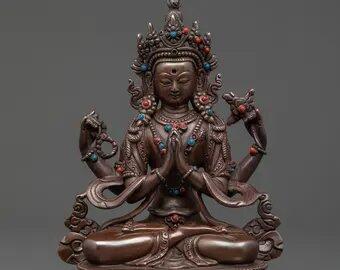
Avalokiteshvara, known as Chenrezig in Tibetan, represents the boundless compassion of all Buddhas. His teachings and imagery emphasize loving-kindness and the aspiration to relieve the suffering of all sentient beings.
Manjushri: The Wisdom of the Buddhas
Manjushri represents transcendent wisdom and insight. He is traditionally depicted holding a flaming sword that cuts through ignorance and a lotus supporting the Prajnaparamita text.
These three bodhisattvas communicate an important Buddhist principle: spiritual awakening involves the cultivation of power, compassion, and wisdom together.
Vajrapani Mantra and Its Spiritual Significance
Mantra recitation is an important practice within Vajrayana Buddhism. Vajrapani is associated with traditional mantras that invoke his enlightened qualities of strength, protection, and spiritual power.
One commonly used Vajrapani mantra is:
Om Vajrapani Hum
Another traditional form includes the additional syllable Phat:
Om Vajrapani Hum Phat
Mantra forms and pronunciation can vary among Buddhist lineages and practices. In Vajrayana traditions, mantra recitation may be combined with visualization, meditation, and guidance from a qualified spiritual teacher.
For practitioners, Vajrapani's mantra is traditionally associated with cultivating courage, strengthening spiritual determination, and overcoming obstacles. Advanced practices should be approached according to the instructions of an authorized teacher.
Vajrapani in Buddhist Art and Traditional Nepalese Sculpture
Vajrapani has inspired centuries of Buddhist artistic expression across India, Tibet, Nepal, and other Himalayan regions. His distinctive appearance presents artisans with the opportunity to represent powerful movement, intricate ornaments, symbolic attributes, and expressive facial details.
Nepal has a particularly important place in the history of Himalayan Buddhist metalwork. The traditional artistic communities of the Kathmandu Valley have preserved sophisticated sculptural techniques through generations of skilled craftsmanship.
Lost-Wax Casting and Traditional Metalworking
Traditional Buddhist metal sculptures are often created using the lost-wax casting technique, also known as investment casting. This method allows artisans to produce detailed three-dimensional figures with carefully modeled features and ornamental designs.
After casting, the sculpture may undergo additional finishing processes, including hand-chasing, engraving, polishing, gilding, and the application of decorative colors.
Gold Gilding and Decorative Details
Depending on the sculpture, artisans may use copper or copper alloy, gold gilding, silver details, acrylic colors, and semi-precious stones to create distinctive finishes.
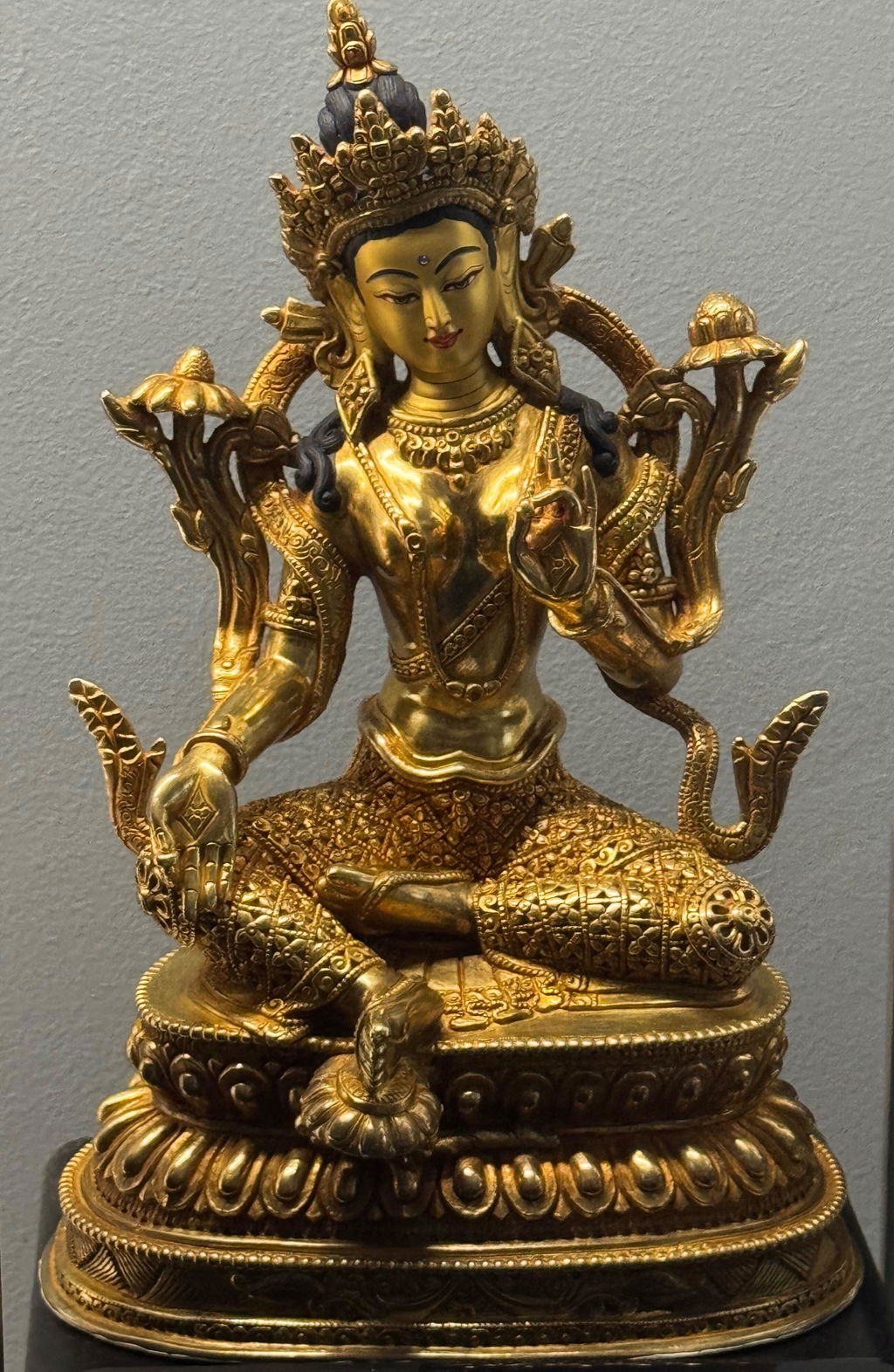
Some Vajrapani sculptures feature radiant gold surfaces, detailed ornaments, elaborate crowns, and carefully modeled flames. Others use oxidized finishes to emphasize the depth and texture of the sculptural details.
These artistic treatments contribute to the visual character of each sculpture while preserving the traditional iconography associated with Vajrapani.
What Is the Spiritual Significance of a Vajrapani Statue?
In Buddhist traditions, sacred images are more than artistic representations. They provide visual expressions of enlightened qualities and can serve as meaningful focal points for devotion, contemplation, and meditation.
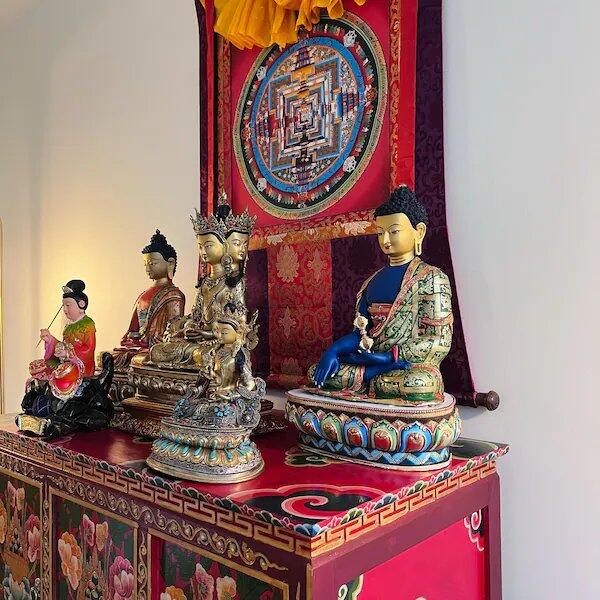
A Vajrapani statue represents the spiritual strength and protective qualities associated with the bodhisattva. Practitioners may keep his image in a Buddhist shrine, meditation room, temple, or Dharma center as part of their devotional environment.
His traditional symbolism offers several themes for reflection:
- Spiritual strength: Vajrapani represents the determination to remain committed to the Buddhist path.
- Protection of the Dharma: His imagery reflects the importance of preserving and respecting Buddhist teachings.
- Overcoming obstacles: His vajra and wrathful appearance symbolize the power to overcome ignorance and harmful tendencies.
- Enlightened activity: His dynamic form represents the active expression of awakened wisdom and compassion.
These are traditional spiritual interpretations, not guarantees of particular worldly or supernatural results. The significance of a sacred image is understood within the beliefs and practices of the Buddhist tradition.
Where Should You Place a Vajrapani Statue?
A Vajrapani statue can be placed in a clean and respectful setting dedicated to Buddhist devotion, meditation, or the appreciation of Himalayan sacred art.
Home Buddhist Shrine
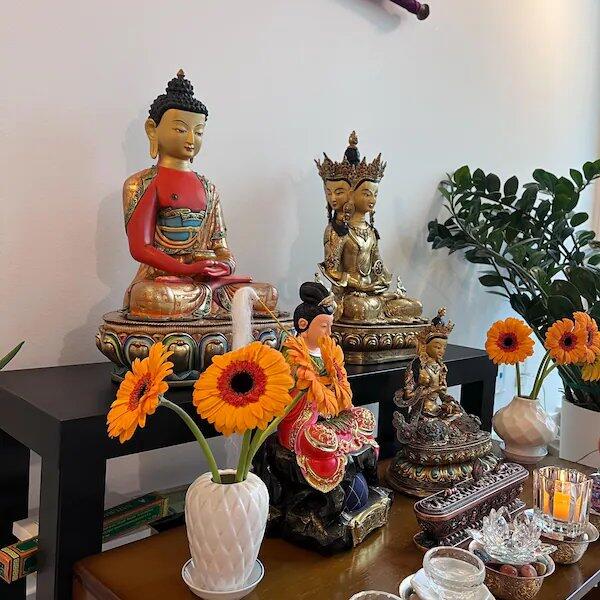
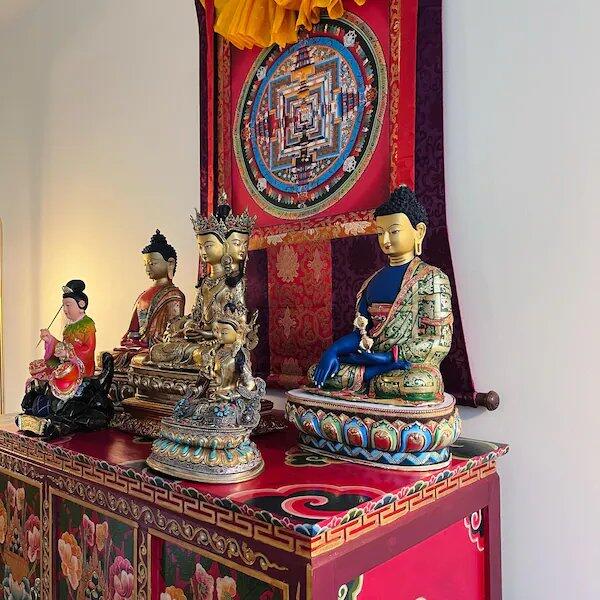
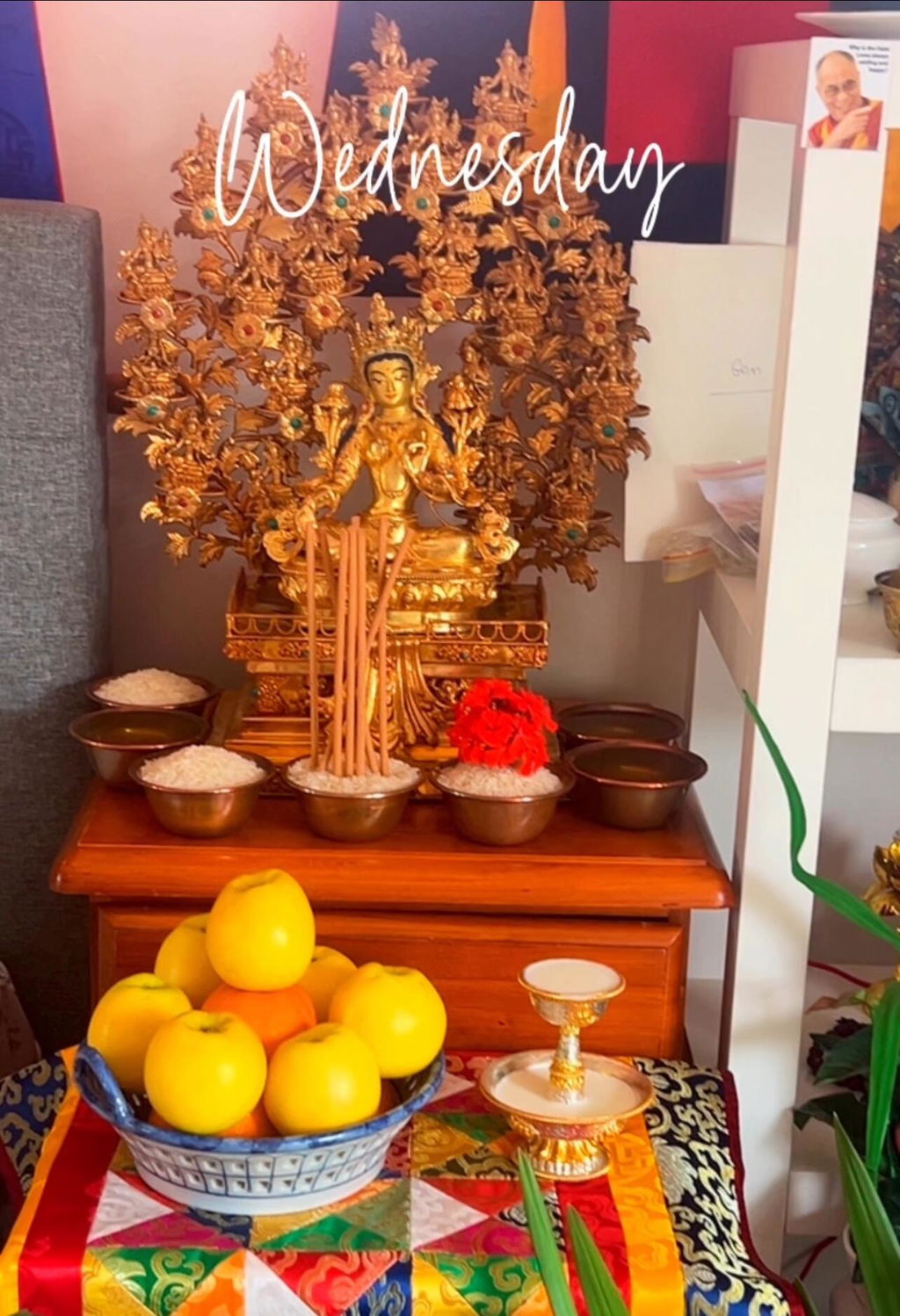
A dedicated home shrine provides a suitable setting for a Vajrapani statue. The sculpture can serve as a visual reminder of spiritual strength, determination, and the protection of Buddhist teachings.
Meditation Room
A Vajrapani image can be placed in a quiet meditation room or contemplative space. Its symbolism may encourage reflection on courage, awareness, and the importance of overcoming inner obstacles.
Temple or Dharma Center
Traditional Vajrapani sculptures are also appropriate subjects for Buddhist temples, monasteries, and Dharma centers, where sacred images form an important part of religious and cultural environments.
Practitioners should follow the customs and guidance of their own Buddhist community when arranging sacred images and performing devotional practices.
Choosing a Traditional Vajrapani Statue
When selecting a Vajrapani statue, it is worth considering its iconography, craftsmanship, materials, size, and intended setting. These details influence both the appearance and cultural significance of the sculpture.
Traditional Iconography
Look for carefully represented attributes that identify the particular Vajrapani form. These may include the vajra, wrathful facial expression, traditional ornaments, flaming halo, and symbolic posture.
Materials and Finishing
Traditional Himalayan sculptures may be made from copper or copper alloy and finished with gold gilding, silver details, painted features, or semi-precious stones. Consider the materials and finishing techniques that best suit your preference.
Artisan Craftsmanship
Traditional lost-wax casting and detailed hand-finishing are important elements of Nepalese Buddhist sculpture. Carefully modeled facial features, ornamental details, and balanced proportions reflect the knowledge and skill involved in traditional metalworking.
Size and Display Setting
Consider the available space before choosing a sculpture. A smaller Vajrapani statue may suit a personal shrine, while a larger sculpture can become a focal point in a spacious meditation room, temple, or Dharma center.
Explore the Vajrapani Statue Collection at Nidhiratna to discover traditional Buddhist sculptures inspired by this powerful bodhisattva.
Frequently Asked Questions About Vajrapani
Who is Vajrapani in Buddhism?
Vajrapani is an important bodhisattva in Mahayana and Vajrayana Buddhism who represents the spiritual power and strength of all Buddhas. He is also revered as a protector of Buddhist teachings.
What does Vajrapani mean?
Vajrapani means Holder of the Vajra. The name comes from the Sanskrit words vajra, meaning diamond or thunderbolt, and pani, meaning hand or holder.
What does Vajrapani symbolize?
Vajrapani symbolizes enlightened power, spiritual strength, protection, and the determination to overcome ignorance and obstacles on the path to enlightenment.
Why is Vajrapani depicted with a fierce expression?
His fierce expression represents wrathful enlightened activity and fierce compassion. It symbolizes the forceful overcoming of ignorance and obstacles rather than ordinary anger.
What does Vajrapani hold in his hand?
Vajrapani is traditionally identified by the vajra, a thunderbolt-shaped ritual scepter. In many representations, he holds it in his raised right hand. Other attributes vary according to his particular form.
What is the Vajrapani mantra?
One commonly used form is Om Vajrapani Hum. Another traditional version is Om Vajrapani Hum Phat. Mantra forms and practice instructions can vary among Buddhist lineages.
What is the relationship between Vajrapani, Manjushri, and Avalokiteshvara?
These three bodhisattvas represent the power, wisdom, and compassion of all Buddhas. Vajrapani represents power, Manjushri represents wisdom, and Avalokiteshvara represents compassion.
Is Vajrapani a wrathful deity?
Vajrapani appears in both peaceful and wrathful forms. His wrathful manifestations symbolize powerful enlightened activity and the protection of Buddhist teachings.
Can I keep a Vajrapani statue at home?
Yes. Many Buddhist practitioners keep Vajrapani statues in home shrines, meditation rooms, or other respectful spaces. It is appropriate to follow the customs of your Buddhist tradition when arranging sacred images.
What is the difference between Vajrapani and Vajrasattva?
Vajrapani is primarily associated with the power and protective activity of the Buddhas. Vajrasattva is particularly associated with purification and the restoration of spiritual commitments. Although their names and some symbolic attributes are related to the vajra, they represent distinct Buddhist figures.
The Enduring Significance of Vajrapani
Vajrapani remains one of the most important figures in Mahayana and Vajrayana Buddhist traditions. His identity as the Holder of the Vajra reflects the indestructible power of awakened wisdom and the determination required to overcome ignorance.
Through his peaceful and wrathful manifestations, Vajrapani communicates the importance of spiritual strength, protection, and enlightened activity. His relationship with Avalokiteshvara and Manjushri also expresses the essential connection between power, compassion, and wisdom on the path to enlightenment.
His influence extends beyond Buddhist philosophy into the remarkable artistic heritage of the Himalayan region. Traditional sculptures, paintings, and ritual objects preserve his symbolism through generations of religious devotion and skilled craftsmanship.
At Nidhiratna, we celebrate this enduring heritage through traditional Nepalese Buddhist statues and ritual objects that honor the artistic knowledge and cultural traditions of Himalayan Buddhist communities. Each sculpture offers an opportunity to appreciate the symbolism, craftsmanship, and spiritual history represented in traditional Buddhist art.
Explore Nidhiratna's Vajrapani Statue Collection to discover traditional representations of this powerful bodhisattva and the enduring artistry of Himalayan Buddhist sculpture.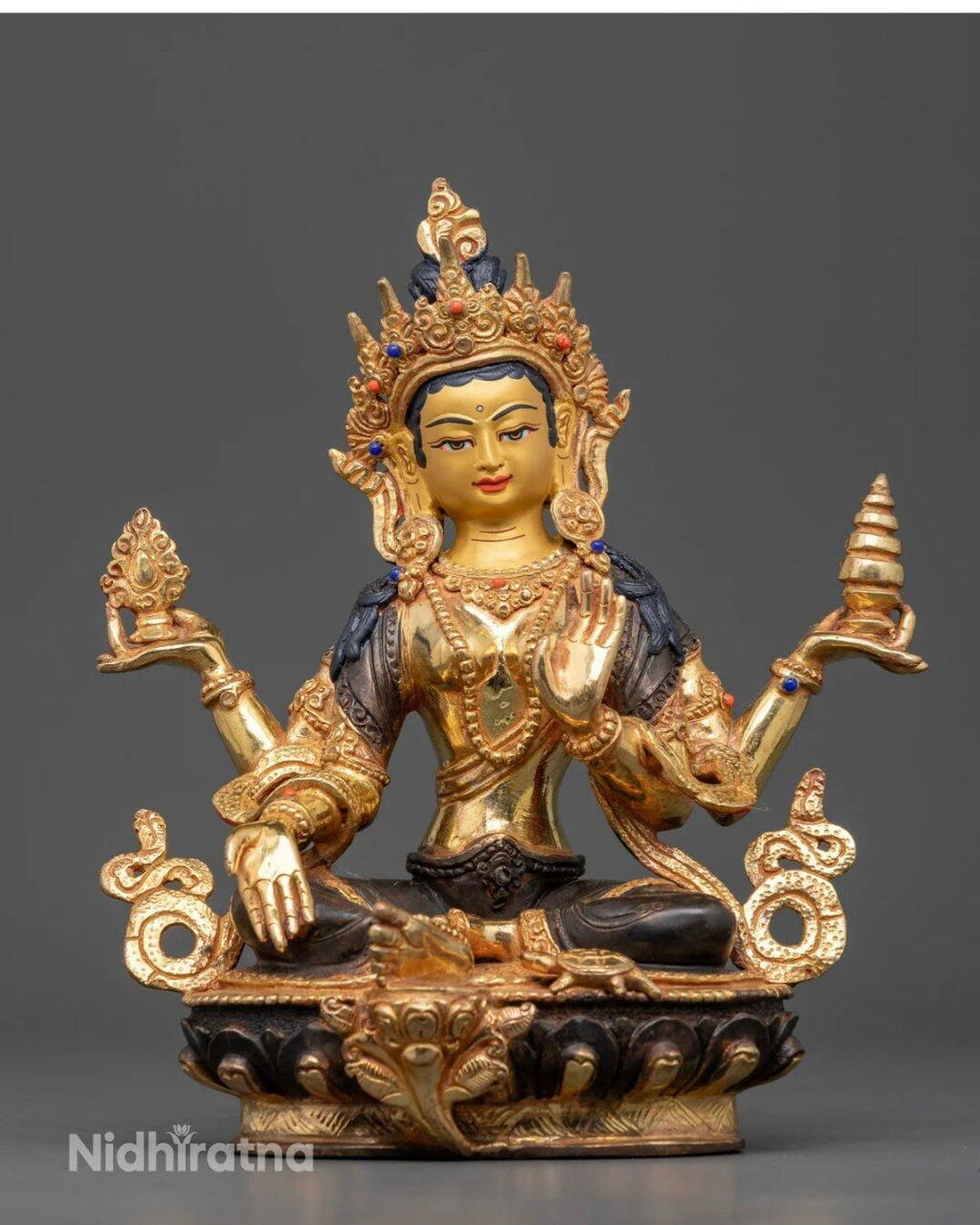
Share:
Vajrayana Buddhism