

Akasha Vajrayogini: Meaning and Symbolism in Tibetan Buddhism

Akasha Vajrayogini, also known as the Flying Vajrayoginī, holds immense importance and reverence in Tantric Buddhism. This powerful feminine deity represents the highest realization of the awakened mind beyond limitation, beyond conceptual thought, and beyond ordinary perception. In Sanskrit, she is known as Akāśa Vajrayoginī, where “Akasha” refers to infinite space, symbolizing boundless awareness and the nature of ultimate reality.
Within Vajrayana Buddhism, Akasha Vajrayogini is not only a meditational deity but also a profound expression of spiritual transformation, embodying wisdom, freedom, and the dynamic energy of enlightenment.
The Essence of Akasha Vajrayogini

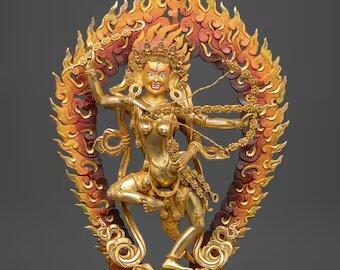
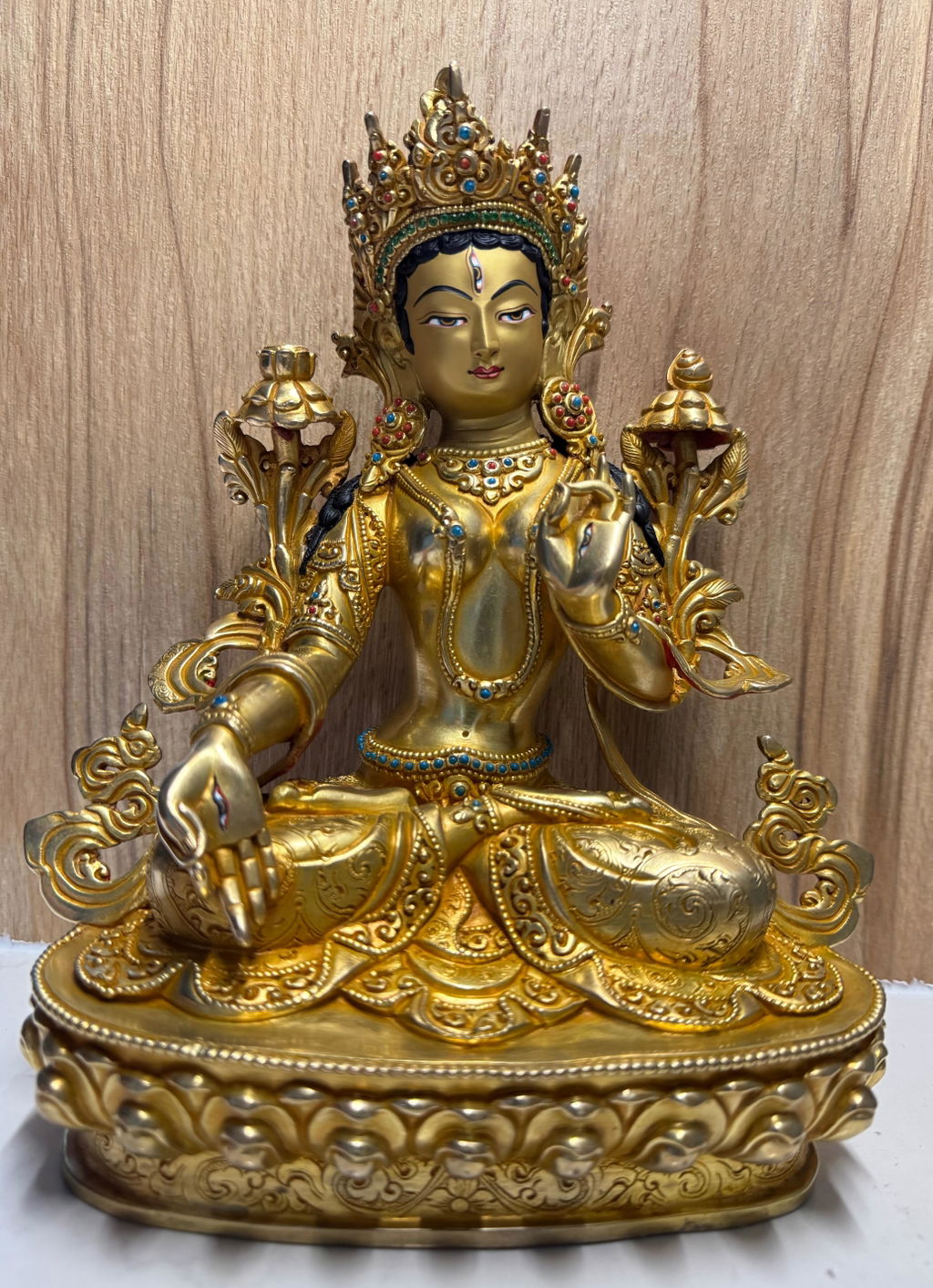
Click Here To View Our Flying Vajrayogini Statue
Akasha Vajrayogini represents both the master’s ultimate knowledge and the direct experience of absolute freedom. She embodies the awakened mind that transcends all limits, dualities, and conceptual boundaries.
The term Akasha signifies space, the vast, unconditioned expanse in which all phenomena arise and dissolve. In this context, Akasha Vajrayogini symbolizes the realization that reality itself is open, luminous, and without fixed form. She is often regarded as the embodiment of enlightened awareness in its most expansive state, where wisdom is not static but alive, dynamic, and continuously unfolding.
The Flying Vajrayoginī: Symbol of Liberation
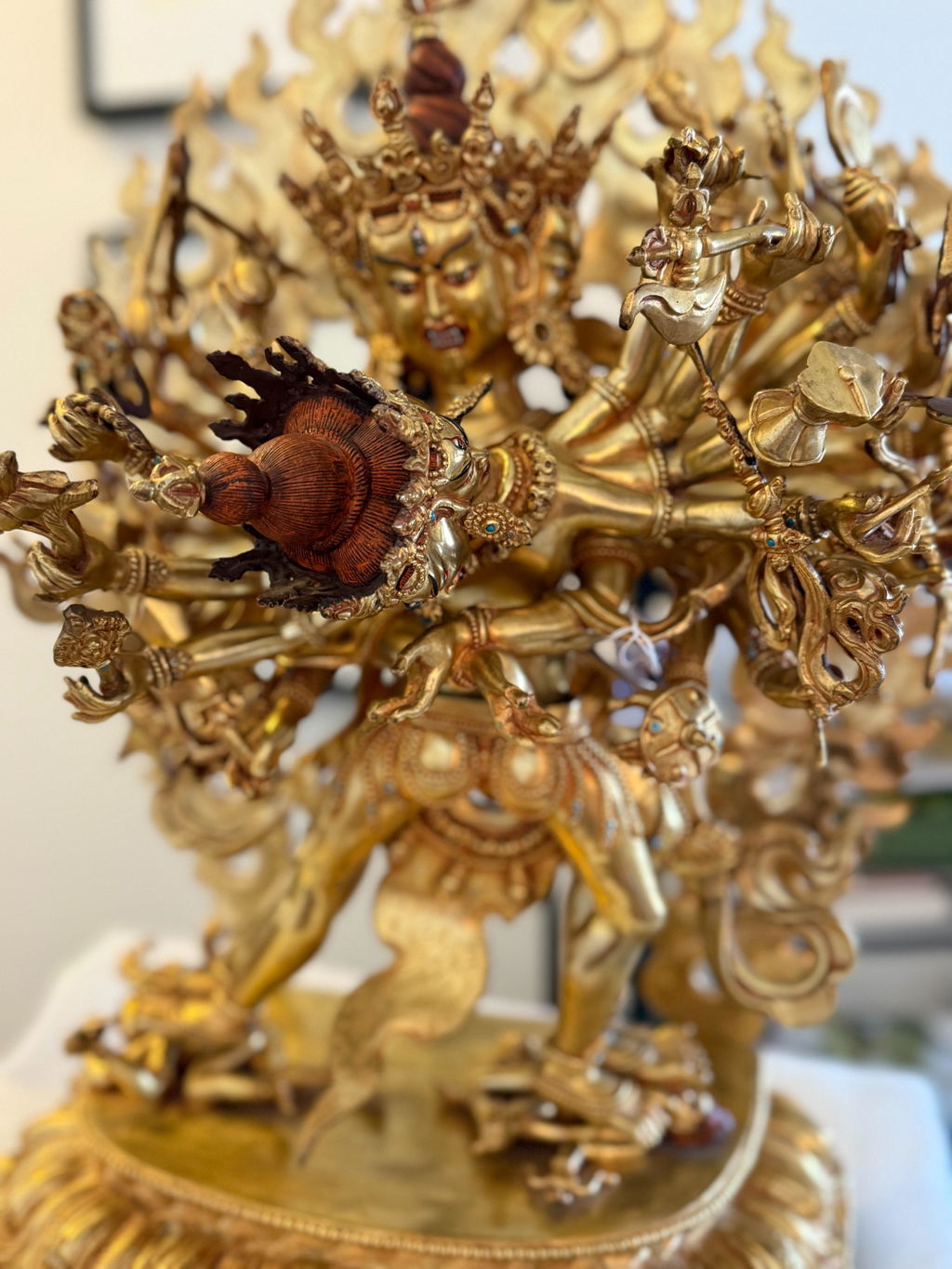
The Flying Vajrayoginī is deeply revered in Tantric Buddhist traditions and is traditionally depicted as a radiant red goddess moving through the sky, expressing complete spiritual freedom.
Her flight through space symbolizes the vastness of awakened consciousness, liberation from worldly attachment, the boundless nature of enlightened awareness, and the dissolution of all mental limitations.
Unlike peaceful buddhas who are often shown seated in meditation, Vajrayoginī appears dynamic, dancing, and in motion. This contrast highlights an essential tantric principle: enlightenment is not only stillness, but also transformative energy in expression. Her presence in the sky reflects the realization that mind itself is vast, luminous, and free from confinement.
Symbolism of Akasha Vajrayogini
Every aspect of Akasha Vajrayogini’s form carries deep symbolic meaning within Vajrayana Buddhism.

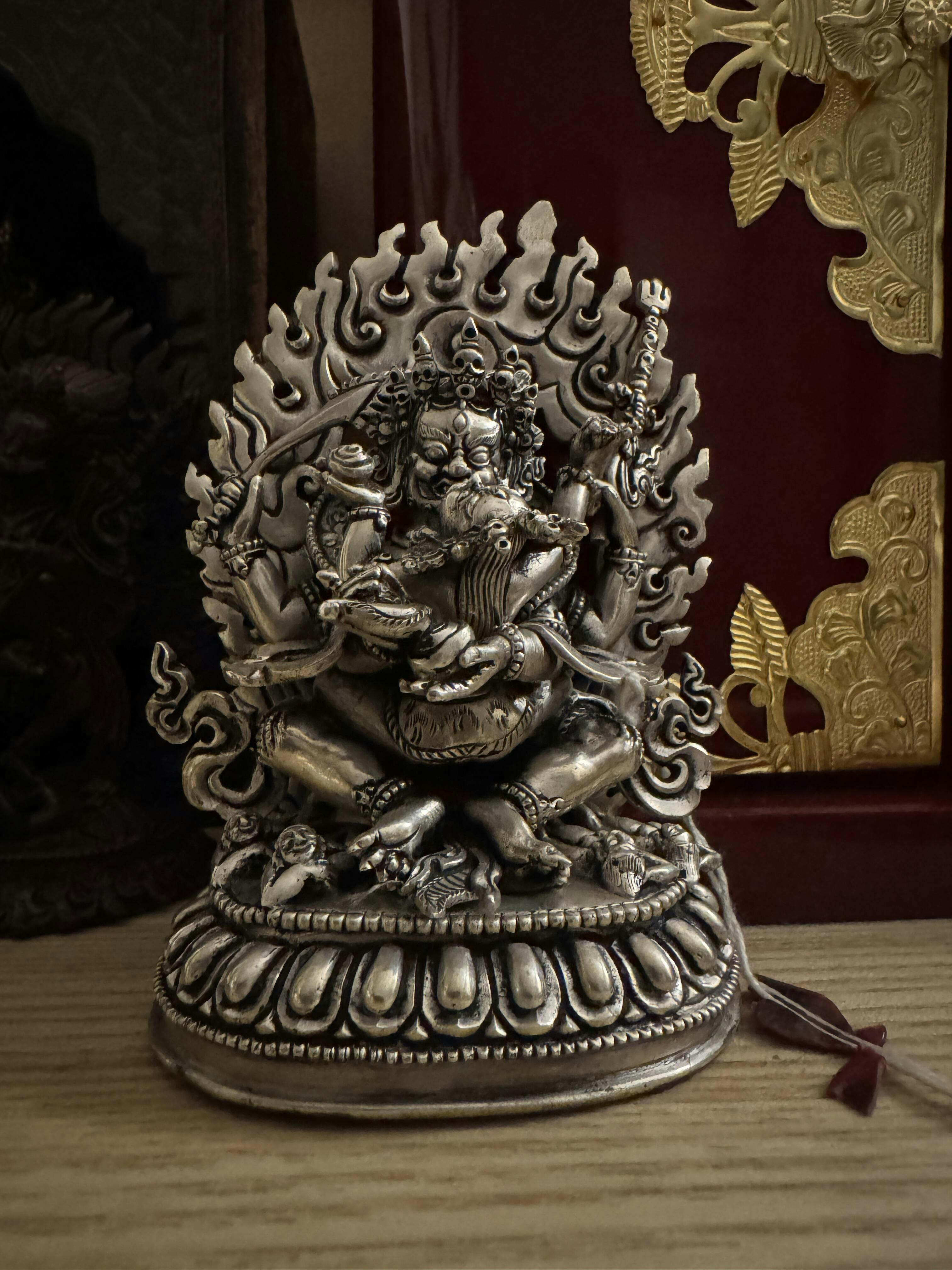
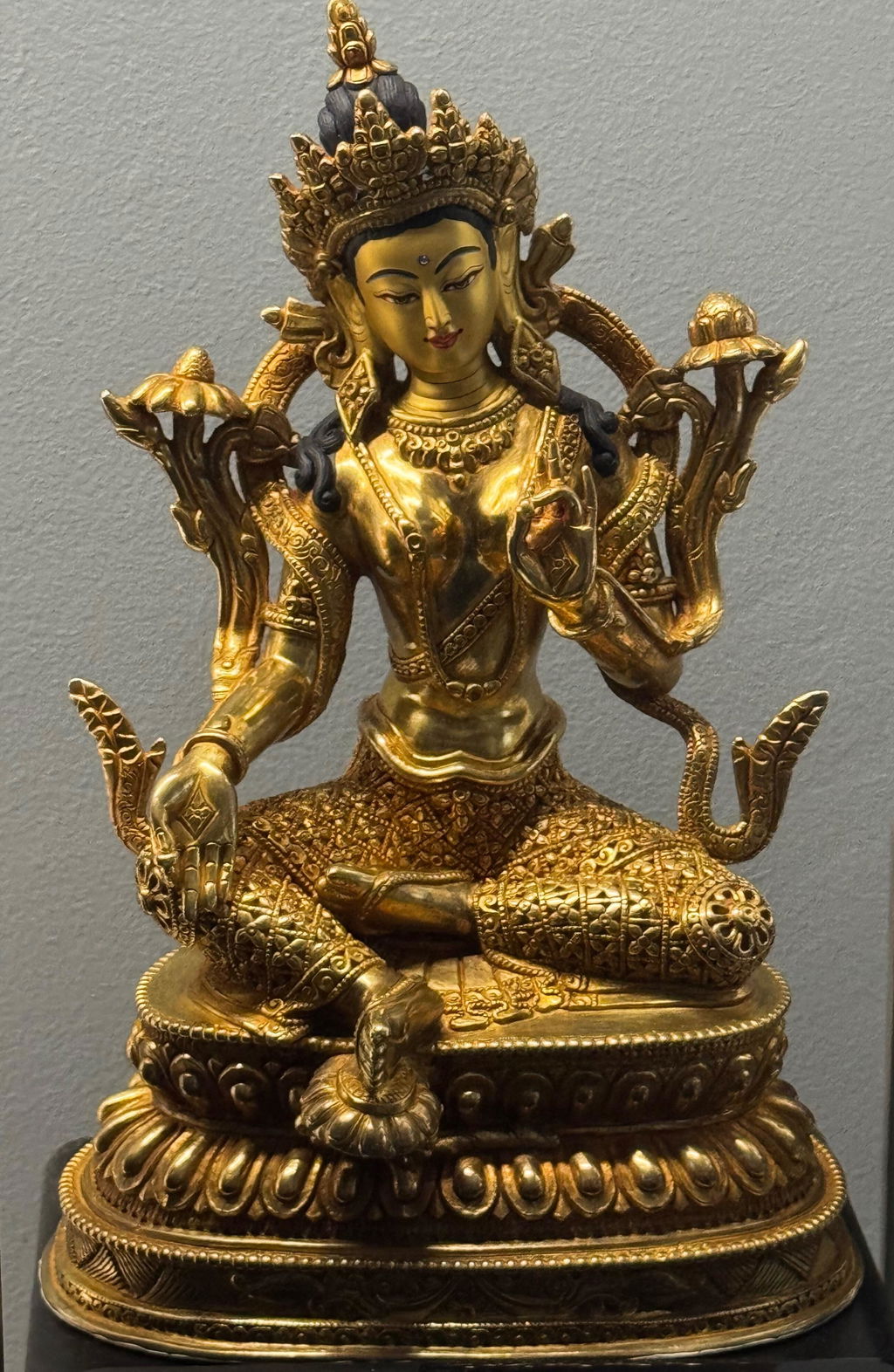
Click Here To View Our Flying Vajrayogini Mini Statue
Red Radiant Form
Her deep red color symbolizes the transmutation of desire into wisdom. Rather than rejecting passion, Vajrayoginī transforms it into enlightened awareness.
Curved Knife (Kartika)
The curved knife represents the cutting of ignorance, ego, and illusion, symbolizing sharp insight that removes delusion at its root.
Skull Cup (Kapala)
The skull cup represents the transformation of attachment and negativity into the nectar of realization and wisdom.
Sky Movement and Flight
Her movement through the sky represents the freedom of mind beyond all conceptual boundaries, emphasizing the experience of limitless awareness.
Dancing Posture
The dynamic dance symbolizes spontaneous wisdom, where enlightenment is expressed as living energy rather than static stillness.
Akasha Vajrayogini in Tantric Buddhism
In Tantric Buddhism, Akasha Vajrayogini is revered as a supreme embodiment of wisdom and liberation. She represents the union of emptiness and bliss, a central realization in Vajrayana practice.
Her significance includes:
- Direct realization of the ultimate truth
- Transformation of desire into wisdom
- Dissolution of ego-based perception
- Experience of non-dual awareness
Through meditation, mantra, and visualization, practitioners engage with her form to gradually dissolve ordinary perception and awaken to the luminous nature of mind.
The Newar Buddhist Tradition: Flying Vajrayoginī of Mahaboudha
In Nepal, particularly among Newar Buddhists, Akasha Vajrayogini is deeply venerated as the Flying Vajrayoginī of Mahaboudha. She is regarded as a sacred and esoteric goddess associated with powerful Tantric devotion and spiritual protection.
Within this tradition, she is honored not only as a meditational deity but also as a living presence of awakened energy. The Newar community celebrates her as a source of peaceful devotion, tantric spiritual power, and ritual transformation and blessing.
Her worship in the Kathmandu Valley reflects a unique blend of esoteric Buddhist practice and living cultural devotion, preserving centuries-old tantric traditions.
Spiritual Significance of Akasha Vajrayogini
The spiritual importance of Akasha Vajrayogini extends far beyond symbolic representation. She serves as a direct guide toward liberation and inner realization.
Her teachings reveal that reality is fundamentally open and spacious, attachment and ignorance are the roots of suffering, enlightenment is already present within awareness, and freedom arises through direct experiential realization.
By engaging with her form in meditation or contemplation, practitioners are guided toward dissolving illusion and recognizing the vast, luminous nature of the mind.
Conclusion
Akasha Vajrayogini: Meaning and Symbolism in Tibetan Buddhism reveals a profound path of transformation rooted in wisdom, freedom, and awakened awareness. As the Flying Vajrayoginī, she embodies the dynamic expression of enlightenment as radiant, powerful, and beyond all limitation.
Her presence in Tantric Buddhism, especially within Nepal’s Newar tradition, reflects her deep significance as both a meditational deity and a symbol of ultimate liberation.
Through this sky-dancing expression of wisdom, Akasha Vajrayogini continues to reveal a timeless truth: the nature of the mind is vast like space, luminous, open, and completely free.


Share:
Sariputra & Maudgalyayana: Two Great Disciples of Buddha
Saga Dawa 2026: The Spiritual Meaning, Sacred Rituals & Power of Buddhism's Holiest Month