

Dü Sum Sangye: Understanding the Buddhas of the Three Times
Dü Sum Sangye, also written as Dus Sum Sangye or Düsum Sangye, is a Tibetan Buddhist expression meaning “the Buddhas of the Three Times.” The three times refer to the past, present, and future, expressing the continuity of awakened wisdom across time.
In Tibetan Buddhist teachings, the phrase can refer broadly to all Buddhas of the past, present, and future. In a common traditional representation, the three are represented by Dipankara Buddha of the past, Shakyamuni Buddha of the present, and Maitreya Buddha of the future.
The expression also has a particularly important meaning in Vajrayana Buddhism through the famous prayer beginning “Dü Sum Sangye Guru Rinpoche.” In this devotional prayer, Guru Rinpoche, also known as Padmasambhava, is praised as the embodiment of the Buddhas of the Three Times.
What Does Dü Sum Sangye Mean?
The Tibetan phrase དུས་གསུམ་སངས་རྒྱས་ (dus gsum sangs rgyas) can be understood as:
- Dü (dus) – time
- Sum (gsum) – three
- Sangye (sangs rgyas) – Buddha or awakened one
Together, Dü Sum Sangye refers to the Buddhas throughout the three periods of time: past, present, and future.
Rather than referring only to one historical Buddha, the expression points toward a much broader Buddhist understanding of awakening. Buddhahood is presented as something that extends beyond one individual and one historical period.
Who Are the Buddhas of the Three Times?
A common traditional presentation associates three Buddhas with the three periods of time.
Dipankara Buddha: The Buddha of the Past
Dipankara Buddha, known in Tibetan as Marme Dzé, is traditionally associated with the Buddhas of the past.
Dipankara appears prominently in Buddhist accounts concerning Shakyamuni Buddha's previous lives. In traditional stories, Dipankara is associated with the prediction that the bodhisattva who would eventually become Shakyamuni Buddha would attain Buddhahood.
Shakyamuni Buddha: The Buddha of the Present
Shakyamuni Buddha, Siddhartha Gautama, is the historical Buddha whose teachings form the foundation of Buddhism practiced today.
Born in the region of ancient Lumbini, Shakyamuni pursued the path to awakening, attained enlightenment, and taught the Dharma for the benefit of countless beings.
Within the Three Times, Shakyamuni represents the present Buddha, making his teachings especially important for practitioners living in the current age.
Maitreya Buddha: The Buddha of the Future
Maitreya, known in Tibetan as Jampa, is traditionally regarded as the Buddha who will appear in the future.
He therefore represents the future Buddha within this threefold presentation.
Together, Dipamkara, Shakyamuni, and Maitreya create a powerful symbolic representation of Buddhahood across time.
Why Are the Three Times Important in Buddhism?
The idea of past, present, and future is more than a simple division of history.
The past represents the lineage of teachings and awakened beings who came before us. The present represents the opportunity to encounter and practice the Dharma. The future represents the continuation of enlightened activity.
Dü Sum Sangye can therefore be contemplated as a reminder that the path to awakening does not belong to only one moment in history.
What has been taught in the past can be practiced in the present, and what is cultivated in the present can influence what unfolds in the future.
Dü Sum Sangye and Guru Rinpoche
One of the most important contexts for understanding this expression is the famous Tibetan prayer beginning:
“Dü Sum Sangye Guru Rinpoche.”
The opening can be understood as “Buddha of the Three Times, Guru Rinpoche.”
Guru Rinpoche, also known as Padmasambhava, holds an especially important place in Tibetan Buddhism. He is revered as a great Vajrayana master and is closely associated with the transmission and establishment of Buddhist teachings in Tibet.
In the Dü Sum Sangye prayer, Guru Rinpoche is addressed as embodying the awakened qualities of the Buddhas of the Three Times.
This is why the phrase Dü Sum Sangye Guru Rinpoche should not automatically be interpreted as simply naming one of the three historical Buddhas. Its devotional meaning is deeper.
The Meaning of Dü Sum Sangye Guru Rinpoche
The title expresses the inseparability of Guru Rinpoche from awakened wisdom.
The past connects practitioners with the lineage of Buddhas and teachers who transmitted the Dharma.
The present represents the opportunity to practice those teachings now.
The future represents the continuation of enlightened activity and the aspiration for awakening.
In this context, Guru Rinpoche becomes a powerful focus for devotion, reminding practitioners of the continuity of Buddhist wisdom throughout the three times.
Dü Sum Sangye in Tibetan Buddhist Art
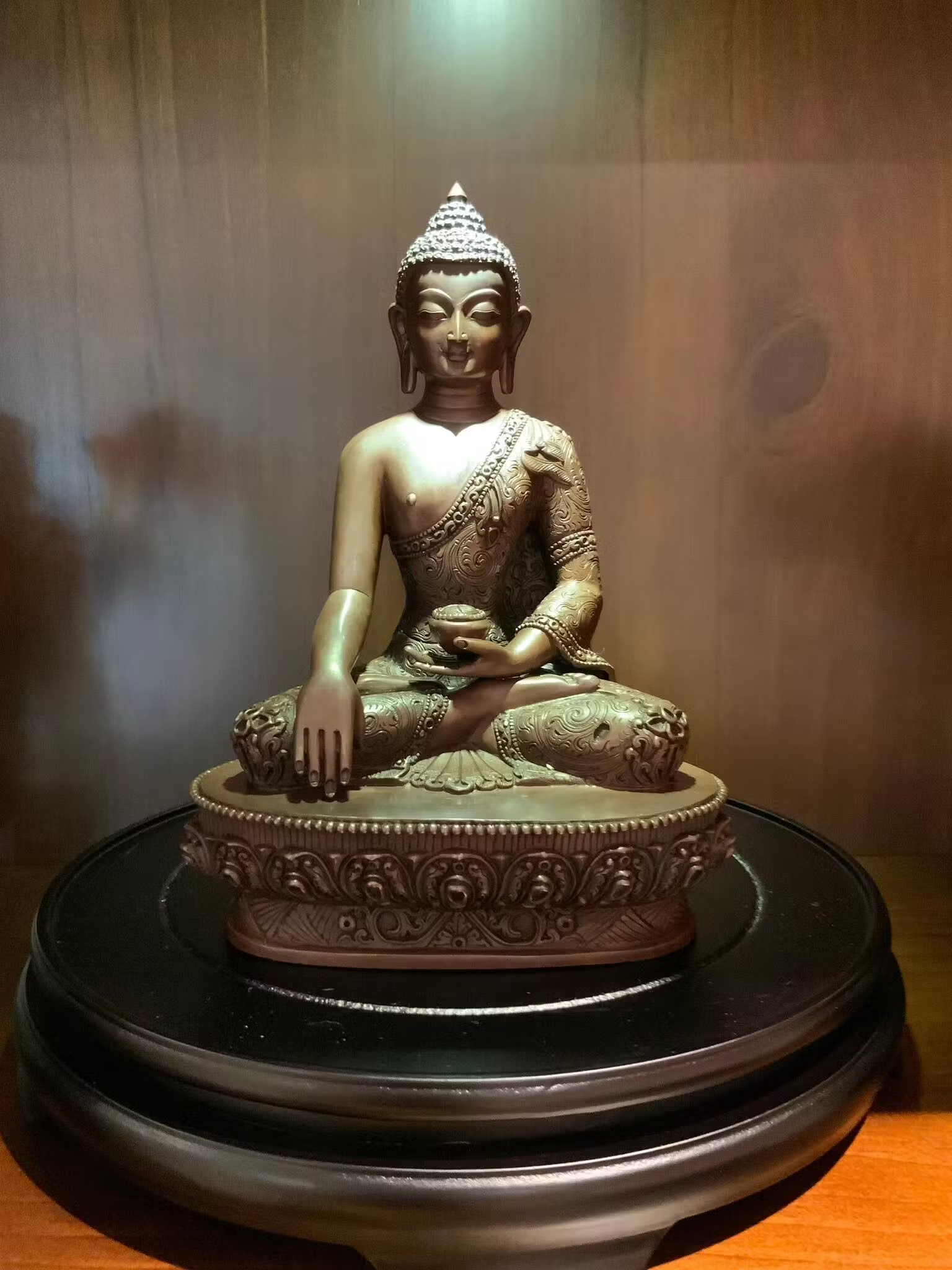
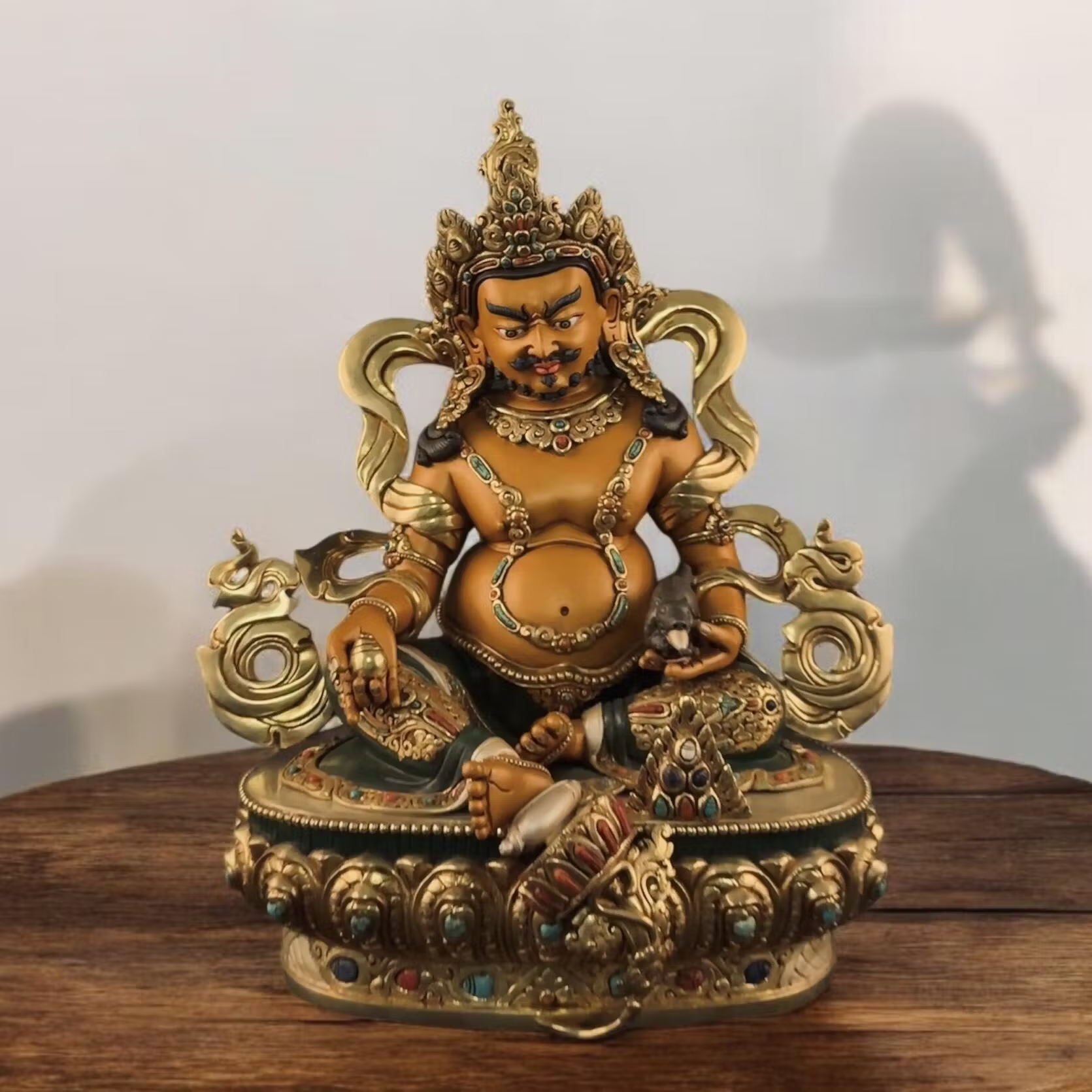
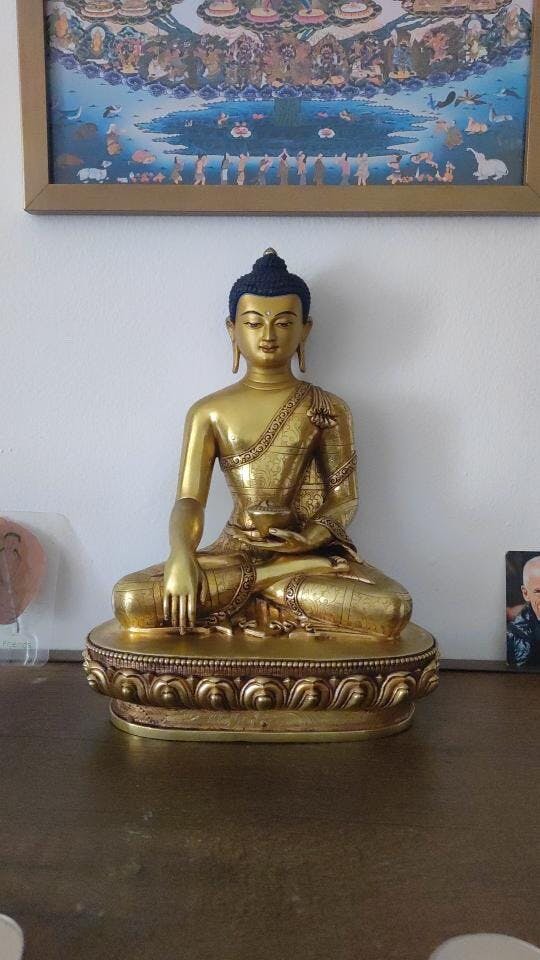
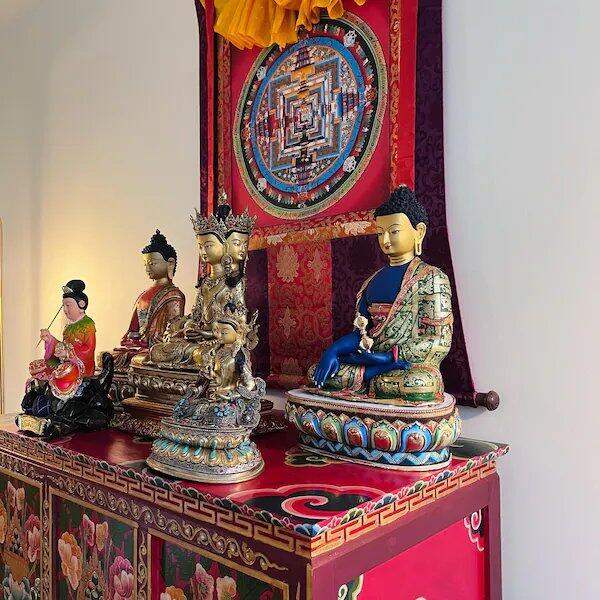
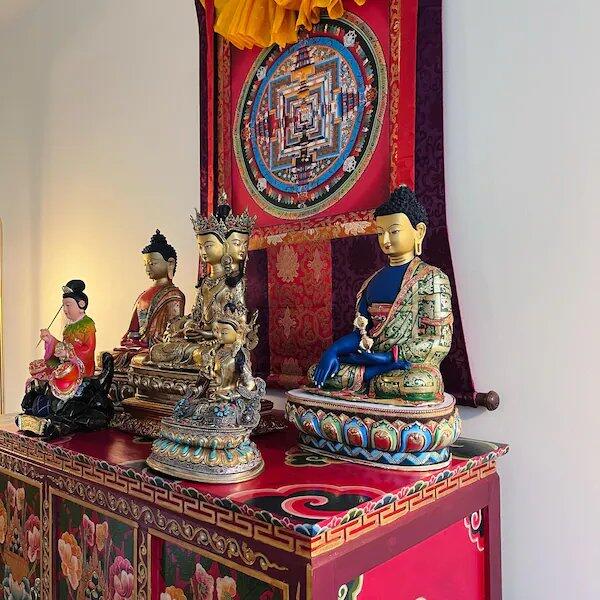
The Buddhas of the Three Times are also represented through Buddhist sculpture, thangka painting, murals, and shrine arrangements.
A traditional Three Buddhas composition may depict Dipankara, Shakyamuni, and Maitreya together. Their arrangement visually expresses the continuity of Buddhahood across the past, present, and future.
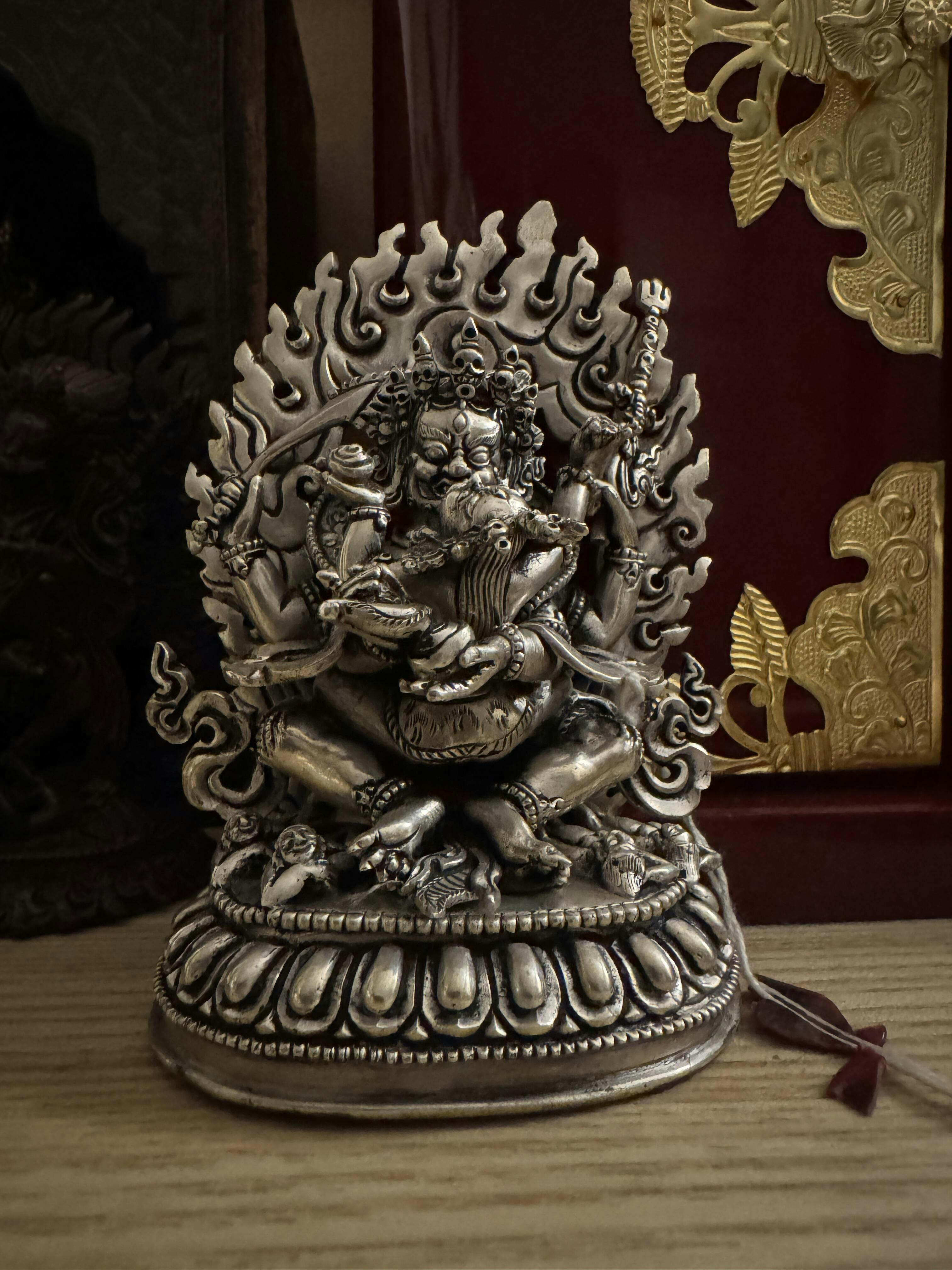
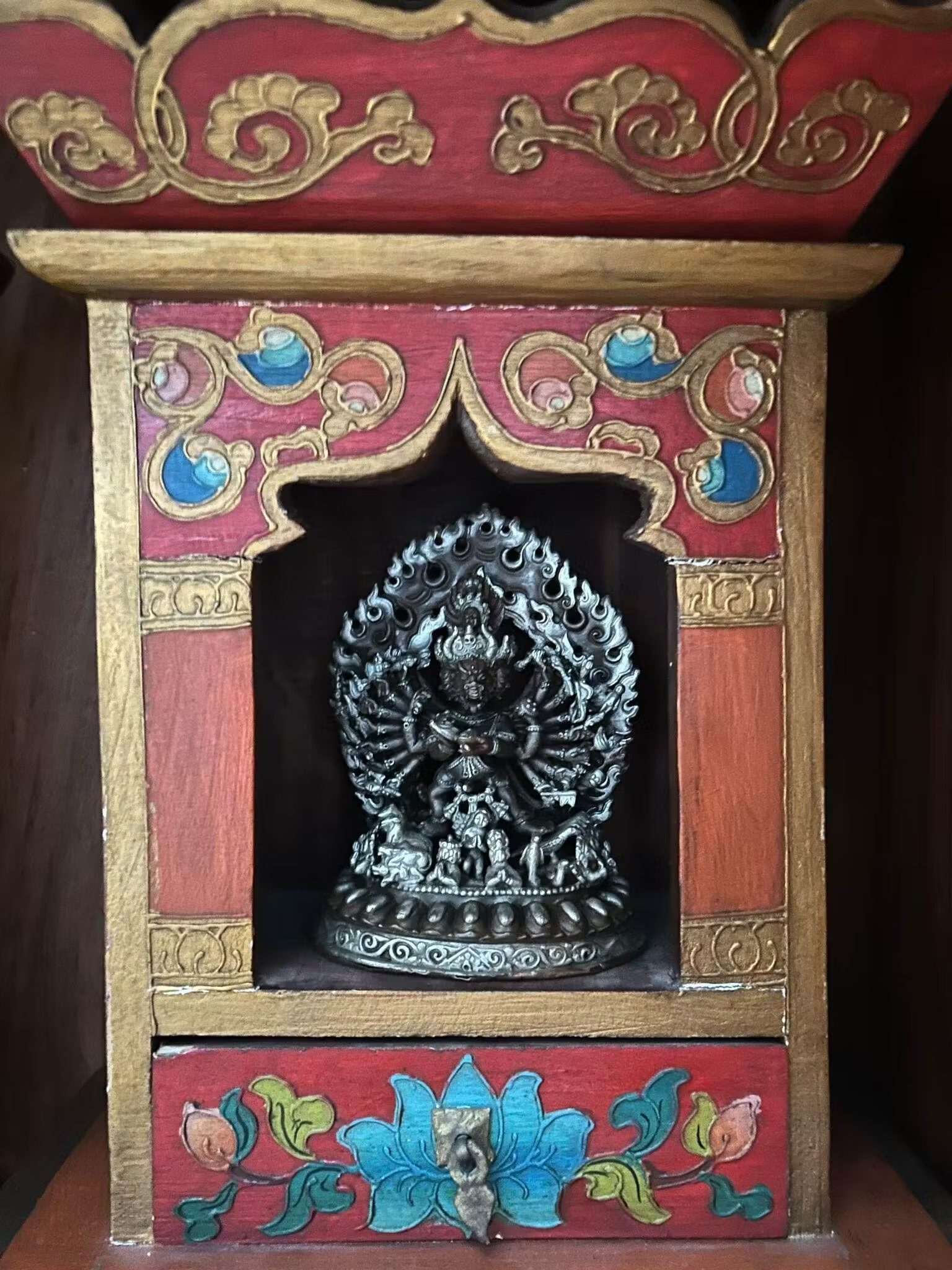
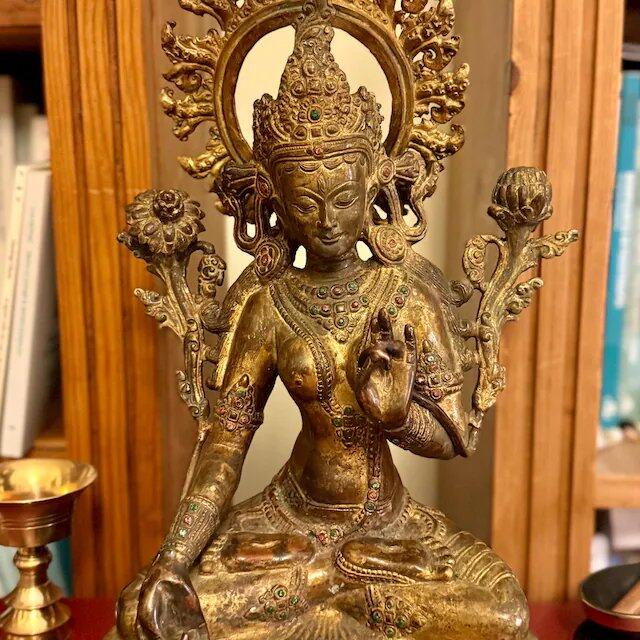
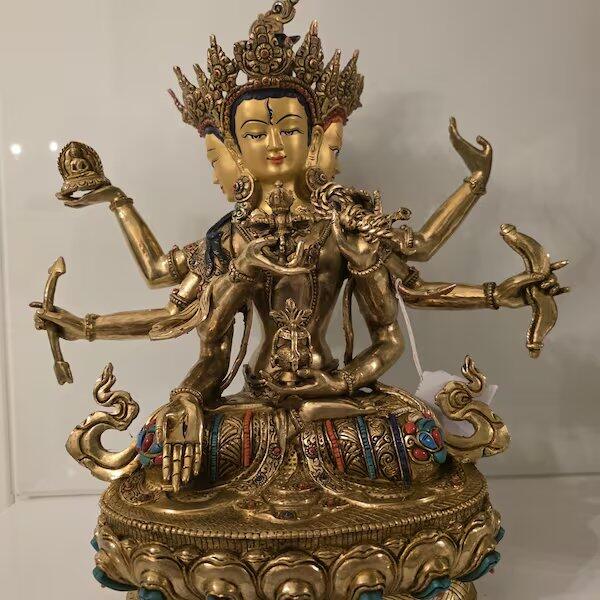
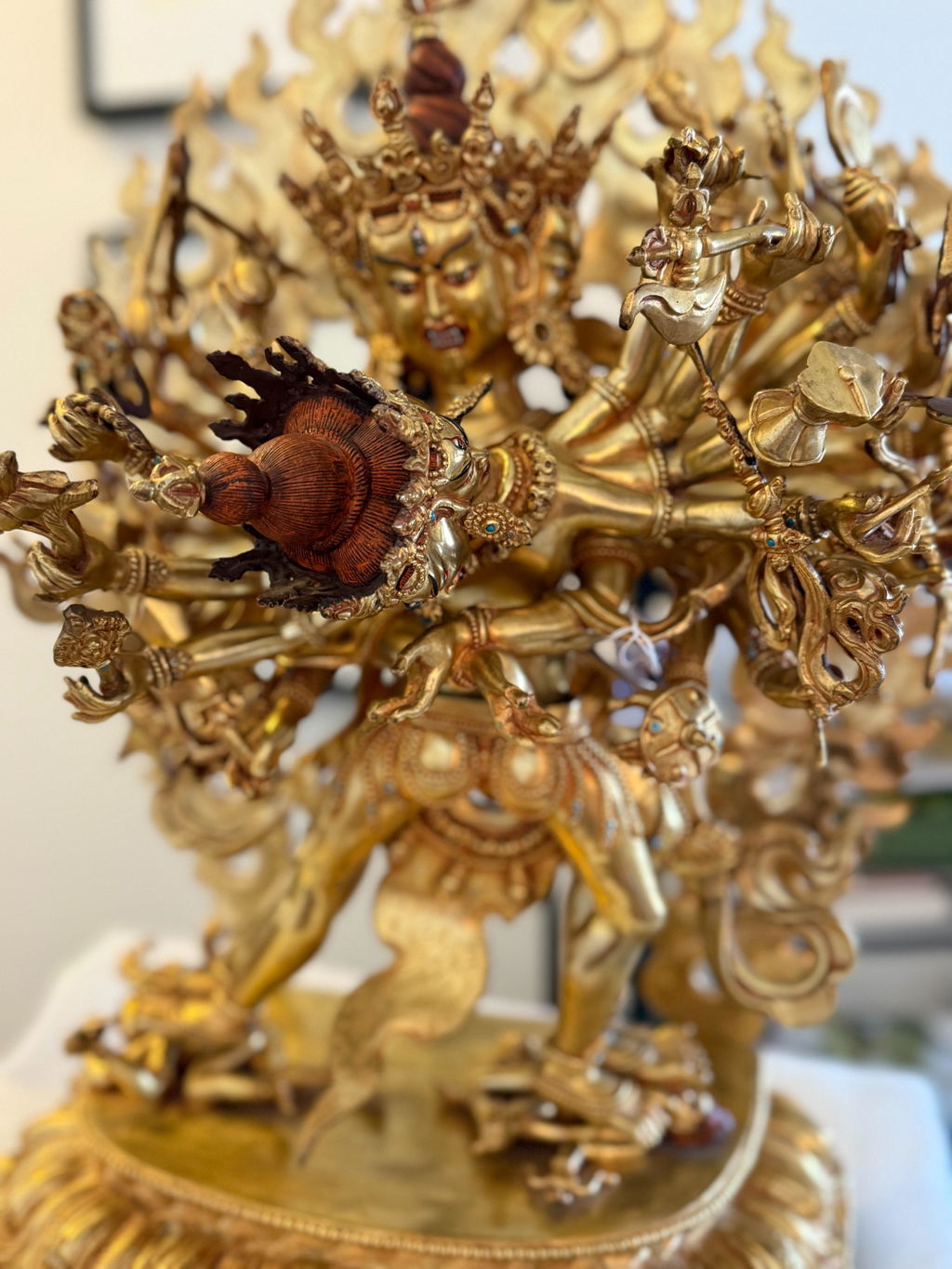
In Himalayan Buddhist art, these sacred figures are created according to established iconographic traditions. Their hand gestures, posture, ornaments, lotus seats, attributes, and expressions can all carry symbolic meaning.
At Nidhiratna, we view this artistic tradition as more than decorative Himalayan art. Nepalese Buddhist sculpture preserves a living connection between spiritual practice, sacred iconography, and the centuries-old artistic heritage of the Kathmandu Valley.
Our collection of Buddhist statues reflects this relationship between traditional Newari craftsmanship and the devotional meaning carried by each sacred figure.
Why Buddhist Statues Matter in Practice
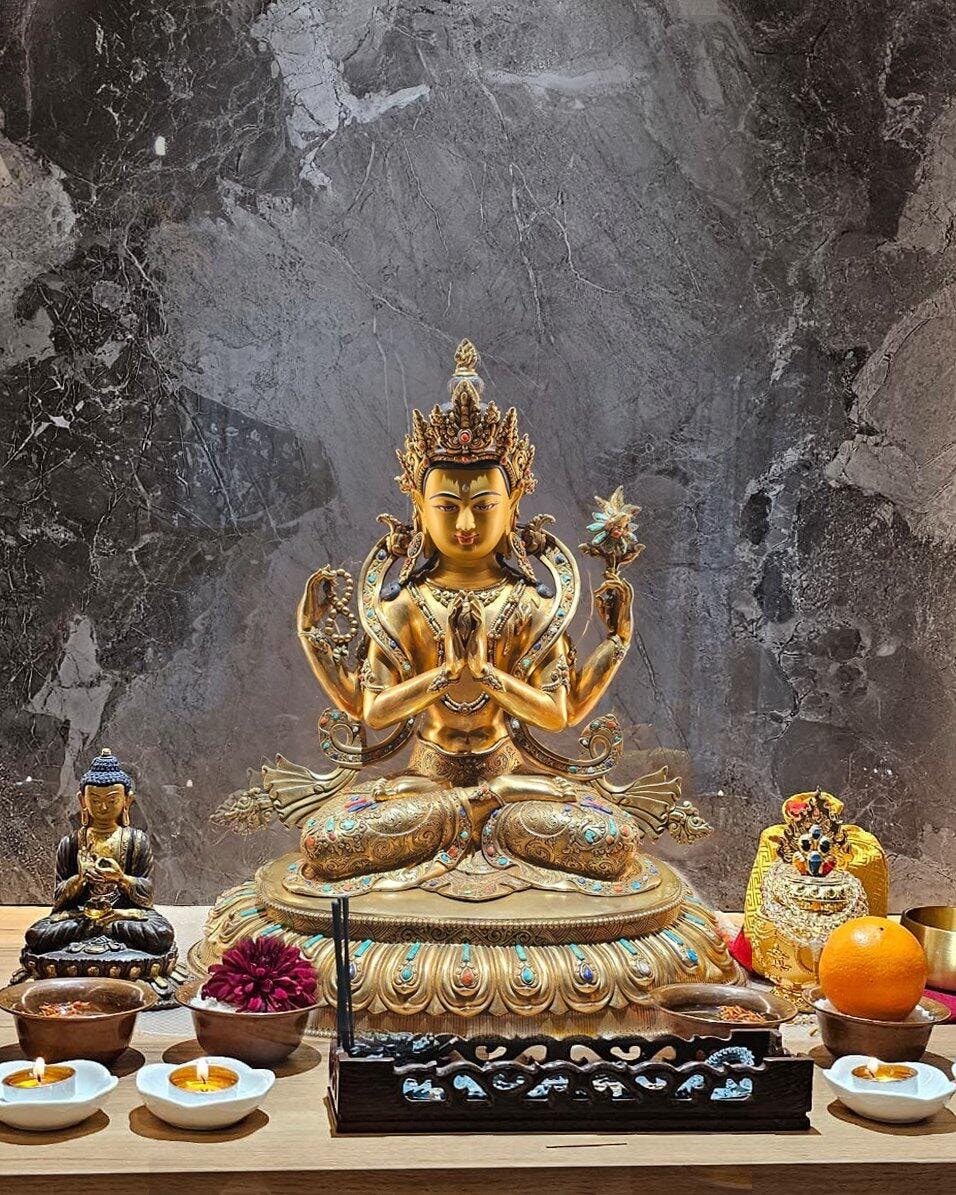
A Buddhist statue can serve as a visual support for meditation, devotion, contemplation, and remembrance.
For a practitioner contemplating Dü Sum Sangye, an image of the Three Buddhas can provide a physical representation of the relationship between past, present, and future Buddhahood.
Likewise, an image of Guru Rinpoche can serve as a meaningful focal point for practitioners connected with Padmasambhava practice and the Dü Sum Sangye supplication.
The purpose of a sacred Buddhist image is therefore not limited to its artistic appearance. Its iconography can remind the practitioner of the qualities represented by the figure and encourage a deeper connection with the Dharma.
Dü Sum Sangye and Nepalese Buddhist Art
Nepal has played an important role in the development and preservation of Himalayan Buddhist art.
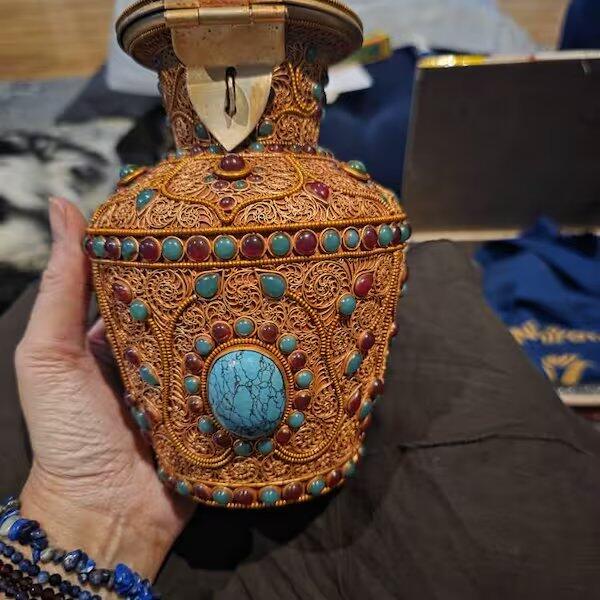
The Newar artistic tradition of the Kathmandu Valley is particularly renowned for its sophisticated metal sculpture, intricate ornamentation, repoussé work, stone setting, gilding, and traditional lost-wax casting.
These techniques have been passed through generations of Newari artisans.
For Nidhiratna, presenting Buddhist statues is closely connected with preserving this cultural heritage. Each statue represents not only a sacred subject but also an artistic tradition rooted in Nepal's history.
This is particularly meaningful when viewing representations of Buddhas and bodhisattvas associated with the three times. The physical artwork becomes a meeting point between ancient Buddhist symbolism and Nepalese craftsmanship.
How to Place a Dü Sum Sangye Statue
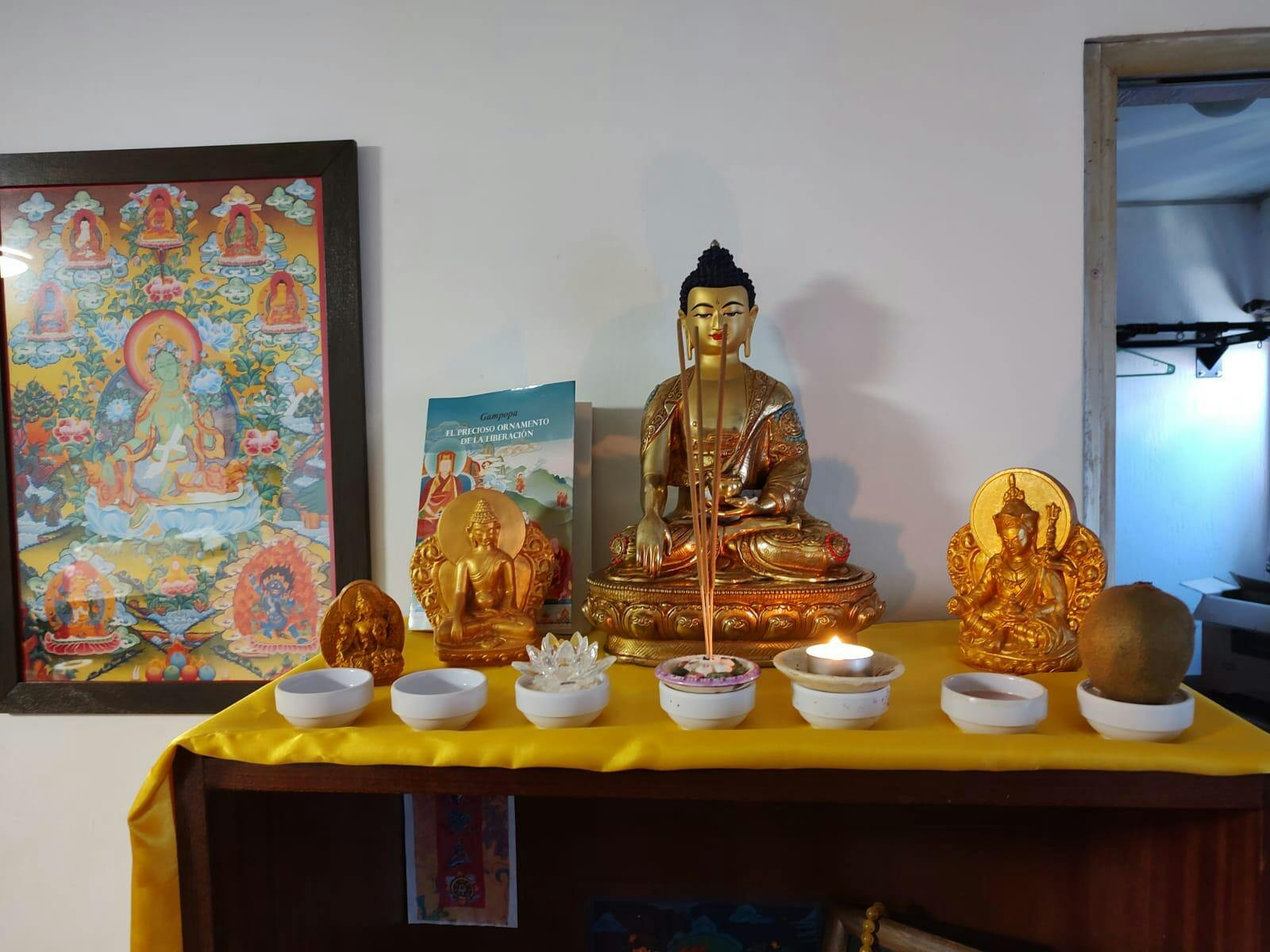
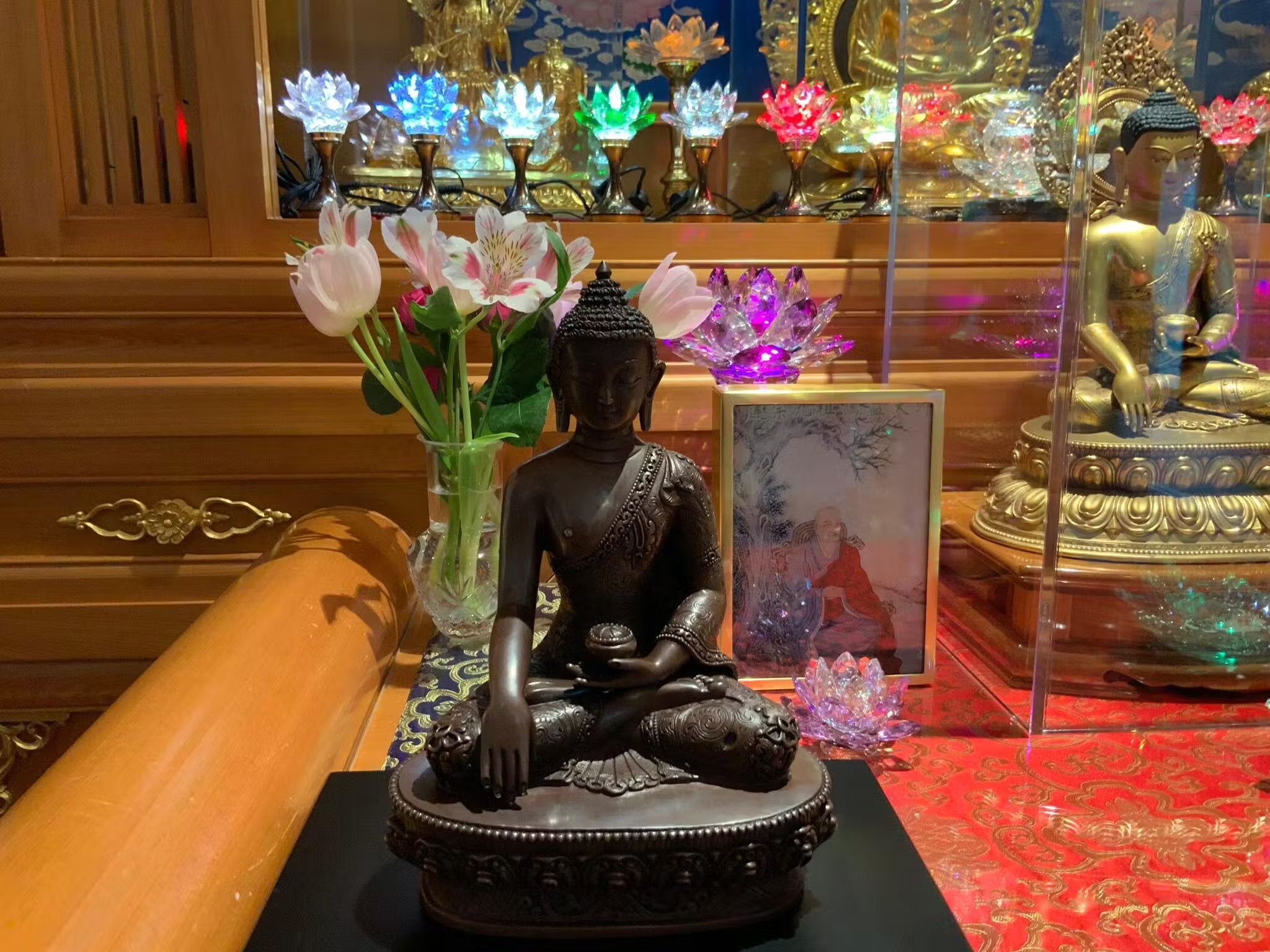
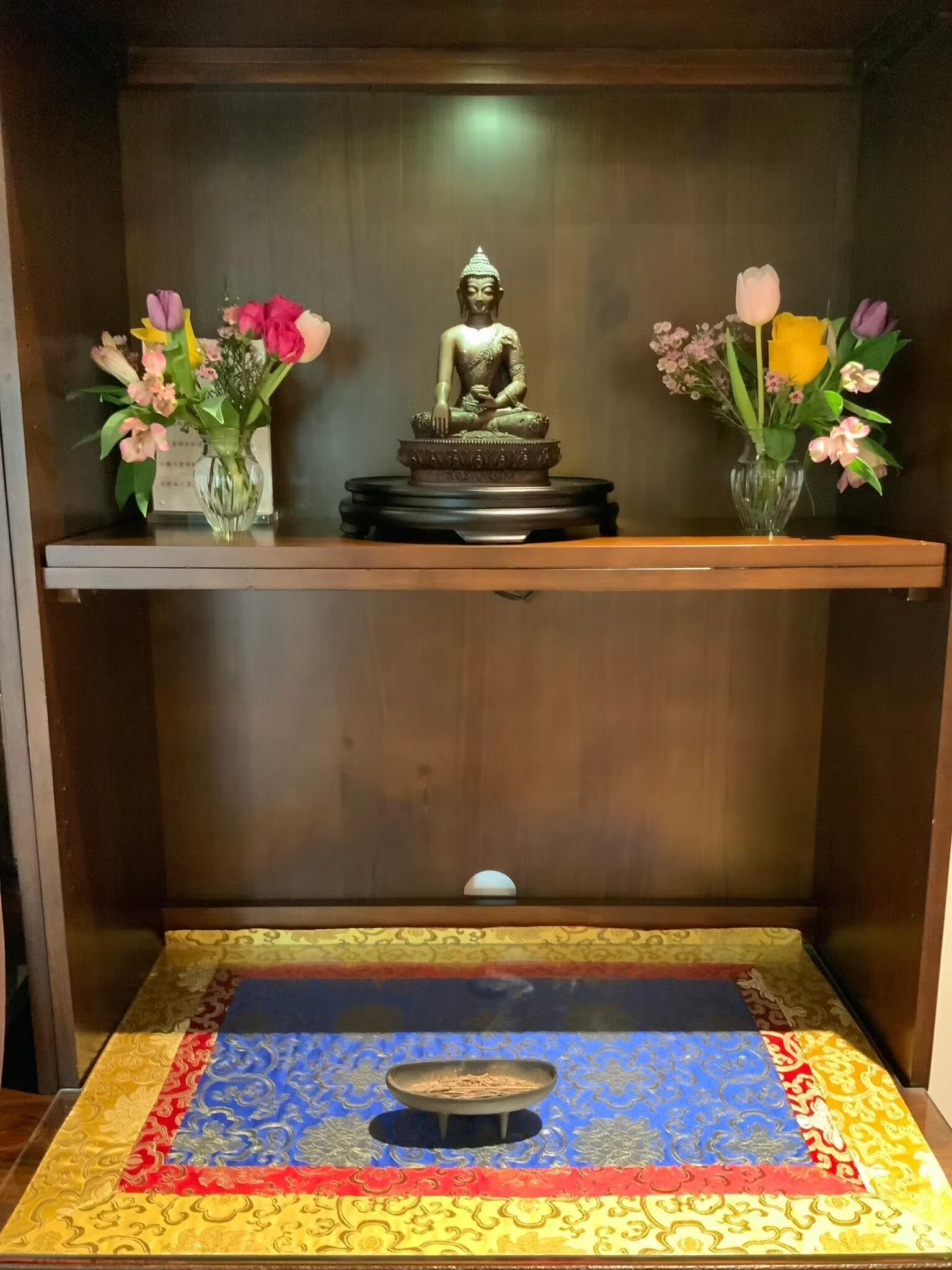
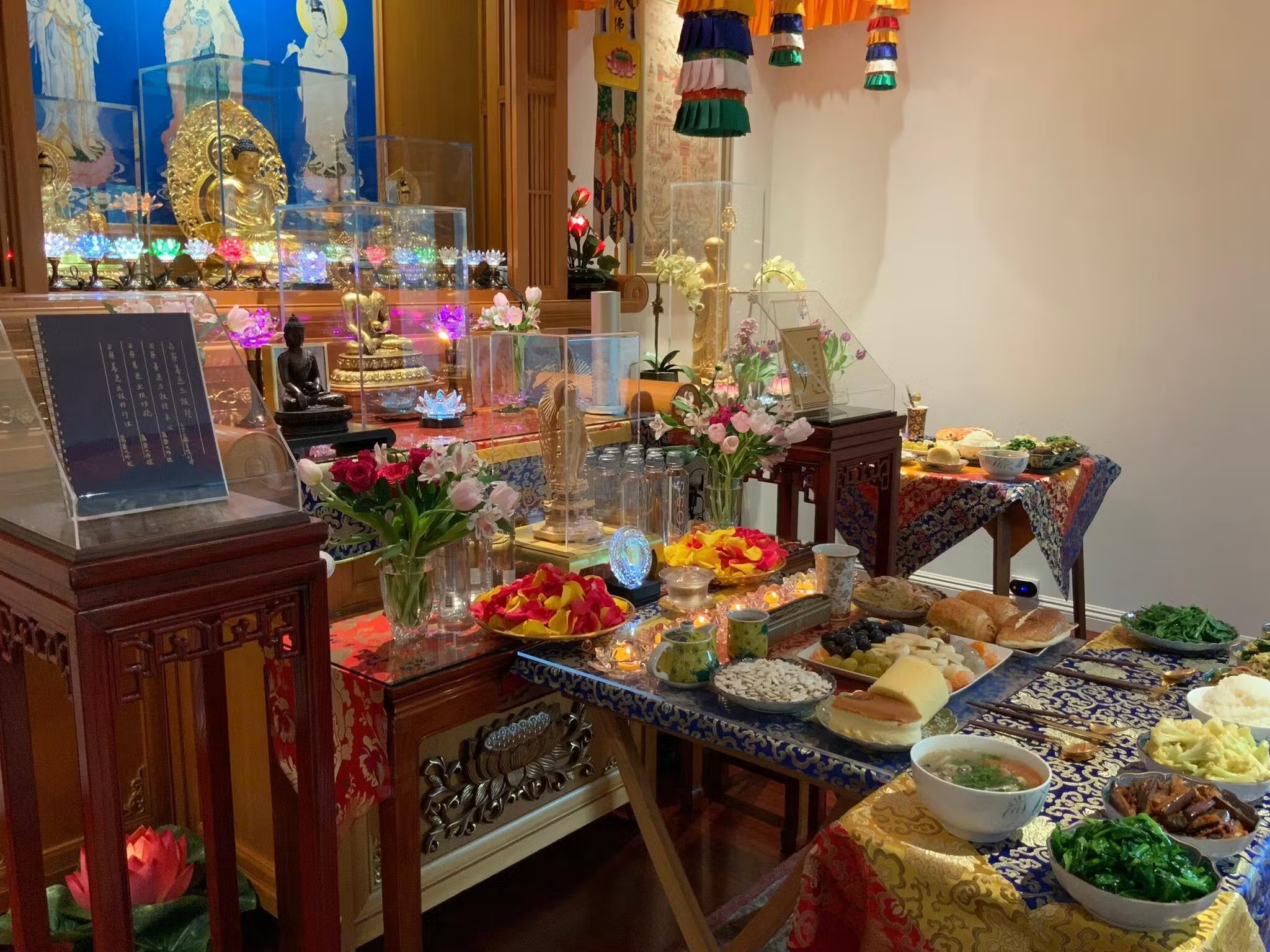
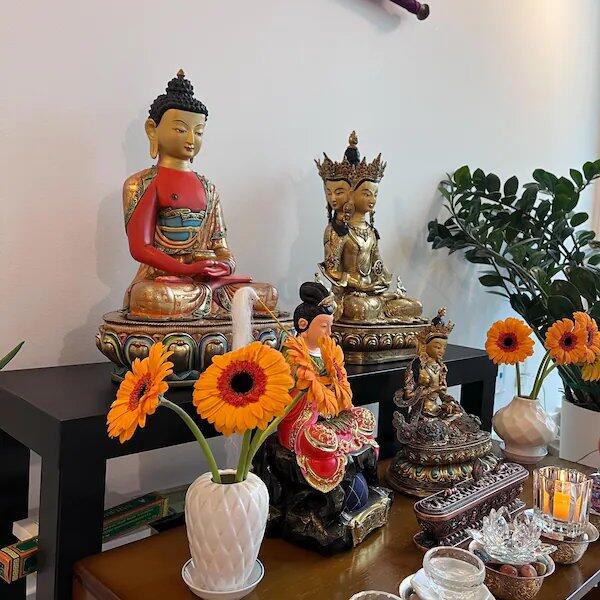
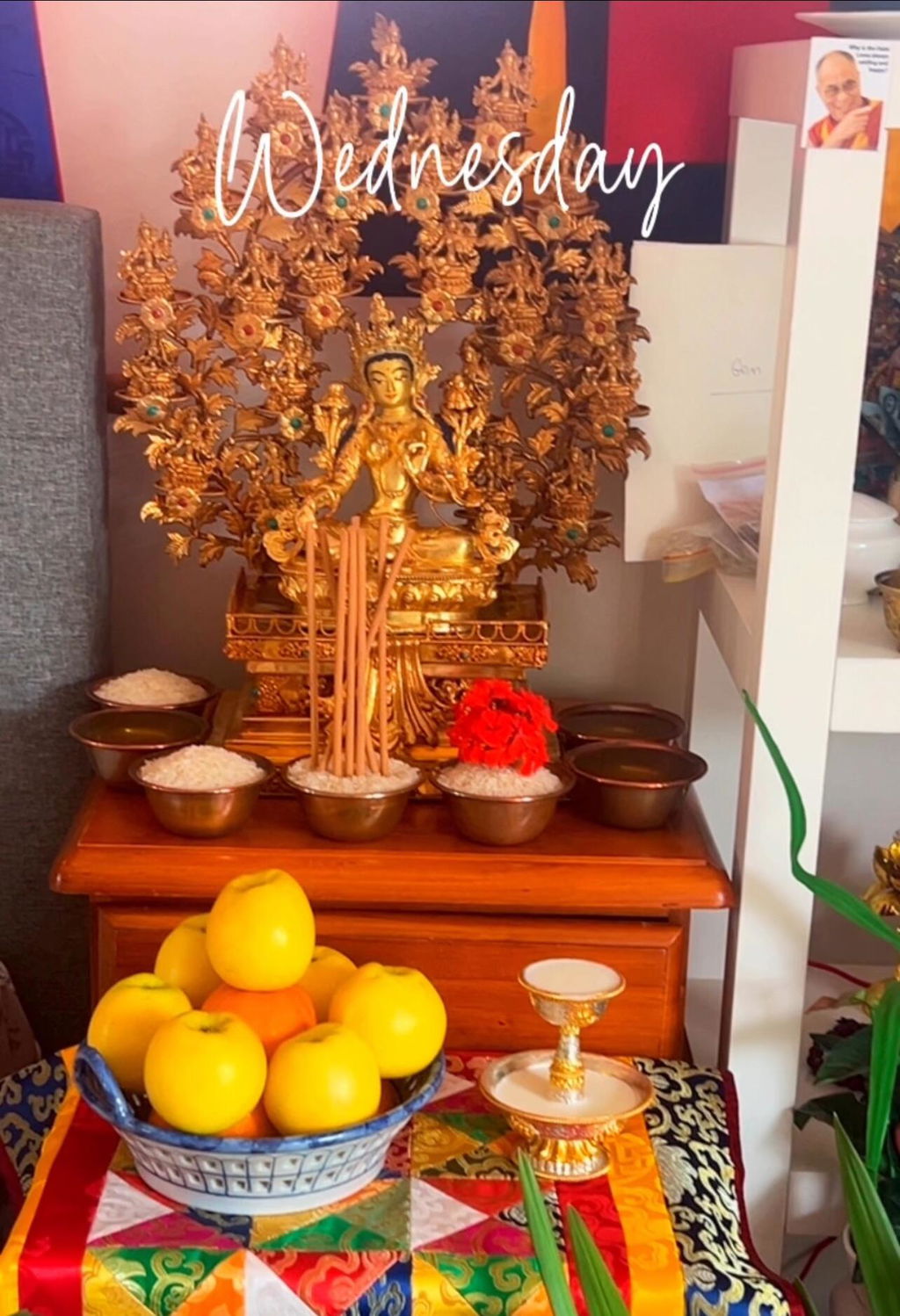
A representation of the Buddhas of the Three Times can be placed on a Buddhist altar, shrine, meditation room, temple, or other dedicated sacred space.
When creating an altar, practitioners may choose a clean and respectful location where the image can be viewed during meditation or prayer.
A Three Buddhas representation can serve as a reminder of:
- the Buddhas of the past
- the Dharma available in the present
- the continuation of awakened activity into the future
For practitioners following Guru Rinpoche practice, a Padmasambhava statue can similarly become a meaningful focal point for reciting the Dü Sum Sangye Guru Rinpoche prayer.
Is Dü Sum Sangye the Same as the Three Buddhas?
Not necessarily.
Dü Sum Sangye means “Buddhas of the Three Times” and can refer broadly to Buddhas of the past, present, and future.
In the common three-Buddha representation, these are:
- Dipankara — Past
- Shakyamuni — Present
- Maitreya — Future
However, the phrase also appears in Dü Sum Sangye Guru Rinpoche, where it functions as an epithet describing Guru Rinpoche in relation to the Buddhas of the three times.
Understanding this distinction is important when encountering the term in Tibetan Buddhist prayers, statues, thangkas, and religious texts.
Frequently Asked Questions About Dü Sum Sangye
What does Dü Sum Sangye mean?
Dü Sum Sangye means “Buddhas of the Three Times.” The three times are the past, present, and future.
Who are the Three Times Buddhas?
A common traditional representation identifies Dipankara Buddha with the past, Shakyamuni Buddha with the present, and Maitreya Buddha with the future.
What does Dü Sum Sangye Guru Rinpoche mean?
Dü Sum Sangye Guru Rinpoche is the opening of a well-known supplication to Guru Rinpoche. It praises Padmasambhava in connection with the Buddhas of the Three Times.
Is Dü Sum Sangye a Guru Rinpoche prayer?
The phrase itself refers to the Buddhas of the Three Times, but Dü Sum Sangye Guru Rinpoche is the opening of a specific devotional prayer to Guru Rinpoche.
Who is Guru Rinpoche?
Guru Rinpoche, also known as Padmasambhava, is one of the most revered masters in Tibetan Buddhism and holds a particularly important place in Vajrayana and Nyingma traditions.
What are the three times in Buddhism?
The three times are past, present, and future. In the traditional Three Buddhas representation, they are associated with Dipankara, Shakyamuni, and Maitreya.
The Enduring Meaning of Dü Sum Sangye
Dü Sum Sangye brings together a profound Buddhist understanding of time, lineage, practice, and awakening.
Dipamkara represents the Buddhas of the past. Shakyamuni represents the Buddha whose teachings remain available to practitioners today. Maitreya represents the Buddha of the future.
Through the phrase Dü Sum Sangye Guru Rinpoche, the tradition also expresses the profound devotional understanding of Guru Rinpoche as inseparable from the awakened Buddhas of the three times.
For those exploring Tibetan Buddhism, Himalayan Buddhist art, or the symbolism of Buddhist statues, understanding Dü Sum Sangye offers a deeper appreciation of how Buddhist wisdom is transmitted from one generation to another.
At Nidhiratna, our work with Nepalese Buddhist art is rooted in this same appreciation for the connection between sacred symbolism, traditional Newari craftsmanship, and living Himalayan Buddhist heritage.
A Buddhist statue is not simply an object of beauty. It can become a visual reminder of the path, the teachings, and the awakened qualities that practitioners seek to cultivate.
And that is one of the enduring meanings of Dü Sum Sangye: the wisdom of the Buddhas continues across the past, present, and future.


Share:
Indra Jatra: History, Kumari, Rituals & Newar Culture