

What Is Vajrayana Buddhism? A Complete Guide to the Diamond Vehicle
Vajrayana Buddhism, often translated as the “Diamond Vehicle” or “Thunderbolt Vehicle,” is a tantric Buddhist tradition that developed within the broader Mahayana Buddhist tradition. Known for its rich symbolism, meditation practices, sacred mantras, mandalas, mudras, deity visualization, and teacher-guided tantric practices, Vajrayana offers a distinctive approach to the Buddhist path.
Vajrayana became especially influential in Tibet and across the Himalayan region, including Nepal and Bhutan, and later spread to Mongolia and other parts of Asia. Today, its influence can be seen not only in Buddhist philosophy and meditation but also in sacred sculpture, thangka and paubha painting, ritual objects, architecture, and ceremonial traditions.
This complete guide explores what Vajrayana Buddhism means, where it originated, its relationship with Mahayana Buddhism, its central beliefs and practices, major schools and deities, and the important role of Vajrayana Buddhism in Nepal and Himalayan culture.
What Does “Vajrayana” Mean?
The Sanskrit word Vajrayana combines two terms: vajra and yana. Vajra can mean “diamond” or “thunderbolt,” while yana means “vehicle” or “path.” Together, Vajrayana can be understood as the “Diamond Vehicle” or “Thunderbolt Vehicle.”
The vajra symbolizes qualities such as indestructibility, clarity, and the ability to cut through ignorance and delusion. In Vajrayana Buddhism, the term therefore expresses a path that uses specialized methods to transform ordinary experience into a means of spiritual awakening.
Vajrayana is also associated with terms such as Tantric Buddhism and Esoteric Buddhism. Many of its advanced practices are traditionally transmitted directly from a qualified teacher to a student rather than learned solely through public texts.
Origins and History of Vajrayana Buddhism
Vajrayana developed in India as Buddhist tantric traditions emerged and evolved alongside Mahayana Buddhism. Rather than appearing suddenly as a completely separate religion, Vajrayana developed gradually through new forms of meditation, ritual, visualization, mantra, yogic practice, and tantric literature.
The Development of Buddhist Tantra in India
Between roughly the middle of the first millennium CE and the later medieval period, Buddhist tantric traditions became increasingly influential in India. New Buddhist texts known as tantras introduced sophisticated systems of meditation, visualization, ritual, mantra, mandala practice, and methods for transforming ordinary mental experiences.
These traditions developed alongside established Mahayana teachings such as compassion, emptiness, bodhicitta, and the bodhisattva ideal. As a result, Vajrayana is best understood within the wider development of Indian Mahayana Buddhism rather than simply as an entirely separate branch.
Vajrayana Buddhism in Tibet
Vajrayana Buddhism became deeply established in Tibet beginning during the early transmission of Buddhism from India. Tibetan Buddhism developed through several periods of transmission and incorporated teachings from numerous Indian Buddhist masters and lineages.
One of the most influential figures associated with this early period was Padmasambhava, also known as Guru Rinpoche. Tibetan Buddhist traditions particularly associate him with the establishment and transmission of tantric Buddhism in Tibet.
Later Tibetan Buddhist masters, translators, scholars, and meditation practitioners continued to receive teachings from India and develop them within Tibetan religious culture. Over centuries, these teachings evolved into the diverse lineages and schools recognized today.
Vajrayana Buddhism in Nepal
Nepal has played an important role in the history and preservation of Vajrayana Buddhism. In particular, the Newar Buddhist tradition of the Kathmandu Valley has preserved distinctive forms of Vajrayana practice, ritual, art, architecture, and craftsmanship.
The Kathmandu Valley became an important center of Buddhist artistic production. Newar artists and artisans developed highly refined traditions of Buddhist sculpture, paubha painting, metal casting, repoussé work, woodcarving, and ritual craftsmanship.
Today, sacred sites such as Swayambhunath and Boudhanath remain important centers of Buddhist life in Nepal. The artistic heritage of the Kathmandu Valley also continues to influence Buddhist communities throughout the Himalayan region.
Is Vajrayana Buddhism Part of Mahayana Buddhism?
Yes. Vajrayana developed from and shares many fundamental teachings with Mahayana Buddhism.
Both traditions emphasize bodhicitta, compassion, emptiness, Buddha-nature, and the bodhisattva path. Vajrayana adds a specialized collection of tantric methods designed to work with the body, speech, mind, imagery, ritual, and subtle aspects of experience.
For this reason, Vajrayana is often described as an esoteric or tantric form of Mahayana Buddhism rather than simply another unrelated Buddhist tradition.
Core Philosophy of Vajrayana Buddhism
Although Vajrayana is famous for its elaborate rituals and visual symbolism, its foundation remains deeply connected to Buddhist philosophy.
Bodhicitta
Bodhicitta is the aspiration to attain enlightenment for the benefit of all sentient beings. Compassion and the wish to liberate others remain central to Vajrayana practice.
Emptiness
Shunyata, or emptiness, refers to the absence of inherent and independent existence in phenomena. Vajrayana practices are grounded in this understanding and use visualization and meditation to transform the way practitioners relate to themselves and the world.
Buddha-Nature
Many Buddhist traditions emphasize the potential for awakening inherent in sentient beings. Vajrayana practices often use this principle by visualizing enlightened forms and qualities as a way of recognizing and cultivating awakened nature.
Transformation Rather Than Rejection
One distinctive feature of Vajrayana is its emphasis on transformation. Rather than simply attempting to suppress difficult emotions and experiences, certain tantric methods work with them as energy that can be transformed through wisdom and disciplined practice.
This does not mean that harmful behavior is encouraged. Vajrayana practices are traditionally grounded in ethical conduct, compassion, wisdom, and proper guidance.
Key Practices of Vajrayana Buddhism
1. Deity Yoga and Visualization
Deity yoga is one of the best-known practices associated with Vajrayana Buddhism. Practitioners visualize themselves in the form of a particular enlightened deity, known as a yidam, while cultivating the qualities represented by that form.
Figures such as Tara, Chenrezig, Vajrasattva, Manjushri, and other enlightened beings may be central to particular practices and lineages.
Deity visualization is not simply worship in the conventional sense. It is traditionally understood as a method for transforming ordinary perception and recognizing enlightened qualities within the practitioner's own mind.
2. Mantra Recitation
Mantras are sacred syllables, words, or phrases used in meditation and ritual practice. Reciting a mantra can help concentrate the mind and connect the practitioner with a particular enlightened quality or practice.
One of the most widely recognized Buddhist mantras is Om Mani Padme Hum, associated with Avalokiteshvara, also known as Chenrezig. Different Vajrayana practices employ different mantras according to their lineage and purpose.
3. Mudras and Ritual Gestures
Mudras are symbolic hand gestures used in Buddhist meditation, visualization, ritual, and sacred art. They can represent particular teachings, qualities, or stages of practice.
In Buddhist sculpture, mudras are also important elements of iconography. The position of a deity's hands can provide clues about the identity, symbolism, and spiritual function of the figure.
4. Mandalas
Mandalas are highly structured symbolic representations used in Buddhist meditation and tantric practice. They may represent an enlightened environment, a deity's palace, or a complete system of spiritual practice.
Traditional sand mandalas are carefully constructed and later dismantled as a reminder of impermanence. Their creation demonstrates concentration and precision, while their dissolution illustrates the temporary nature of conditioned existence.
5. Guru Yoga and Lineage
The relationship between teacher and student is particularly important in Vajrayana Buddhism. Guru yoga involves practices focused on the spiritual teacher and the lineage through which teachings are transmitted.
Vajrayana emphasizes continuity of transmission because many tantric practices are traditionally received through a lineage rather than learned independently from written instructions.
6. Empowerment and Initiation
Many advanced Vajrayana practices require an empowerment, or abhisheka, from a qualified teacher. Empowerment formally authorizes a practitioner to engage in a particular tantric practice and establishes a connection with its lineage.
This is one reason Vajrayana differs from approaches in which Buddhist meditation can be learned primarily through public teachings and books.
Important Vajrayana Buddhist Deities and Figures
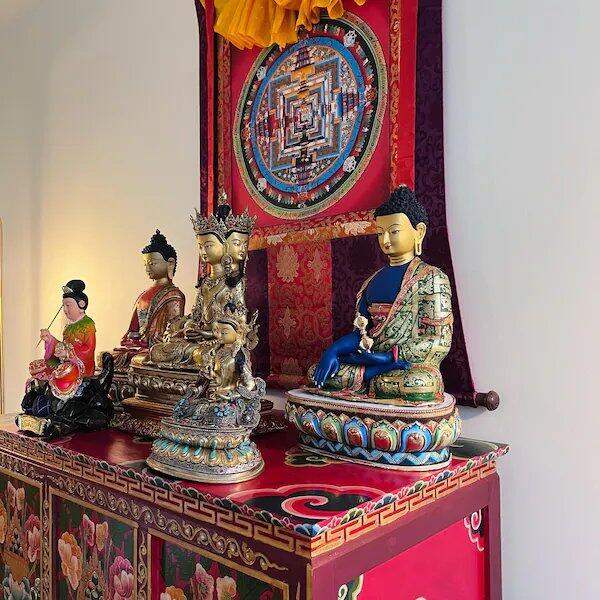
Vajrayana Buddhism contains a rich visual and symbolic tradition involving Buddhas, bodhisattvas, tantric deities, protectors, teachers, and other enlightened figures. These figures are not simply decorative subjects. Their forms, gestures, attributes, colors, and ornaments communicate specific teachings and qualities.
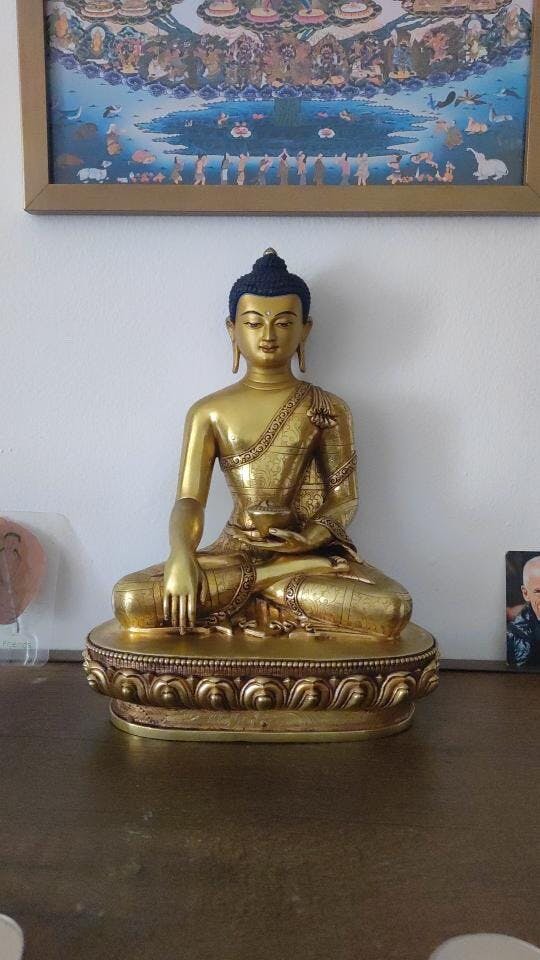
Shakyamuni Buddha
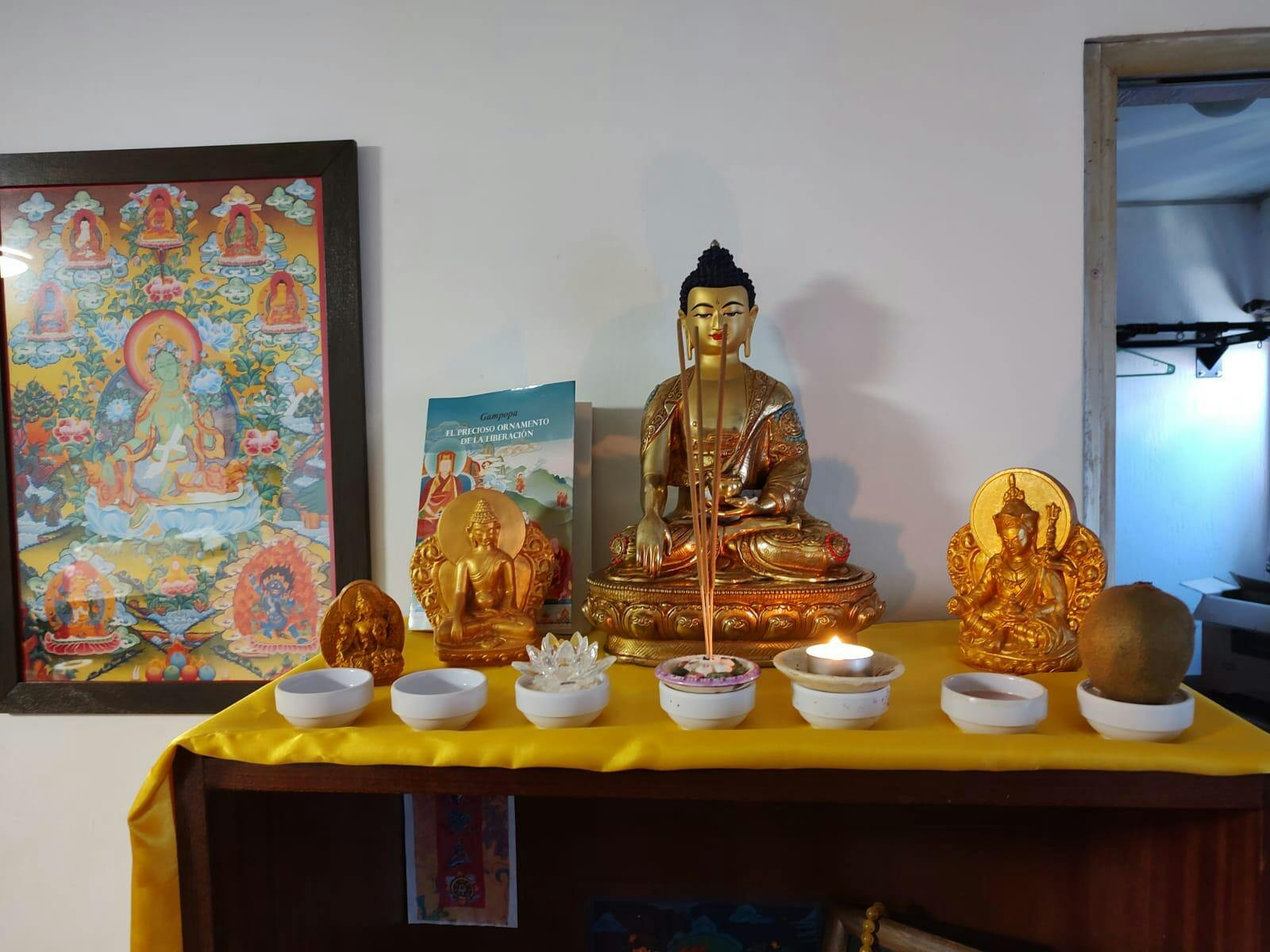
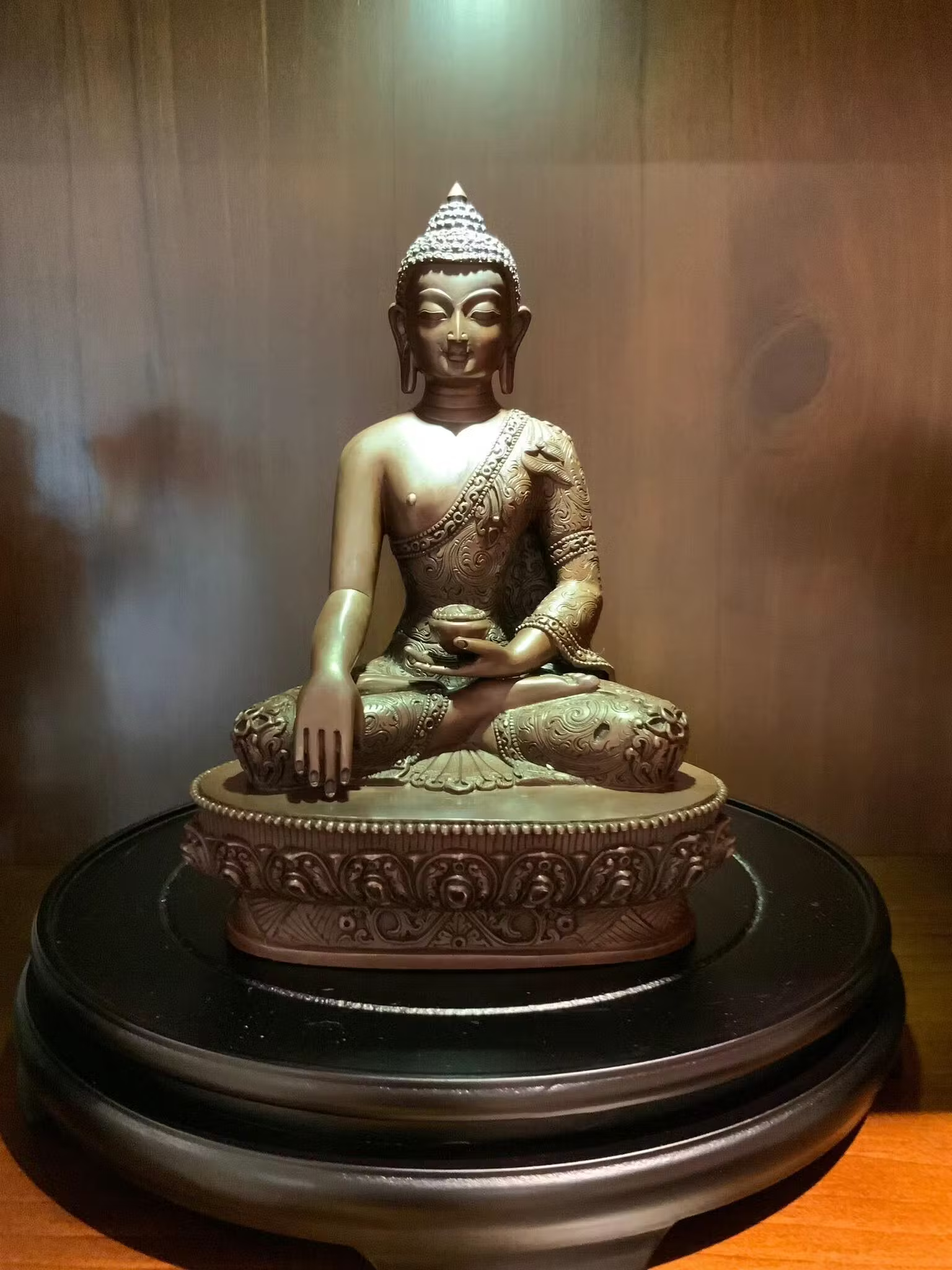
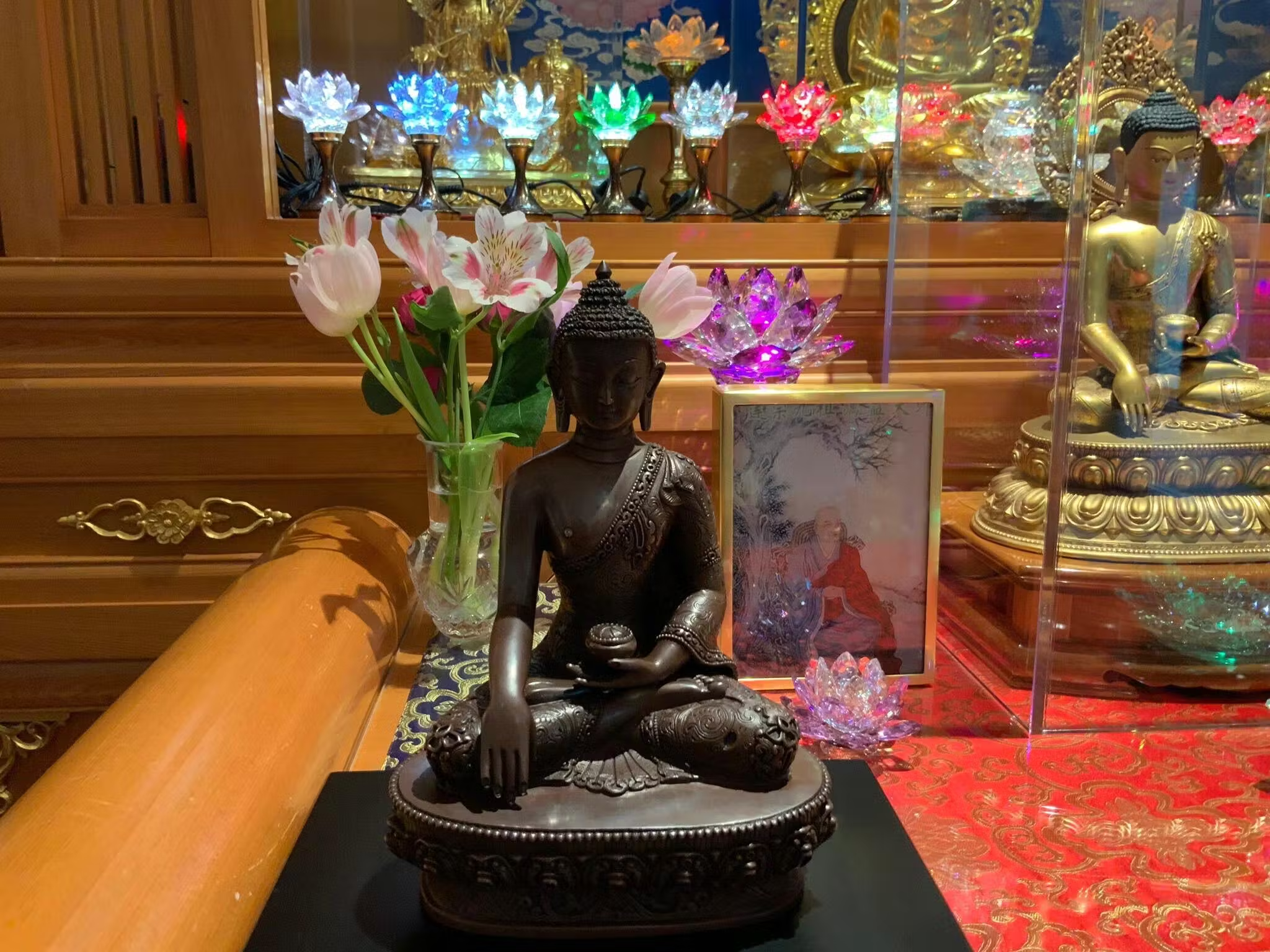
Shakyamuni Buddha is the historical Buddha whose teachings form the foundation of Buddhism. Images of Shakyamuni commonly portray him in meditation or in the earth-touching gesture known as bhumisparsha mudra.
Chenrezig
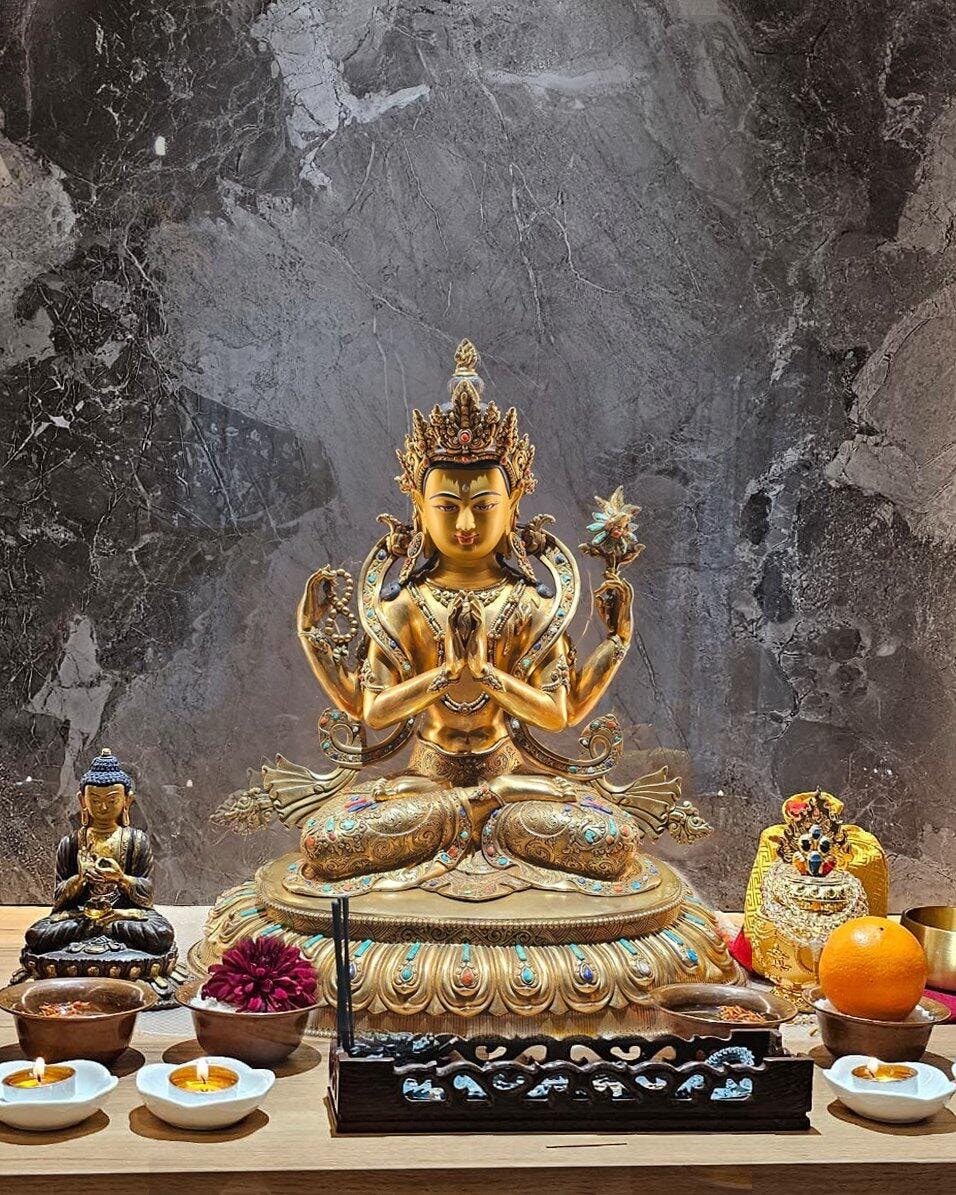
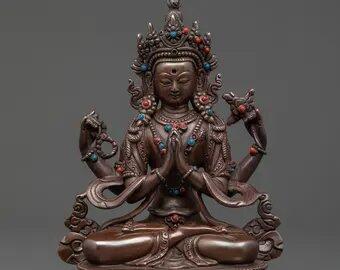
Chenrezig, known as Avalokiteshvara in Sanskrit, represents compassion. The four-armed form is especially prominent in Himalayan Buddhist art and is commonly shown with hands joined in prayer while holding symbolic attributes such as a lotus and mala.
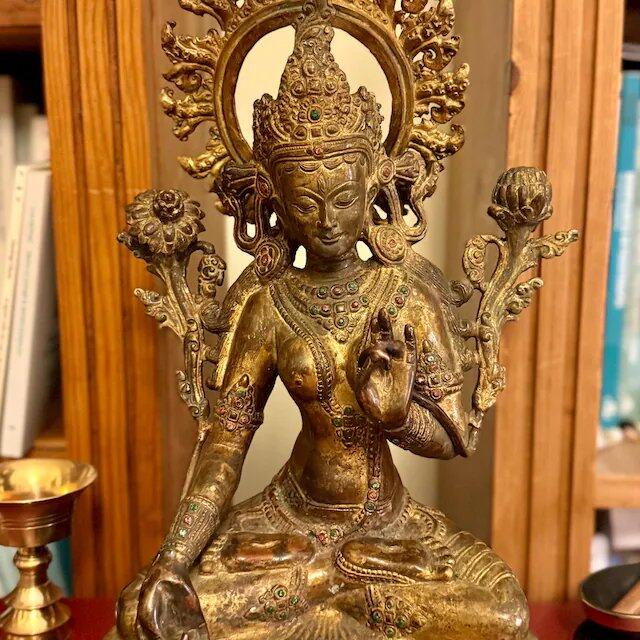
Green Tara
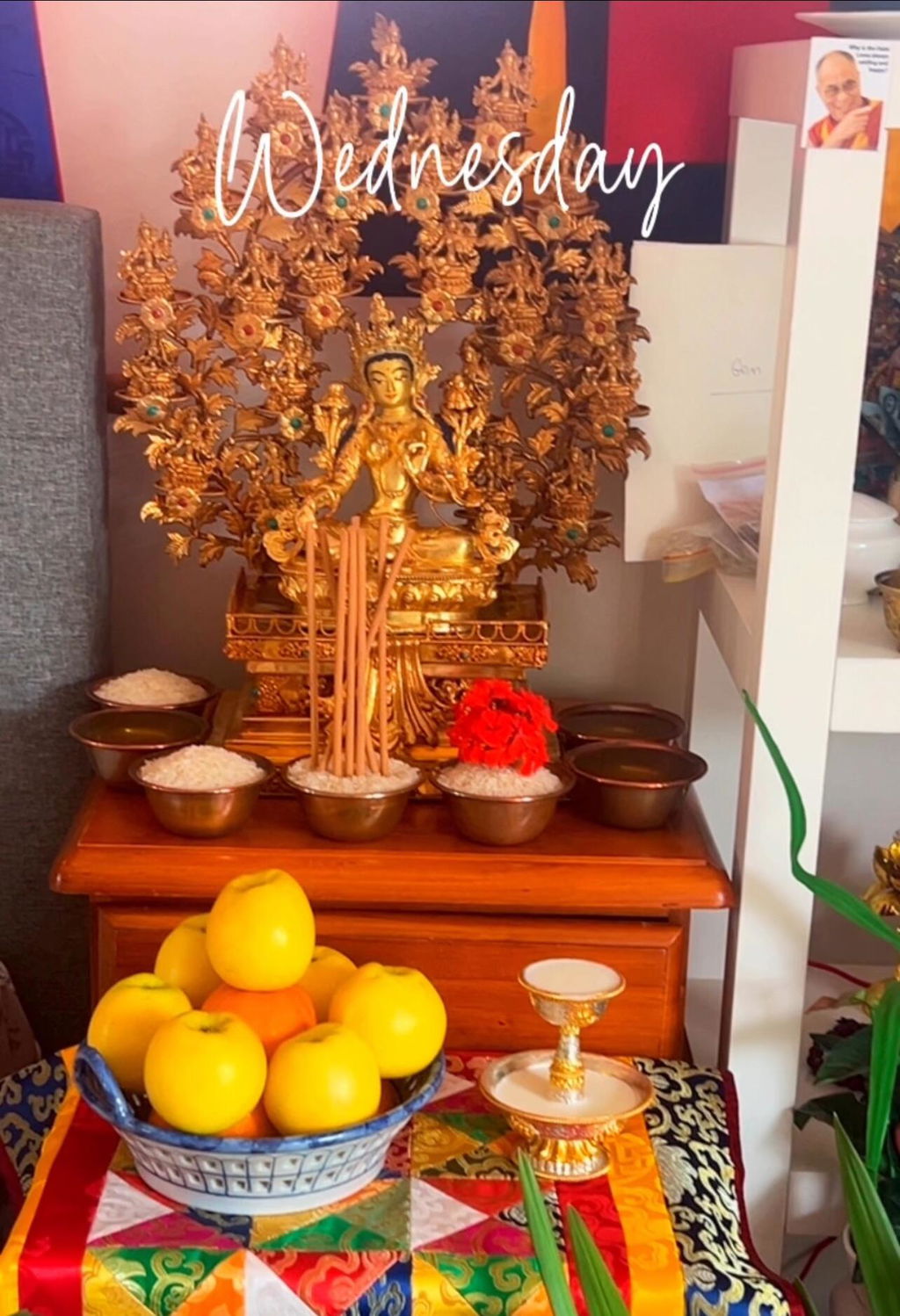
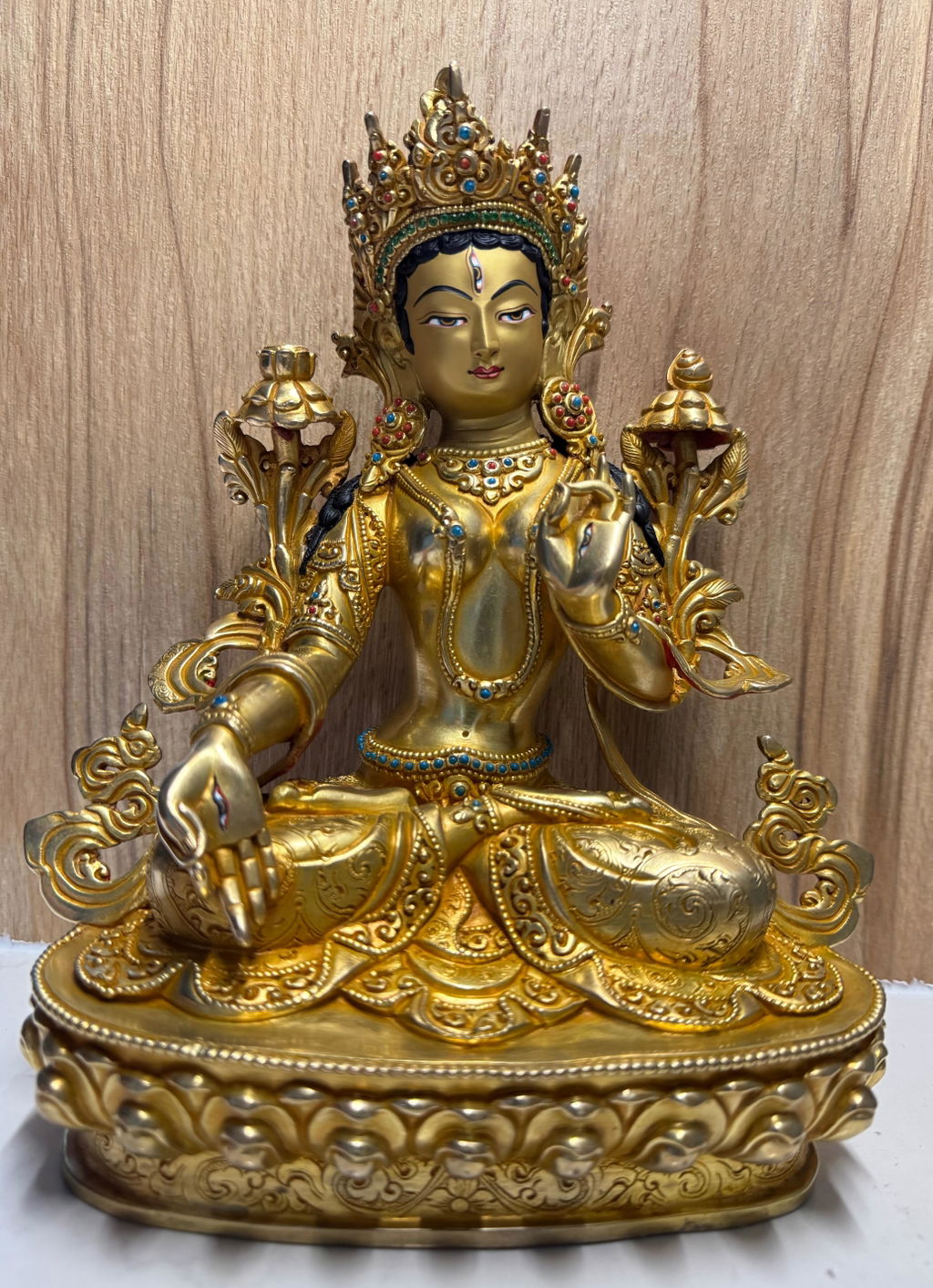
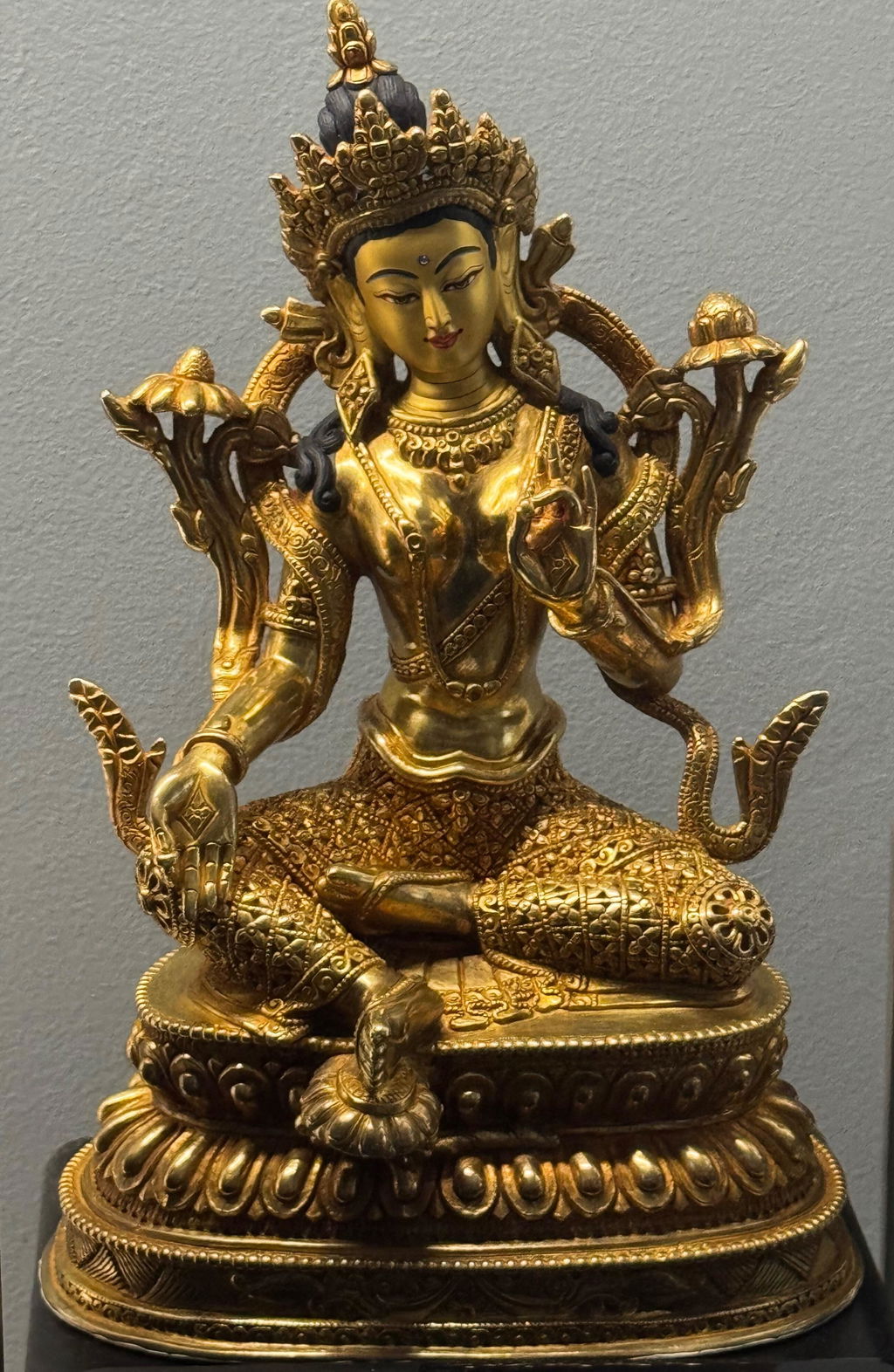
Green Tara is widely revered as a compassionate female Buddha associated with protection, liberation, and swift compassionate activity. She is traditionally portrayed seated in a graceful posture with one leg extended, symbolizing readiness to respond to those in need.
White Tara
White Tara is associated with compassion, protection, healing, and longevity. Her distinctive iconography includes seven eyes: two on her face and one on each palm and sole of the feet.
Vajrasattva
Vajrasattva is especially associated with purification practices. He is commonly depicted holding a vajra and bell, representing complementary aspects of Buddhist practice.
Manjushri
Manjushri represents transcendent wisdom. His most recognizable attribute is the flaming sword of wisdom, symbolizing the cutting away of ignorance and delusion.
Guru Rinpoche
Guru Rinpoche, or Padmasambhava, occupies a central position in Tibetan Vajrayana traditions. He is especially associated with the early transmission of tantric Buddhism to Tibet and remains a major figure in Himalayan Buddhist practice and art.
Vajrapani
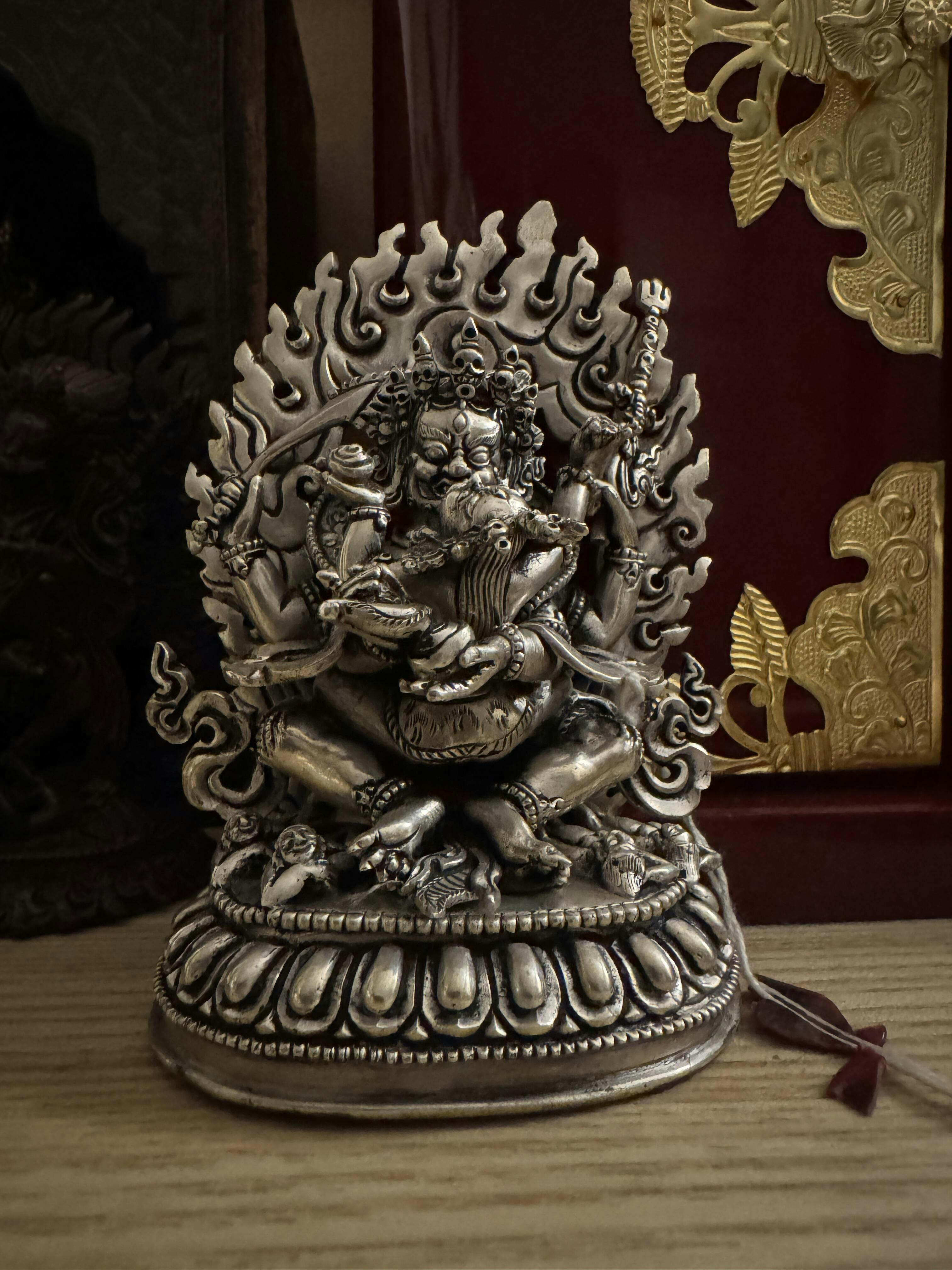
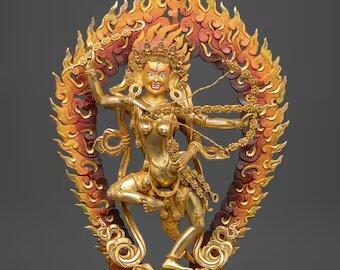
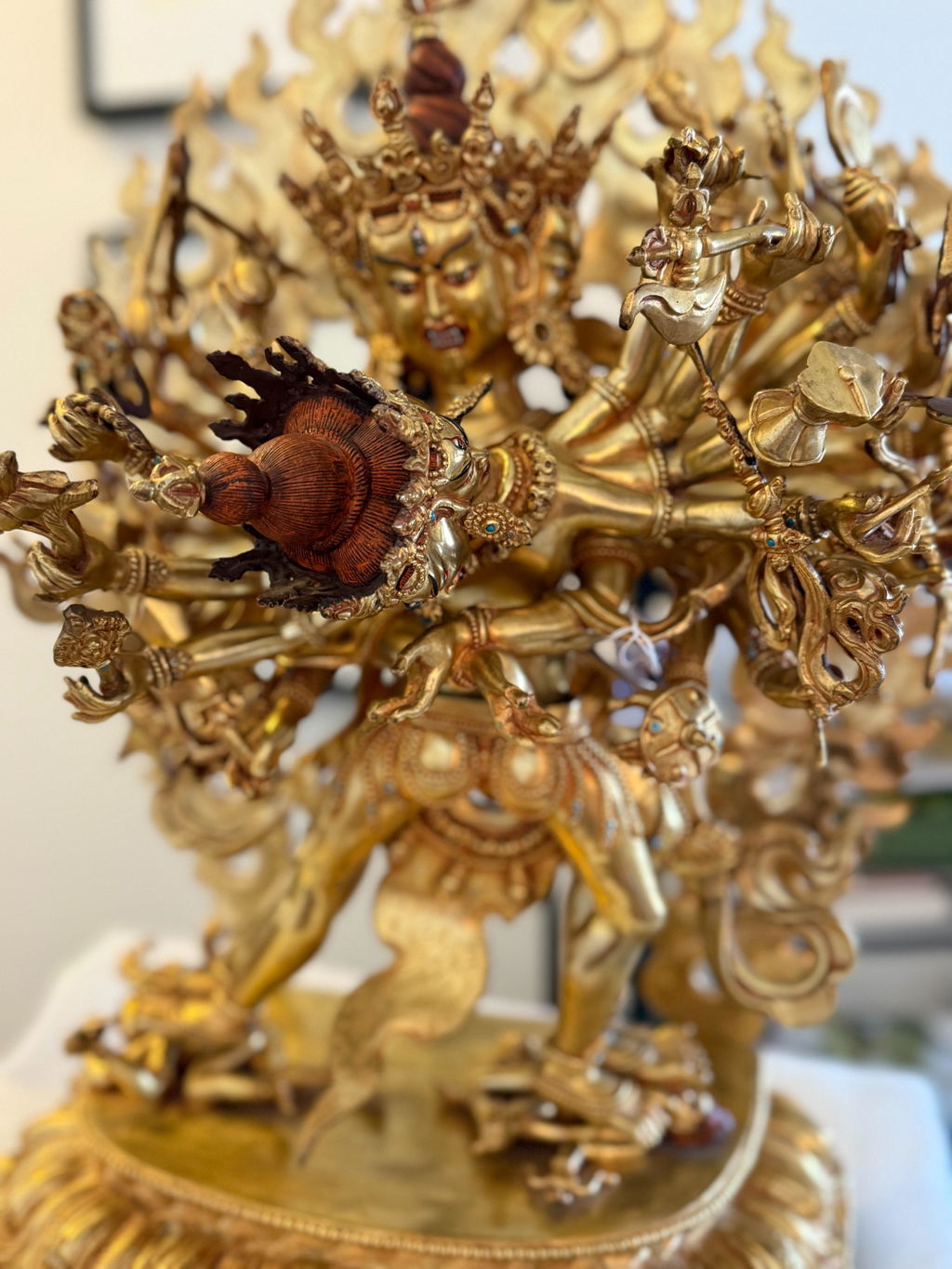
Vajrapani represents the power and energetic activity of enlightened beings. His dynamic appearance, vajra, powerful posture, and often wrathful expression symbolize the force that overcomes obstacles to awakening.
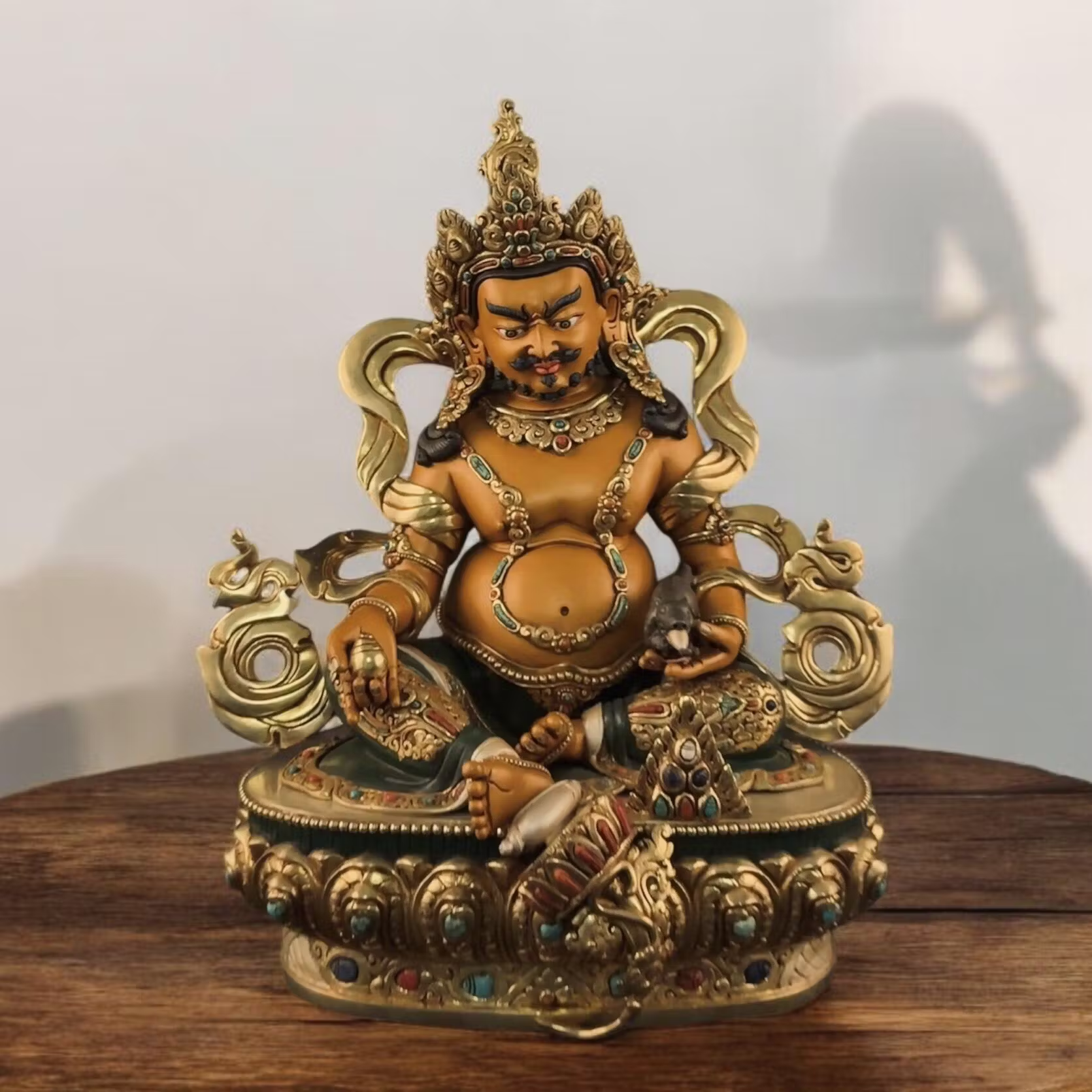
Dzambhala
Dzambhala is associated with generosity, abundance, and the removal of obstacles connected with material and spiritual resources. His imagery frequently includes the jewel-spitting mongoose and a precious jewel or citron.
Vajrayana Buddhism and Sacred Buddhist Art
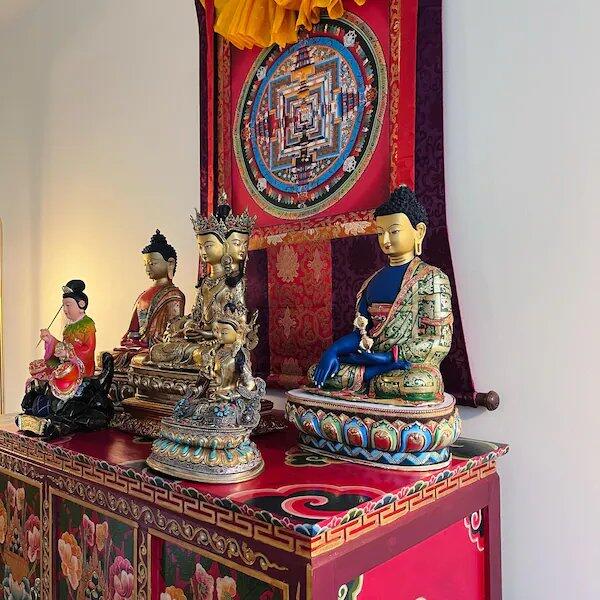
Vajrayana Buddhism has produced one of the world's most sophisticated traditions of sacred religious art. Buddhist statues, paintings, mandalas, ritual instruments, manuscripts, and architectural designs all serve as visual expressions of Buddhist teachings.
In Vajrayana, sacred images can function as supports for meditation and visualization. The proportions of a deity, the position of the hands, the objects held in each hand, the ornaments, the throne, the surrounding figures, and even the colors can communicate specific aspects of the tradition.
This is why Himalayan Buddhist statues are created according to established systems of iconography rather than simply as artistic interpretations.
Newar Buddhist Art of Nepal
Nepalese Newar artisans from the Kathmandu Valley are renowned for their metalworking traditions. Techniques such as lost-wax casting, hand-chasing, repoussé, engraving, gilding, and detailed ornamentation have been passed through generations of artistic practice.
These traditions have played an important role in the production of Buddhist sculptures and ritual objects used throughout Nepal and the wider Himalayan Buddhist world.
Vajras, Bells, Malas, and Ritual Objects
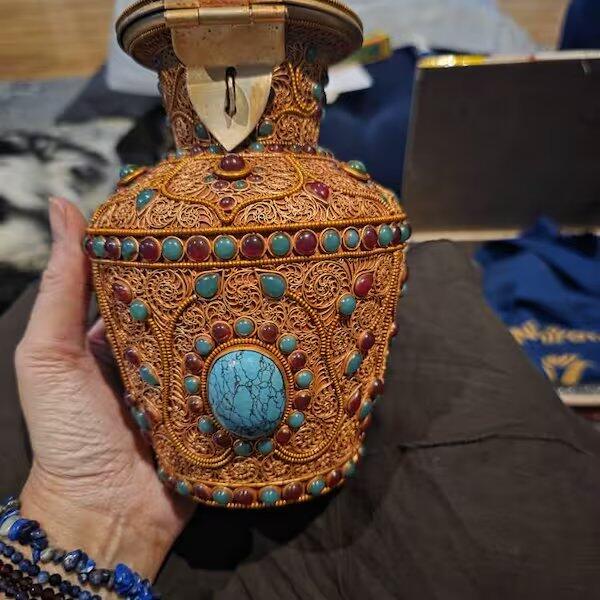
Vajrayana ritual practice also includes a wide range of symbolic objects. The vajra and bell are among the most recognizable. Malas are used for counting mantra recitations, while ritual objects such as offering vessels, mandala sets, and ceremonial instruments support particular practices.
Understanding the symbolism of these objects provides a deeper appreciation of Vajrayana Buddhist art and material culture.
Vajrayana Buddhism in Nepal and the Kathmandu Valley
Nepal occupies a distinctive position in the history of Himalayan Buddhism. The Kathmandu Valley has been home to sophisticated Buddhist communities and artistic traditions for centuries.
Newar Buddhism preserves a form of Vajrayana practice characterized by its rich ritual traditions, Buddhist monasteries and courtyards, hereditary Vajracharya and Shakya communities, sacred festivals, and highly developed artistic heritage.
The valley's Buddhist architecture and sacred art can be seen at important sites including Swayambhunath and Boudhanath. Its paubha paintings and metal sculptures have also become internationally recognized expressions of Himalayan Buddhist culture.
For anyone seeking to understand Vajrayana Buddhism beyond philosophy alone, the living artistic and cultural traditions of Nepal provide an important window into how Buddhist teachings have been expressed through everyday ritual, architecture, craftsmanship, and sacred imagery.
Vajrayana vs. Theravada vs. Mahayana Buddhism
Theravada, Mahayana, and Vajrayana represent different historical developments and approaches within the wider Buddhist world. They share fundamental teachings but differ in scriptures, philosophical developments, practices, and historical traditions.
| Aspect | Theravada | Mahayana | Vajrayana |
|---|---|---|---|
| Major ideal | Arhatship | Bodhisattva path and Buddhahood | Bodhisattva path and Buddhahood through tantric methods |
| Foundational texts | Pali Canon | Mahayana sutras and earlier Buddhist scriptures | Mahayana sutras and Buddhist tantras |
| Key practices | Ethics, meditation, mindfulness, wisdom | Compassion, wisdom, meditation, bodhisattva practices | Mantra, visualization, deity yoga, mandala, mudra, meditation |
| Historical regions | South and Southeast Asia | East and Southeast Asia | Tibet, Nepal, Bhutan, Mongolia and Himalayan regions |
| Teacher's role | Important spiritual guide | Important spiritual guide | Particularly central to tantric transmission and initiation |
These categories should not be understood as completely separate systems. Buddhist traditions have influenced one another throughout history, and individual schools contain considerable diversity.
The Four Major Schools of Tibetan Buddhism
Tibetan Vajrayana Buddhism is commonly associated with four major schools: Nyingma, Kagyu, Sakya, and Gelug. Each has its own historical lineages, philosophical traditions, practices, and methods of transmission.
Nyingma
Nyingma is traditionally regarded as the oldest of the four major schools of Tibetan Buddhism. Its history is strongly associated with the early transmission of Buddhism to Tibet and figures such as Padmasambhava.
Kagyu
Kagyu is particularly known for its meditation traditions and lineage teachings. Important historical figures include Marpa, Milarepa, Gampopa, and later masters within the various Kagyu lineages.
Sakya
Sakya developed around the Khön family and the Sakya monastery tradition. It became influential for both its scholarship and tantric teachings, including the Lamdré, or “Path and Its Fruit,” tradition.
Gelug
Gelug developed through the teachings of Je Tsongkhapa and became known for its emphasis on monastic discipline, philosophical study, debate, and systematic Buddhist education. The Dalai Lama lineage is historically associated with the Gelug tradition.
Common Misconceptions About Vajrayana Buddhism
Misconception 1: Vajrayana Buddhism Is Simply Tibetan Buddhism
Tibetan Buddhism is one of the most prominent living forms of Vajrayana, but Vajrayana traditions also exist beyond Tibet. Nepal, Bhutan, Mongolia, and other regions have important Vajrayana histories and practices. Esoteric Buddhist traditions in Japan, particularly Shingon, also developed from related tantric Buddhist traditions.
Misconception 2: Vajrayana Is Only About Mysticism and Magic
Vajrayana includes elaborate rituals and powerful symbolism, but these practices are grounded in Buddhist philosophy, meditation, compassion, wisdom, and the understanding of mind. Ritual is traditionally used as a method toward transformation rather than as an end in itself.
Misconception 3: Anyone Can Practice Advanced Tantric Methods Without Guidance
Many advanced Vajrayana practices traditionally require empowerment and guidance from a qualified teacher. This reflects the importance placed on lineage, correct practice, and the relationship between teacher and student.
Misconception 4: Buddhist Deities Are Simply Gods
Vajrayana Buddhist deities are understood within Buddhist frameworks rather than simply as creator gods. Their forms can represent enlightened qualities, meditation practices, and aspects of awakened mind.
Can Vajrayana Buddhism Lead to Enlightenment in One Lifetime?
Vajrayana is traditionally associated with the possibility of attaining Buddhahood within a single lifetime through advanced tantric methods. This is one of the reasons the tradition is sometimes described as a particularly swift vehicle.
However, this should not be understood as a guaranteed result or a shortcut that bypasses ethical conduct, compassion, wisdom, meditation, or disciplined practice. Traditional Vajrayana teachings emphasize that advanced practices depend upon proper preparation, guidance, motivation, and realization.
Why Does Vajrayana Buddhism Use So Many Symbols?
Symbolism is central to Vajrayana because visual forms can communicate complex Buddhist teachings in a concentrated way.
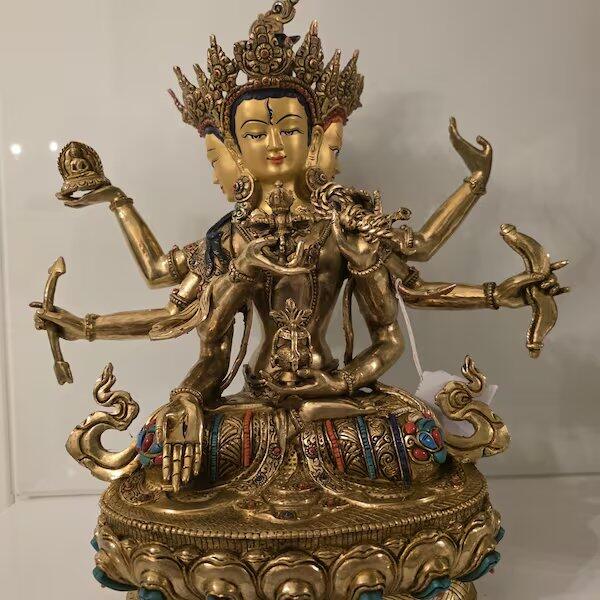
A lotus may symbolize purity. A vajra can represent indestructibility and awakened method. A bell can represent wisdom. A flaming sword can symbolize the cutting of ignorance. Multiple arms can represent the ability to perform many enlightened activities, while different colors and ornaments can communicate particular qualities.
For this reason, studying Vajrayana art can become a way of studying Buddhist philosophy itself.
Why Vajrayana Buddhism Continues to Attract Global Interest
Vajrayana Buddhism continues to attract interest around the world because it combines philosophy, meditation, ritual, symbolism, visual culture, and embodied practice in a distinctive way.
Interest in Buddhist meditation has grown internationally, while Himalayan Buddhist art has gained recognition among scholars, collectors, practitioners, museums, and cultural institutions.
The global visibility of Tibetan Buddhism and teachers such as the Dalai Lama has also contributed to wider awareness of Vajrayana traditions. At the same time, Nepal's living Buddhist communities and artistic traditions continue to provide an important connection to the history and practice of Himalayan Vajrayana.
Frequently Asked Questions About Vajrayana Buddhism
What is Vajrayana Buddhism?
Vajrayana Buddhism is a tantric Buddhist tradition that developed within the broader Mahayana tradition. It is known for practices including mantra recitation, deity visualization, mandalas, mudras, guru yoga, and tantric meditation.
What does Vajrayana mean?
Vajrayana means “Diamond Vehicle” or “Thunderbolt Vehicle.” The Sanskrit term combines vajra, meaning diamond or thunderbolt, with yana, meaning vehicle or path.
Is Vajrayana Buddhism Mahayana?
Vajrayana developed within the Mahayana Buddhist tradition and shares major Mahayana teachings such as bodhicitta, emptiness, compassion, and the bodhisattva ideal.
Is Vajrayana the same as Tibetan Buddhism?
They are closely related but not identical terms. Tibetan Buddhism is one of the major living forms of Vajrayana Buddhism, while Vajrayana traditions also exist in Nepal, Bhutan, Mongolia and other parts of Asia.
What are the main practices of Vajrayana Buddhism?
Major Vajrayana practices include deity yoga, mantra recitation, meditation, visualization, mandala practice, mudras, guru yoga, and other tantric methods. Advanced practices may require empowerment and guidance from a qualified teacher.
What are the four major schools of Tibetan Buddhism?
The four major schools are Nyingma, Kagyu, Sakya, and Gelug. Each has distinct historical lineages, teachings, practices, and methods of transmission.
What is deity yoga in Vajrayana Buddhism?
Deity yoga is a tantric meditation practice in which practitioners visualize an enlightened deity and cultivate the qualities represented by that form. It is traditionally used to transform ordinary perception and recognize awakened qualities.
Why are Buddhist statues important in Vajrayana?
Vajrayana Buddhist statues serve as visual supports for meditation, devotion, ritual, and contemplation. Their gestures, attributes, ornaments, posture, and proportions communicate specific teachings and qualities associated with the depicted figure.
What is the role of a guru in Vajrayana Buddhism?
The teacher or guru plays an especially important role in Vajrayana because many tantric teachings are transmitted through established lineages. Advanced practices may require empowerment and direct instruction from a qualified teacher.
Why is Nepal important to Vajrayana Buddhism?
Nepal, particularly the Kathmandu Valley, has a long history of Vajrayana Buddhism. Newar Buddhist communities have preserved distinctive traditions of ritual, philosophy, sculpture, paubha painting, architecture, and metal craftsmanship.
Final Thoughts
Vajrayana Buddhism is a deeply layered Buddhist tradition that brings together philosophy, meditation, compassion, ritual, symbolism, visualization, and teacher-student transmission. Its distinctive tantric methods seek to transform ordinary experience into a path toward awakening while remaining grounded in fundamental Buddhist teachings.
From the monasteries and sacred sites of Tibet and Nepal to the intricate sculptures and mandalas created by generations of Himalayan artists, Vajrayana continues to express Buddhist teachings through both spiritual practice and living cultural heritage.
For those interested in Himalayan Buddhism, learning about Vajrayana also means learning to read the symbolism behind its sacred art. A Buddhist statue, ritual object, mandala, or painting can contain layers of meaning connected to compassion, wisdom, protection, purification, meditation, and the path to enlightenment.
Explore Vajrayana Buddhist Art from Nepal
Vajrayana Buddhism is expressed not only through meditation and ritual but also through a remarkable tradition of sacred art. From finely cast deity sculptures to ritual implements and symbolic objects, Nepalese Buddhist art preserves centuries of Himalayan craftsmanship and spiritual symbolism.
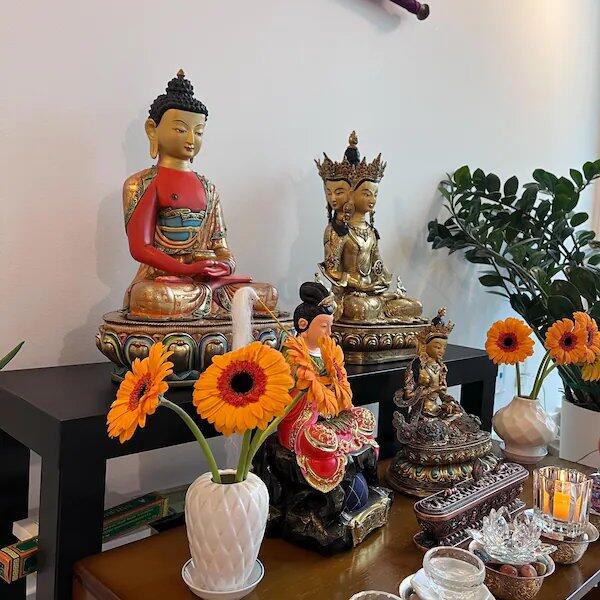
At Nidhiratna, our collection brings together Nepalese Buddhist statues representing revered figures such as Green Tara, White Tara, Chenrezig, Vajrasattva, Manjushri, Guru Rinpoche, Vajrapani, and Dzambhala.
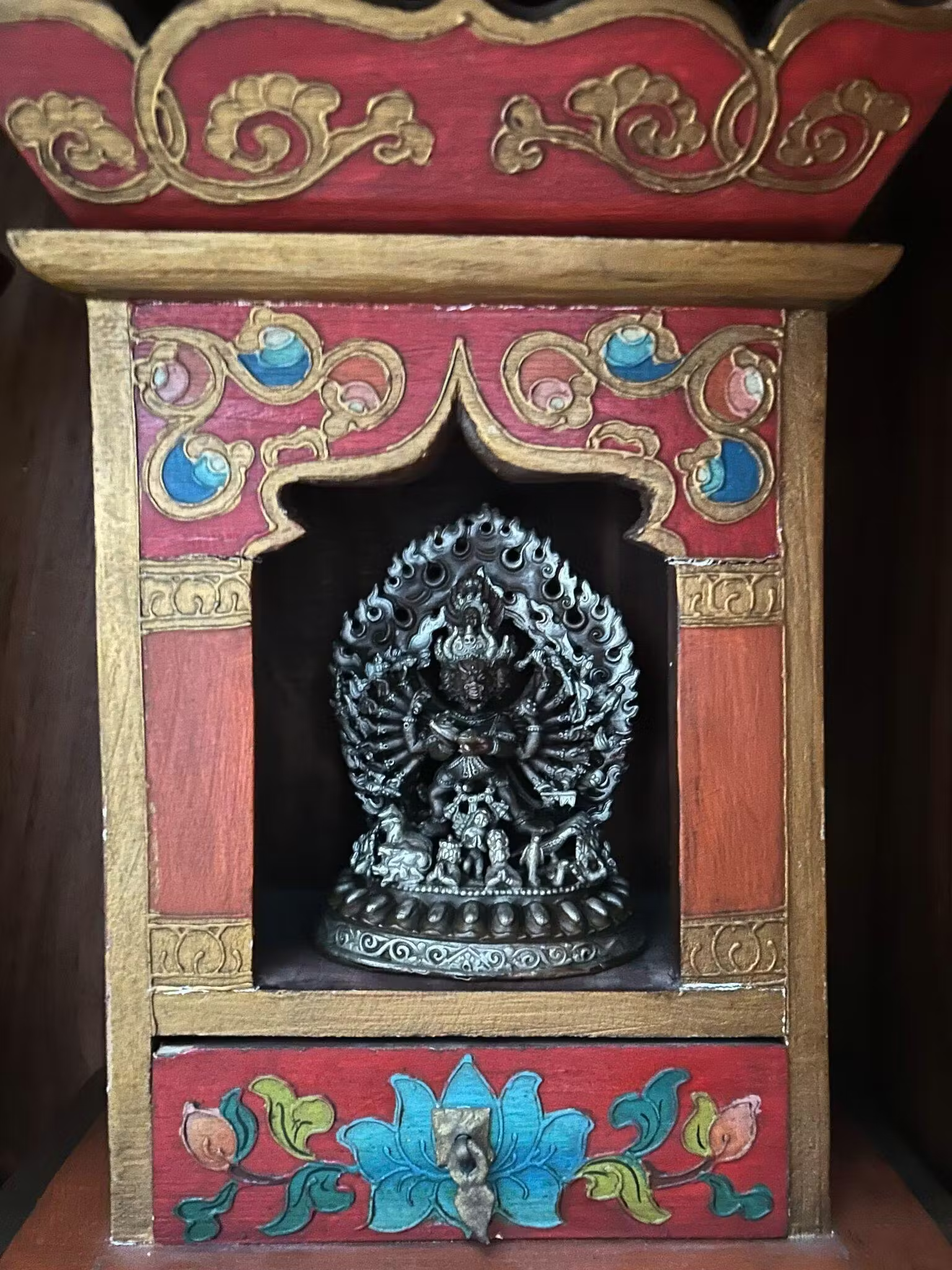
Our wider collection also includes Vajrayana ritual objects, mandala offering sets, Buddhist Ghau boxes, and other forms of Himalayan Buddhist ritual art.
Each piece reflects the artistic heritage of Nepal and the symbolism that gives Vajrayana Buddhist art its distinctive visual language.


Share:
Dü Sum Sangye: Buddhas of the Three Times Explained