

The Life of Shakyamuni Buddha: From Prince Siddhartha to the Enlightened Teacher
More than 2,500 years ago, a young prince walked away from a life of comfort in search of an answer to one of humanity’s deepest questions: Why do we suffer, and is there a way beyond suffering?
His name was Siddhartha Gautama. He was born in Lumbini, in present-day Nepal, among the Shakya people. After years of meditation, spiritual searching, hardship, and profound contemplation, Siddhartha attained enlightenment and became known as the Buddha, meaning “the Awakened One.” Because he belonged to the Shakya clan, he is also known as Shakyamuni Buddha, or “the Sage of the Shakyas.”
His story is not simply the story of a prince who became a religious teacher. It is the story of a human being who confronted aging, sickness, death, attachment, fear, and uncertainty and refused to turn away from them. His search eventually gave rise to Buddhism and a path that continues to guide millions of people around the world.
The Birth of Siddhartha Gautama in Lumbini
The life of Shakyamuni Buddha begins in Lumbini, a sacred garden in the southern plains of present-day Nepal. Buddhist tradition identifies Lumbini as the birthplace of Siddhartha Gautama. The site is now one of the most important pilgrimage destinations in the Buddhist world and has been recognized as a UNESCO World Heritage Site. An Ashokan pillar at Lumbini provides important historical evidence identifying the sacred birthplace.
According to Buddhist tradition, Siddhartha was born to King Shuddhodana, leader of the Shakya community, and Queen Maya. His mother is traditionally said to have given birth to him while visiting Lumbini Garden.
Stories surrounding his birth describe extraordinary signs and predictions. One of the best-known traditions tells that wise spiritual teachers examined the newborn child and recognized that he possessed the potential for an exceptional destiny. He could become either a great worldly ruler or a great spiritual teacher.
King Shuddhodana naturally hoped his son would become a powerful ruler. He wanted Siddhartha to inherit his position and continue the strength of the Shakya kingdom. Yet the destiny of the young prince would eventually take him in an entirely different direction.
The Young Prince of the Shakya Clan
Siddhartha's mother, Queen Maya, died shortly after his birth, and he was raised with great care by her sister, Prajapati Gautami, who became his foster mother.
He grew up in the Shakya realm and was surrounded by the privileges of royal life. He received an education appropriate for a prince and was trained in the skills expected of a future ruler.
According to Buddhist tradition, King Shuddhodana tried to protect his son from the painful realities of ordinary life. Siddhartha was given beautiful surroundings, fine clothing, entertainment, and every comfort available to a royal family.
But comfort could not answer the questions that eventually arose in his mind.
As he grew older, Siddhartha began to understand that the beautiful things surrounding him were temporary. Youth would not last forever. Health could disappear. People we love would eventually separate from us. And every living being would ultimately face death.
These realizations became the beginning of his spiritual journey.
Siddhartha and the Four Sights

One of the most famous stories from the life of the Buddha is the account of the Four Sights.
According to Buddhist tradition, Siddhartha eventually ventured outside the protected world of the palace. During these journeys, he encountered four sights that changed the direction of his life.
The Old Man
First, he saw an elderly man. Siddhartha was deeply troubled when he learned that aging was a natural part of human life and that no one could remain young forever.
The Sick Person
On another journey, he encountered a person suffering from illness. He realized that physical health could never be guaranteed. Even the strongest person could become sick.
The Dead Body
Then Siddhartha saw a dead person. Death was no longer an abstract idea. He understood that everyone, including himself and those he loved, would eventually face death.
The Wandering Ascetic
The fourth sight was different. Siddhartha saw a wandering spiritual seeker who had renounced ordinary worldly life in search of truth.
These encounters made Siddhartha realize that wealth and pleasure could not permanently protect anyone from suffering. He began to wonder whether there was a deeper form of freedom beyond the temporary pleasures and fears of ordinary existence.
This realization would eventually lead him to leave the palace.
The Great Renunciation
When Siddhartha was around 29 years old according to traditional accounts, he made one of the most important decisions in Buddhist history. He left his privileged life as a prince and began searching for a solution to the problem of suffering.
This event is often called the Great Renunciation.
Siddhartha left behind his palace, wealth, royal position, and the life he had known. He also separated from his family, including his wife Yashodhara and their young son Rahula.
His decision was not a rejection of love. Rather, it was driven by his conviction that temporary worldly happiness could not provide a lasting answer to aging, sickness, death, and suffering.
He became a wandering seeker.
Six Years of Spiritual Searching
After leaving his royal life, Siddhartha studied with respected spiritual teachers of his time. He learned advanced forms of meditation and explored different approaches to spiritual liberation.
Yet he remained unsatisfied.
He then turned toward severe ascetic practices. Along with other spiritual seekers, he subjected himself to extreme fasting and physical hardship, believing that denying the body might lead to liberation.
For years he practiced severe austerities.
But eventually Siddhartha recognized that extreme self-denial was not leading him toward the freedom he sought. A life of luxury had not provided the answer, but neither had extreme suffering.
He began to understand the importance of a balanced path.
The Middle Way
Siddhartha abandoned extreme asceticism and accepted nourishment so that he could regain his strength. Some of his former companions believed he had abandoned his spiritual search and left him.
But Siddhartha had reached an important insight.
Freedom would not be found through indulgence, but it would not be found through destroying the body either.
This principle became known as the Middle Way, a path that avoids both excessive sensual indulgence and extreme self-mortification.
Strengthened and determined, Siddhartha continued his meditation alone.
Enlightenment Beneath the Bodhi Tree

Siddhartha eventually arrived at what is now known as Bodh Gaya in Bihar, India. There, he sat in meditation beneath a sacred fig tree, later known as the Bodhi Tree.
He resolved not to rise until he had discovered the truth he had been seeking.
According to Buddhist tradition, Siddhartha entered deep meditation and confronted the forces of fear, temptation, attachment, and delusion. These experiences are traditionally represented through the figure of Mara, the tempter or embodiment of obstacles to awakening.
Siddhartha remained unmoved.
Through profound meditation and insight, he came to understand the nature of suffering, its causes, its cessation, and the path leading toward its cessation.
At that moment, Siddhartha Gautama became a Buddha, the Awakened One.
The place where this transformation is traditionally associated is now one of the most sacred pilgrimage sites in Buddhism. The Mahabodhi Temple Complex at Bodh Gaya is recognized by UNESCO as a World Heritage Site and is directly associated with the Buddha's enlightenment.
What Did the Buddha Discover?
The Buddha's awakening became the foundation of his teaching.
He taught that ordinary existence is marked by dukkha, often translated as suffering, dissatisfaction, or unsatisfactoriness. The Buddha did not teach that life consists only of suffering. Rather, he observed that conditioned things are impermanent and that clinging to what continually changes produces dissatisfaction.
He identified craving and attachment as central causes of this suffering and taught that freedom becomes possible when craving and ignorance are overcome.
These teachings became known as the Four Noble Truths:
- There is dukkha, or suffering and dissatisfaction.
- Dukkha has causes, particularly craving and attachment.
- The cessation of dukkha is possible.
- There is a path leading toward the cessation of dukkha.
That path became known as the Noble Eightfold Path, encompassing right view, intention, speech, action, livelihood, effort, mindfulness, and concentration.
Why Shakyamuni Buddha Is Called the Sage of the Shakyas
The name Shakyamuni comes from the Shakya clan to which Siddhartha belonged. “Shakya” refers to his people, while “muni” means sage or wise one.
Therefore, Shakyamuni Buddha can be understood as the Sage of the Shakya Clan.
The name is especially meaningful because it connects the enlightened teacher with his human origins. Before becoming the Buddha, he was Siddhartha Gautama, a member of the Shakya community who lived, questioned, struggled, practiced, and searched for truth.
The Buddha's First Teaching at Sarnath
After attaining enlightenment, the Buddha initially considered whether the profound truth he had discovered could be communicated to others.
Eventually, he decided to teach.
He travelled to Sarnath, near present-day Varanasi, where he met five former companions from his years of ascetic practice.
There, in the Deer Park, he delivered what Buddhist tradition considers his first sermon.
This teaching is remembered as the Dhammacakkappavattana Sutta, often translated as the “Turning of the Wheel of Dharma.”
In this first teaching, the Buddha explained the Middle Way, the Four Noble Truths, and the path toward liberation.
With this first teaching, the Buddha's public mission began.
The Growth of the Buddha's Community
The Buddha spent approximately the next 45 years travelling throughout the Gangetic plains, teaching people from different backgrounds.
He spoke to kings and merchants, farmers and laborers, monks and householders. His teachings were not restricted to one social group.
People who encountered him were encouraged to examine their own experience, develop ethical conduct, cultivate mindfulness, and develop wisdom.
Over time, a large community formed around his teachings.
This community became known as the Sangha.
The Buddha established an order of monks and, according to Buddhist tradition, an order of nuns as well. Lay followers also became an important part of the growing Buddhist community.
The Buddha as a Teacher
The Buddha did not present himself as a creator god or as someone who demanded blind belief. His teaching emphasized practice, observation, ethical living, meditation, and direct understanding.
He repeatedly returned to themes that remain central to Buddhist practice today: compassion, mindfulness, wisdom, impermanence, non-attachment, and liberation from ignorance.
His teachings were often adapted to the people listening to him. A king, a farmer, a grieving parent, and a wandering monk might receive different explanations while being guided toward the same fundamental understanding.
This ability to communicate profound ideas through simple human situations helped his teachings travel far beyond the communities where he first taught.
The Buddha's Compassion and Wisdom
Two qualities are especially important when understanding Shakyamuni Buddha: wisdom and compassion.
Wisdom allowed the Buddha to see the nature of existence clearly. Compassion shaped the way he shared that understanding with others.
His teaching was not presented simply as philosophical theory. It was intended to help living beings understand the causes of suffering and discover a path toward freedom.
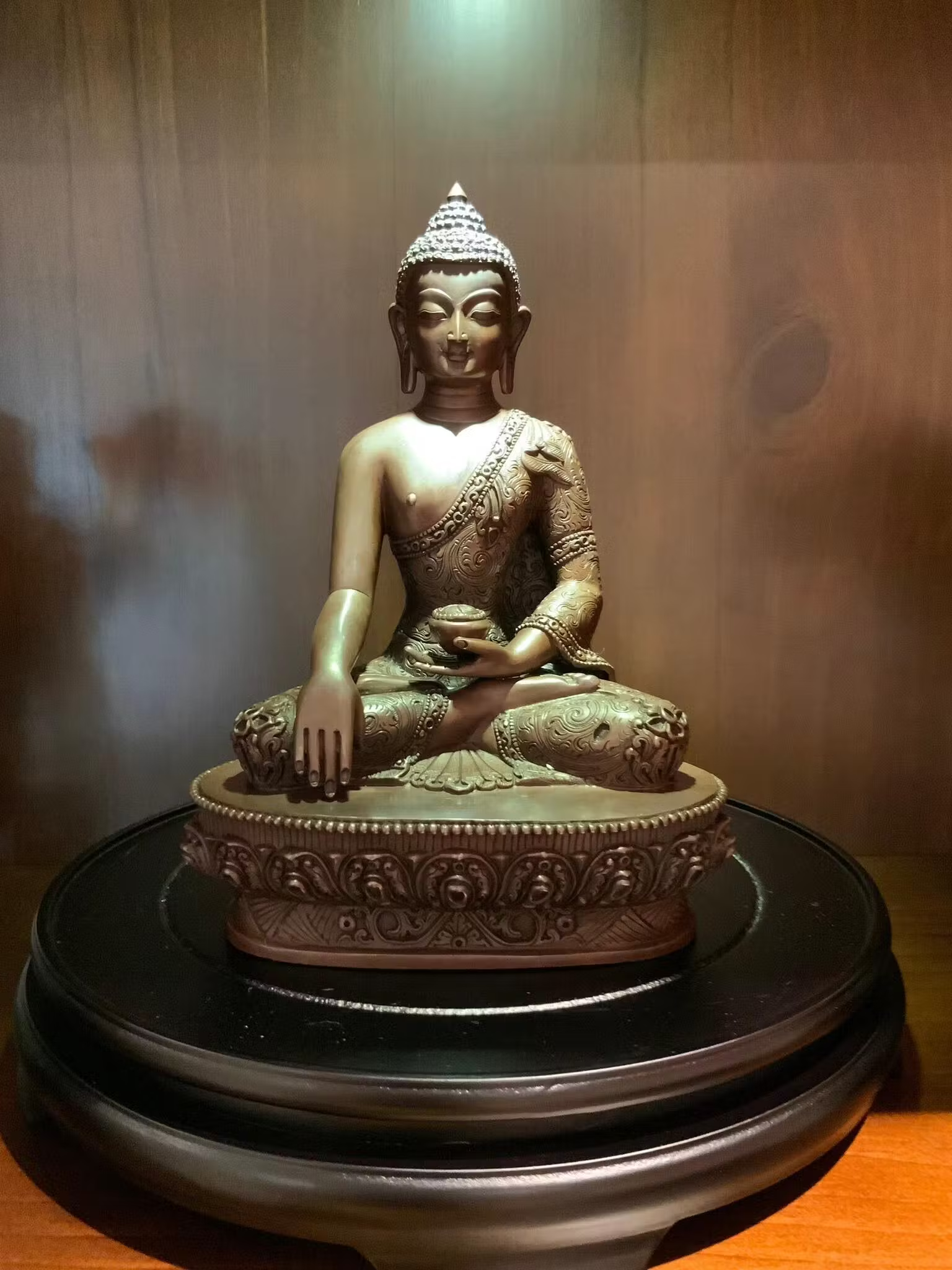
For this reason, images of Shakyamuni Buddha often show him seated in meditation, calm and composed. His expression communicates the stillness that comes from awakening rather than worldly power.
The Buddha's Final Journey
After decades of teaching, the Buddha eventually reached old age.
According to Buddhist tradition, when he was around 80 years old, he began his final journey toward Kushinagar, in present-day Uttar Pradesh, India.
His physical body had grown old, but his teaching continued.
At Kushinagar, the Buddha lay down between two trees and entered his final meditation.
His passing is known as Mahaparinirvana, the “Great Passing Beyond.”
It marks the end of the Buddha's physical life, but not the end of his teachings.
Before his passing, Buddhist tradition preserves his emphasis on impermanence and the need for his followers to continue practicing with diligence.
The Four Great Buddhist Pilgrimage Sites

The Buddha's life became associated with four principal pilgrimage places:
- Lumbini – the place of his birth
- Bodh Gaya – the place of his enlightenment
- Sarnath – the place of his first teaching
- Kushinagar – the place of his Mahaparinirvana
These four places create a remarkable map of the Buddha's life, connecting his birth, awakening, teaching, and final passing. Buddhist tradition specifically remembers these locations as important places of pilgrimage.
How Shakyamuni Buddha Changed the World
The Buddha's influence did not end with his passing.
His teachings were preserved and transmitted by generations of disciples. Over centuries, Buddhism spread throughout South, Central, East, and Southeast Asia and developed into diverse traditions and schools.
Today, the Buddha's teachings continue to influence philosophy, meditation, ethics, art, literature, architecture, and spiritual practice across the world.
His image has also become one of the most recognizable spiritual symbols in human history.
Yet the meaning of a Buddha statue goes deeper than its visual beauty.
The Meaning of the Shakyamuni Buddha Statue
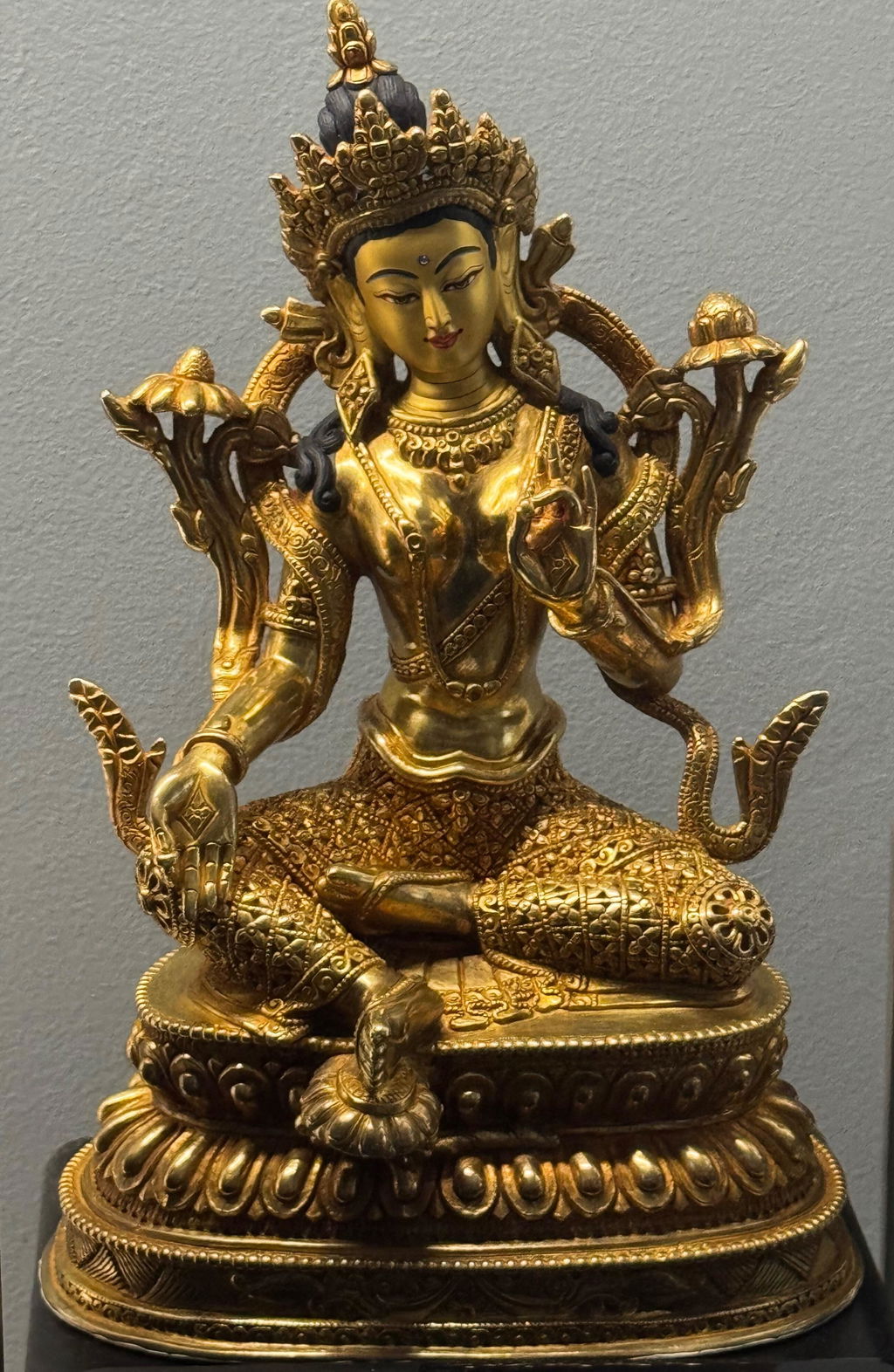
A statue of Shakyamuni Buddha represents the historical Buddha, Siddhartha Gautama, after his awakening.
His peaceful expression reflects inner calm. His meditative posture represents concentration and stability. His gestures, known as mudras, communicate particular moments or aspects of his teaching.
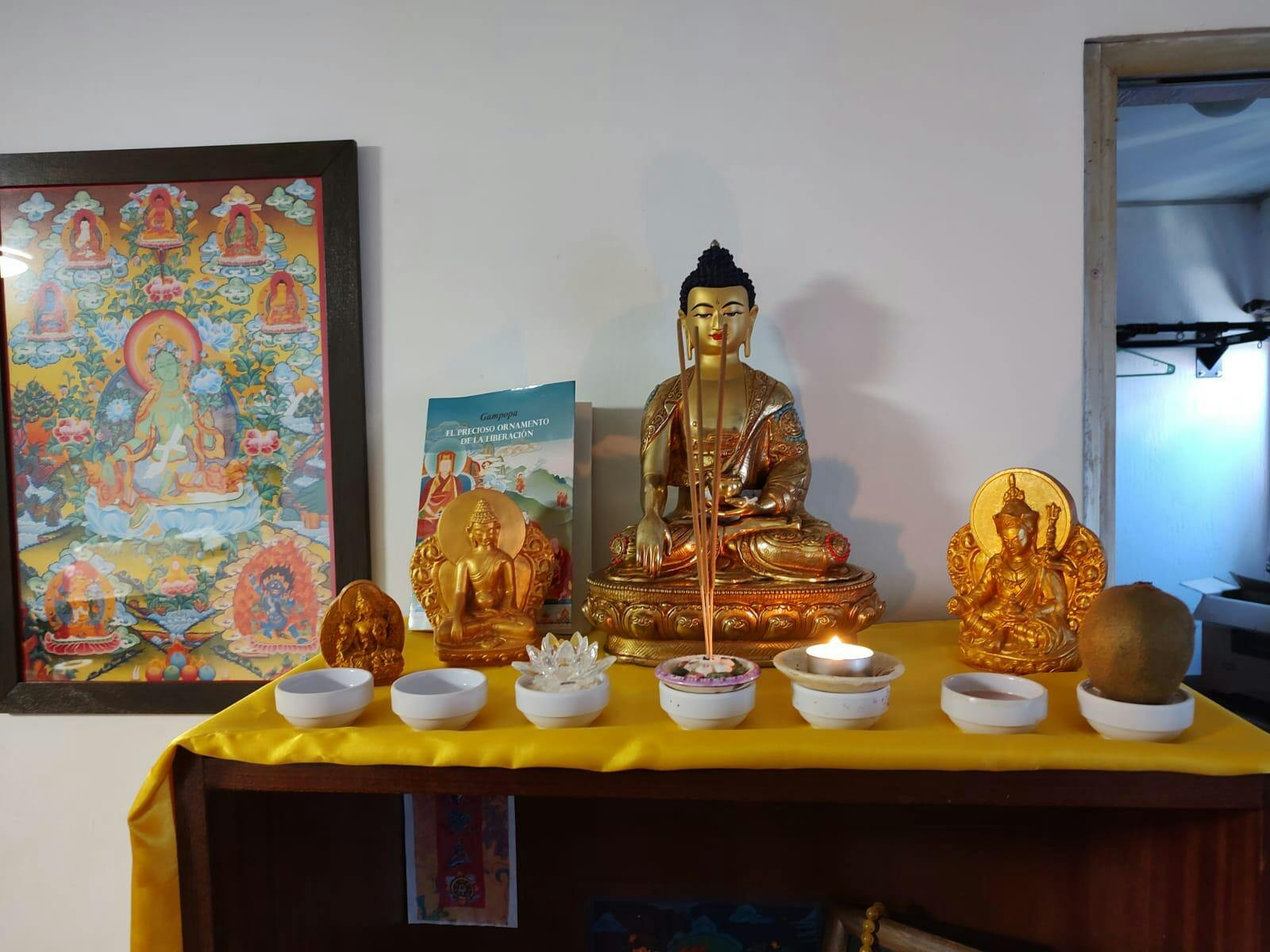
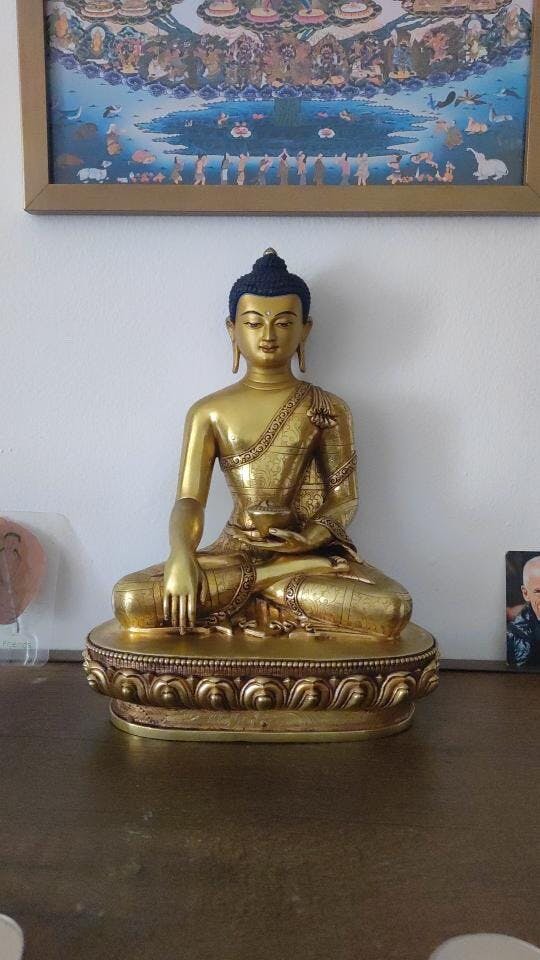
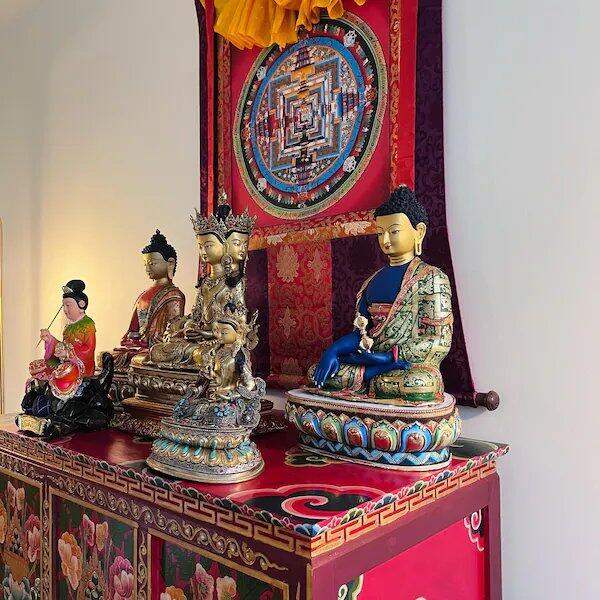
One of the most recognizable forms is the Buddha seated in the Bhumisparsha Mudra, or earth-touching gesture. In this representation, the Buddha touches the earth with his right hand while his left hand rests in his lap. The gesture recalls the moment of his awakening beneath the Bodhi Tree and his calling upon the earth as witness.
Another important feature is the alms bowl, which can symbolize the Buddha's life as a renunciant and his reliance on generosity.
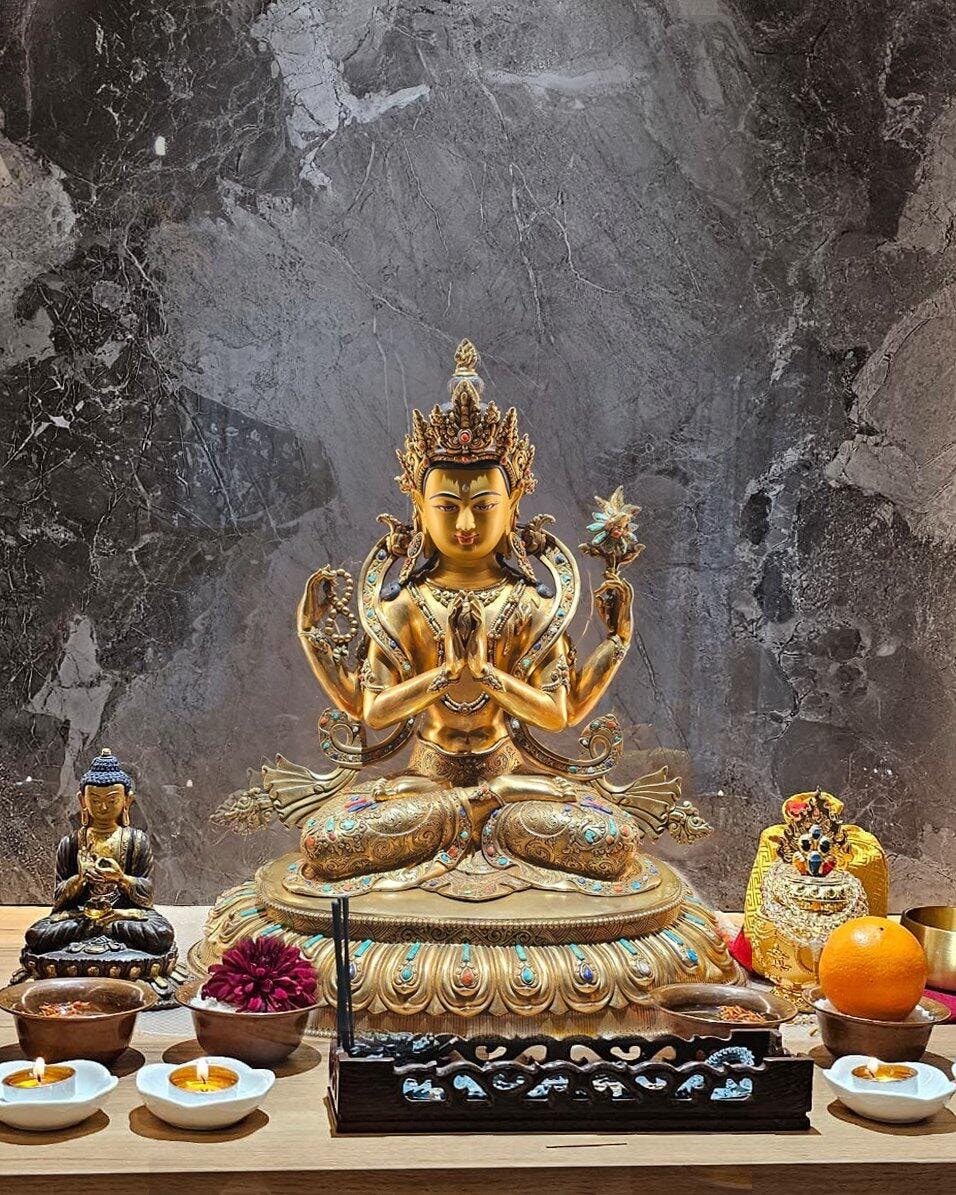
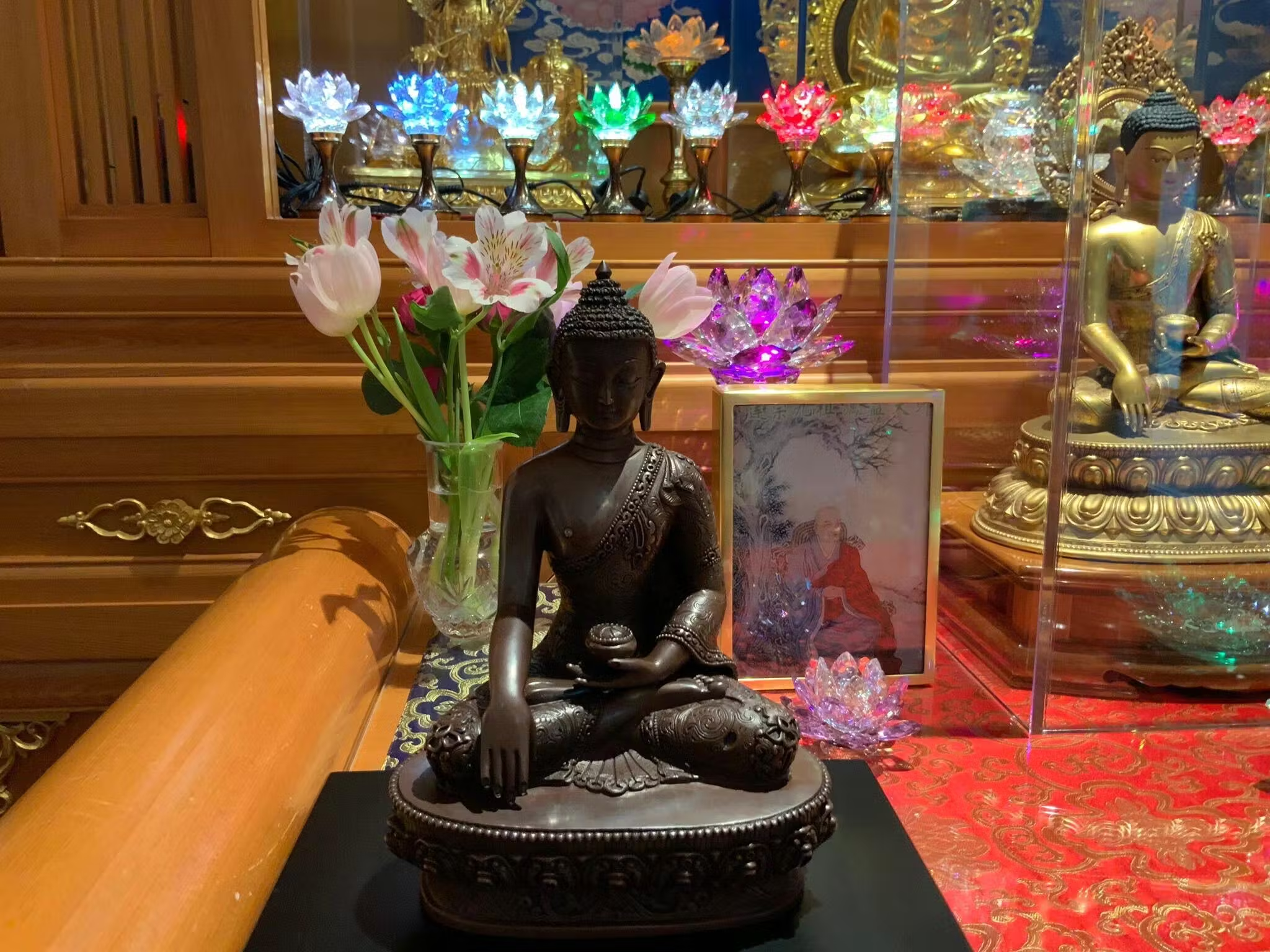
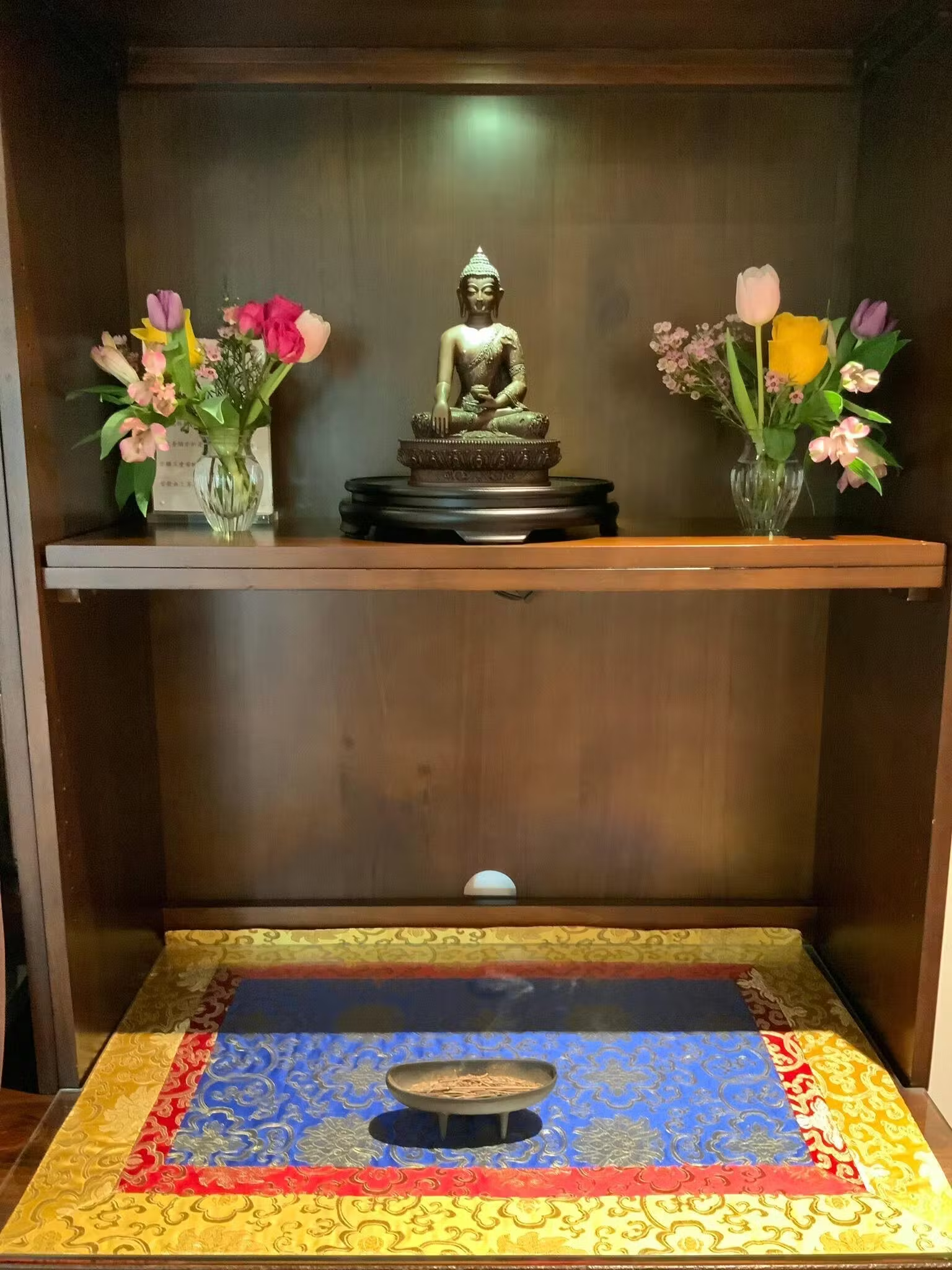
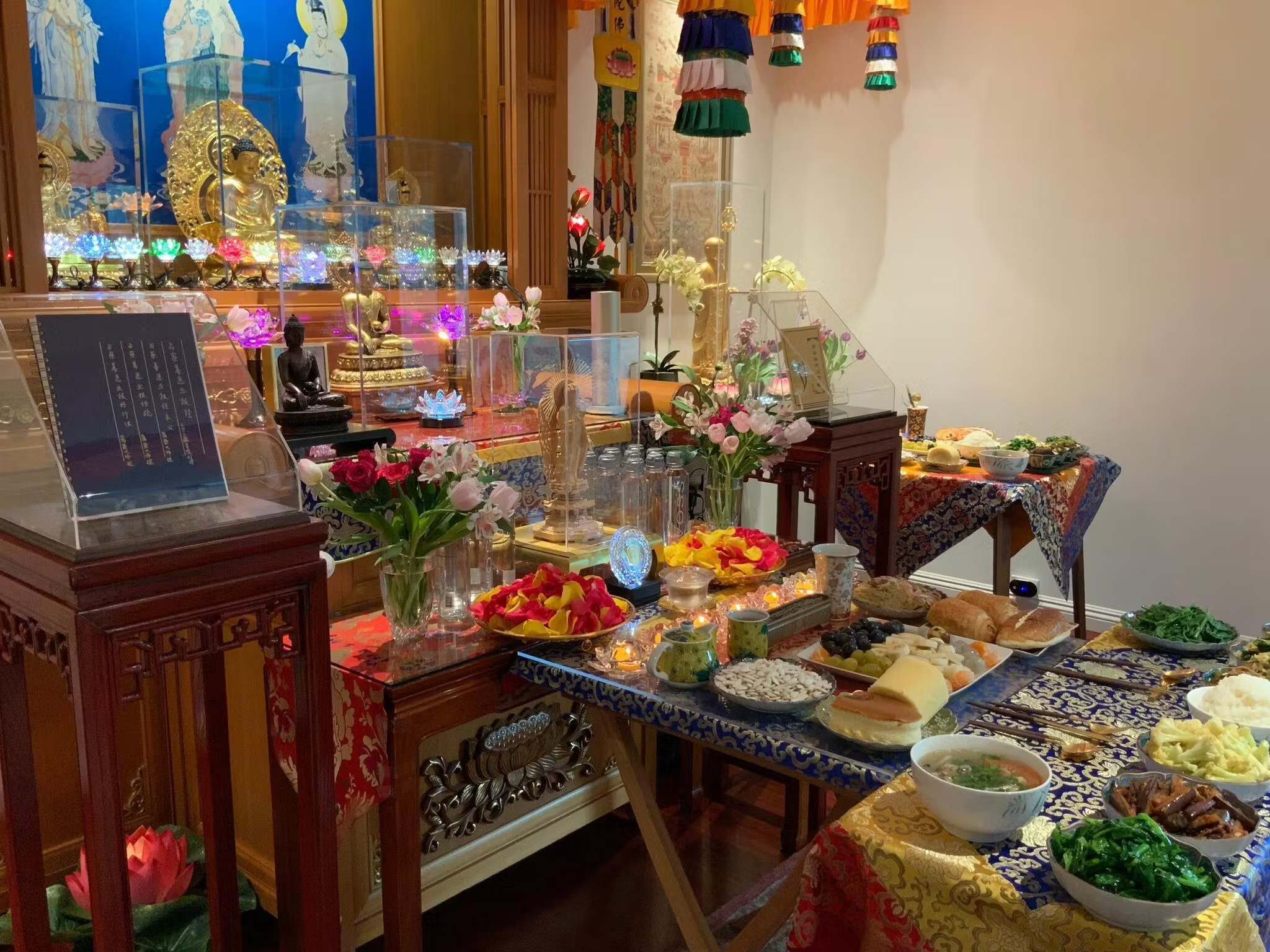
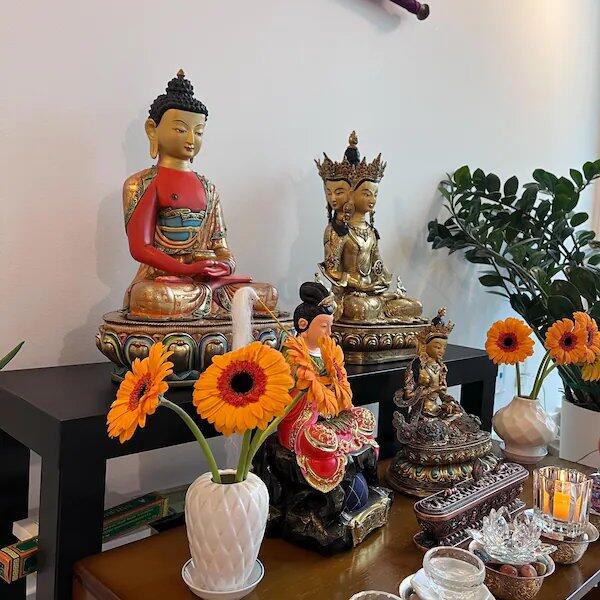
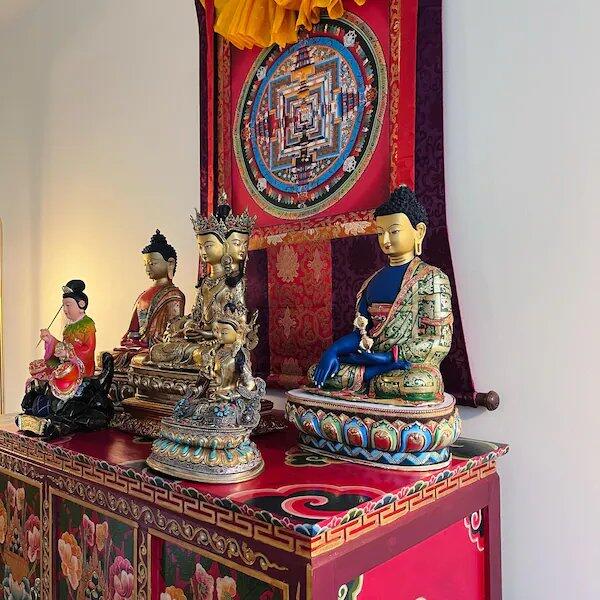
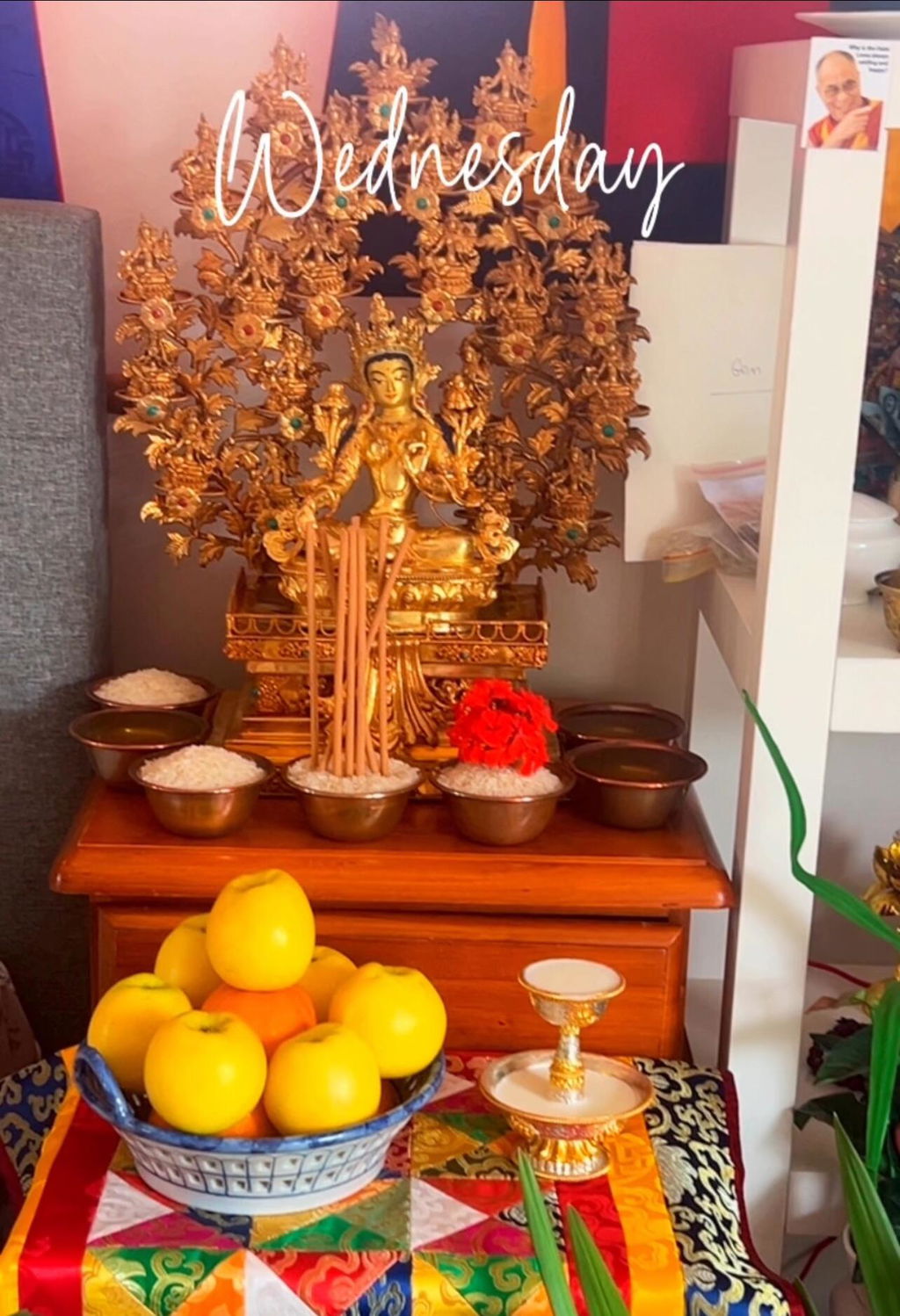
For devotees, a Shakyamuni Buddha statue may serve as a reminder to cultivate mindfulness, compassion, wisdom, and inner discipline. It can be placed in a meditation room, home shrine, Buddhist altar, temple, or peaceful contemplative space.
Why People Still Turn to Shakyamuni Buddha Today
The world has changed dramatically since the Buddha walked across ancient India, yet many of the questions he addressed remain familiar.
People still experience anxiety, loss, attachment, aging, illness, grief, desire, and uncertainty.
We still search for happiness while knowing that circumstances can change at any moment.
This is one reason the Buddha's story remains so powerful.
He did not begin his journey as an enlightened figure separated from ordinary human experience. He began as a young man who encountered suffering and refused to ignore it.
He searched.
He struggled.
He failed to find the answer through luxury.
He failed to find it through extreme asceticism.
Then he discovered another way.
His awakening transformed his understanding of life, and he spent the remainder of his life sharing that understanding with others.
The Enduring Legacy of Shakyamuni Buddha
More than two millennia after Siddhartha Gautama's life, his teachings continue to inspire people across cultures and generations.
From the sacred garden of Lumbini in Nepal to the Bodhi Tree at Bodh Gaya, from the Deer Park at Sarnath to Kushinagar, the places associated with his life remain destinations for pilgrims seeking to connect with the beginnings of Buddhism.
Lumbini in particular remains a living center of Buddhist pilgrimage. Archaeological research at the Maya Devi Temple has identified ancient structural remains associated with the early history of the sacred site, adding another dimension to our understanding of Lumbini's long religious importance.
The story of Shakyamuni Buddha ultimately reaches beyond one historical figure. It is a story about awakening, about looking directly at suffering, and about discovering that wisdom and compassion can transform the way we understand ourselves and the world.
That is why the image of Shakyamuni Buddha continues to sit quietly in temples, monasteries, meditation rooms, homes, and sacred spaces around the world.
His peaceful presence reminds us that awakening begins with seeing clearly.
And his life reminds us that the search for wisdom is not reserved for a prince, a monk, or a scholar. It begins with a simple human question:
Is there a way to live with greater wisdom, compassion, and freedom?
The life of Shakyamuni Buddha is the story of one person who devoted his entire life to finding the answer.



Share:
Vajrayana Buddhism