

Indra Jatra: The Sacred Festival of Kathmandu
Every year, when the monsoon begins to give way to autumn, the historic streets of Kathmandu come alive with drums, sacred masks, towering chariots, oil lamps, music, and thousands of devotees. At the heart of this extraordinary celebration is Indra Jatra, one of the most important traditional festivals of the Kathmandu Valley.
Known in Nepal Bhasa as Yenya, Indra Jatra is an eight-day festival deeply connected with Newar culture, religious traditions, ancient Kathmandu, and the Living Goddess Kumari. The celebration brings together Hindu and Buddhist traditions through sacred processions, masked dances, ritual performances, music, offerings, and community gatherings.
But Indra Jatra is much more than a colorful festival. Behind the chariots and celebrations are stories of gods, rain, harvest, protection, ancestors, devotion, and the ancient cultural life of Kathmandu.
What Is Indra Jatra?
Indra Jatra is an eight-day religious and cultural festival celebrated primarily in Kathmandu. It honors Indra, the ancient deity associated with heaven and rain, while also incorporating the famous chariot procession of the Living Goddess Kumari.
The festival is traditionally known as Yenya, a Newar festival whose celebrations fill the old city with sacred performances and processions. The festival features chariot processions, masked dances, religious enactments, and the public appearance of Kumari.
The festival does not take place inside one temple alone. Instead, its sacred landscape spreads through the historic center of Kathmandu, especially around Kathmandu Durbar Square, Basantapur, Hanuman Dhoka, and the surrounding old neighborhoods.
This is one reason Indra Jatra feels so different from an ordinary religious celebration. The city itself becomes part of the ritual.
The Story Behind Indra Jatra
The traditional story of Indra Jatra begins with Indra, the king of the heavens and deity associated with rain.
According to one widely told legend, Indra came down to the Kathmandu Valley in human form while searching for a special flower called parijat for his mother. The local people did not recognize him as a god. Believing him to be an ordinary person, they captured and restrained him.
When Indra's identity was eventually revealed, his mother came to the valley searching for him. After his release, she is traditionally associated with granting blessings of dew and rain to the people.
The story connects the festival with one of the most important natural forces in the agricultural life of the Kathmandu Valley: rain.
It also gives the festival a deeper meaning. Indra Jatra is not simply a celebration of a deity. It reflects an older relationship between people, nature, agriculture, seasonal change, and the divine.
Why Is Indra Jatra Important to Newar Culture?
To understand Indra Jatra, it is important to understand the Newar civilization of the Kathmandu Valley.
The Newars developed a remarkable urban culture shaped by temples, courtyards, traditional architecture, religious art, music, metalwork, wood carving, festivals, and community-based rituals.
Indra Jatra brings many of these traditions together.
- Sacred chariot processions
- Traditional Newar music
- Masked dances
- Religious performances
- Offerings and prayers
- Oil lamps and memorial rituals
- Kumari worship
- Bhairav displays
- Community gatherings
The festival therefore acts as a living expression of Kathmandu's cultural heritage. Rather than being preserved only inside museums or historical texts, these traditions continue to move through the same streets where generations of Newar communities have celebrated them.
Yenya and Indra Jatra
Many people know the festival simply as Indra Jatra, but within Newar culture it is also called Yenya.
The two names are often used interchangeably today, although the festival encompasses a much broader collection of rituals than the worship of Indra alone.
Yenya brings together several interconnected traditions, including the worship of deities, remembrance of the deceased, masked dances, chariot processions, and the appearance of the Kumari.
This combination is one of the defining characteristics of Kathmandu's traditional festival culture.
The Raising of Yosin: How Indra Jatra Begins
One of the most recognizable opening rituals of Indra Jatra is the raising of the sacred wooden pole known as Yosin or lingo at Basantapur.
The large wooden pole is ceremonially erected in the area of Kathmandu Durbar Square, traditionally announcing the beginning of the festival. The ceremony attracts large crowds who gather around the historic palace square and surrounding temples.
The sight of the enormous pole rising above Basantapur is one of the visual symbols that Kathmandu's ancient festival has begun.
The ritual also demonstrates something important about Newar festivals: major celebrations are built around collective participation. The preparation, movement, installation, music, rituals, and processions require the involvement of many members of the community.
Kumari Jatra: The Living Goddess of Kathmandu
For many visitors, the most famous part of Indra Jatra is the appearance of Kumari, the Living Goddess of Kathmandu.
The Kumari is a young girl from the Newar Shakya community who is traditionally revered as a living manifestation of the goddess. The institution of the Kumari has deep roots in Kathmandu's religious history.
Her residence, Kumari Ghar, stands beside Kathmandu Durbar Square and is known for its intricate traditional Newar woodcarving.
During Indra Jatra, the Kumari leaves her residence and is carried through the historic city in a magnificent wooden chariot.
For devotees, seeing the Kumari is not simply a cultural spectacle. It is an opportunity to receive her presence and blessing.
The tradition also represents the distinctive relationship between Hindu and Buddhist traditions within Kathmandu Valley society. The Kumari is revered across religious communities, making her one of the most important living symbols of Nepal's shared cultural heritage.
The Three Sacred Chariots
The Indra Jatra processions are closely associated with three important chariots.
Kumari Chariot
The largest and most famous is the chariot of Kumari, the Living Goddess.
Its massive wooden structure is decorated with traditional craftsmanship and pulled through the historic streets by devotees.
Bhairav Chariot
A second chariot represents Bhairav, a powerful manifestation associated with Shiva and protective forces.
Bhairav has a particularly strong presence during Indra Jatra, appearing not only through processions but also through enormous sacred masks displayed in the old city.
Ganesh Chariot
The third chariot represents Ganesh, the elephant-headed deity widely revered as a remover of obstacles and a guardian of auspicious beginnings.
Together, the three chariots form one of the central visual and spiritual features of Indra Jatra.
The Majestic Mask of Seto Bhairav
One of the most striking sights during Indra Jatra is the enormous mask of Seto Bhairav, or White Bhairav.
Displayed in the historic center of Kathmandu, the massive mask attracts crowds throughout the festival.
Bhairav represents a powerful and protective aspect of divine energy. His imposing appearance adds a dramatic dimension to the festival, but the mask is not merely decorative.
For devotees, sacred masks can function as powerful representations of deities and forces that protect the community.
Seto Bhairav therefore embodies the mixture of devotion, mythology, craftsmanship, and public ritual that makes Indra Jatra unique.
Lakhey: The Masked Spirit of Indra Jatra
If there is one figure that captures the energetic side of Indra Jatra, it is the Lakhey.
Lakhey dancers appear in elaborate masks and costumes while traditional drums and music fill the streets.
The Lakhey is commonly understood as a powerful supernatural or protective figure within Newar tradition. During Indra Jatra, the dramatic dance performances bring mythology into the middle of everyday city life.
The dancers move through crowded streets while musicians create an intense rhythm around them.
For children and families, the appearance of Lakhey can be both exciting and frightening. For the community, however, these performances are part of a much older ritual tradition passed from one generation to another.
Pulukisi and Other Traditional Performances
Indra Jatra is filled with traditional characters and performances beyond Lakhey and Bhairav.
One of the best known is Pulukisi, the representation of Indra's white elephant.
Pulukisi moves through the old streets accompanied by music and crowds, adding another playful yet symbolic element to the festival.
These performances show how Kathmandu's traditional festivals combine sacred mythology with public theater. The stories of gods, spirits, animals, and supernatural beings are not simply told in books. They are performed in the streets.
Remembering Ancestors During Indra Jatra
Indra Jatra also has an important connection with the remembrance of deceased family members.
Traditional rituals during the festival allow families to remember departed relatives through offerings, lights, incense, and visits to sacred places.
This aspect of the festival gives Indra Jatra a quieter and more reflective dimension.
Amid the drums, crowds, chariots, and masked dancers, families remember those who are no longer with them.
Why Are Masks So Important in Indra Jatra?
Masks are among the most recognizable forms of Newar religious art.
During Indra Jatra, masks representing gods, spirits, demons, and other supernatural figures appear throughout Kathmandu.
These masks are not simply costumes. They are connected with ritual performance, mythology, sacred space, and traditional craftsmanship.
Newar artisans have historically developed highly sophisticated techniques for creating religious objects from wood, metal, clay, and other materials.
This artistic heritage is also visible in Nepalese Buddhist and Hindu sculptures, paubha paintings, temple architecture, and ritual objects.
For anyone interested in Nepalese art, Indra Jatra offers an extraordinary opportunity to see religious art functioning within a living community rather than as an object separated from its original cultural context.
Indra Jatra and the Living Heritage of Kathmandu
One of the most remarkable things about Indra Jatra is that it continues to take place within the historic urban environment of Kathmandu.
The festival passes through courtyards, temples, squares, narrow lanes, and historic neighborhoods.
The buildings are not merely a backdrop. They form part of the ritual landscape.
The chariots follow traditional routes. Musicians perform established rhythms. Communities maintain particular responsibilities. Rituals follow inherited practices.
This is why Indra Jatra can be understood as a form of living heritage.
It connects the present generation with the artistic, religious, and social traditions of earlier generations.
When Is Indra Jatra Celebrated?
Indra Jatra follows the traditional lunar calendar, so its date changes from year to year.
The festival generally falls in August or September, around the full moon period of the Newar month of Yanla.
The exact dates and procession schedules change each year, so visitors planning to attend should check the festival calendar for the particular year.
Indra Jatra in Kathmandu: What Visitors Can Expect
If you visit Kathmandu during Indra Jatra, expect the old city to feel completely different.
- Crowds gathering around Kathmandu Durbar Square
- Traditional drums and Newar music
- The towering Kumari chariot
- Ganesh and Bhairav processions
- Lakhey dancers
- Pulukisi performances
- Giant Bhairav masks
- Oil lamps and offerings
- Traditional architecture filled with spectators
- Food and community gatherings
- Ritual activities continuing throughout the day and evening
The festival can become extremely crowded, especially around major processions.
Visitors should remember that Indra Jatra is first and foremost a religious and cultural celebration for local communities, not simply a performance created for tourists.
Respecting rituals, asking before photographing people at close range, following local instructions, and avoiding interference with processions are important ways to experience the festival respectfully.
Indra Jatra and Nepalese Art
Indra Jatra also provides a window into the extraordinary artistic traditions of the Kathmandu Valley.
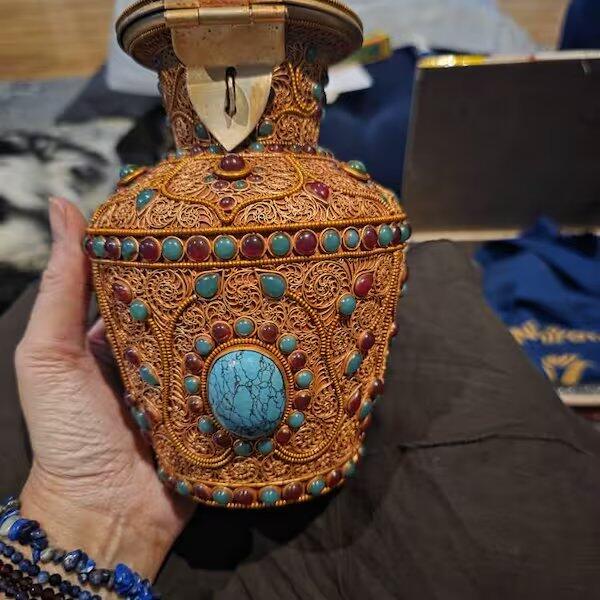
The carved wooden chariots, monumental masks, metal ritual objects, temple decorations, costumes, jewelry, and traditional instruments all reflect centuries of craftsmanship.
This same artistic heritage can be seen in the work of Newar artisans from Patan, Kathmandu, and Bhaktapur, where traditional techniques continue to shape Nepalese religious art today.
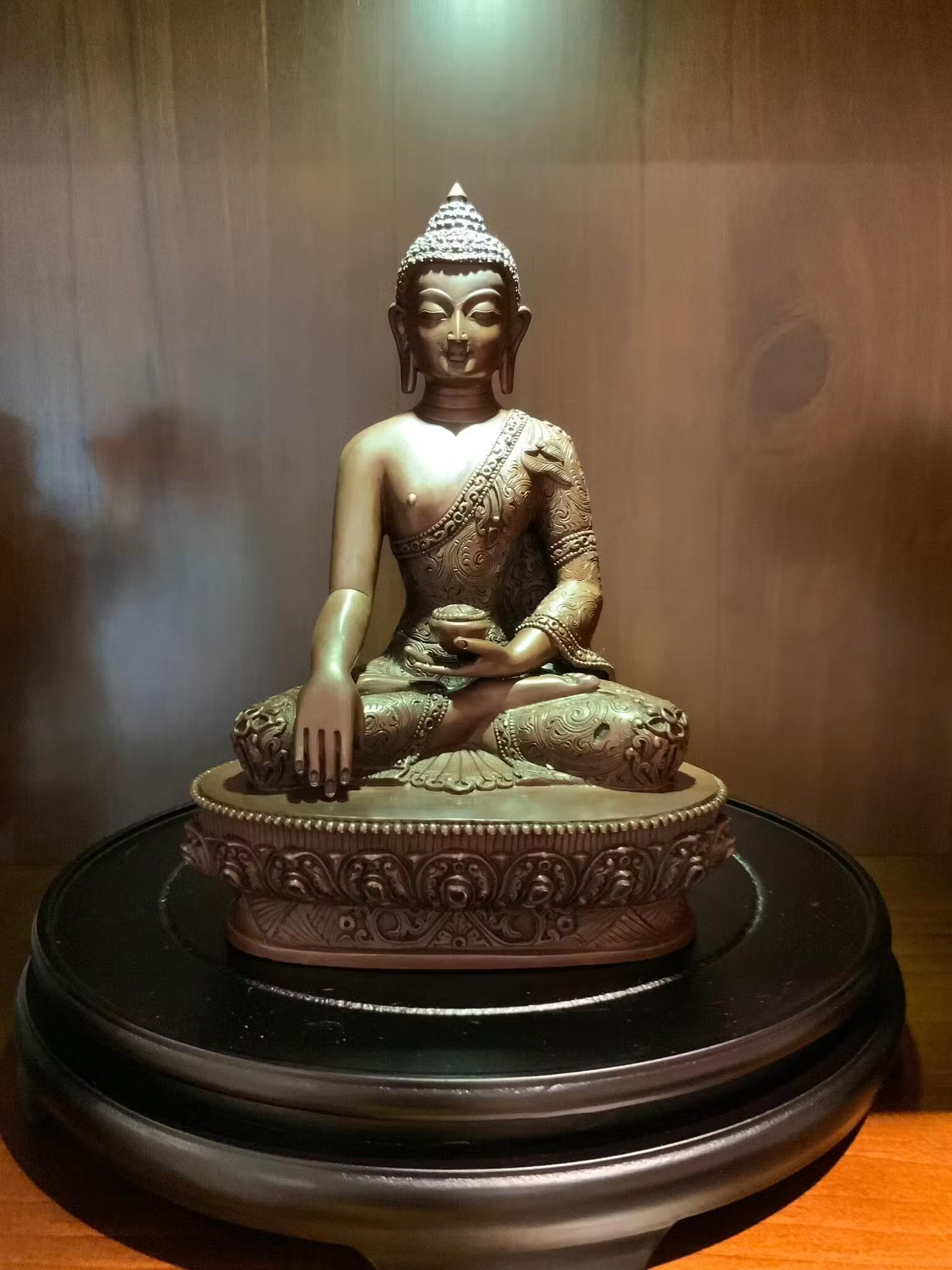
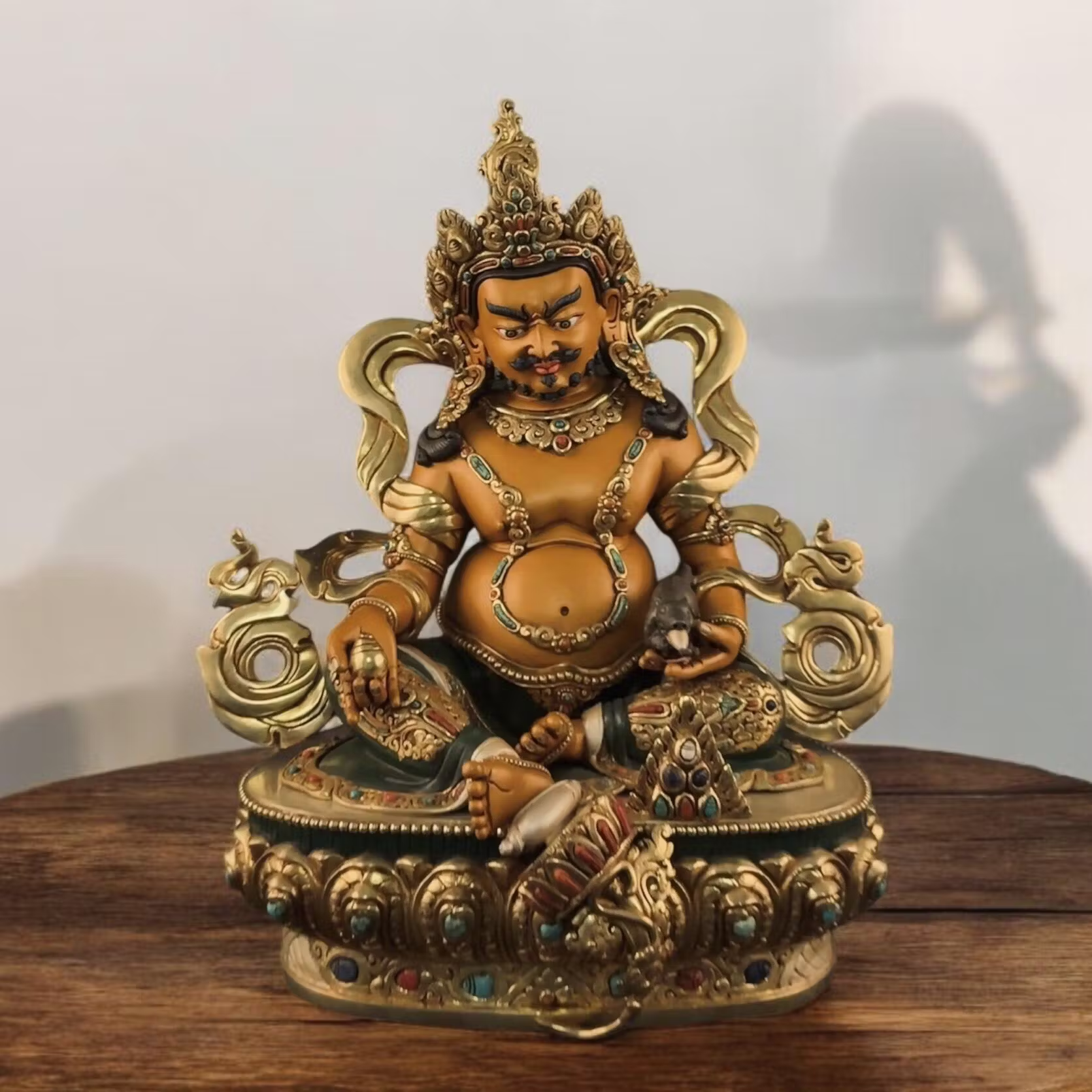
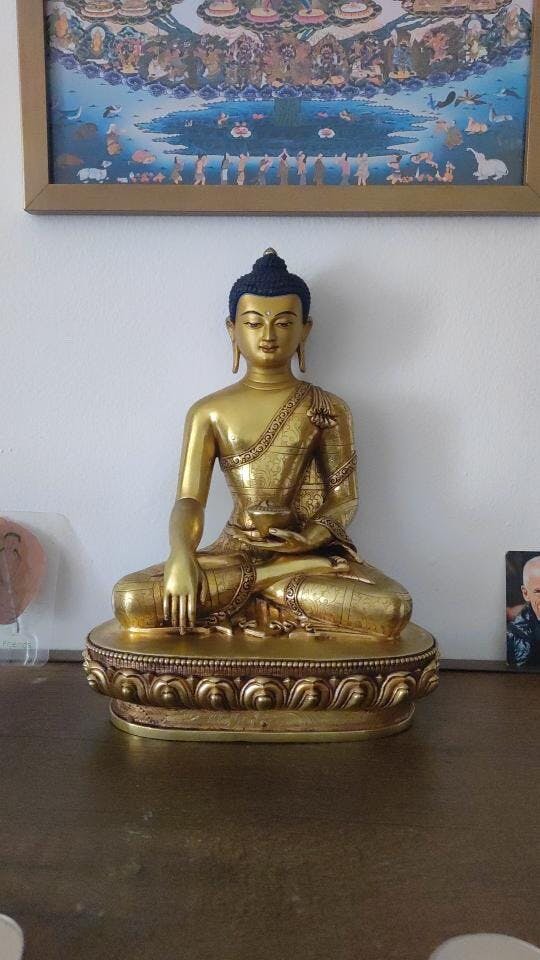
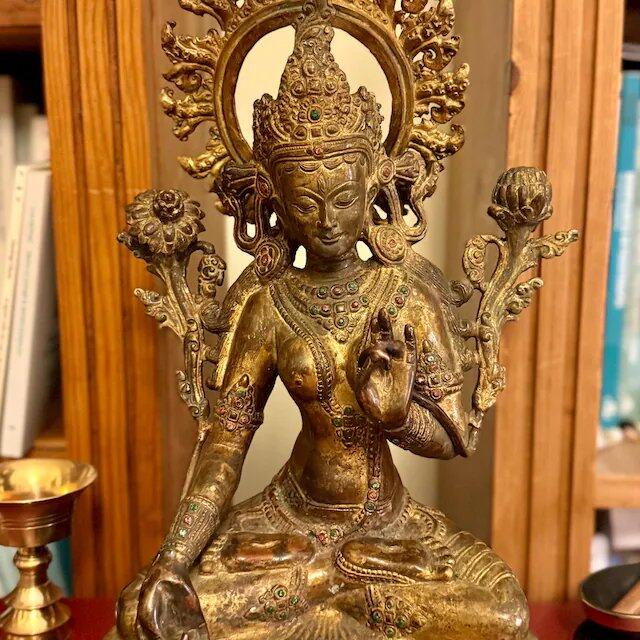
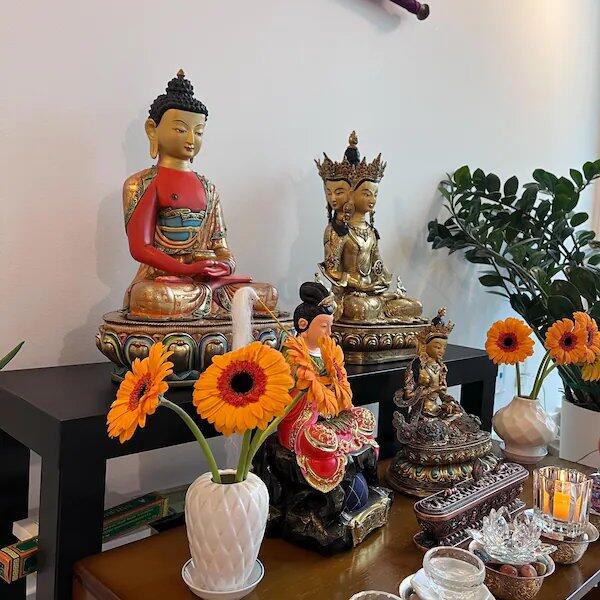
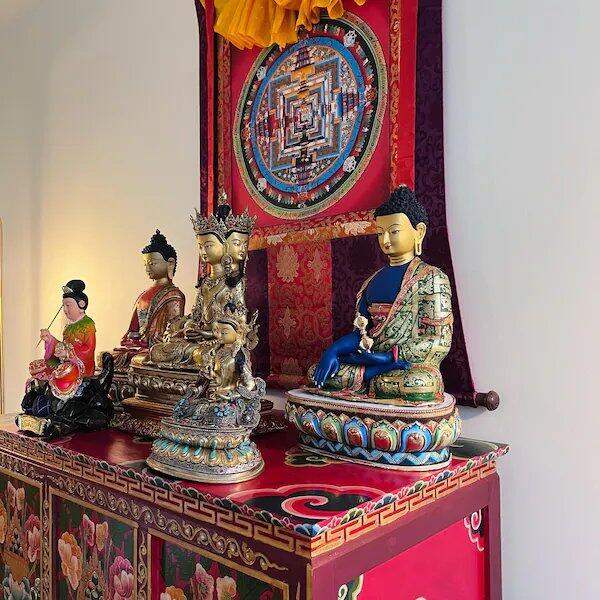
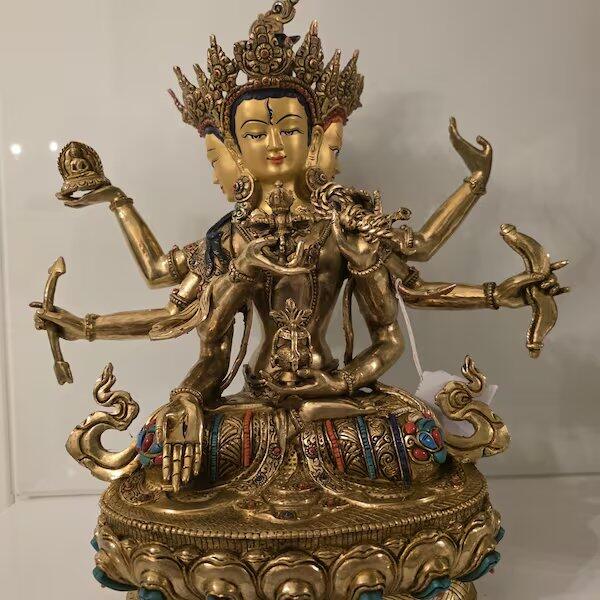
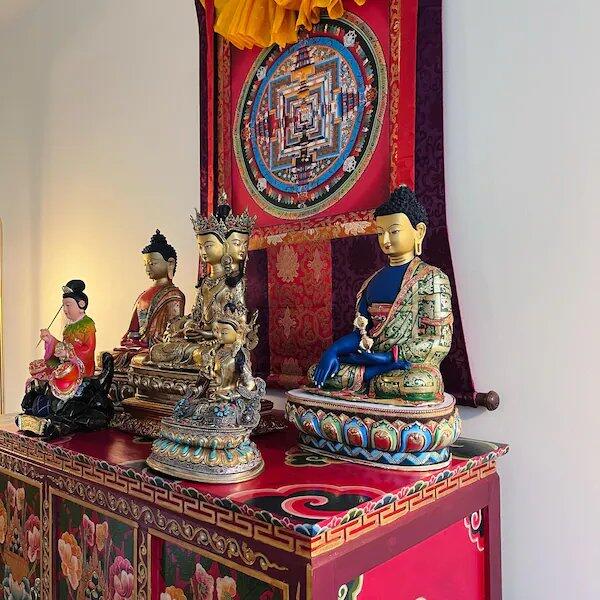
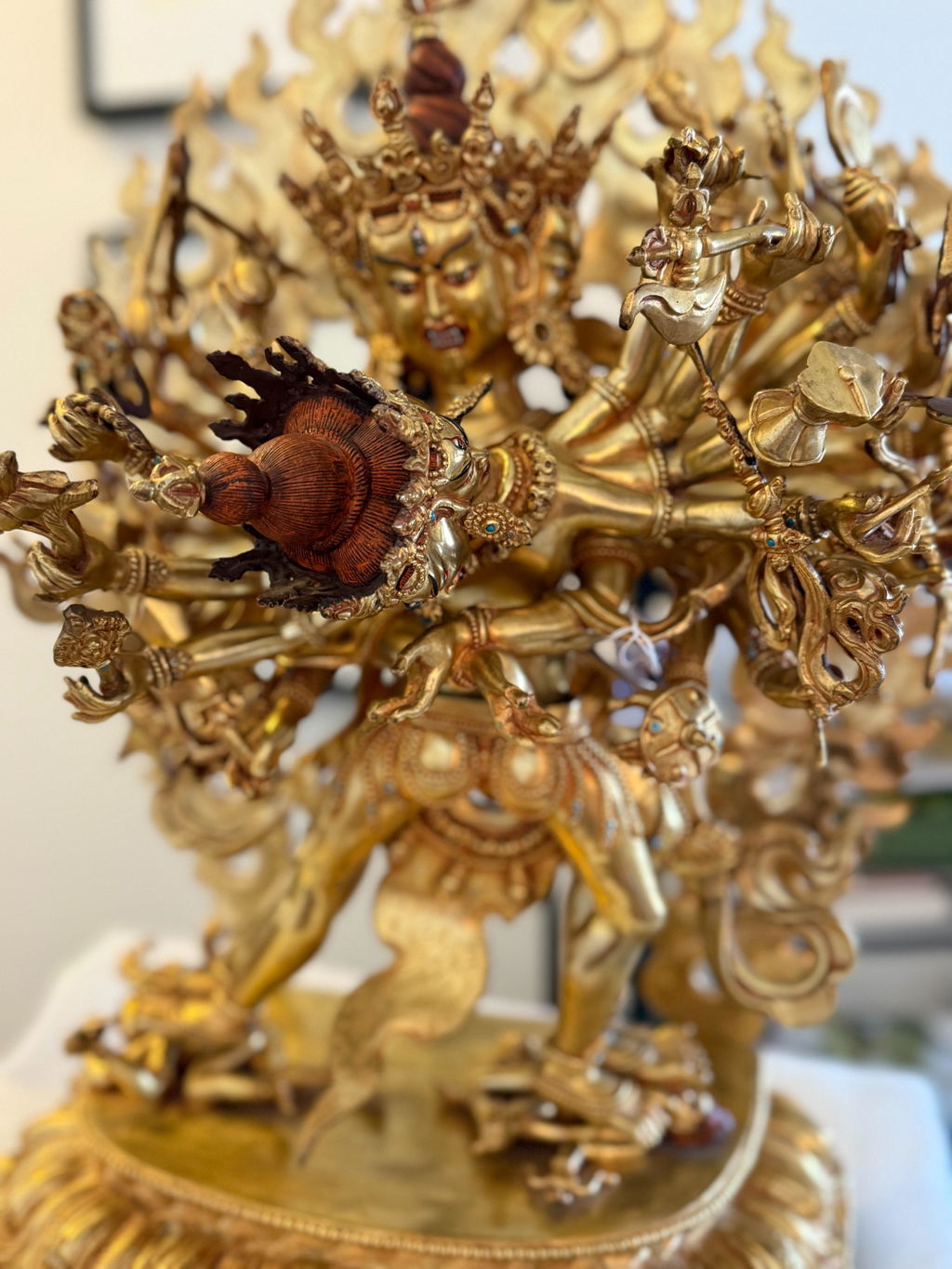
For collectors and devotees of Himalayan Buddhist and Nepalese art, understanding festivals such as Indra Jatra adds another layer of meaning to the sacred objects associated with the Kathmandu Valley.
A statue, ritual object, or traditional artwork is not simply an object of beauty. It can also represent a larger cultural world of mythology, devotion, craftsmanship, and living tradition.
What Makes Indra Jatra Different From Other Festivals in Nepal?
Nepal is home to countless festivals, but Indra Jatra has a particularly distinctive character because of the way it brings together so many traditions in one urban celebration.
It combines:
- Mythology through the story of Indra and the rain.
- Devotion through the worship of deities and Kumari.
- Buddhist and Hindu traditions through shared ritual culture.
- Performance through Lakhey, Pulukisi, and masked dances.
- Craftsmanship through chariots, masks, costumes, and sacred objects.
- Community through neighborhood participation.
- History through the ancient streets and palace squares of Kathmandu.
- Remembrance through rituals honoring deceased family members.
Together, these elements create a festival that is both sacred and communal.
The Deeper Meaning of Indra Jatra
At its deepest level, Indra Jatra is about relationships.
It connects people with the divine.
It connects the present with the past.
It connects the city with its traditions.
It connects religious devotion with artistic expression.
And it connects communities with one another.
The story of Indra also reminds us of the importance of rain and nature, while remembrance rituals acknowledge the continuing relationship between the living and their ancestors.
The appearance of Kumari represents another dimension of Kathmandu's spiritual heritage: the belief that the sacred can be encountered through a living human presence.
Meanwhile, the masks, dances, music, and chariots demonstrate how religious stories can remain alive through performance.
Indra Jatra: A Festival That Keeps Kathmandu's Heritage Alive
Walking through Kathmandu during Indra Jatra is like stepping into a story that has never completely ended.
The drums echo through ancient streets. Chariots move slowly between historic buildings. Devotees gather around sacred images. Masked dancers emerge into the crowds. Lamps burn in remembrance of ancestors. And the Kumari appears before thousands of people as one of Nepal's most enduring sacred traditions.
This is what makes Indra Jatra in Kathmandu so significant.
It is not only a festival of Indra.
It is not only Kumari Jatra.
It is not only a celebration of Newar culture.
It is a living combination of mythology, religion, art, history, community, and devotion.
For Nepal, Indra Jatra represents a remarkable cultural inheritance. For Kathmandu, it is one of the moments when the city's ancient identity becomes most visible.
And for anyone seeking to understand the cultural soul of the Kathmandu Valley, Indra Jatra offers one of the most powerful places to begin.
Frequently Asked Questions About Indra Jatra
What is Indra Jatra?
Indra Jatra is an eight-day festival primarily celebrated in Kathmandu that honors Indra and incorporates chariot processions, masked dances, religious rituals, and the public appearance of the Living Goddess Kumari.
What is Indra Jatra called in Newari?
Indra Jatra is commonly known as Yenya or Yenya Punhi in Newar tradition.
Why is Kumari important during Indra Jatra?
The Kumari is revered as the Living Goddess of Kathmandu. During Indra Jatra, she appears publicly in a ceremonial chariot procession through the old city.
What are the main chariots of Indra Jatra?
The principal processions include the chariots associated with Kumari, Bhairav, and Ganesh.
What is Lakhey in Indra Jatra?
Lakhey is a masked supernatural or protective figure featured in traditional Newar dance performances during Indra Jatra.
Where is Indra Jatra celebrated?
The central celebrations take place around Kathmandu Durbar Square, Basantapur, Hanuman Dhoka, and the historic neighborhoods of Kathmandu.
How long does Indra Jatra last?
Indra Jatra traditionally lasts eight days.
When does Indra Jatra take place?
The festival follows the lunar calendar and generally takes place in August or September. The exact dates change each year.
Is Indra Jatra a Hindu or Buddhist festival?
Indra Jatra reflects the intertwined Hindu and Buddhist religious traditions of the Kathmandu Valley and is particularly important within Newar culture.
Final Thoughts
Indra Jatra is one of those rare festivals where history does not feel distant.
It is carried through the streets, played through drums, carved into wooden chariots, painted onto sacred masks, illuminated by lamps, and preserved through generations of community participation.
To see Indra Jatra is to see Kathmandu's living heritage in motion.
And to understand the festival is to understand a little more about the extraordinary cultural world of the Kathmandu Valley.


Share:
Four Noble Truths, Eightfold Path & Karma in Buddhism