

Four Noble Truths, Noble Eightfold Path & Karma: Buddhist Teachings Explained
Buddhism offers a profound understanding of suffering, its causes, and the possibility of freedom. At the heart of these teachings are the Four Noble Truths, the Noble Eightfold Path, and the principle of karma. Together, they provide a practical framework for understanding the human experience, cultivating wisdom, living ethically, and moving toward liberation.
The teachings of Shakyamuni Buddha, the historical Buddha, are not simply philosophical ideas to study. They encourage practitioners to examine their own thoughts, actions, attachments, and experiences. The Four Noble Truths explain the problem and its cause, while the Noble Eightfold Path describes a way of practice. Karma helps explain how intentional actions influence future experiences and patterns of existence.
Understanding these three foundational Buddhist teachings provides a valuable starting point for anyone interested in Buddhism, Buddhist philosophy, meditation, mindfulness, or the path toward enlightenment.
What Are the Four Noble Truths?
The Four Noble Truths are among the most fundamental teachings of Buddhism. They provide a framework for understanding suffering and the possibility of freedom from it.
Traditionally, the Four Noble Truths are understood as:
-
The truth of suffering or dukkha
-
The truth of the origin of suffering
-
The truth of the cessation of suffering
-
The truth of the path leading to the cessation of suffering
The Four Noble Truths are not intended simply as pessimistic statements about life. Instead, they can be understood as a diagnosis and remedy. The Buddha identified the problem, explained its cause, described the possibility of its ending, and presented a path of practice leading toward liberation.
1. The First Noble Truth: Dukkha
The first noble truth is traditionally described as dukkha, a Pali term often translated as “suffering.” However, dukkha has a broader meaning than physical pain or emotional suffering.
It can also refer to the unsatisfactory or unstable nature of conditioned existence. Even pleasant experiences change. Relationships change, circumstances change, bodies age, and possessions eventually disappear. Because everything conditioned is subject to change, relying upon temporary experiences for permanent satisfaction can lead to disappointment and dissatisfaction.
This does not mean Buddhism teaches that life contains nothing beautiful or joyful. Rather, it encourages us to recognize the impermanent nature of experience.
Understanding dukkha allows us to look more carefully at the causes of dissatisfaction instead of simply trying to escape uncomfortable experiences.
2. The Second Noble Truth: The Origin of Suffering
The second noble truth examines the causes of dukkha.
Buddhist teachings identify craving, attachment, and ignorance as important conditions underlying suffering. We may crave pleasant experiences, resist unpleasant experiences, or become attached to people, possessions, identities, opinions, and circumstances.
The problem is not simply having preferences. Suffering becomes more deeply rooted when craving develops into clinging and we believe that changing external circumstances will provide permanent satisfaction.
For example, we may think:
“I will finally be happy when I have this possession.”
“I will be satisfied when this person behaves differently.”
“I will be at peace when everything goes exactly as I want.”
The Buddha's teachings encourage us to investigate these patterns and understand how attachment and craving contribute to dissatisfaction.
3. The Third Noble Truth: The Cessation of Suffering
The third noble truth presents an important message of hope: suffering can cease.
When craving, attachment, and ignorance are brought to an end, the conditions that perpetuate suffering can also cease. This freedom is associated with nirvana, the liberation sought through Buddhist practice.
Rather than treating suffering as an unavoidable permanent condition, Buddhism presents the possibility of transformation.
This teaching shifts the focus from simply asking, “Why am I suffering?” to asking, “What causes suffering, and how can those causes be released?”
4. The Fourth Noble Truth: The Noble Eightfold Path
The fourth noble truth identifies the Noble Eightfold Path as the way leading toward the cessation of suffering.
The Eightfold Path is not simply a list of rules. It is a comprehensive approach to developing wisdom, ethical conduct, mindfulness, and mental discipline.
The eight factors are:
-
Right View
-
Right Intention
-
Right Speech
-
Right Action
-
Right Livelihood
-
Right Effort
-
Right Mindfulness
-
Right Concentration
These elements are traditionally grouped into three broad areas: wisdom, ethical conduct, and mental discipline.
What Is the Noble Eightfold Path?
The Noble Eightfold Path is one of the central practices in Buddhism. It provides guidance for how a person can cultivate understanding, ethical behavior, mindfulness, and concentration.
The eight factors are interconnected rather than being a rigid sequence. Practicing one aspect can support the development of the others.
Right View
Right View involves developing an appropriate understanding of reality and the Buddha's teachings.
It includes recognizing the Four Noble Truths, understanding cause and effect, and seeing the consequences of unskillful patterns.
Right View does not mean blindly accepting ideas. Buddhist practice traditionally encourages investigation and direct understanding.
Right Intention
Right Intention concerns the motivations behind our thoughts and actions.
Practitioners cultivate intentions associated with letting go, goodwill, compassion, and non-harming. By examining motivation, we become more aware of how our inner states influence our behavior.
Right Speech
Right Speech encourages truthful, compassionate, and beneficial communication.
Buddhist teachings caution against harmful forms of speech such as deliberate lying, divisive communication, harsh speech, and meaningless or harmful talk.
Our words can create harmony or conflict, making speech an important part of ethical Buddhist practice.
Right Action
Right Action concerns ethical conduct.
Rather than focusing only on personal beliefs, Buddhism emphasizes how those beliefs are expressed through behavior. Compassion, non-harming, honesty, and respect for life are important dimensions of Buddhist ethical practice.
Right Livelihood
Right Livelihood refers to earning a living in a way that avoids causing unnecessary harm.
This teaching connects spiritual practice with everyday life. Work is not viewed as separate from ethical development; the way we earn and use our livelihood can reflect our values and intentions.
Right Effort
Right Effort involves cultivating wholesome mental qualities while reducing harmful ones.
This requires continuous awareness of the mind. Instead of allowing anger, greed, resentment, or confusion to control our actions, Buddhist practice encourages us to recognize these states and cultivate more skillful alternatives.
Right Mindfulness
Right Mindfulness is the cultivation of clear, attentive awareness.
Mindfulness involves observing the body, feelings, mental states, and experiences with greater clarity. Rather than automatically reacting to everything that arises, practitioners learn to recognize experiences as they occur.
Today, mindfulness has become widely known beyond Buddhist communities, but within Buddhism it forms part of a much broader path involving ethics, wisdom, and mental cultivation.
Right Concentration
Right Concentration refers to developing a stable and focused mind through meditation and mental training.
A concentrated mind can become calmer and more capable of observing experience clearly. Meditation therefore supports the development of insight and wisdom rather than functioning as an isolated practice.
What Is Karma in Buddhism?
Karma is another important concept in Buddhist philosophy.
The word karma comes from a term meaning action. In Buddhist teachings, karma is particularly associated with intentional actions of body, speech, and mind and their consequences.
This means karma is not simply “fate.”
A common misunderstanding is that karma means everything that happens to a person is a punishment or reward for something they did in the past. Buddhist teachings are more nuanced.
Karma emphasizes intentional action and its consequences. The choices we repeatedly make can influence our habits, mental tendencies, relationships, and future experiences.
For example, consistently cultivating generosity may strengthen generous tendencies. Repeatedly acting from anger can reinforce patterns of anger. Compassionate actions can contribute to more compassionate ways of thinking and behaving.
In this sense, karma emphasizes the importance of intention and personal responsibility.
Is Karma the Same as Fate?
No. Karma and fate are not identical.
Fate generally suggests that events are predetermined and cannot be changed. Karma, by contrast, emphasizes the relationship between intentional actions and their consequences.
Because our present actions can influence future conditions, Buddhist teachings leave room for transformation.
Every moment provides an opportunity to make a different choice.
This is one reason Buddhist practice places such importance on mindfulness. When we become aware of our thoughts, intentions, and actions, we have a greater opportunity to respond skillfully rather than automatically repeating harmful patterns.
How Are the Four Noble Truths, Eightfold Path, and Karma Connected?
The Four Noble Truths, Noble Eightfold Path, and karma can be understood as interconnected aspects of Buddhist practice.
The Four Noble Truths explain the nature of suffering, its origin, its cessation, and the path leading toward its cessation.
The Noble Eightfold Path provides practical guidance for developing wisdom, ethical conduct, mindfulness, and concentration.
Karma helps explain the significance of intentional action and why ethical choices matter.
Together, they encourage a transformation that begins with understanding and continues through everyday conduct.
A person may study Buddhist philosophy, but Buddhist teachings also ask a practical question:
How are these teachings expressed in the way we think, speak, and live?
The Middle Way in Buddhist Practice
The Noble Eightfold Path is also associated with the Middle Way, a principle emphasized by the Buddha.
The Middle Way avoids extremes of excessive sensual indulgence and extreme self-denial. Instead, it encourages a balanced approach to spiritual development.
This principle can also be applied to everyday life.
Rather than constantly chasing pleasure or rejecting the world completely, Buddhist practice encourages awareness, moderation, ethical conduct, and wisdom.
Why the Four Noble Truths Still Matter Today
Although the Four Noble Truths originated in ancient India, their questions remain relevant.
People still experience stress, attachment, loss, uncertainty, disappointment, anger, desire, and fear. Modern life may look very different from the world in which the Buddha taught, but the human tendency to seek lasting satisfaction in impermanent conditions remains familiar.
The Four Noble Truths encourage us to examine these experiences rather than simply reacting to them.
The Noble Eightfold Path then provides practical principles for how we speak, work, act, think, meditate, and develop awareness.
In this way, Buddhist teachings can be approached not only as historical philosophy but also as a framework for reflection and ethical living.
How to Apply Buddhist Teachings in Everyday Life
You do not need to become a Buddhist monk or live in a monastery to begin exploring these teachings.
Simple practices can bring Buddhist principles into everyday life.
Practice mindful speech
Before speaking, consider whether your words are truthful, necessary, and beneficial.
Observe craving
When you strongly want something, pause and notice the feeling rather than immediately acting on it.
Cultivate compassion
Try to respond to yourself and others with greater patience and understanding.
Practice generosity
Giving time, attention, resources, or kindness can weaken excessive attachment to possessions and self-interest.
Develop mindfulness
Spend a few minutes observing your breathing, thoughts, emotions, and bodily sensations without immediately reacting.
Examine your intentions
Before acting, ask yourself what motivates the action. Is it driven by generosity and compassion, or by anger, fear, greed, or attachment?
These small practices can help turn Buddhist teachings from abstract concepts into lived experience.
Buddhist Symbols and the Path of Practice
Buddhist teachings have also been expressed through sacred art and symbolism for centuries.
The Dharma Wheel, or Dharmachakra, is one of the most recognizable Buddhist symbols. Its eight spokes are commonly associated with the Noble Eightfold Path.
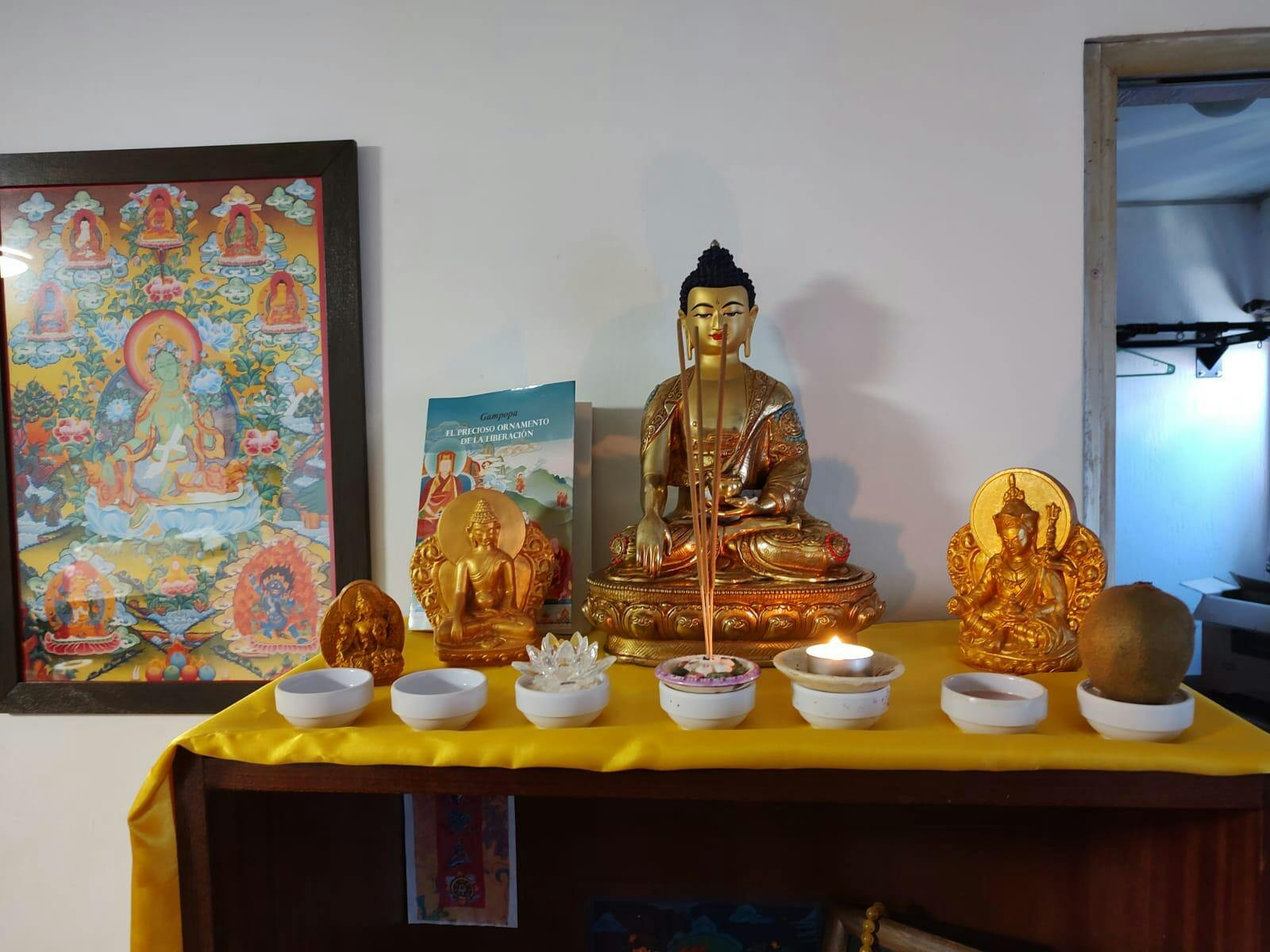
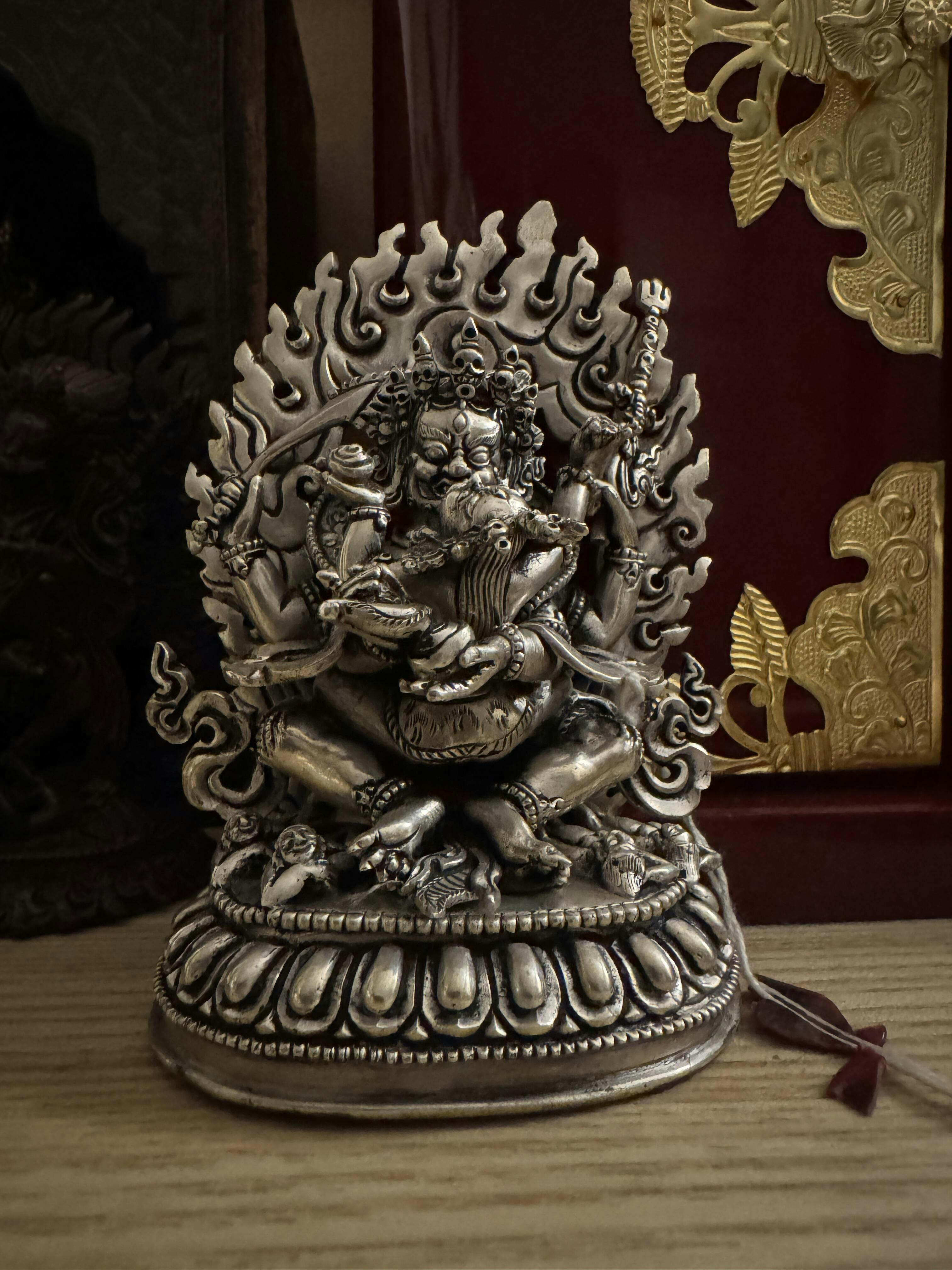
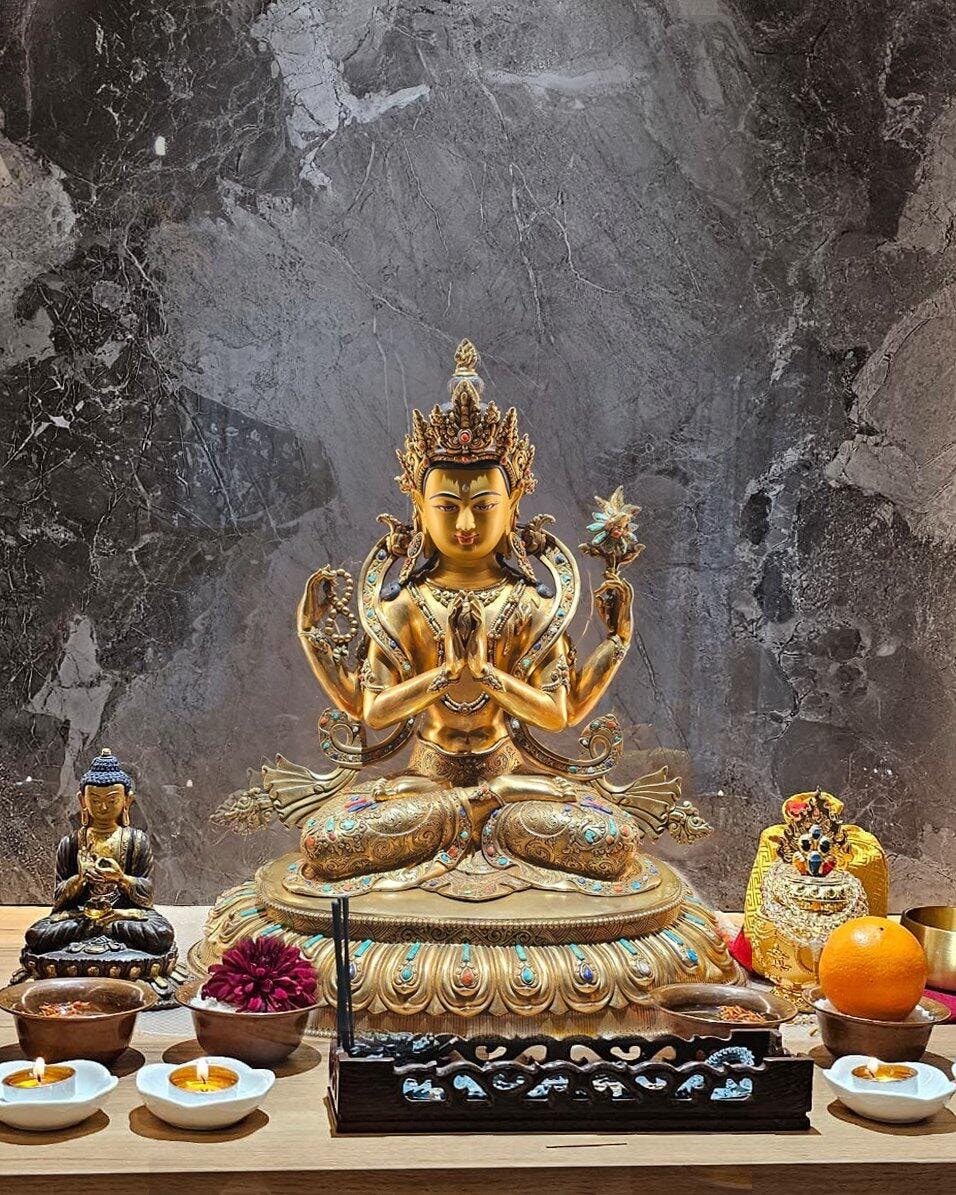
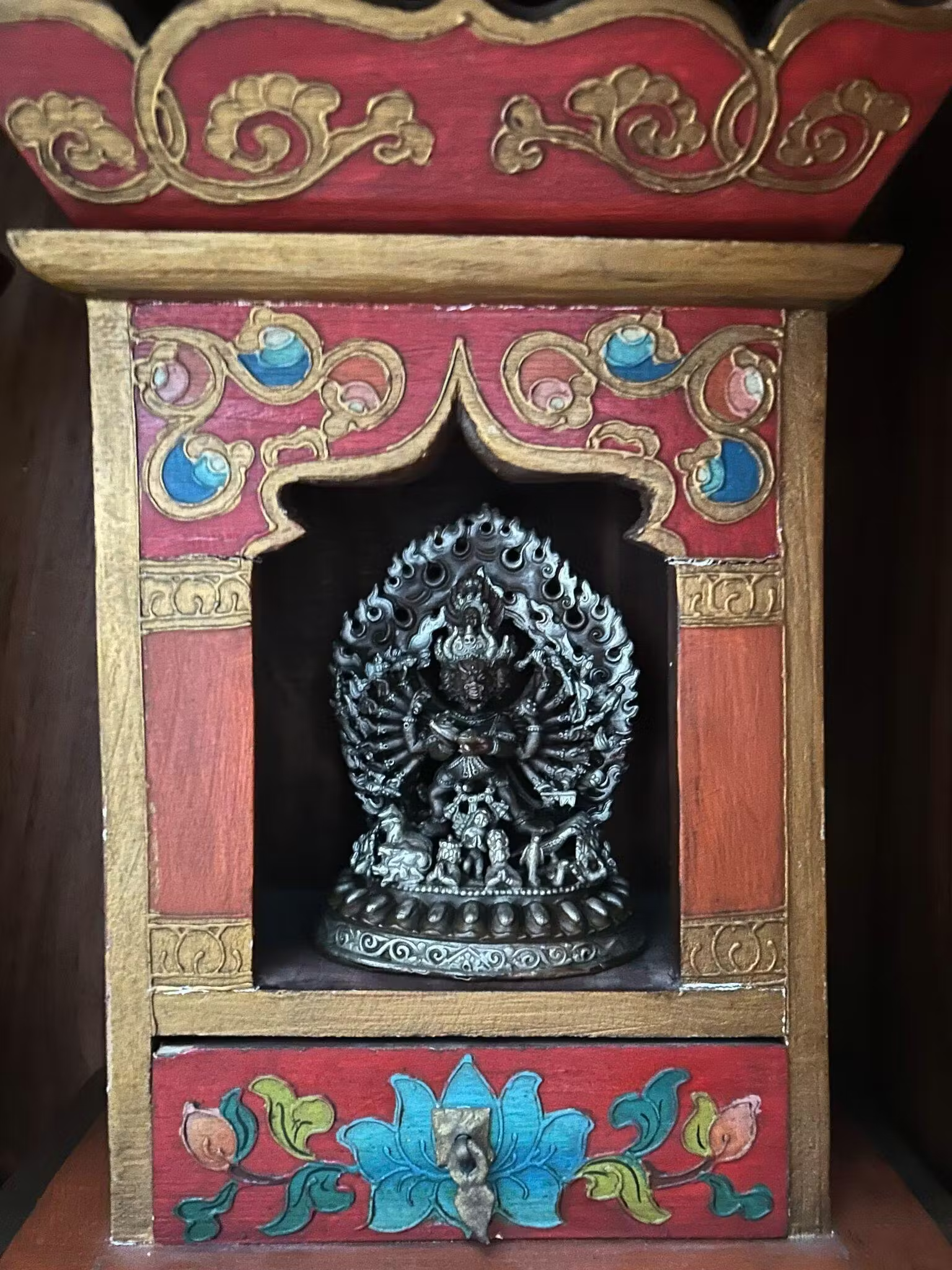
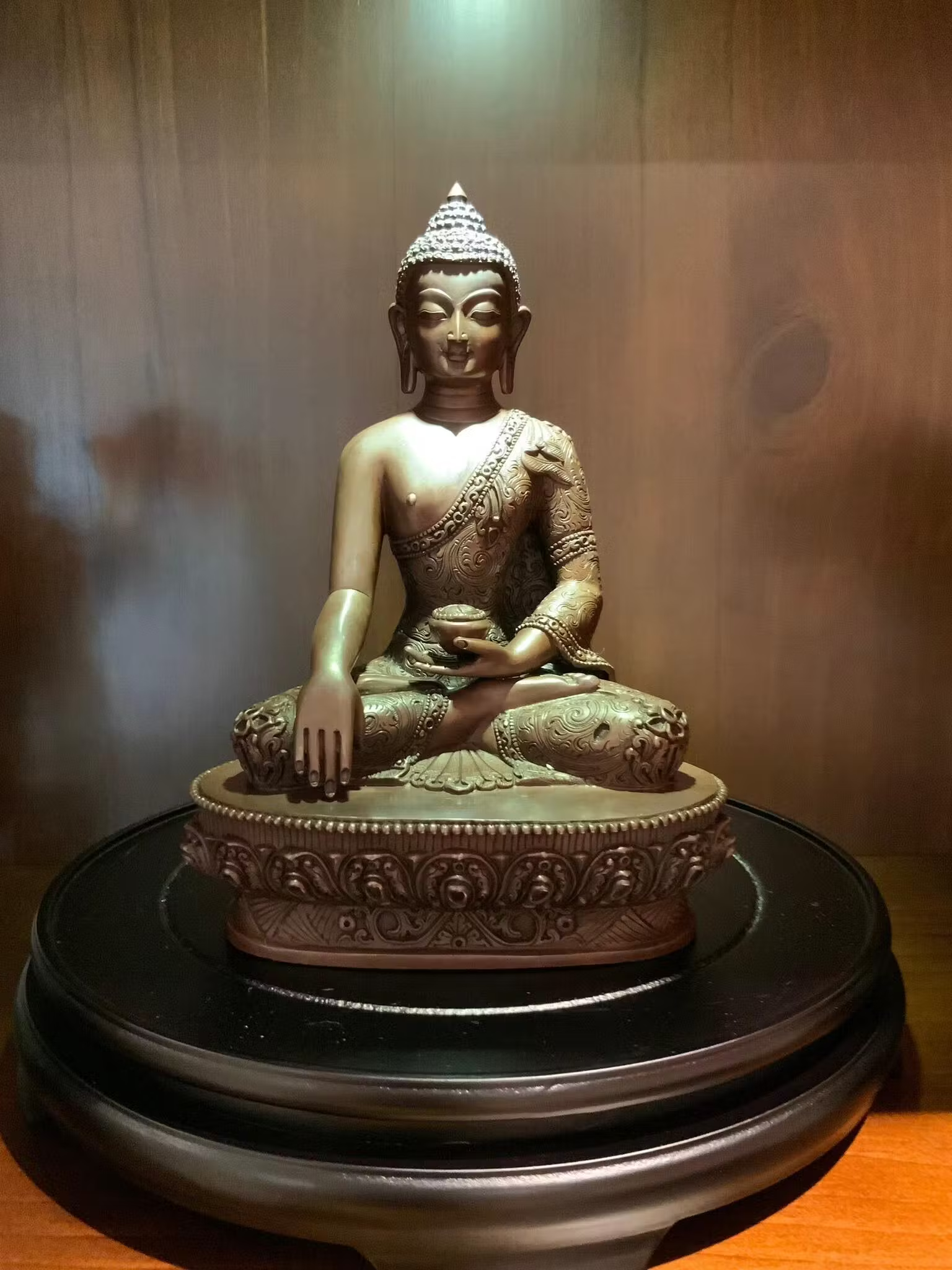
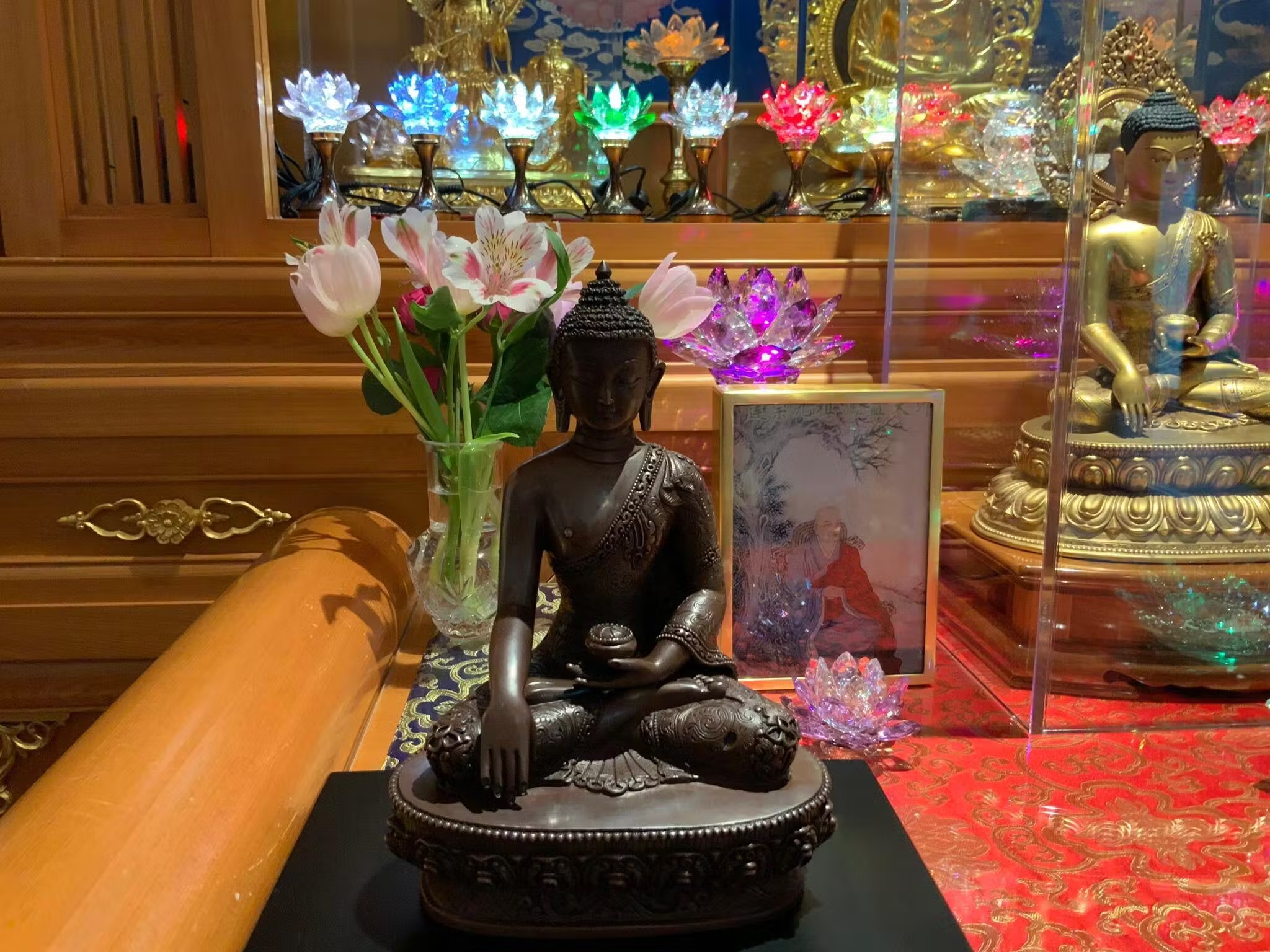
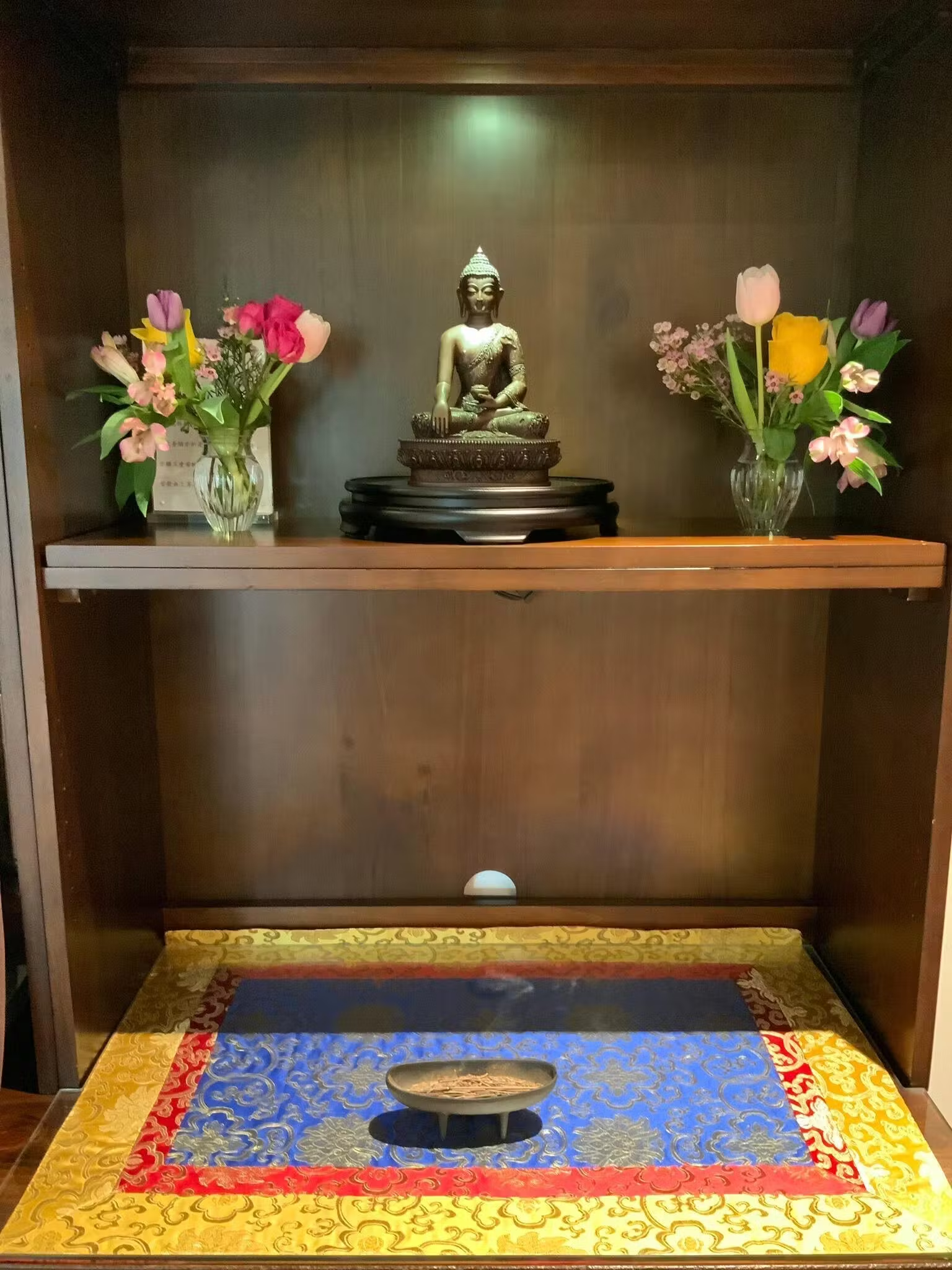
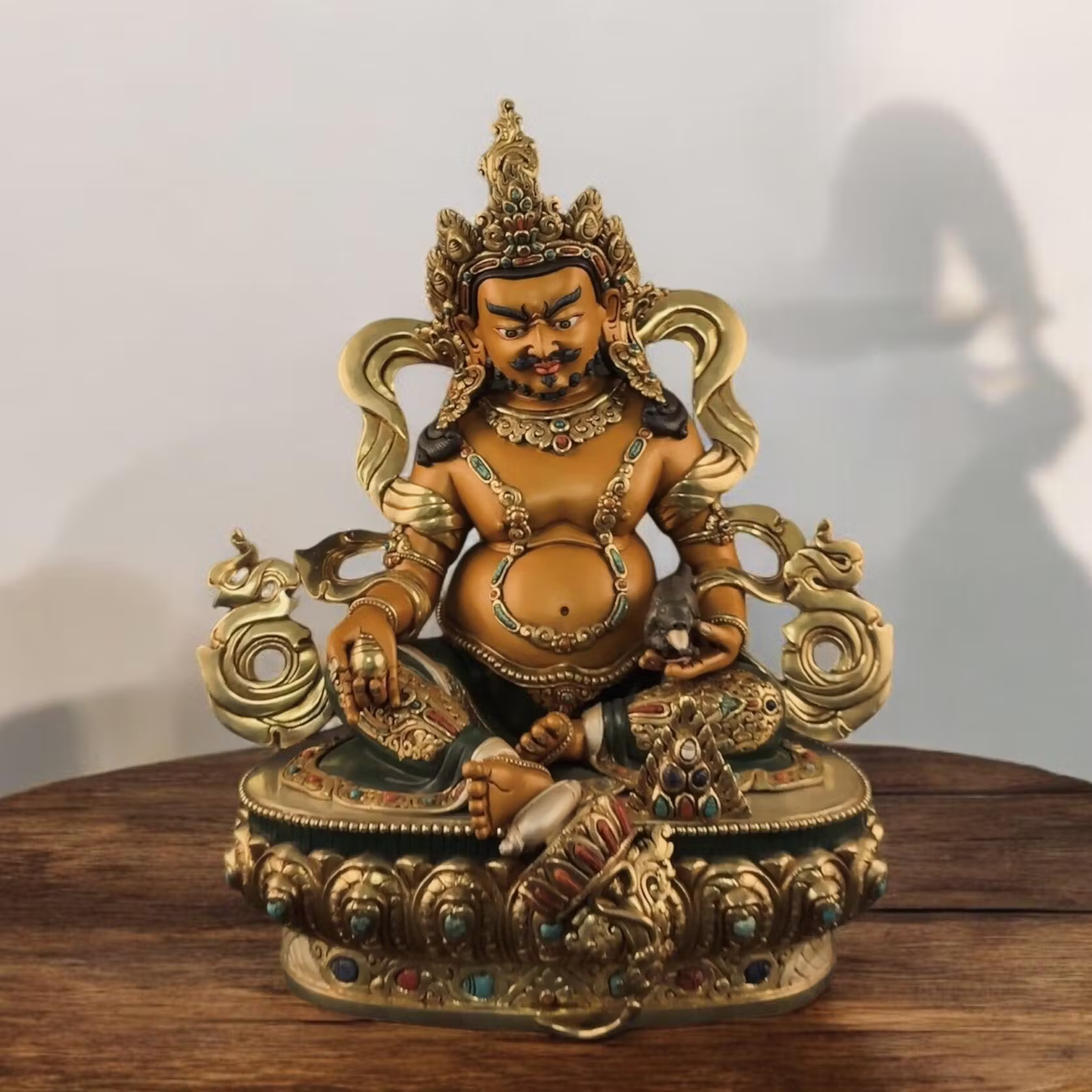
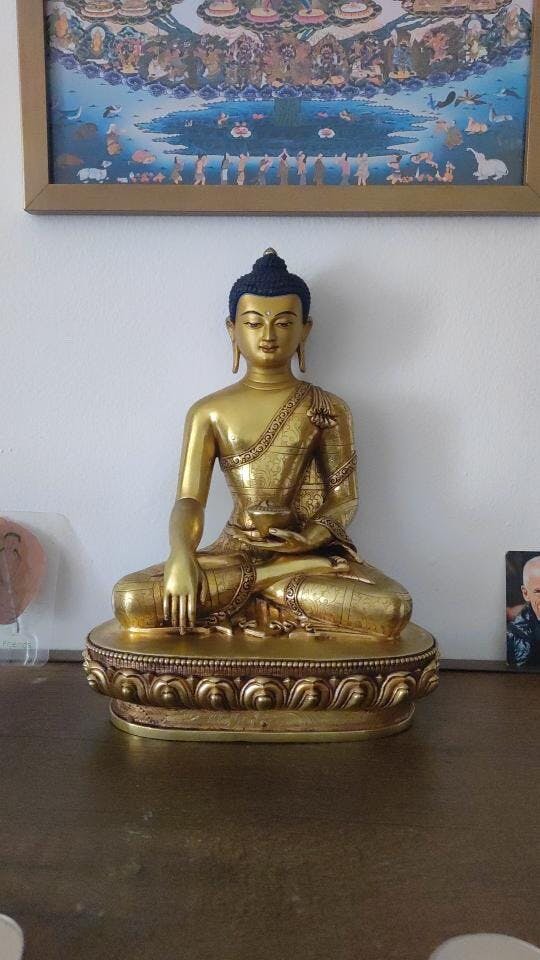
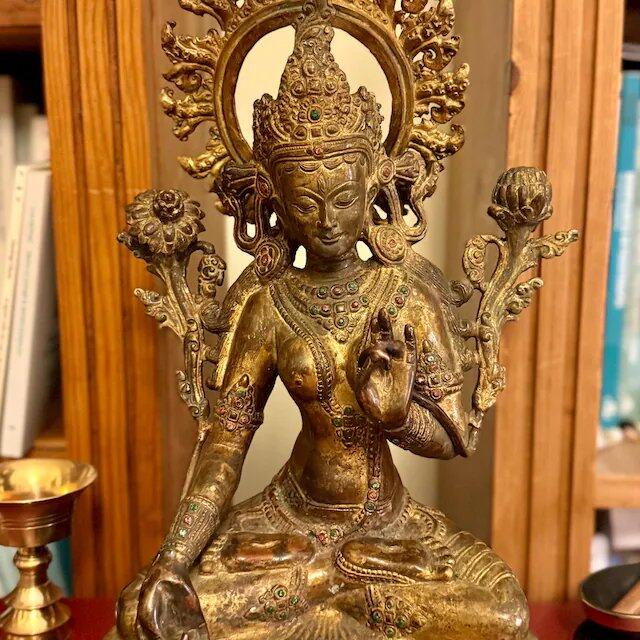
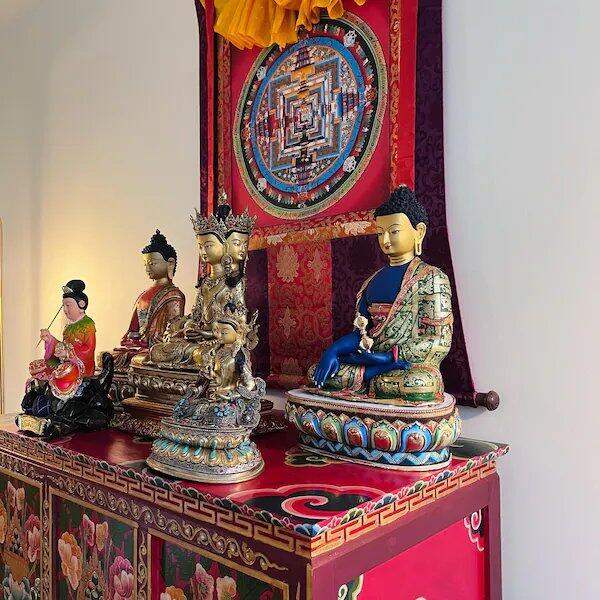
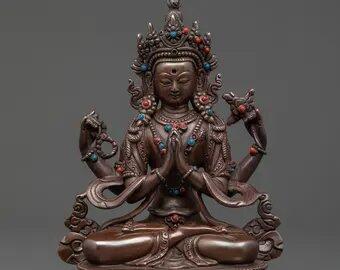
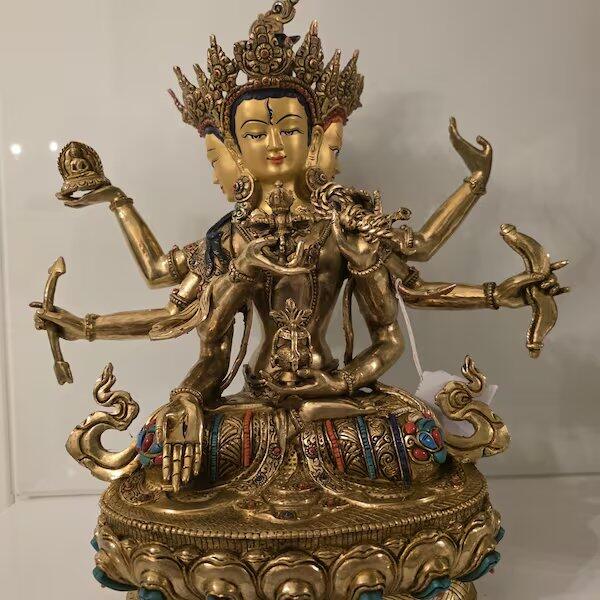
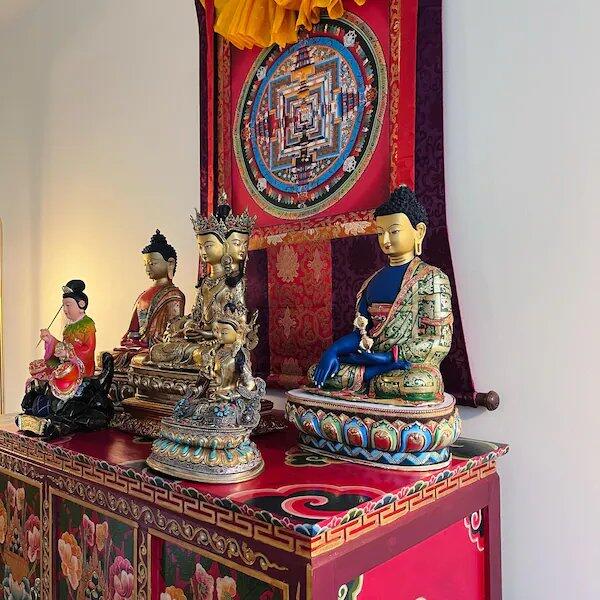
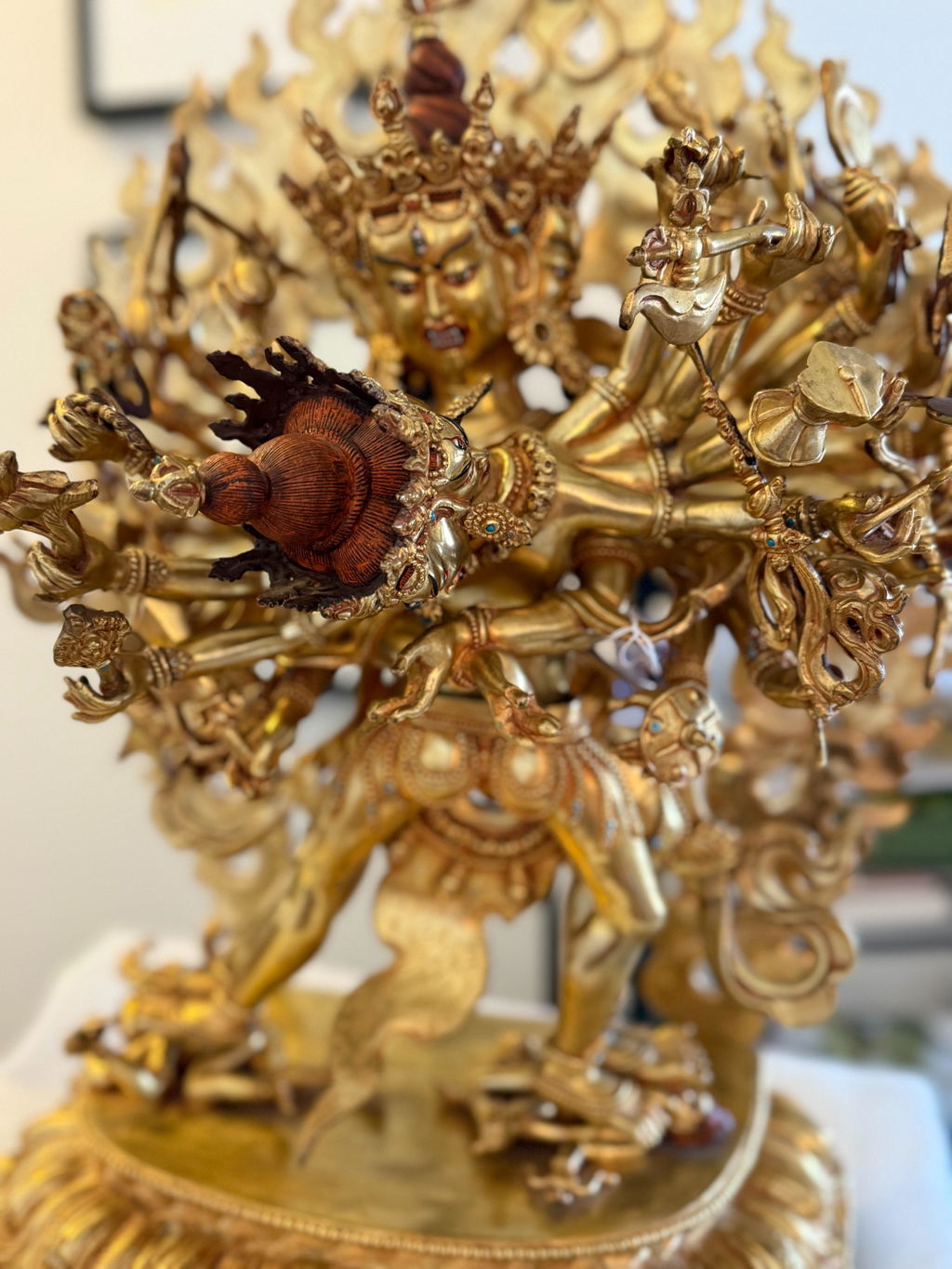
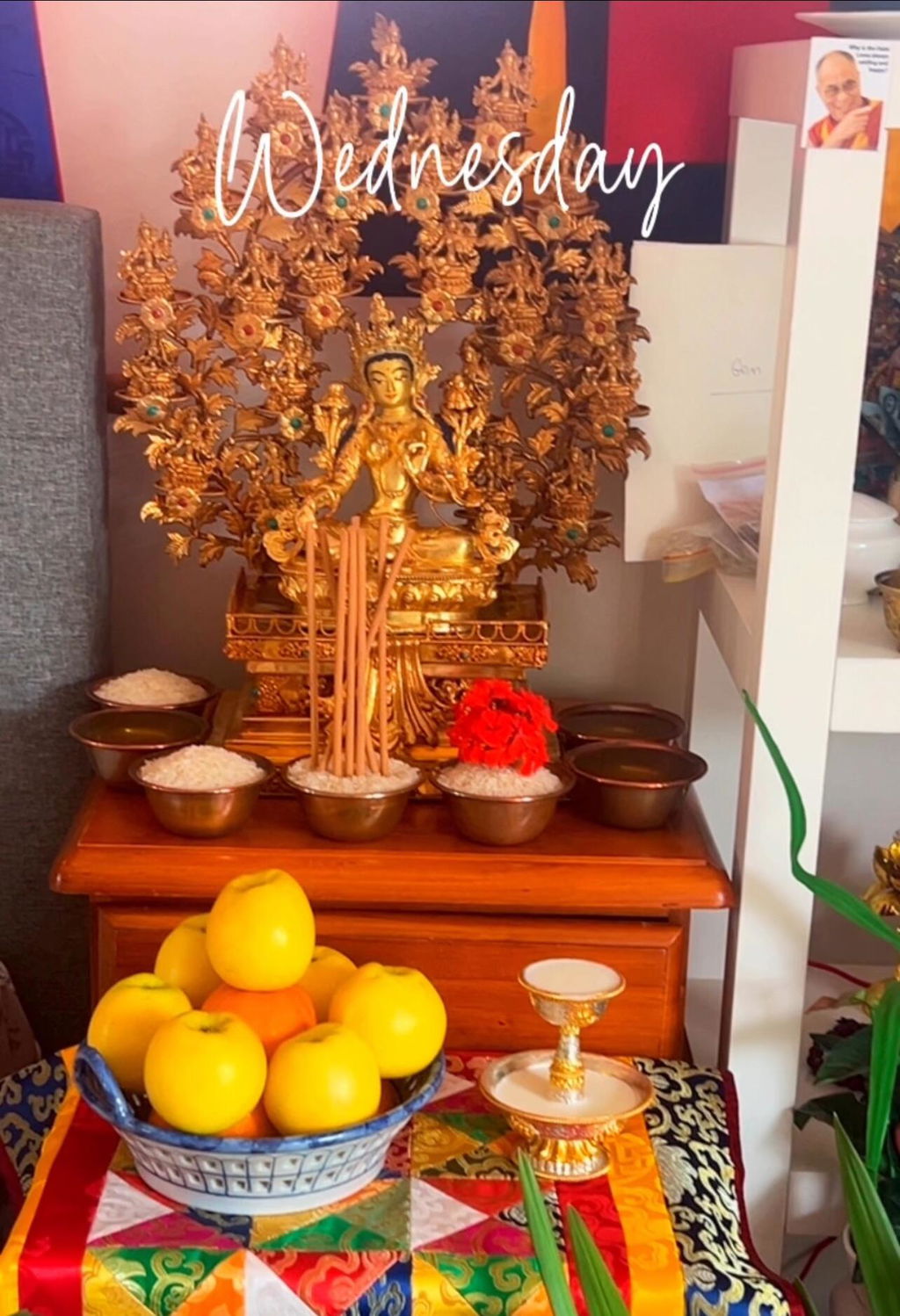
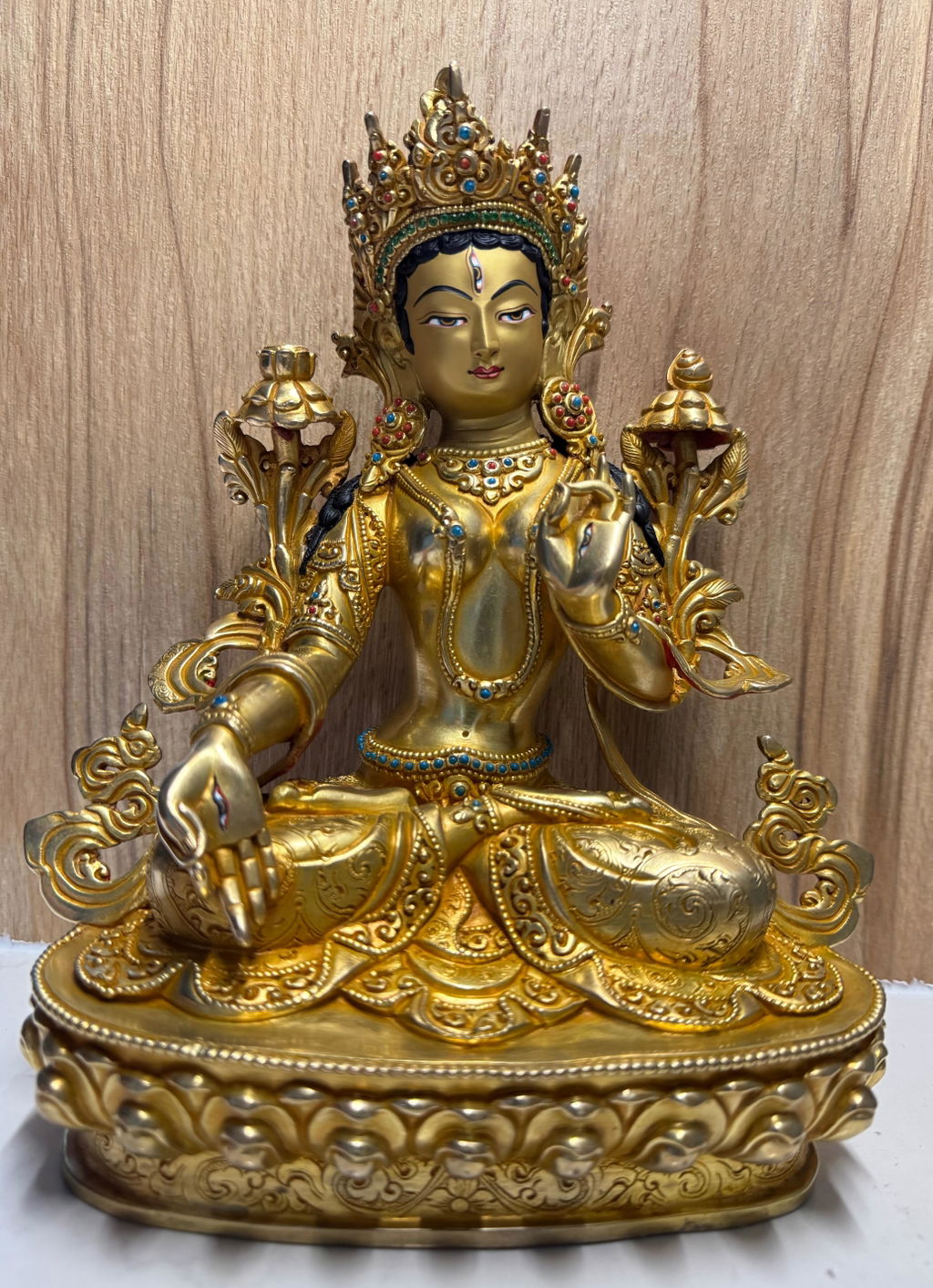
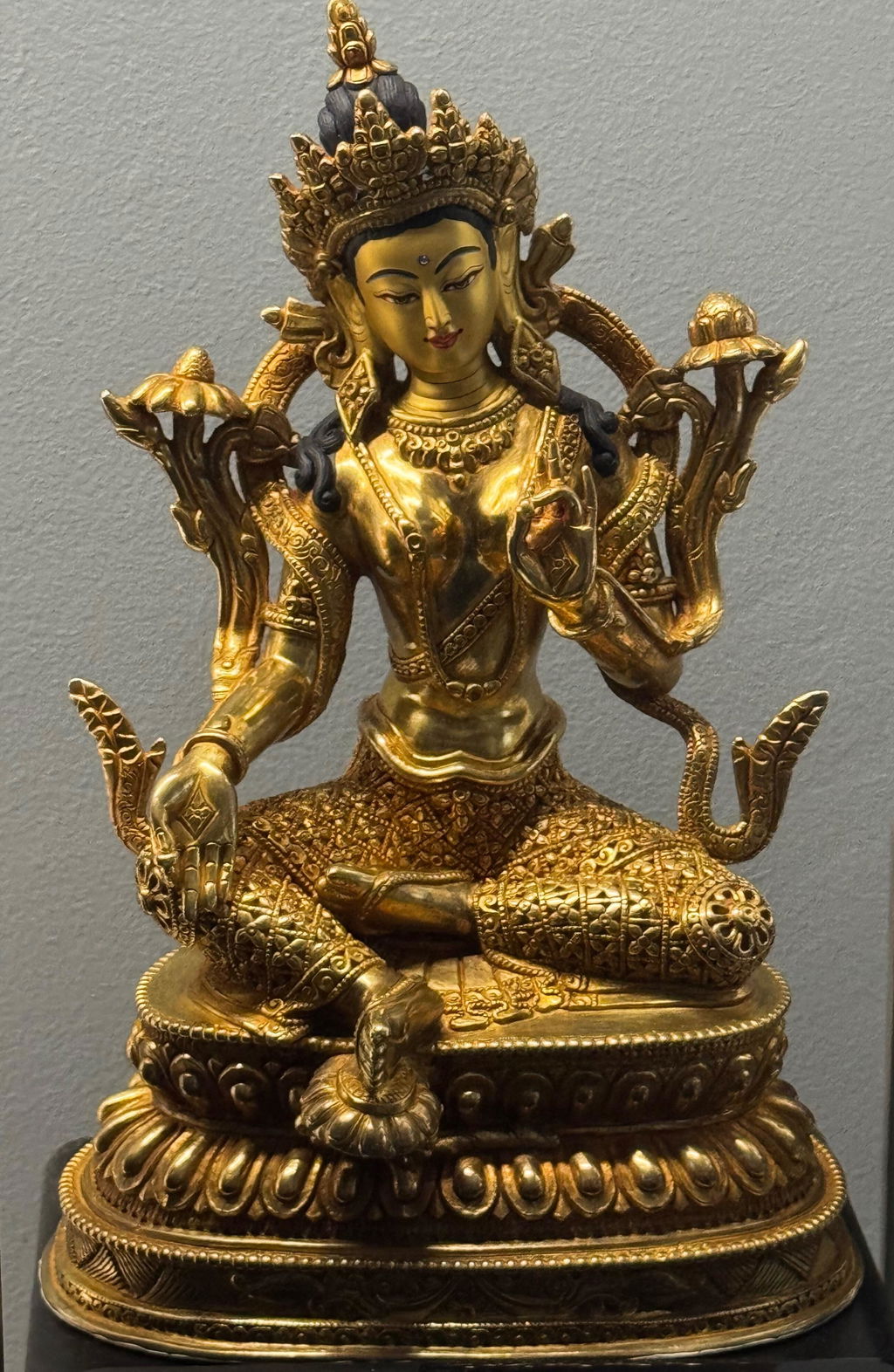
Buddhist statues likewise serve as visual representations of qualities such as compassion, wisdom, peace, generosity, and meditation. Images of Shakyamuni Buddha, the historical Buddha, are often placed in meditation spaces, temples, monasteries, and home altars as objects of devotion and reminders of the Buddha's teachings.
For many practitioners, a Buddhist statue is not merely decorative. It can serve as a visual reminder to cultivate qualities such as mindfulness, compassion, wisdom, and inner peace.
Frequently Asked Questions About Buddhist Teachings
What are the Four Noble Truths in simple terms?
The Four Noble Truths explain that suffering and dissatisfaction exist, that they have causes, that suffering can cease, and that the Noble Eightfold Path provides a way toward its cessation.
What are the eight parts of the Noble Eightfold Path?
The eight factors are Right View, Right Intention, Right Speech, Right Action, Right Livelihood, Right Effort, Right Mindfulness, and Right Concentration.
What does karma mean in Buddhism?
Karma means action and is particularly associated with intentional actions and their consequences. It is not simply a system of punishment or reward.
Is karma the same as fate?
No. Karma emphasizes intentional action and consequences, while fate generally implies predetermined events beyond one's control.
What is dukkha?
Dukkha is commonly translated as suffering, but it can also describe dissatisfaction, instability, or the unsatisfactory nature of conditioned existence.
What is the purpose of the Noble Eightfold Path?
The Noble Eightfold Path provides a comprehensive framework for cultivating wisdom, ethical conduct, mindfulness, and concentration as part of the Buddhist path toward liberation from suffering.
Are the Four Noble Truths and Eightfold Path connected?
Yes. The Noble Eightfold Path is traditionally identified as the fourth of the Four Noble Truths: the path leading toward the cessation of suffering.
Conclusion
The Four Noble Truths, Noble Eightfold Path, and karma form an interconnected foundation for understanding Buddhist thought and practice.
The Four Noble Truths encourage us to recognize suffering and investigate its causes. The Noble Eightfold Path provides practical guidance for developing wisdom, ethical conduct, mindfulness, and concentration. Karma emphasizes the importance of intentional action and reminds us that our choices matter.
Together, these teachings offer more than a philosophical explanation of suffering. They provide an invitation to observe our minds, examine our intentions, act with greater compassion, and cultivate wisdom in everyday life.
For those beginning to explore Buddhism, understanding these teachings can provide a meaningful foundation for discovering the broader world of Buddhist philosophy, meditation, ethics, symbolism, and sacred art.





Share:
Je Tsongkhapa: Life, Teachings, Philosophy & Legacy
Indra Jatra: History, Kumari, Rituals & Newar Culture