

Je Tsongkhapa: Life, Teachings, Philosophy and Legacy in Tibetan Buddhism
Je Tsongkhapa, also known as Lama Tsongkhapa or Tsongkhapa Lobsang Drakpa, is one of the most influential Buddhist masters in the history of Tibet. Born in 1357 and passing away in 1419, he became renowned for his profound understanding of Buddhist philosophy, disciplined practice, meditation, and ability to bring together teachings from many different Buddhist traditions.
For centuries, practitioners have looked to Je Tsongkhapa as an important teacher of wisdom, compassion, ethical conduct, and the gradual path toward enlightenment. His writings continue to be studied in Tibetan Buddhist monasteries and Dharma centers around the world, while his image is preserved in sacred paintings, thangka art, and handcrafted Buddhist statues.
Tsongkhapa's influence is particularly associated with the development of the Gelug tradition of Tibetan Buddhism. Although the Gelug school developed formally through his students after his death, his teachings, writings, and institutions provided its essential foundation.
Who Was Je Tsongkhapa?
Je Tsongkhapa, whose full name was Lobsang Drakpa, was a Tibetan Buddhist monk, scholar, philosopher, teacher, and tantric practitioner. He was born in the region of Amdo in northeastern Tibet during a period when Buddhist thought and practice were undergoing significant intellectual and religious development.
Rather than limiting himself to a single lineage, Tsongkhapa studied extensively with teachers from different Tibetan Buddhist traditions. His education included Buddhist philosophy, logic, ethics, meditation, monastic discipline, Mahayana teachings, and Vajrayana practices.
This broad education became one of the defining characteristics of his later work. Tsongkhapa sought to understand Buddhist teachings through careful study and reasoning while also emphasizing meditation and personal practice.
Tsongkhapa traveled widely through Central Tibet and studied with numerous masters. His intellectual development was therefore shaped by several Buddhist traditions rather than by one isolated lineage.
Why Is Je Tsongkhapa Important in Tibetan Buddhism?
Je Tsongkhapa is important because his work helped organize, clarify, and strengthen major areas of Tibetan Buddhist thought and practice.
He placed strong emphasis on three interconnected foundations: study, ethical discipline, and meditation.
For Tsongkhapa, Buddhist practice was not simply about collecting knowledge. Understanding Buddhist philosophy needed to influence the way a person lived, while meditation was necessary to transform intellectual understanding into direct experience.
His approach brought together philosophical reasoning and contemplative practice. His writings addressed subjects ranging from Buddhist ethics and Madhyamaka philosophy to the stages of the path and tantric practice.
Je Tsongkhapa and the Path to Enlightenment
One of Tsongkhapa's greatest contributions was his presentation of the gradual path to enlightenment, known as Lamrim.
The Tibetan word Lamrim can be understood as "stages of the path." Rather than presenting Buddhist teachings as disconnected ideas, Lamrim organizes spiritual training into a progressive path that guides practitioners from foundational teachings toward deeper realization.
What Is Lamrim Chenmo?
Tsongkhapa's most famous Lamrim work is the Lamrim Chenmo, commonly translated as The Great Treatise on the Stages of the Path to Enlightenment.
Completed in 1402, this extensive work became one of the central texts for understanding Tsongkhapa's presentation of Buddhist practice. It provides a structured explanation of Buddhist practice, bringing together teachings concerning motivation, ethical conduct, compassion, wisdom, meditation, and the path toward liberation.
The Lamrim approach is valuable because it gives practitioners a framework for understanding how different Buddhist teachings relate to one another.
Tsongkhapa and Madhyamaka Philosophy
Another major part of Tsongkhapa's legacy is his interpretation of Madhyamaka, the Buddhist philosophy of the Middle Way associated especially with the Indian master Nagarjuna.
At the heart of Madhyamaka is the profound teaching of emptiness, or shunyata. Emptiness does not mean that nothing exists. Instead, it challenges the assumption that things possess an independent and permanent essence existing entirely on their own.
Tsongkhapa devoted considerable attention to understanding this difficult subject through careful reasoning.
His major philosophical works include The Essence of Eloquence, Ocean of Reasoning, and Illuminating the Intent. His Ocean of Reasoning is a detailed commentary on Nagarjuna's Fundamental Wisdom of the Middle Way.
For Tsongkhapa, wisdom and compassion were not competing ideals. A genuine Buddhist path requires both profound understanding and compassionate motivation.
Tsongkhapa's Teachings on Compassion and Bodhichitta
Compassion occupies an important place within Mahayana Buddhist practice.
Tsongkhapa emphasized bodhichitta, the aspiration to attain enlightenment for the benefit of all sentient beings. Rather than seeking liberation only for oneself, the practitioner develops an altruistic motivation directed toward the welfare of others.
This creates an important balance in Buddhist practice. Wisdom helps practitioners understand reality more deeply, while compassion gives that wisdom an altruistic purpose.
For many practitioners, this combination of wisdom and compassion is one of the most meaningful aspects of Tsongkhapa's teachings.
Tsongkhapa and Buddhist Ethics
Tsongkhapa also placed considerable importance on ethical discipline.
His approach recognized that meditation and philosophical understanding cannot be separated from conduct. The way a practitioner speaks, acts, thinks, and relates to others forms part of the spiritual path.
His writings include discussions of the ethical codes associated with monastic practitioners, bodhisattvas, and tantric practitioners. His work contributed to a renewed emphasis on disciplined monastic practice within the tradition that developed around his teachings.
Je Tsongkhapa and the Gelug Tradition
Tsongkhapa is traditionally regarded as the founder of the Gelug tradition of Tibetan Buddhism. Historically, however, the school developed formally through his students after his death.
His teachings, writings, institutions, and disciples provided the foundation from which the tradition emerged. The Gelug tradition became particularly known for systematic Buddhist education, philosophical debate, ethical discipline, meditation, and the preservation of Buddhist scriptures.
Ganden Monastery and Tsongkhapa's Legacy
Ganden Monastery holds a special place in the history of Tsongkhapa.
In 1409, Tsongkhapa established Ganden as an important center of Buddhist study and practice. He spent the final years of his life there and died at Ganden in 1419.
The monastery later became one of the three great Gelug monasteries, together with Drepung and Sera. These institutions became important centers for Buddhist scholarship, debate, meditation, monastic discipline, and the preservation of Tibetan Buddhist knowledge.
What Is Je Tsongkhapa Known For?
Je Tsongkhapa is particularly known for his contributions to Tibetan Buddhist philosophy, meditation, ethics, and spiritual education.
- The Lamrim Chenmo, or Great Treatise on the Stages of the Path
- His interpretation of Madhyamaka philosophy
- His writings on emptiness and Buddhist philosophy
- His emphasis on ethical discipline
- His teachings on bodhichitta and compassion
- His writings on Buddhist tantra
- The establishment of Ganden Monastery
- His influence on the development of the Gelug tradition
- His extensive study of different Tibetan Buddhist traditions
- His role as a scholar, teacher, philosopher, and practitioner
His writings covered both sutra and tantra, and he produced an exceptionally large body of Buddhist literature.
Tsongkhapa and Vajrayana Buddhism
Tsongkhapa was not only a philosopher of Mahayana Buddhism. He also devoted significant attention to Vajrayana and tantric practice.
His Great Stages of Mantra presents a systematic treatment of tantric practice, while his writings discuss several important tantric traditions.
He wrote extensively on the Guhyasamaja Tantra, and also addressed traditions associated with Chakrasamvara, Yamantaka, and Kalachakra. His work helped preserve and strengthen the study of these tantric systems within the tradition that developed around his teachings.
What Does a Tsongkhapa Statue Represent?
A Tsongkhapa statue represents the presence and legacy of one of Tibet's most respected Buddhist teachers.
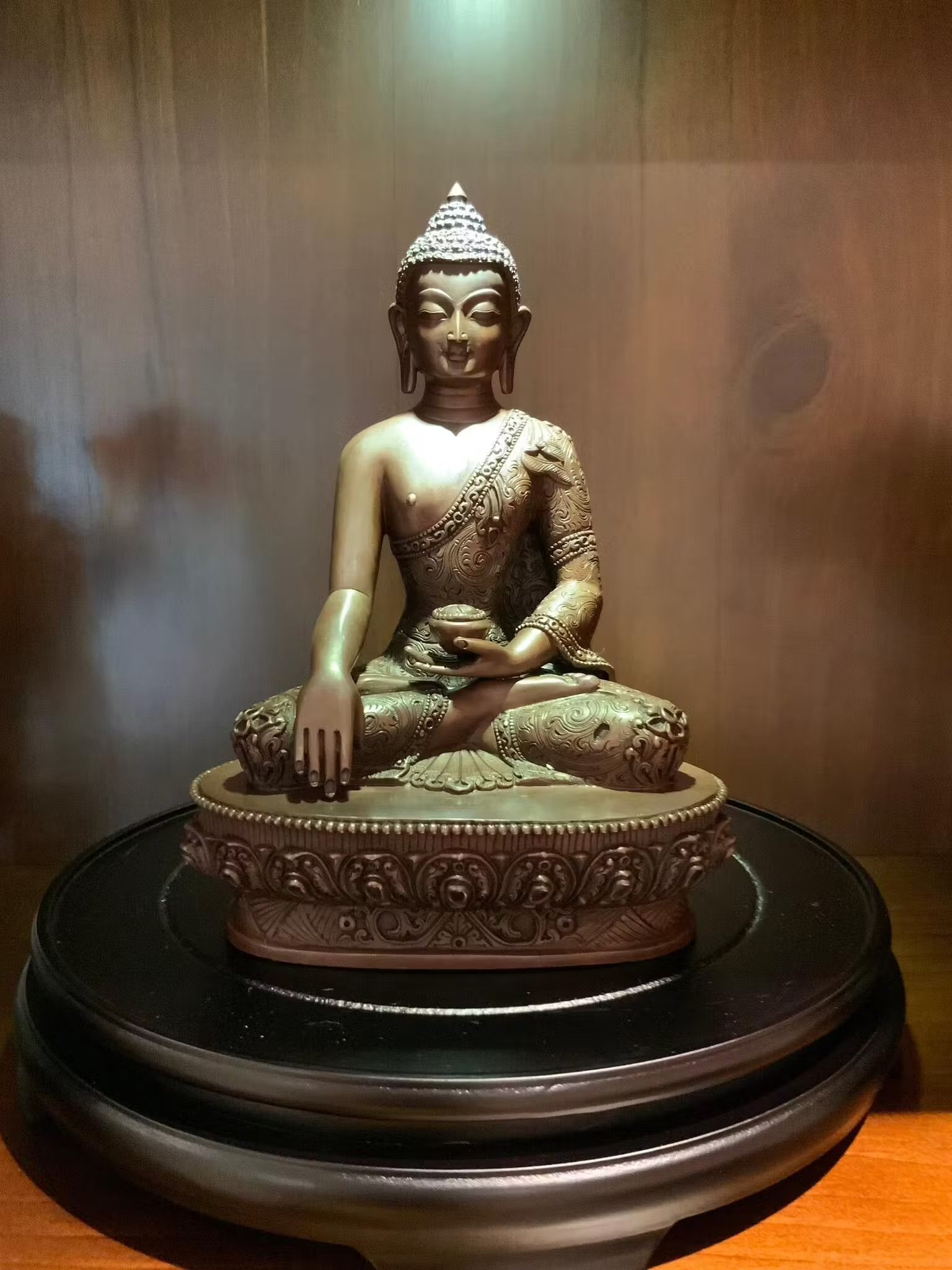
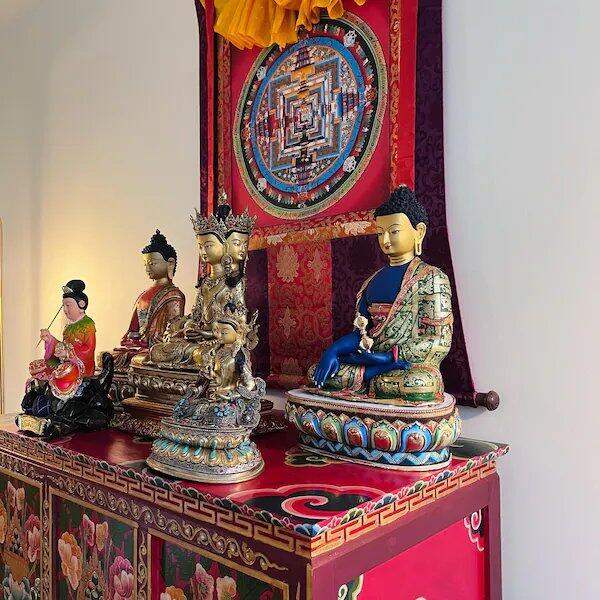
In Buddhist sacred art, Tsongkhapa is commonly depicted as a monk wearing monastic robes and a distinctive yellow hat. He is often shown seated in meditation posture with his hands arranged in a symbolic gesture, while lotus flowers beside him may support symbolic attributes associated with wisdom and Buddhist teachings.
For devotees, a Tsongkhapa statue can serve as a visual reminder of:
- Wisdom
- Compassion
- Ethical discipline
- Buddhist study
- Meditation
- Devotion to the Dharma
- The aspiration toward enlightenment
A sacred image is therefore more than decorative artwork. It can become a meaningful focal point for contemplation, prayer, meditation, and spiritual practice.
Why Do People Place a Tsongkhapa Statue in a Shrine or Meditation Space?
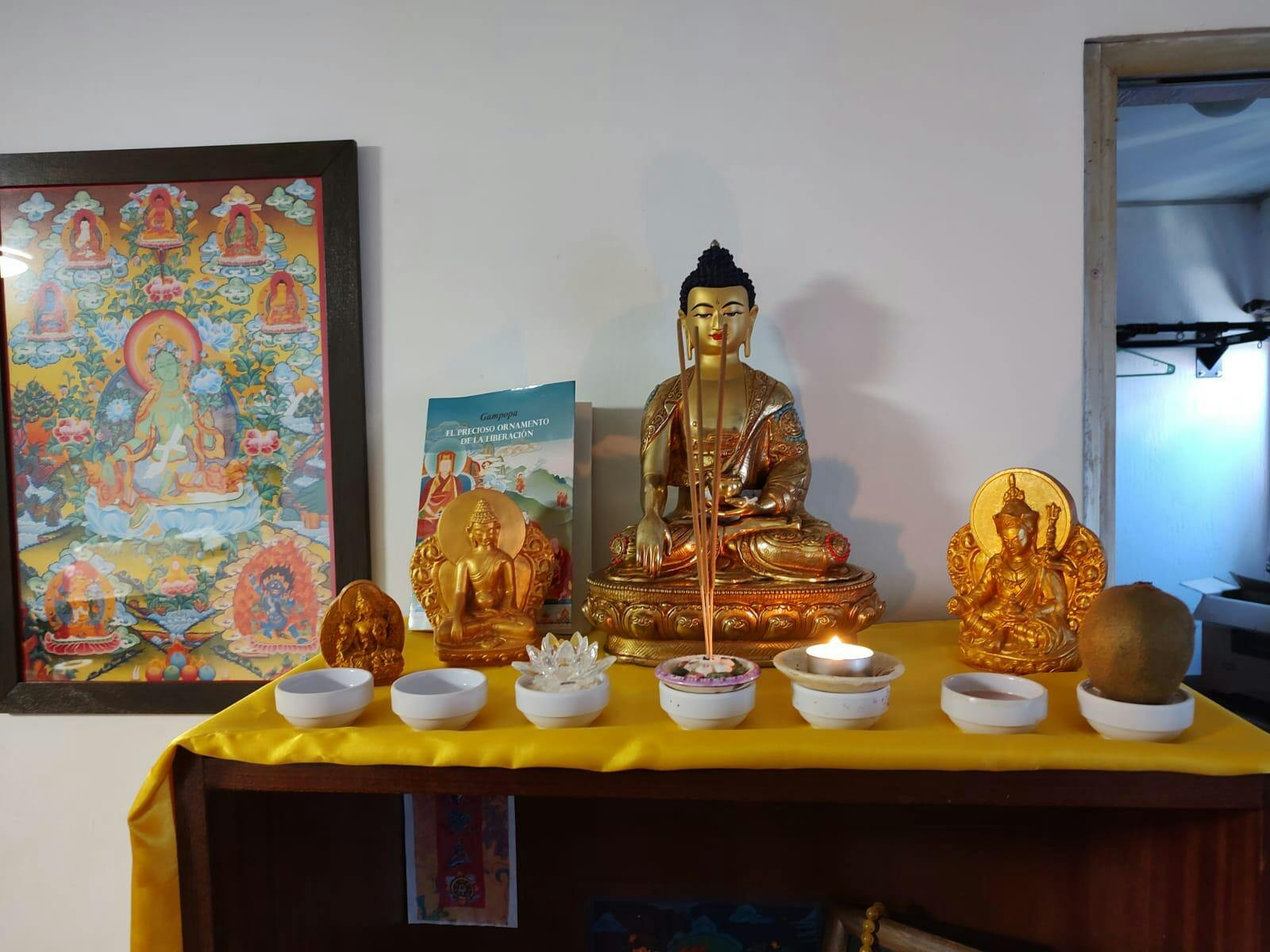
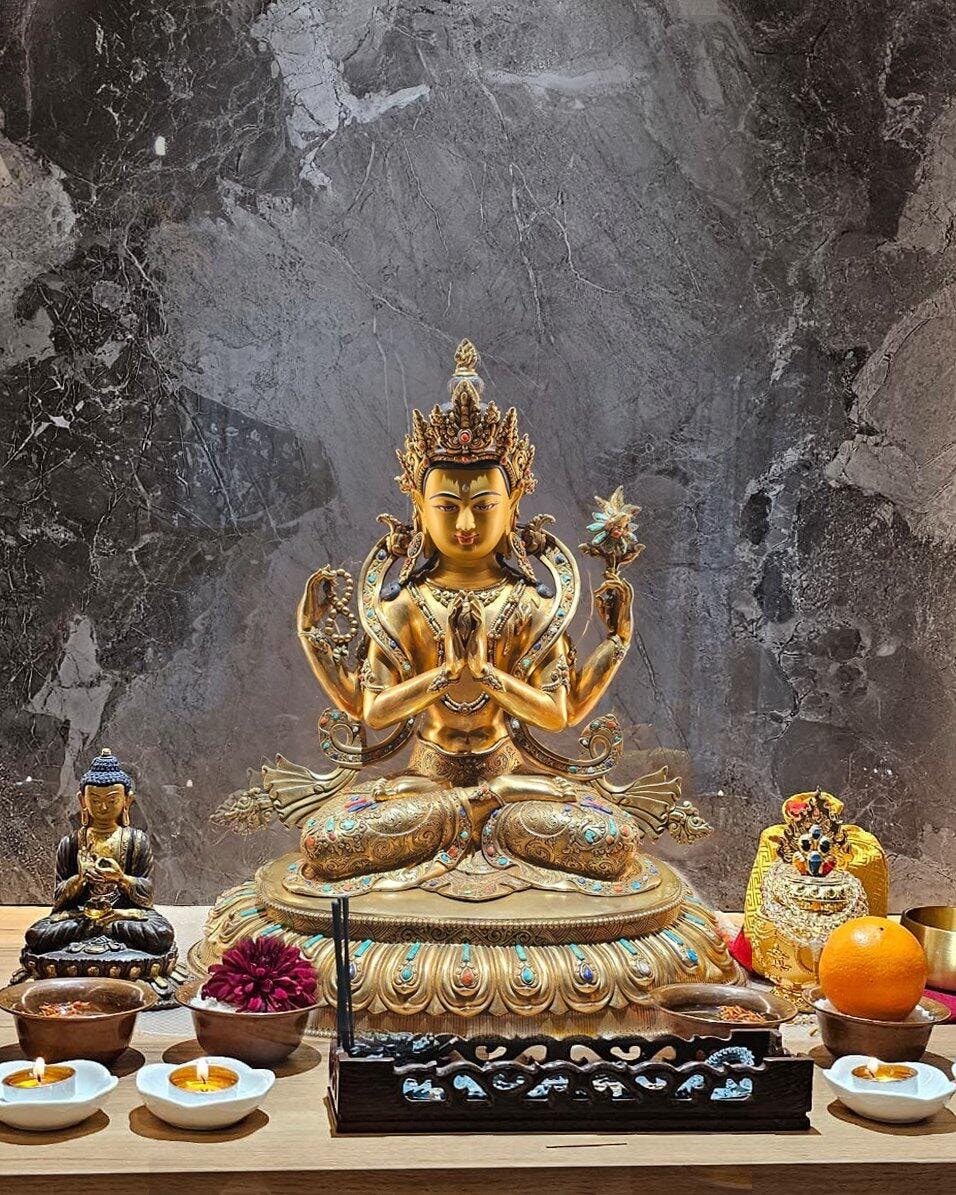
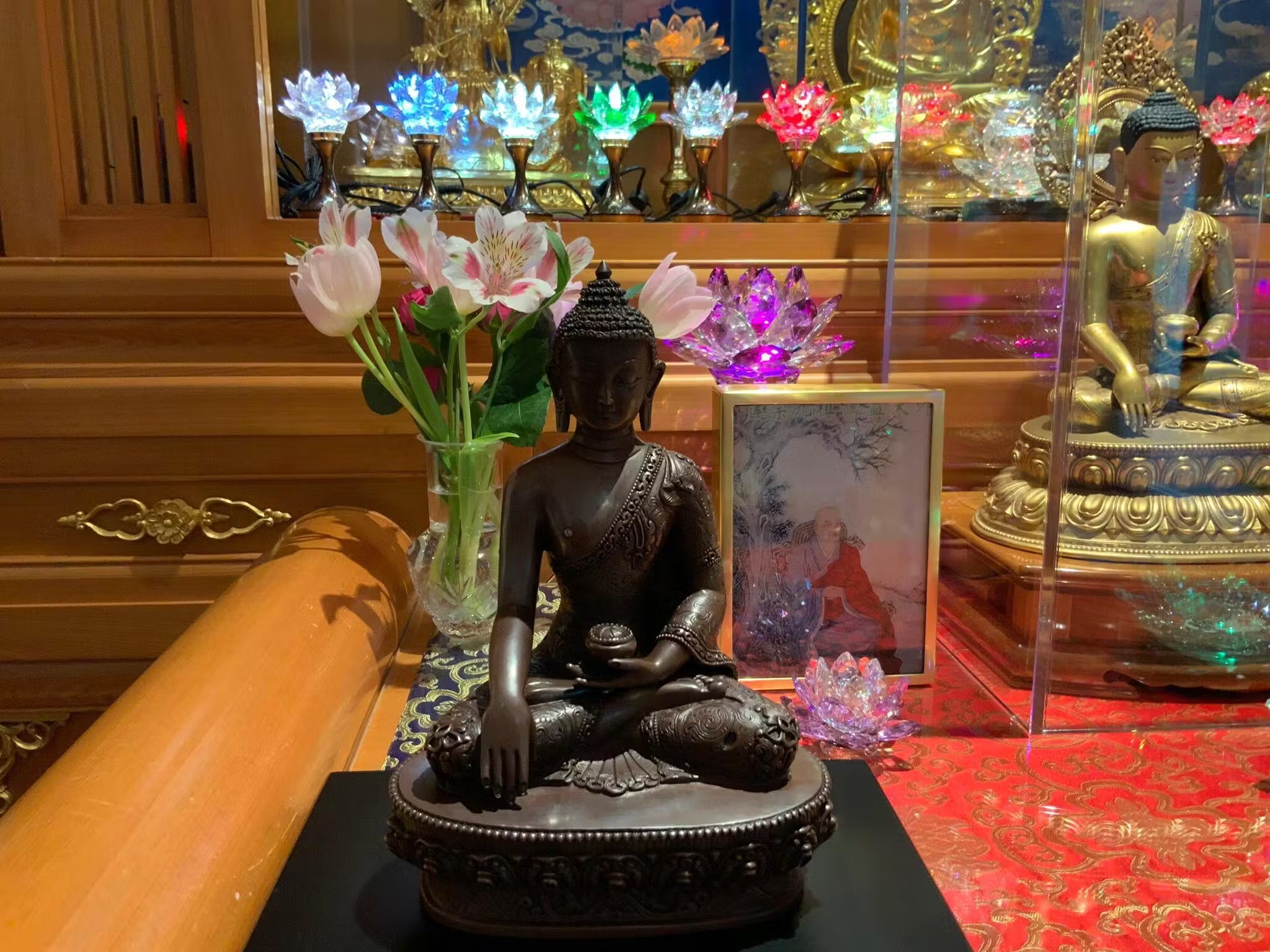
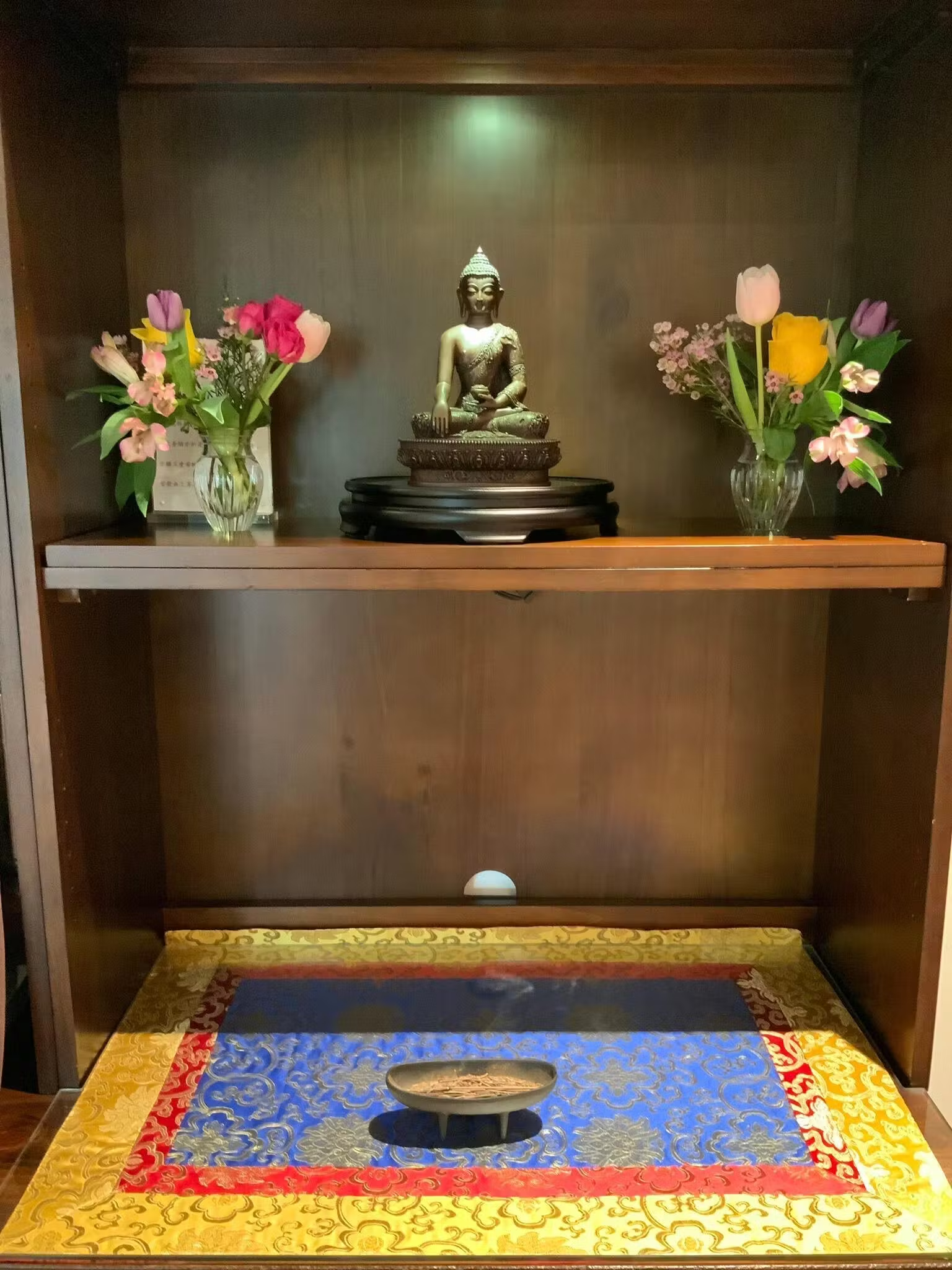
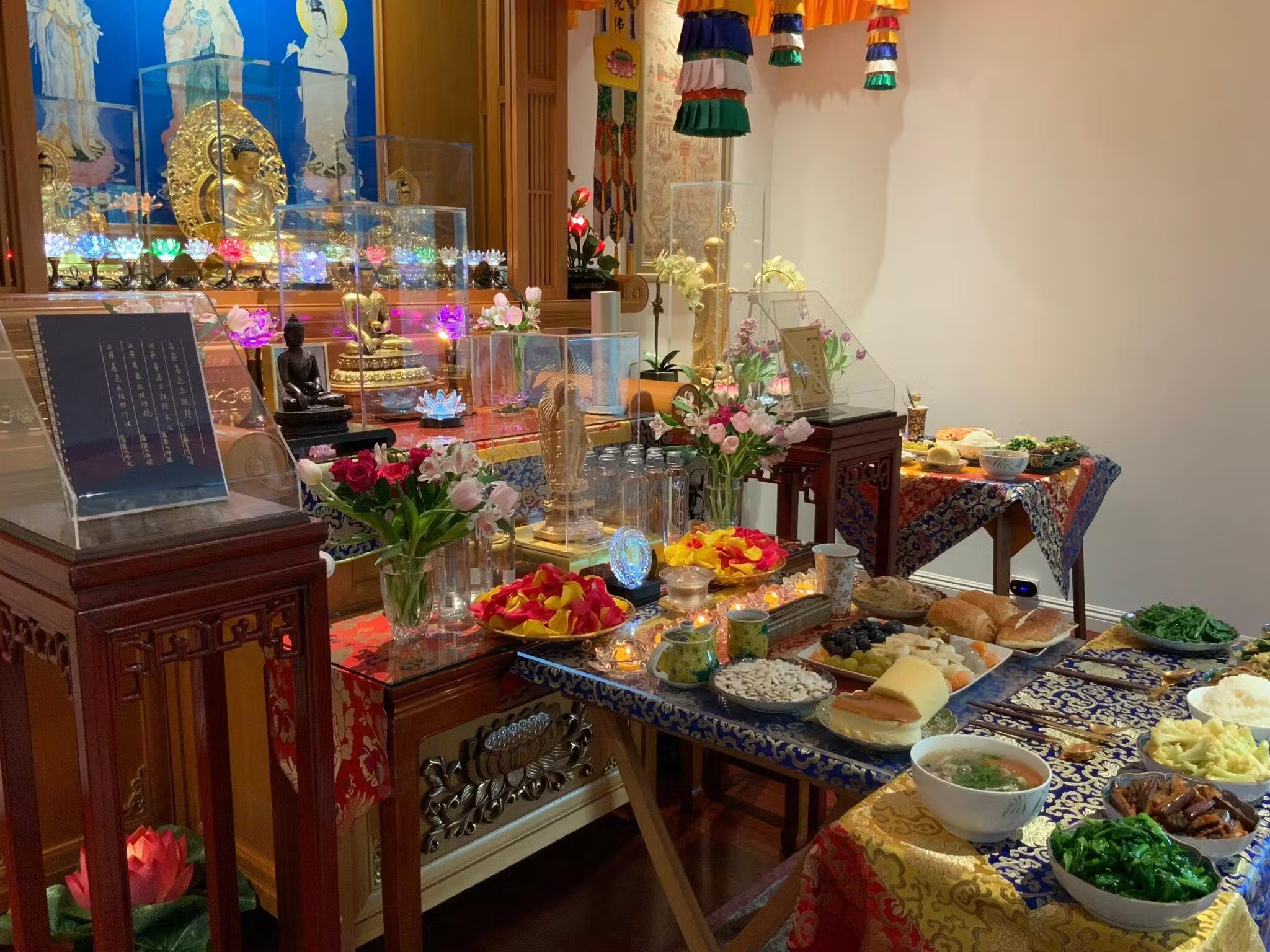
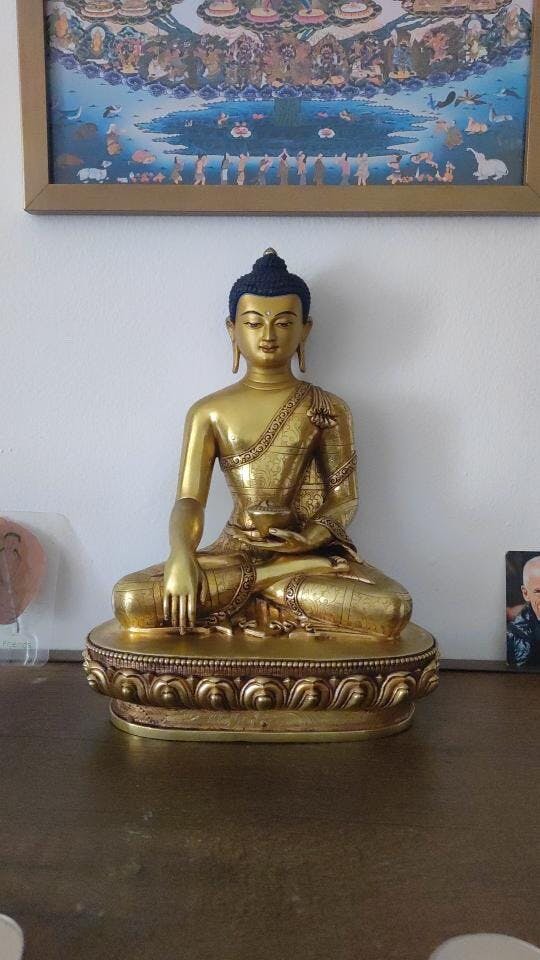
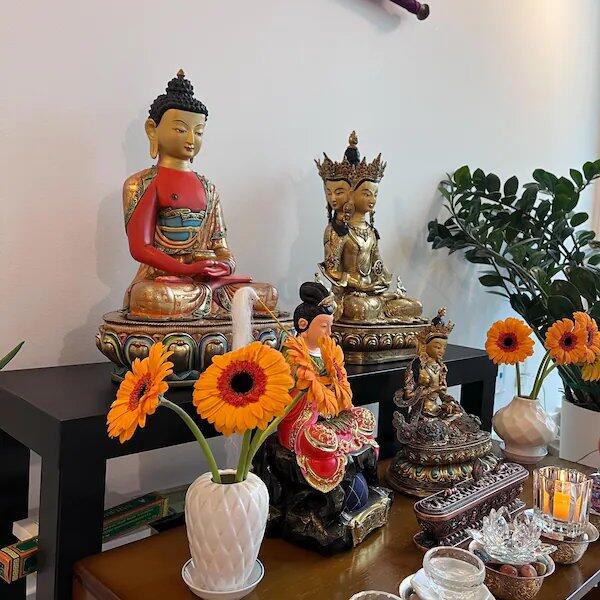
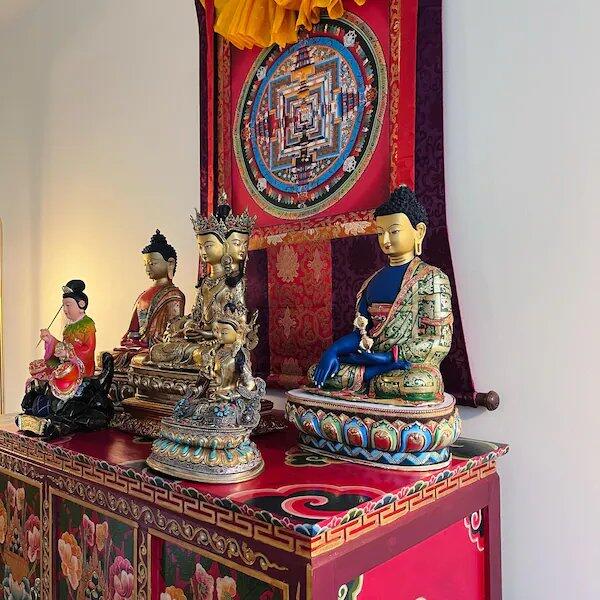
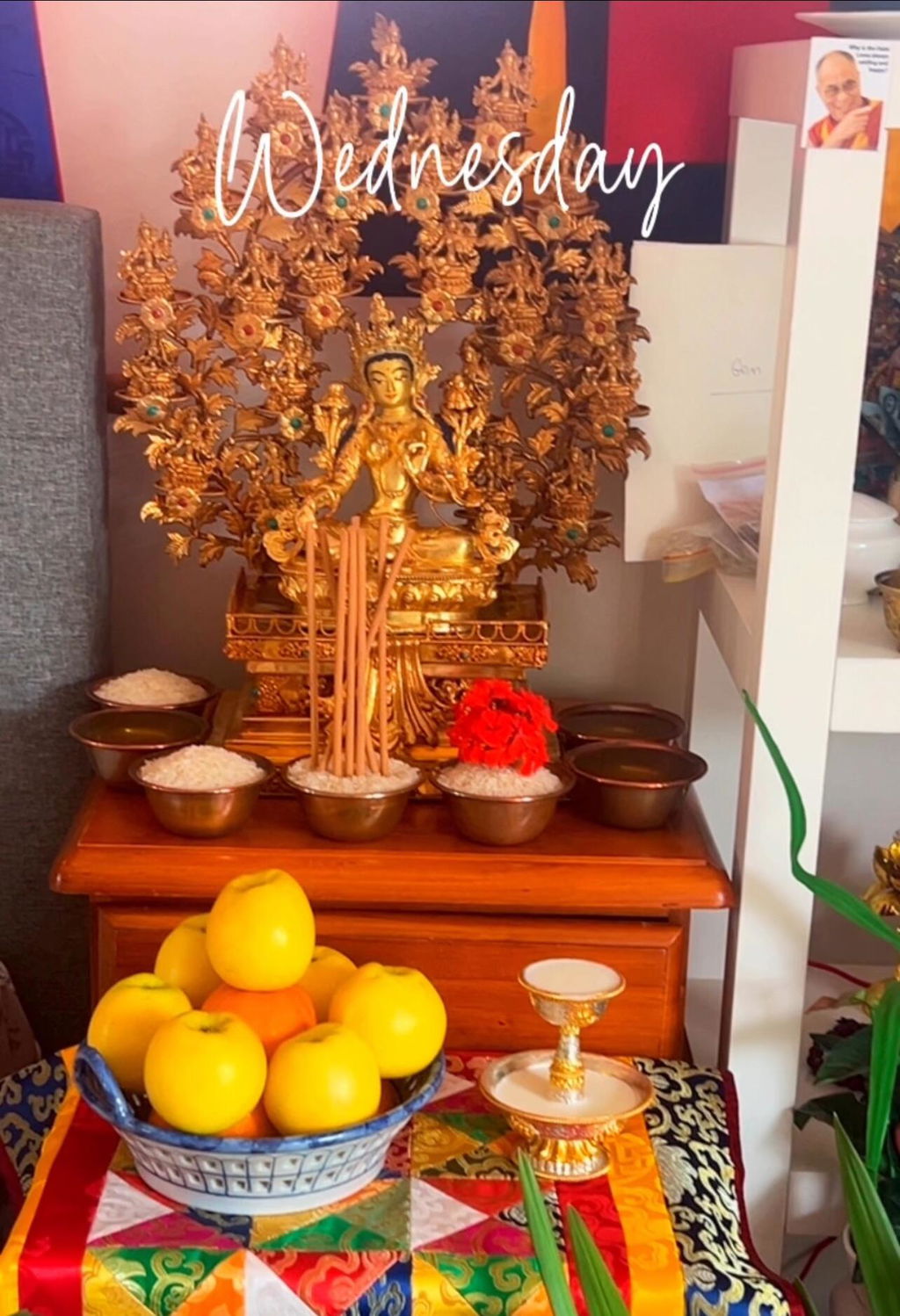
A handcrafted Tsongkhapa statue may be placed on a Buddhist altar, meditation space, shrine, monastery, or personal Dharma room.
For practitioners, the image can serve as a reminder to cultivate the qualities represented by Tsongkhapa's teachings: disciplined practice, wisdom, compassion, and dedication to the Buddhist path.
For collectors of Himalayan Buddhist art, a Tsongkhapa statue also represents the extraordinary artistic heritage of Tibetan and Nepalese sacred sculpture.
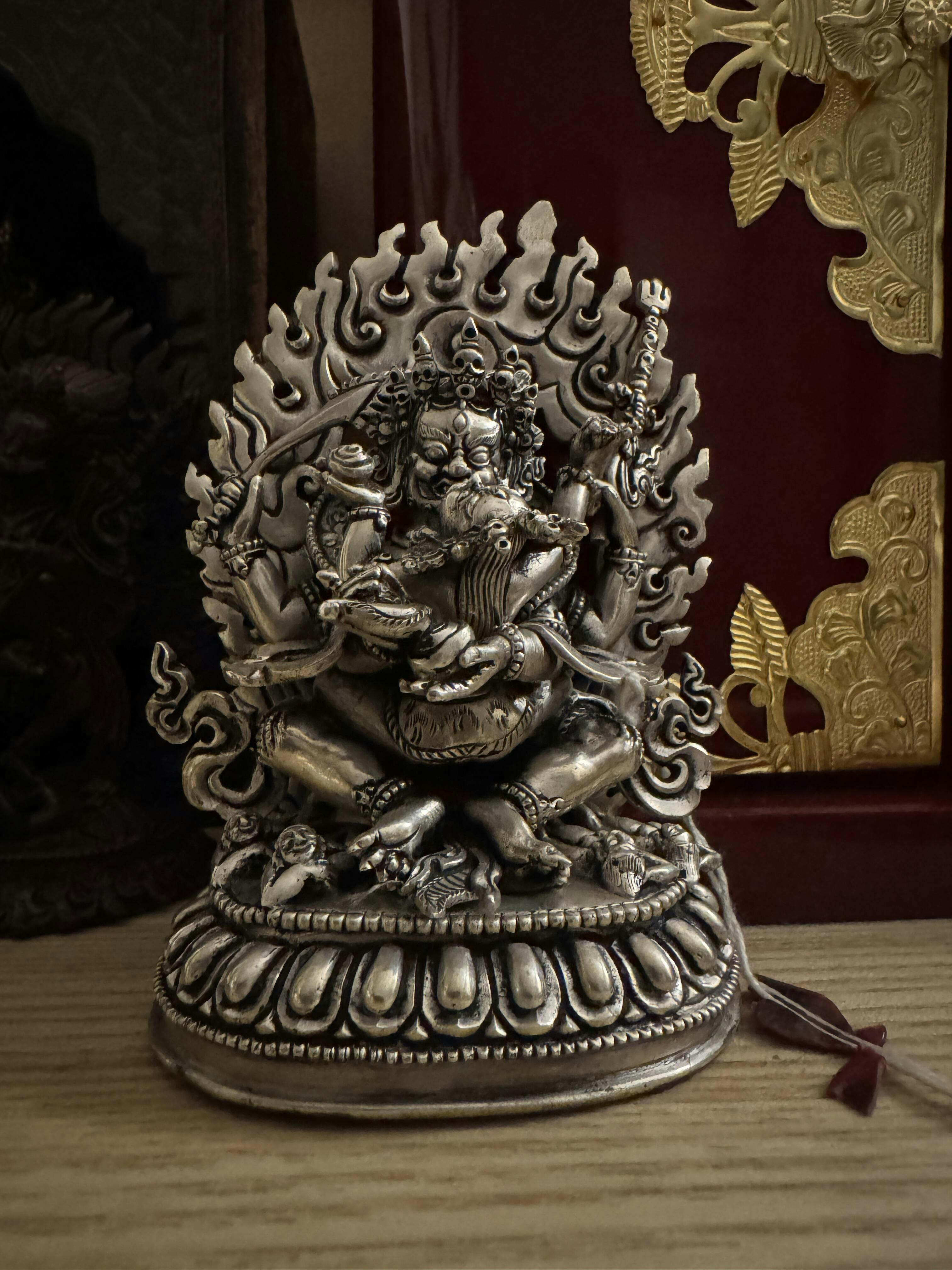
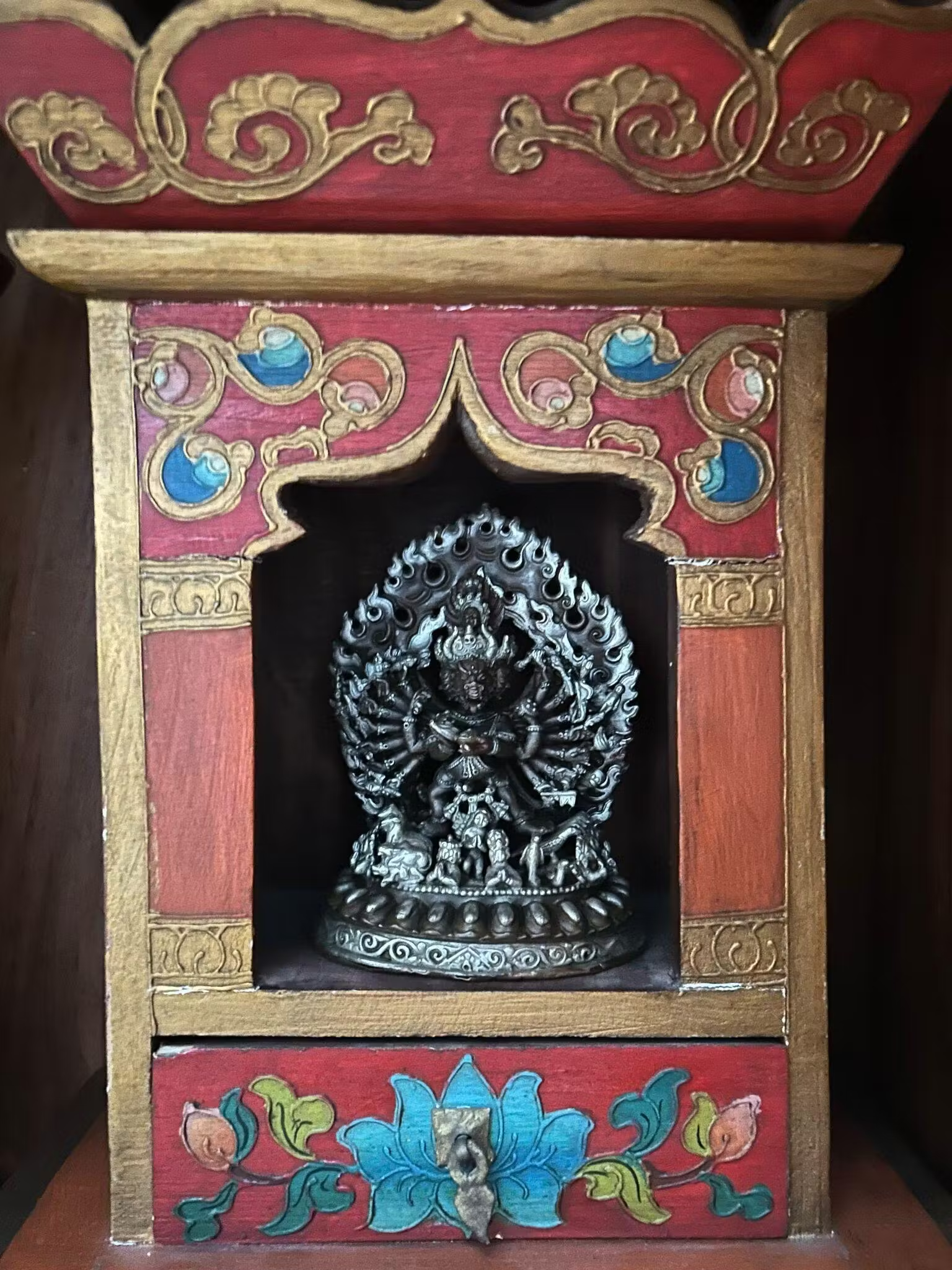
Nepal has a particularly important history of Buddhist metalwork. Newari artisans of the Kathmandu Valley have preserved sophisticated traditions of sacred sculpture, including lost-wax casting, repoussé, chasing, gilding, stone inlay, and detailed hand finishing.
A carefully handcrafted statue therefore carries both spiritual and cultural significance.
Je Tsongkhapa in Nepalese Buddhist Art
Nepal has long played an important role in the artistic history of Himalayan Buddhism.
Newari artists from the Kathmandu Valley became renowned for their ability to create highly detailed Buddhist and Hindu sculptures in metal. Their artistic traditions traveled across the Himalayas and influenced sacred art in Tibet and beyond.
This heritage can be seen in contemporary handcrafted statues of Buddhist masters such as Je Tsongkhapa.
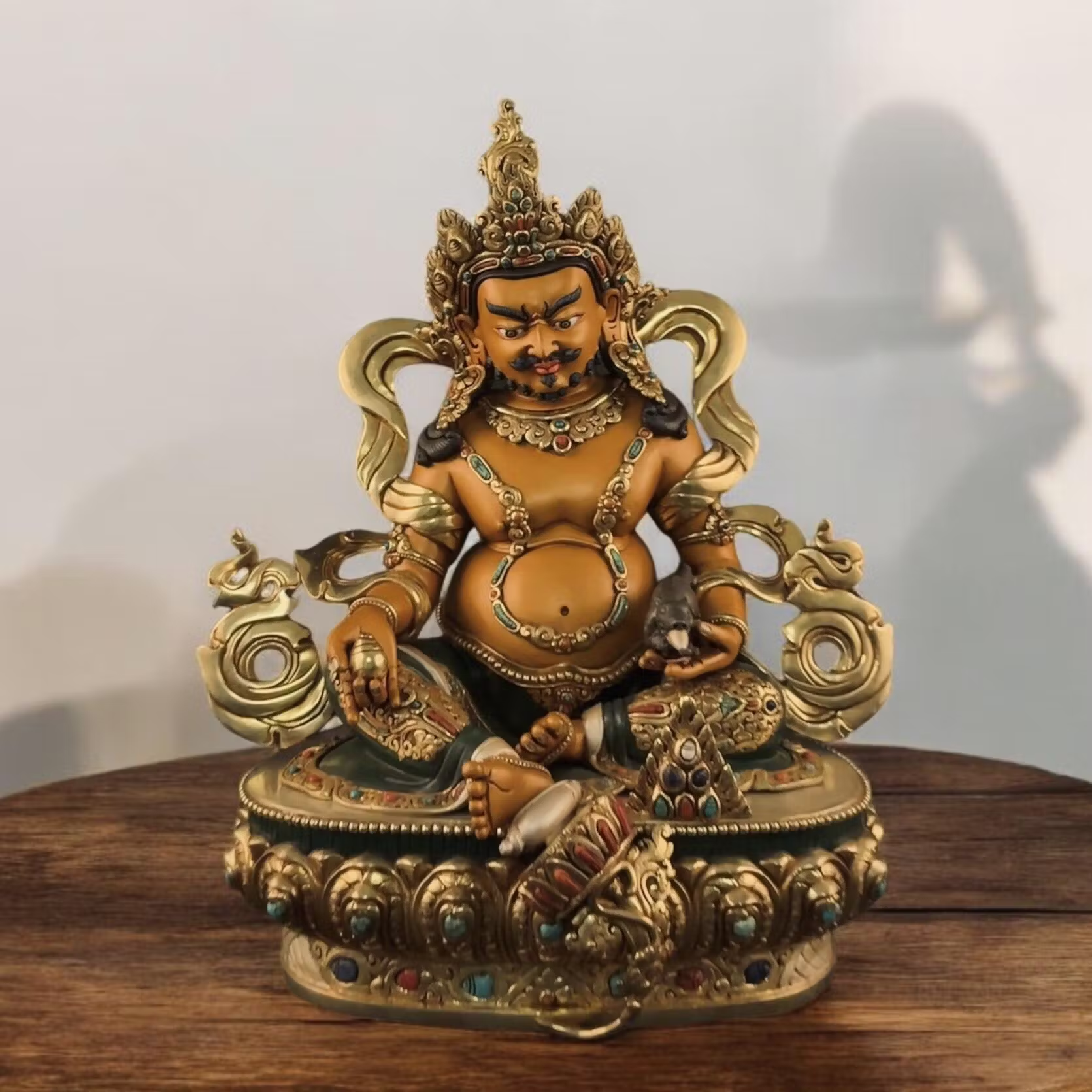
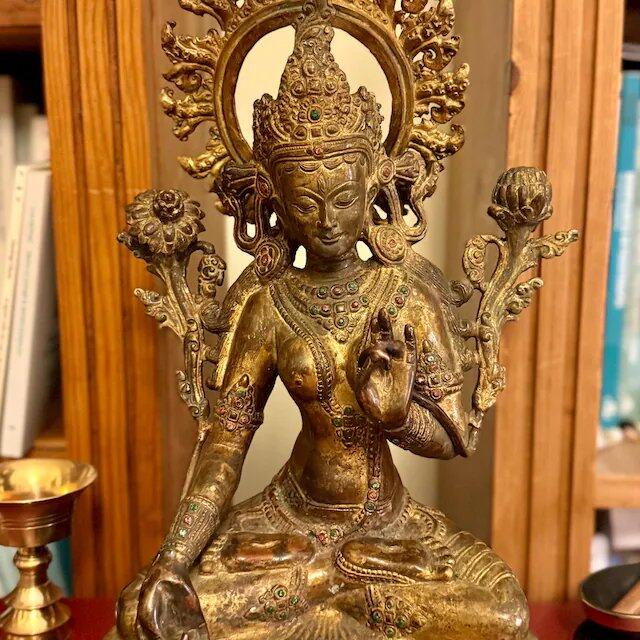
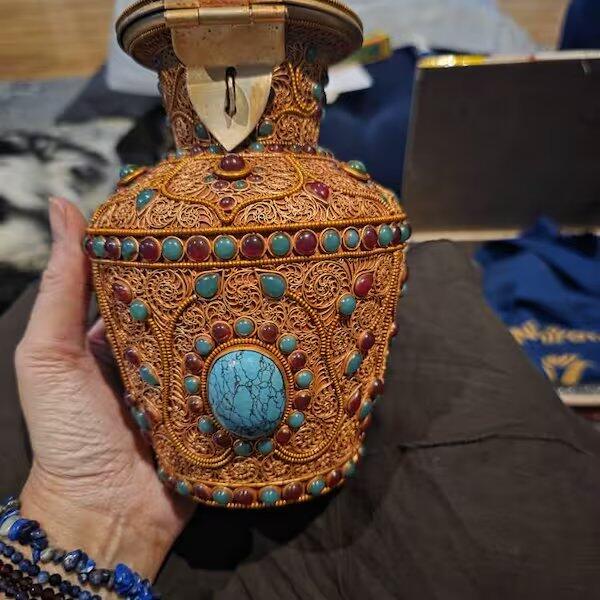
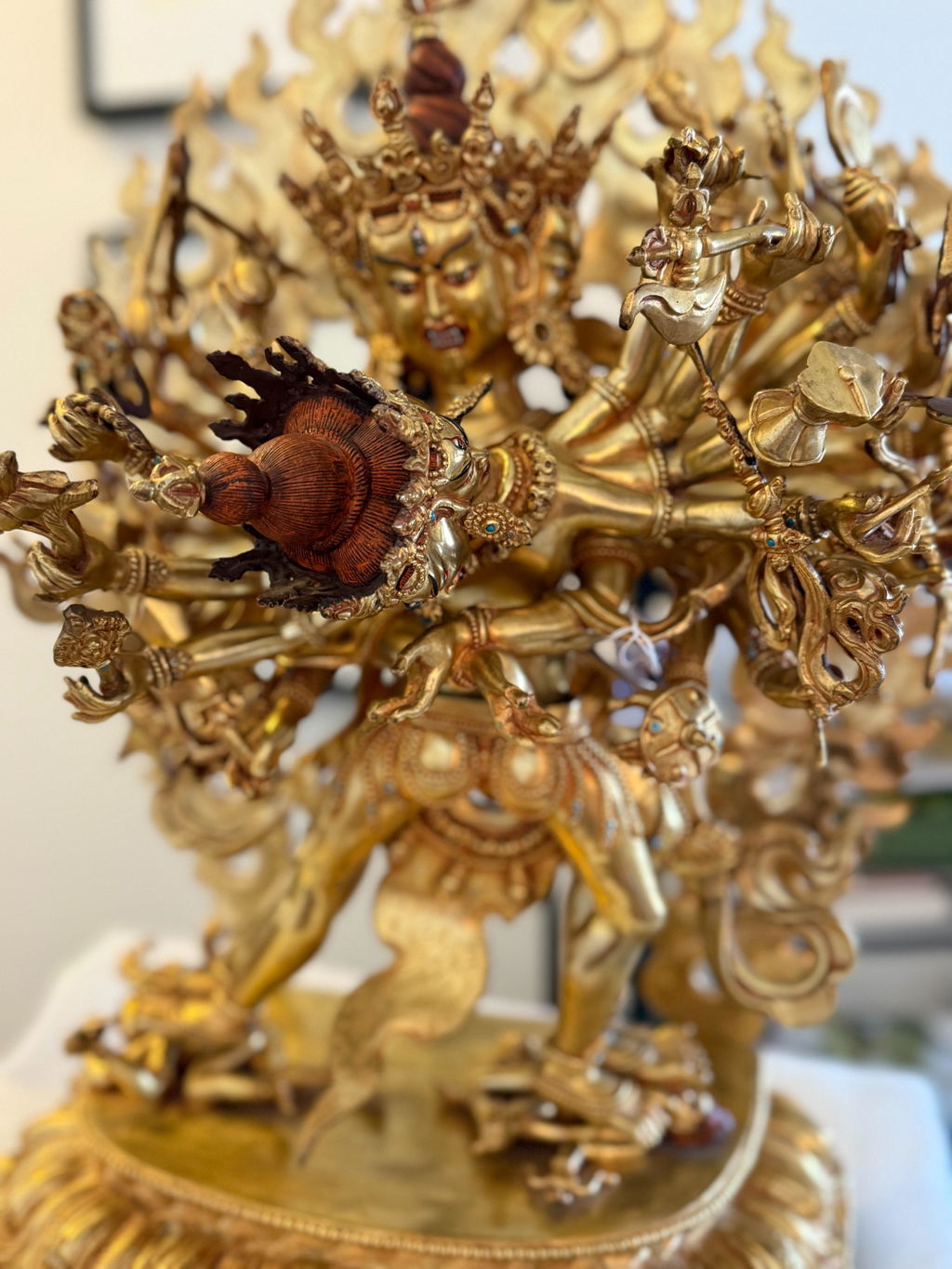
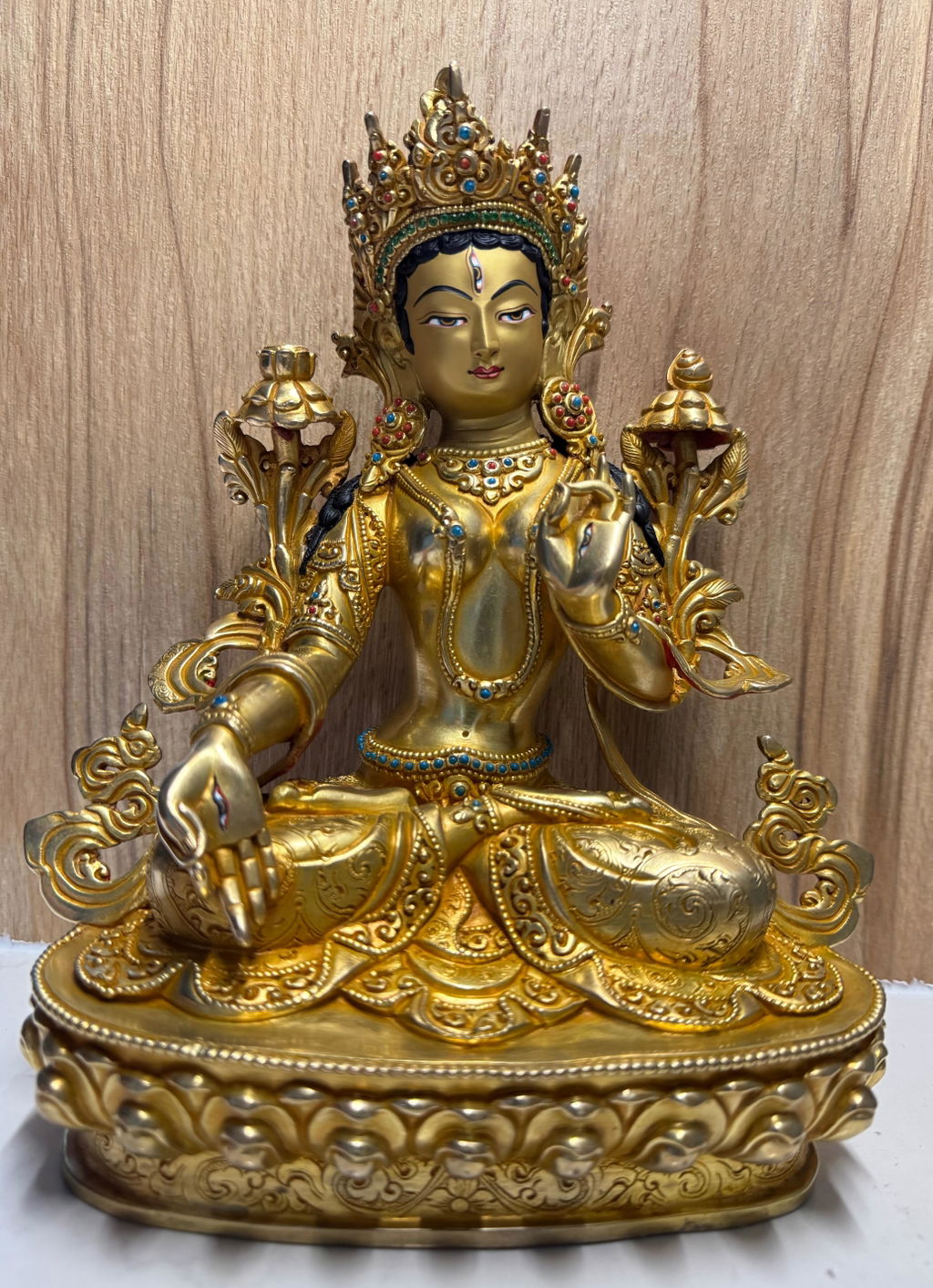
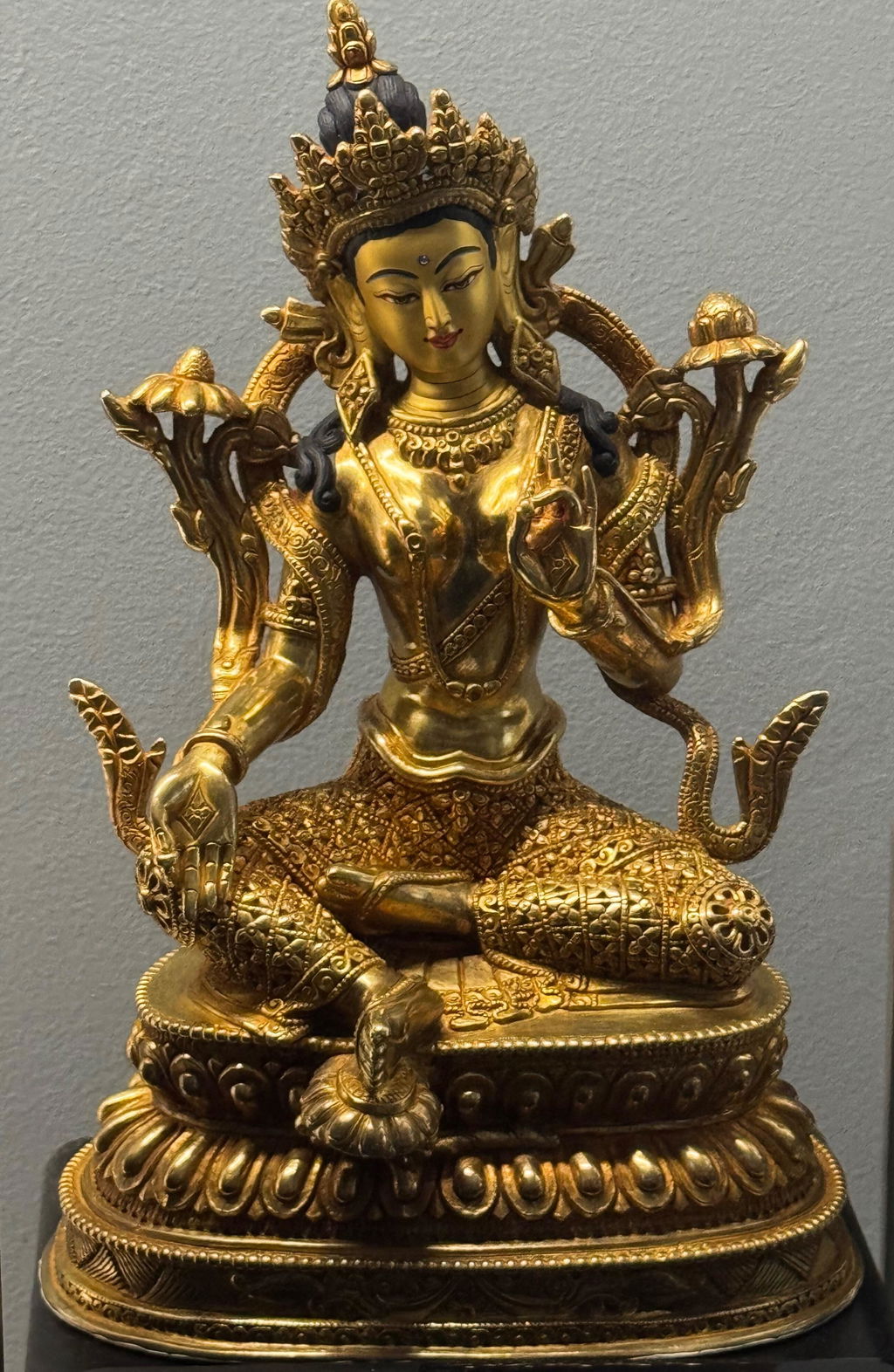
A traditionally crafted Tsongkhapa statue may combine copper or copper alloy with techniques such as lost-wax casting, hand chasing, fire gilding, painting, and semi-precious stone inlay.
The result is not simply a representation of a historical teacher. It is also part of a living artistic tradition connecting contemporary craftsmanship with centuries of Himalayan Buddhist culture.
Je Tsongkhapa's Four Great Deeds
Tsongkhapa's legacy was not limited to writing books.
His life also included significant institutional and religious activities. Historical accounts highlight four major accomplishments associated with his leadership: restoration work at Dzingchi Temple, the establishment of an annual Dharma celebration, the beginning of the Great Prayer Festival in Lhasa, and the establishment of Ganden Monastery.
These activities demonstrate an important aspect of his character. Tsongkhapa was not simply a scholar working with philosophical texts. He was also a teacher and community leader who sought to strengthen Buddhist education, practice, and institutions.
When Did Je Tsongkhapa Die?
Je Tsongkhapa died in 1419 at Ganden Monastery, after a life devoted to Buddhist study, teaching, writing, meditation, and institutional development.
His death did not mark the end of his influence. His students continued teaching his system, preserving his writings, and establishing institutions that would become central to the Gelug tradition.
Over the centuries, Tsongkhapa's philosophical and religious influence expanded throughout Tibet, Mongolia, the Himalayan region, and eventually Buddhist communities around the world.
Is Tsongkhapa Considered an Emanation of Manjushri?
Within Tibetan Buddhist devotional traditions, Tsongkhapa is widely revered as an emanation of Manjushri, the bodhisattva associated with transcendent wisdom.
This is a religious and devotional understanding rather than a historical claim that can be established in the same way as dates or documented events.
For devotees, however, this association is deeply meaningful. Manjushri represents wisdom, and Tsongkhapa's life is strongly associated with the study and clarification of Buddhist philosophy.
His connection with wisdom is therefore central to how he is represented and revered in Tibetan Buddhist practice.
The Lasting Legacy of Je Tsongkhapa
More than six centuries after his death, Je Tsongkhapa remains an influential figure in Tibetan Buddhism.
His works continue to be studied because they address fundamental questions of Buddhist philosophy and practice: What causes suffering? What does emptiness mean? How should compassion be developed? How should Buddhist teachings be practiced systematically? How can wisdom and ethical conduct support one another?
His legacy can be found not only in books and monasteries but also in sacred art.
From traditional thangka paintings to handcrafted copper statues, images of Tsongkhapa continue to appear in Buddhist temples, monasteries, meditation centers, and personal shrines.
For some people, a Tsongkhapa statue represents devotion. For others, it represents Buddhist wisdom and scholarship. For collectors, it preserves an important part of Himalayan cultural heritage.
These meanings can exist together.
Why Je Tsongkhapa Still Matters Today
The enduring appeal of Tsongkhapa's teachings comes partly from their practical balance.
He did not present Buddhism as purely intellectual study, nor did he separate meditation from ethical responsibility. His approach connected philosophical investigation, compassion, discipline, meditation, and spiritual aspiration.
That integrated approach remains meaningful in the modern world.
People interested in Tibetan Buddhism can encounter Tsongkhapa through his books, Buddhist philosophy, meditation traditions, monasteries, teachings, and sacred art.
Whether one approaches him as a historical philosopher, a Buddhist master, a teacher of the Lamrim, or a revered figure of Tibetan Buddhism, his influence is difficult to overlook.
Frequently Asked Questions About Je Tsongkhapa
Who Was Je Tsongkhapa?
Je Tsongkhapa was a major Tibetan Buddhist scholar, philosopher, monk, teacher, and tantric practitioner who lived from 1357 to 1419. His teachings became the foundation for the later development of the Gelug tradition of Tibetan Buddhism.
What Is Je Tsongkhapa Famous For?
Tsongkhapa is especially famous for his writings on the stages of the Buddhist path, Madhyamaka philosophy, emptiness, Buddhist ethics, bodhichitta, and tantric practice. His Lamrim Chenmo is among his most influential works.
What Is Lamrim Chenmo?
Lamrim Chenmo means the Great Treatise on the Stages of the Path to Enlightenment. Completed by Tsongkhapa in 1402, it presents a comprehensive framework for Buddhist spiritual practice.
Did Tsongkhapa Found the Gelug School?
Tsongkhapa is traditionally regarded as the founder of the Gelug tradition, but historically the school was formally developed by his students after his death. His teachings and institutions provided its essential foundation.
What Does a Tsongkhapa Statue Symbolize?
A Tsongkhapa statue can symbolize Buddhist wisdom, compassion, ethical discipline, study, meditation, and dedication to the path toward enlightenment. In devotional settings, it can also serve as a focal point for prayer and contemplation.
Where Did Tsongkhapa Die?
Tsongkhapa died at Ganden Monastery in 1419. Ganden later became the central monastery of the Gelug tradition.
Why Is Tsongkhapa Important Today?
Tsongkhapa's writings continue to influence Tibetan Buddhist philosophy, monastic education, meditation, and tantric practice. His teachings are studied internationally, making him one of the most influential figures in Tibetan Buddhist history.
Conclusion
Je Tsongkhapa's life represents a remarkable meeting of scholarship, meditation, ethical discipline, compassion, and spiritual practice.
Born in fourteenth-century Tibet, he became one of the great thinkers of Tibetan Buddhism through his dedication to understanding and preserving the Dharma. His writings on the stages of the path and Madhyamaka philosophy continue to guide Buddhist study, while the institutions established through his efforts helped shape the later development of the Gelug tradition.
Today, his legacy lives not only through Buddhist texts and monasteries but also through sacred works of Himalayan art.
A handcrafted Je Tsongkhapa statue can therefore carry several layers of meaning: reverence for a great Buddhist teacher, a reminder of wisdom and compassion, and appreciation for the artistic heritage of Nepal and the Himalayas.
For those drawn to Buddhist philosophy, meditation, sacred art, or Himalayan culture, learning about Je Tsongkhapa offers an opportunity to explore a tradition built upon a simple but profound ideal: study deeply, practice sincerely, cultivate compassion, and use wisdom for the benefit of others.


Share:
Vajradhara: Meaning, Symbolism, Iconography & Spiritual Significance
Four Noble Truths, Eightfold Path & Karma in Buddhism