

Peaceful Vs Wrathful Deity Statues: Understanding their role in Vajrayana Buddhism
When people first see Vajrayana Buddhist art, there is a sense of curiosity or puzzlement. At first glance, the peaceful deities and wrathful deities may be seen as contradictions. How can a spiritual tradition celebrate both stillness and ferocity, softness and hardness? The very question struck the mind of the observer.
Some figures of peaceful deities depict calmness, serenity, and compassion, while others of fierce deities surrounded by flames project a sense of power and intense energy. But in reality, the duality of peaceful deities and fierce deities is not a contradiction. It is the cycle of life where one has to cultivate their yins and yans to be on the right path of enlightenment under favorable spiritual guidance.
Trikaya System in Vajrayana Buddhism
If we want to understand the reasons why, the concept of the Trikaya, or the “Three Bodies” of a Buddha, helps. They help us understand different levels of reality and the manifestations of energy associated with them.
1. Dharmakaya
The Dharmakaya, or the Truth Body, takes one closer to the nature of reality itself. It is said to be formless, infinite, and beyond all concepts, and it cannot be represented in any form of art. In many mythical contexts, it is, however, perceived by a deep blue figure of Samantabhadra or an empty space.
2. Sambhogakaya
The Sambhogakaya, or “Bliss Body,” is the sacred image coming alive. Many visions of Buddhism come alive here, be it the peaceful or wrathful expressions, or the path reflects on the enlightenment of an individual on their spiritual journey.
3. Nirmanakaya
The Nirmanakaya, or “Emanation Body,” is the physical form of enlightenment in the human world. This concept appreciates that Gautama Buddha lived as a human being and left behind all his teachings during his earthly existence.
Peaceful and Wrathful Forms of Deity
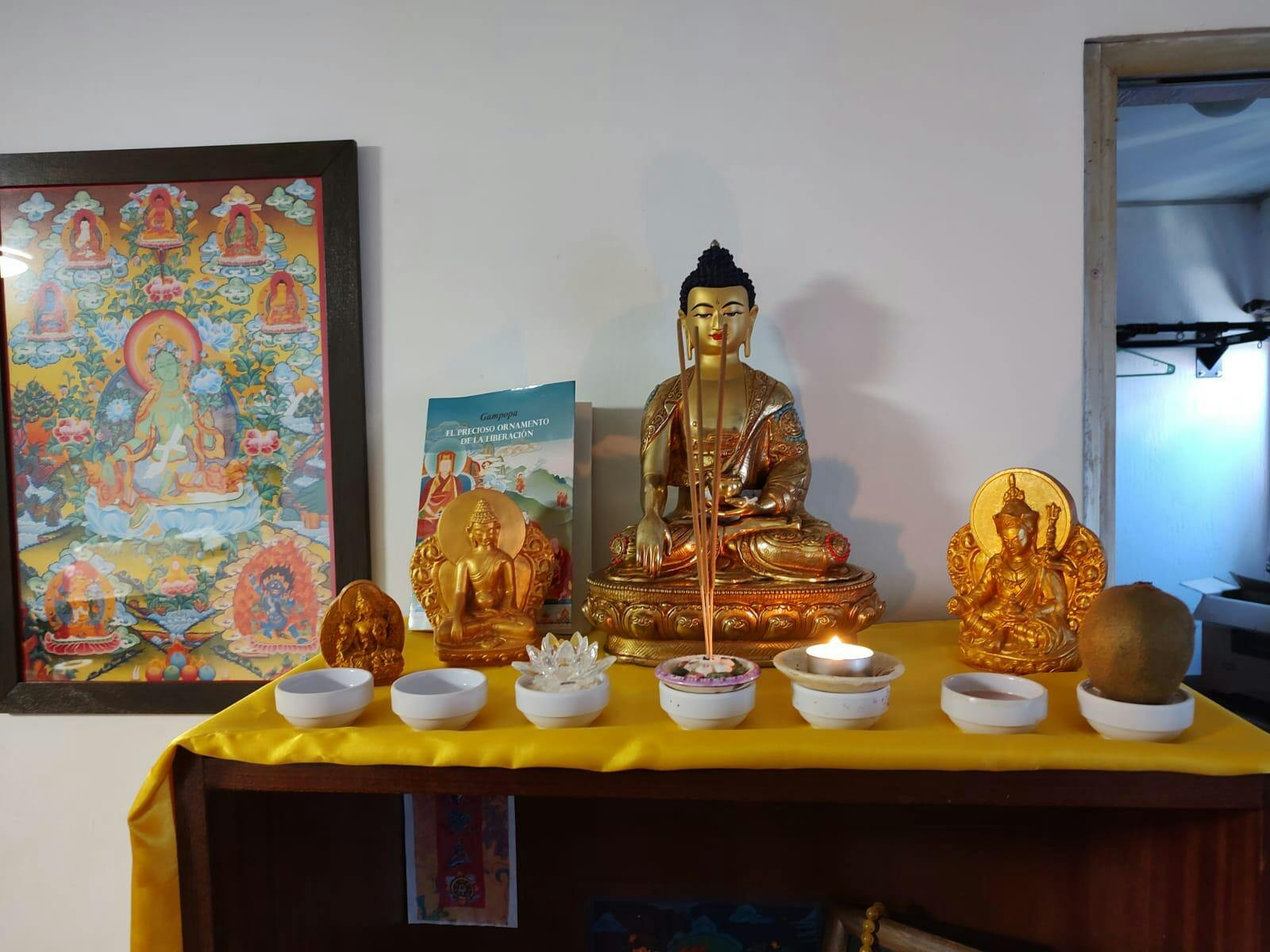
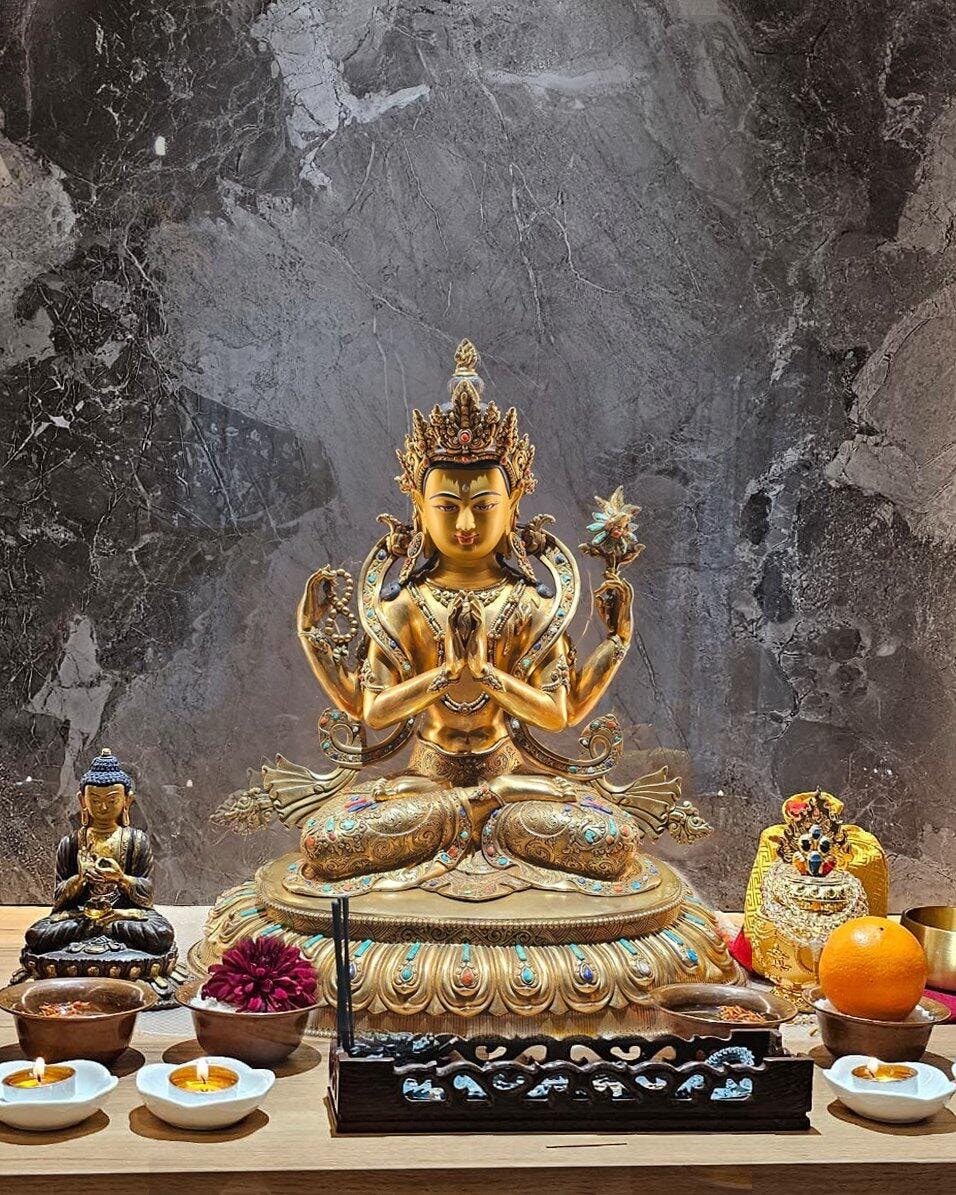
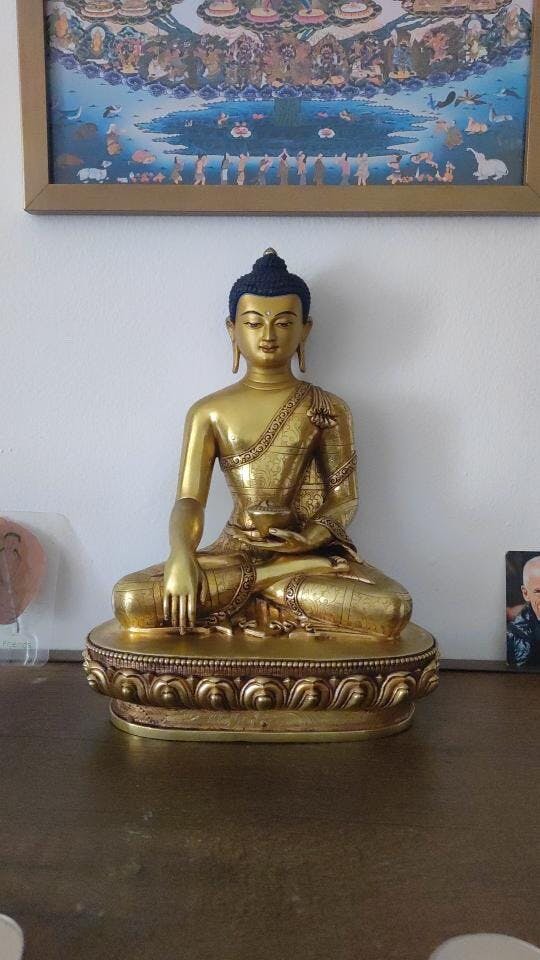
Peaceful deities are one with soft, balanced proportions. Their bodies are slender and youthful, symbolizing clarity and timeless awareness. They sit or rest in relaxed poses like meditation or royal ease, reflecting calmness and compassion.
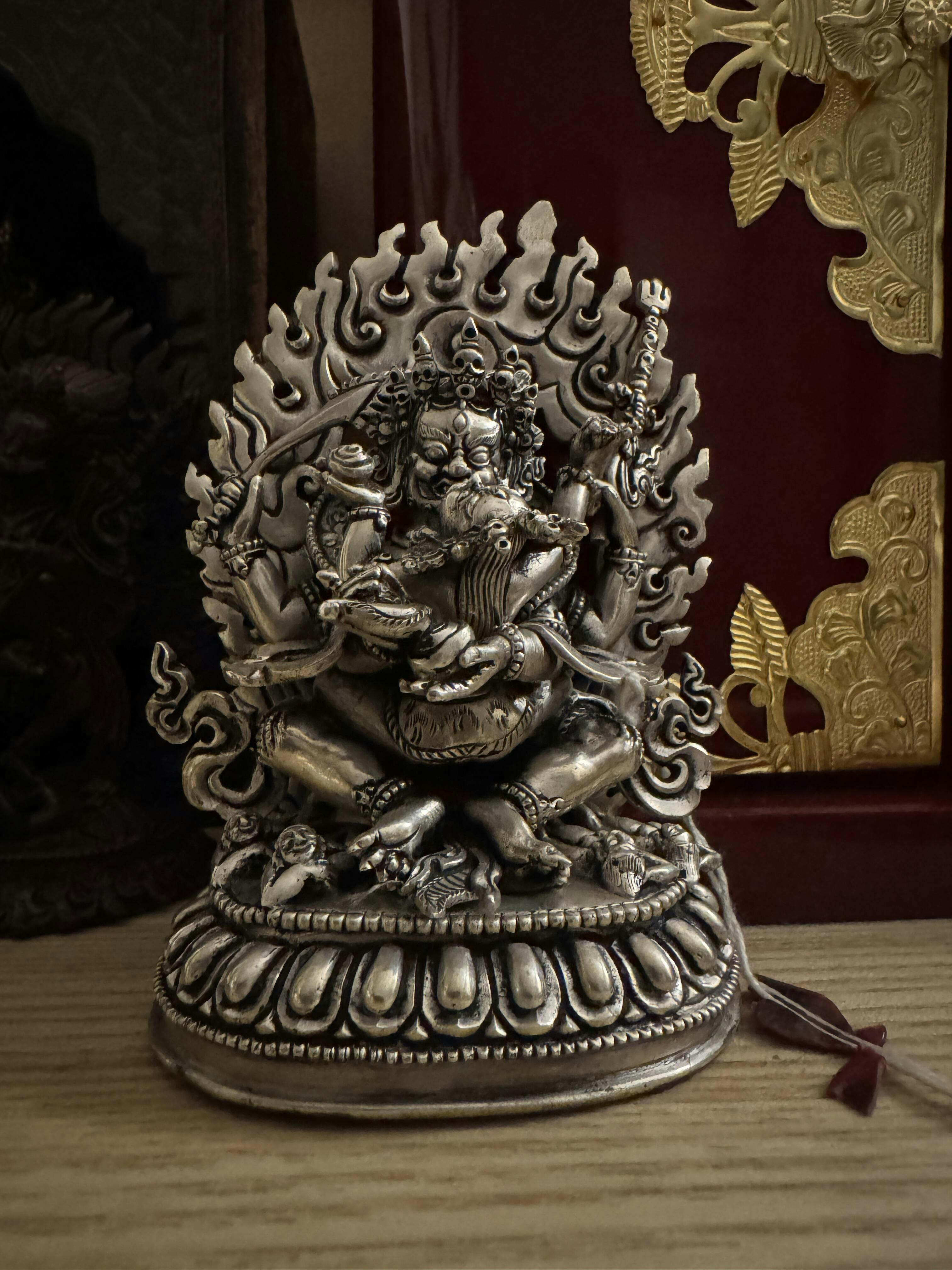
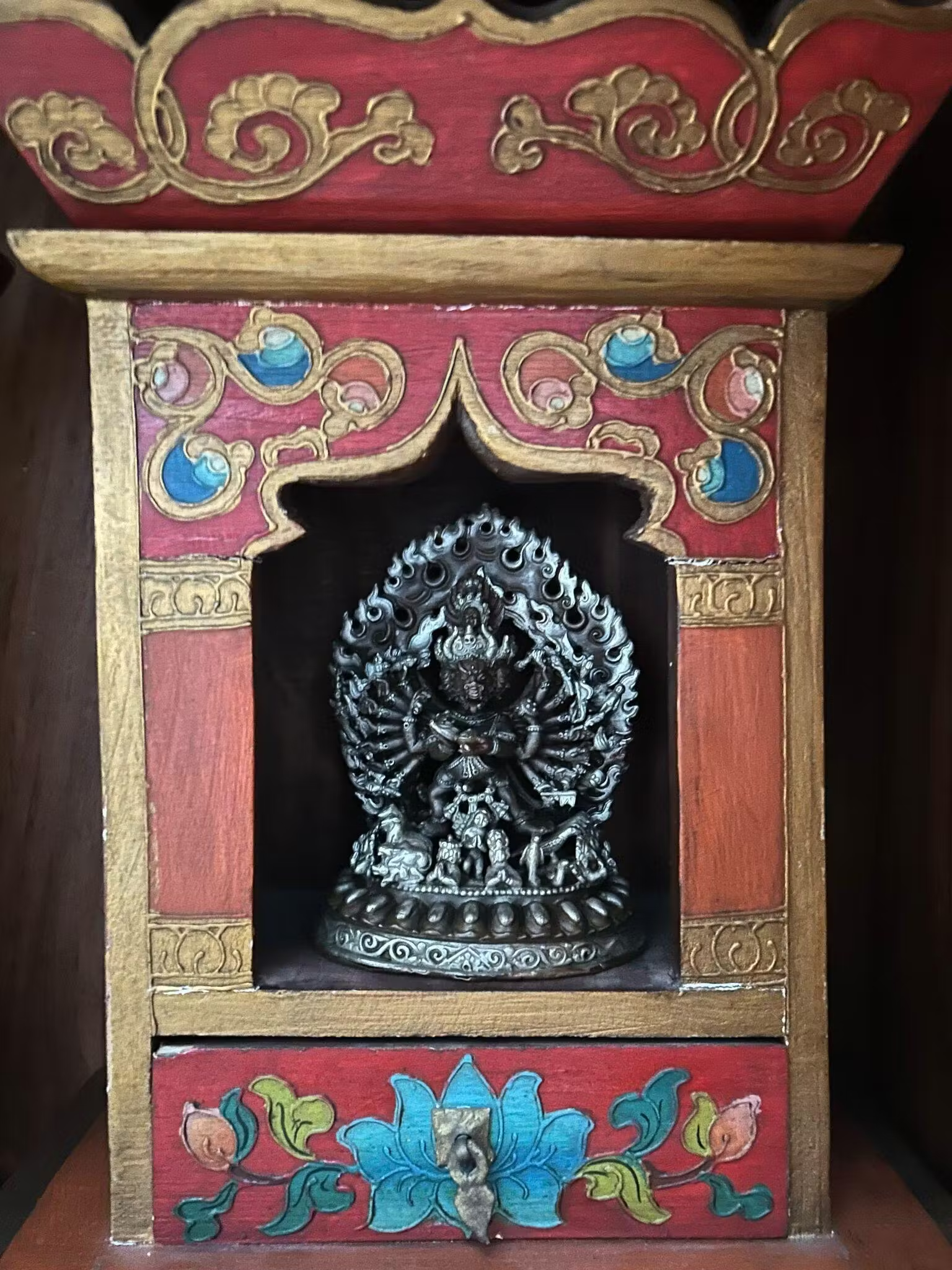
Wrathful deities, on the other hand, appear powerful and intense. Their muscular forms and strong stances represent energy in action, the force needed to overcome deep inner obstacles. Their dynamic posture shows movement, strength, and determination.
Detailed Iconographic Comparison
|
Attribute |
Peaceful Appearance (Zhi-wa) |
Wrathful Appearance (Tro-wo) |
|
Proportions |
Youthful and graceful with regular position. |
Muscular, rotund belly, powerful squat position |
|
Eyes |
Two almond-shaped eyes, a serene gaze |
Three bulging eyes, fierce gaze |
|
Hair Style |
Neatly arranged top knot, blue-black |
Hair standing on end, orange-red |
|
Necklace |
Jewels and garlands of flowers |
Garland of severed heads |
|
Aura |
Gentle radiance or jeweled halo |
Blazing aura of wisdom-fire |
|
Postures |
Meditative, relaxed, symmetrical |
Dynamic warrior pose, dancing on corpses |
Peaceful vs. Wrathful deities: Examples
Wrathful deity statues in Vajrayana Buddhism may look fierce, but they are not symbols of evil. Instead, they transform what is believed to be inner “poisons” like anger, desire, and ignorance into wisdom and compassion. This helps one understand the essence of facing the harsh reality rather than suppressing the negative emotions.
In this tradition, anger is not rejected but further shaped into clarity and strength. Wrathful forms channelize their inner anger as spiritual protectors by helping one break through illusion and ego. This wrathful energy is often depicted with bone ornaments, skull crowns, and trampling postures that remind us of impermanence and the illusion of self. Each element symbolizes overcoming attachment and transforming the mind.
Wrathful deities are seen holding ritual objects such as the Vajra, Ghanta (bell), or the Phurba (ritual dagger). These weapons do not intend to harm but are used to cut through ignorance and bring peace and wisdom to one's mind.
|
Quality |
Peaceful Example |
Wrathful Transformation |
|
Wisdom |
Manjushri (Golden Youth) |
Yamantaka (Buffalo-headed) |
|
Compassion |
Avalokiteshvara (White) |
Mahakala (Black Protector) |
|
Power |
Vajrapani (Inner Power) |
Vajrapani (Blue Warrior) |
|
Action |
Green Tara (Gentle Mother) |
Palden Lhamo (Fierce Queen) |
|
Internal Bliss |
Samantabhadra |
Chechok Heruka |
Peaceful forms invite stillness and openness, whereas wrathful deities such as Mahakala challenge the mind, breaking through illusion and resistance. One has to learn and unlearn many emotions in their life, but what is good is knowing the existence of both positive and negative energy. Both the modes of deity signal one toward achieving what is needed in life, the awakening of the soul, with the co-existence of energy.
The Zhitro Teachings: Peaceful and Wrathful Beyond This Life
The contrast of peaceful vs wrathful is also explained in the Zhitro Teachings. These teachings explain that after death, in the intermediate state known as the bardo, one's consciousness has to observe 100s of deities in a pool of both peaceful and wrathful.
What is interesting is the fact that these are not merely of the divine or the deity, but manifestations of the mind. The same peaceful and wrathful forms we see in statues and thangkas appear in sequence, first as calm, radiant deities, and then as intense, wrathful figures.
This directly connects to Vajrayana Buddhism and its art manifestations. It is believed that one prepares for recognition with these forms during life, to recognize them in the bardo, as the statement says, “Recognition leads to liberation. Fear leads to continued rebirth.”
The fierce may be compassionate in action, and the peaceful may be very deep. In this way, peaceful and wrathful deity statues are not only artistic expressions, but they are also guides for both life and beyond.
The Color and Tantric Symbolism of Deities
In Vajrayana Buddhism, colors are deeply intentional. Every shade used in deity statues is associated with the Tantric Activities. These colors help practitioners understand how wisdom expresses itself in different situations.
1. White
White represents peaceful energy, such as healing and calming the mind. Deities like Avalokiteshvara appear in white to symbolize purity and compassion that pacifies one's emotional imbalance.
2. Yellow
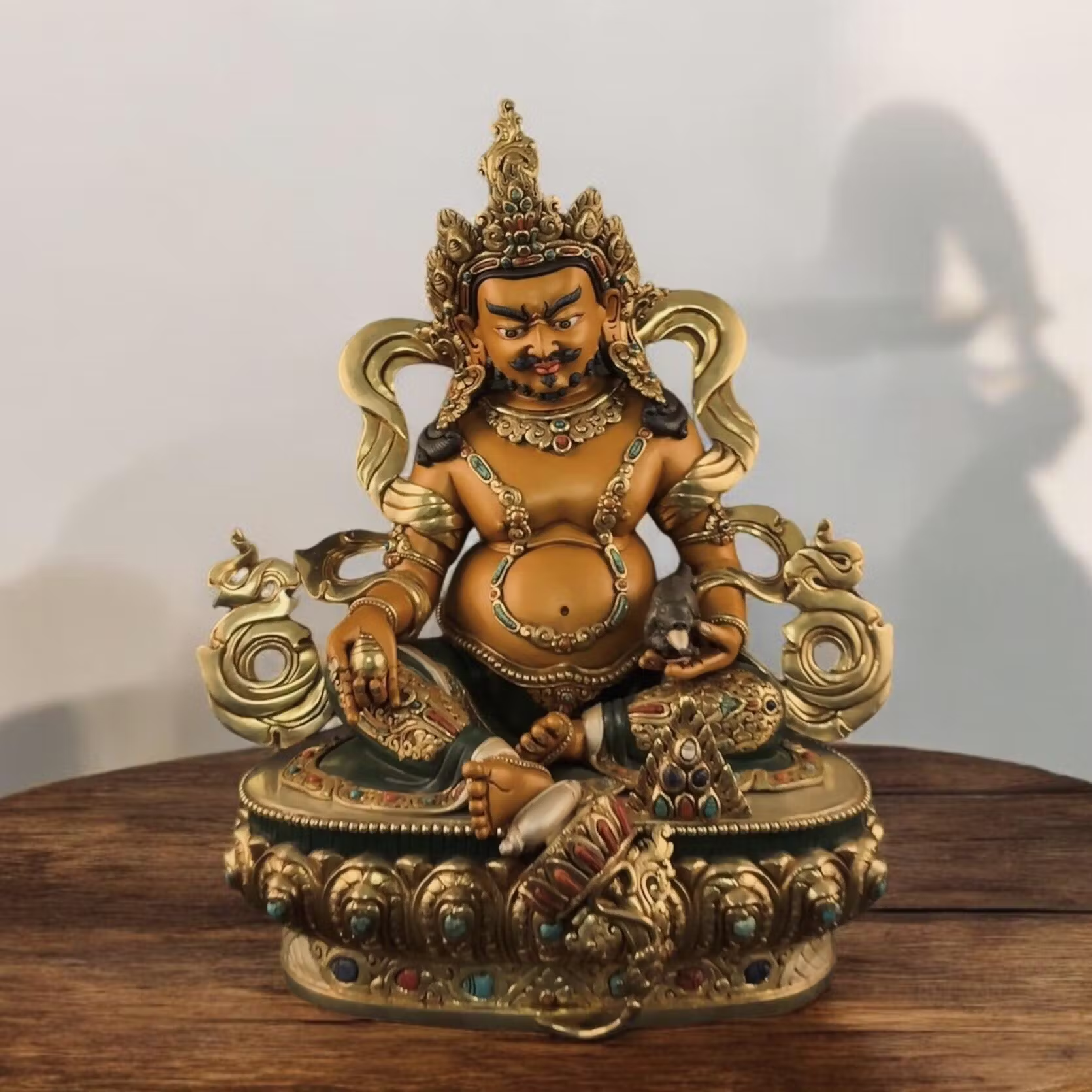
Yellow signifies growth, merit, and abundance. This quality is often seen in deities like Jambhala, reflecting both material and spiritual enrichment.
3. Red
Red is the color of attraction and influence. It represents one's capacity to create favorable conditions and transform desire into awareness. A key example is Kurukulla.
4. Blue/Black
Blue or black reflects wrathful action. Deities such as Mahakala harness this intense energy to protect and guide practitioners against the odds.
The Five Buddha Families and Iconography
Every human emotion is associated with a color and, in fact, can be transformed into wisdom, as the Five Buddha Families suggests.
|
Family |
Principal Buddha |
Color |
Direction |
Wisdom Transformation |
|
Vajra |
Akshobhya |
Blue |
East |
Anger to Mirror-like Wisdom |
|
Jewel |
Ratnasambhava |
Yellow |
South |
Pride to Wisdom of Sameness |
|
Lotus |
Amitabha |
Red |
West |
Desire to Discriminating Wisdom |
|
Karma |
Amoghasiddhi |
Green |
North |
Envy to All-Accomplishing Wisdom |
|
Buddha |
Vairochana |
White |
Center |
Ignorance to Wisdom of Dharmadhatu |
Conclusion
Peaceful and wrathful deities in Vajrayana Buddhism are not dualistic concepts, but different sides of the same coin, the truth of wisdom. From the peaceful and compassionate form to the fierce and dynamic form, each deity is there to help the practitioner transcend the illusions and realize the true nature of one's mind.
Under the Trikaya system, the Zhitro teachings, and the complex symbolism of colors and forms, we understood that the deities are beyond their mere appearance. The visual form can be confusing; the inner awakening can only be achieved in the co-existence of peaceful and fierce moments.
At Nidhiratna, we understand the assignment. Thus, every statue here pays tribute to the deeper philosophy and symbolism, respecting one's religious values.
Shop your favorite deity today!
FAQs
1. Why do Vajrayana Buddhist statues have duality of forms?
Vajrayana Buddhist statues often reflect a powerful duality between peaceful and wrathful forms. Together, they express the balance of compassion and transformative strength within Vajrayana Buddhism.
2. What are common ritual objects possessed by wrathful deity statues?
Common ritual objects associated with the wrathful form of deities are their iconic skull crowns, bone ornaments, flames, vajra, bell (ghanta), and phurba. These elements represent impermanence, wisdom, and the removal of ignorance.
3. Where can I buy authentic Vajrayana Buddhist statues?
At Nidhiratna, you can buy authentic Vajrayana Buddhist statues that are carefully made according to sacred artistic guidelines; every detail reflects both spiritual meaning and cultural heritage.


Share:
How to choose the right Buddhist Statue for your Spiritual Intention?
Handcrafted vs Machine-Made Buddhist Statues: Why Authentic Nepalese Art Matters