

Prajnaparamita: The Buddhist Goddess of Perfect Wisdom
In Buddhism, wisdom means more than gaining knowledge or understanding the world around us. It means learning to see things clearly, letting go of mistaken beliefs, and developing a deeper understanding of life. This profound wisdom is personified by Prajnaparamita, one of the most revered figures in Mahayana and Vajrayana Buddhist traditions.
Known as the Goddess of Perfect Wisdom and the Mother of All Buddhas, Prajnaparamita represents the insight that leads toward enlightenment. Her presence in Buddhist art, sacred texts, and meditation practices reflects the importance of wisdom on the spiritual path. For devotees and collectors of Himalayan Buddhist art, a Prajnaparamita statue is more than a beautiful sculpture. It is a reminder to approach life with clarity, awareness, and an open mind.
In this guide, we explore the meaning of Prajnaparamita, the symbolism of her traditional imagery, her connection to Buddhist teachings, and the significance of keeping her statue in a sacred space.
Who Is Prajnaparamita in Buddhism?
Prajnaparamita is both a central Buddhist teaching and the goddess who personifies that teaching. Her name comes from Sanskrit, with prajna meaning wisdom and paramita referring to perfection or the attainment of the far shore. Together, the term is commonly translated as "Perfection of Wisdom."
In Mahayana Buddhism, Prajnaparamita is closely associated with the wisdom needed to realize the true nature of reality. This wisdom goes beyond ordinary intellectual understanding. It involves recognizing that things do not exist independently or permanently in the way we often assume.
Prajnaparamita is also called the Mother of All Buddhas because perfect wisdom is essential to the awakening of every Buddha. The title expresses a spiritual principle rather than an ordinary biological relationship. Just as a mother gives birth to new life, wisdom gives rise to enlightenment.
Her importance extends across Buddhist philosophy, religious practice, sacred literature, and art. Through her image, an abstract teaching becomes something devotees can contemplate and remember in their daily lives.
What Does Prajnaparamita Mean?
The meaning of Prajnaparamita reaches into one of the deepest ideas in Buddhist philosophy: the difference between simply knowing something and truly understanding it.
Ordinary knowledge helps us navigate everyday life. Perfect wisdom, however, encourages us to look beyond appearances, question our assumptions, and recognize how all things arise through causes, conditions, and relationships.
This understanding is closely connected to the Buddhist teaching of emptiness, known in Sanskrit as shunyata. Emptiness does not mean that nothing exists or that life has no meaning. Rather, it points to the absence of an independent, unchanging essence in people and things.
When we begin to understand this principle, we may become less attached to rigid opinions, possessions, and expectations. We can respond to difficulties with greater patience and meet others with more understanding.
For this reason, Prajnaparamita symbolizes wisdom that transforms the way we see ourselves and the world. Her teachings invite practitioners to look beyond surface appearances and cultivate a clearer understanding of reality.
Why Is Prajnaparamita Called the Mother of All Buddhas?
The title "Mother of All Buddhas" is one of the most meaningful aspects of Prajnaparamita's identity. It reflects the belief that perfect wisdom is fundamental to attaining Buddhahood.
Compassion, generosity, patience, and ethical conduct are essential qualities on the Buddhist path. Yet wisdom helps practitioners understand how to cultivate these qualities without becoming trapped by attachment or mistaken views. It brings depth and clarity to spiritual practice.
The Prajnaparamita teachings are preserved in a major collection of Mahayana Buddhist scriptures known as the Perfection of Wisdom Sutras. These texts explore emptiness, the bodhisattva path, and the wisdom required to work toward enlightenment for the benefit of all beings.
Among these teachings, the Heart Sutra is especially well known in Mahayana and Tibetan Buddhist traditions. Its concise presentation of emptiness has made it an important text for study, reflection, and recitation.
By personifying these teachings as a goddess, Buddhist traditions give visible form to the wisdom that nurtures awakening. Prajnaparamita therefore represents both the sacred scriptures and the realization they encourage practitioners to develop.
Prajnaparamita Statue Meaning and Symbolism

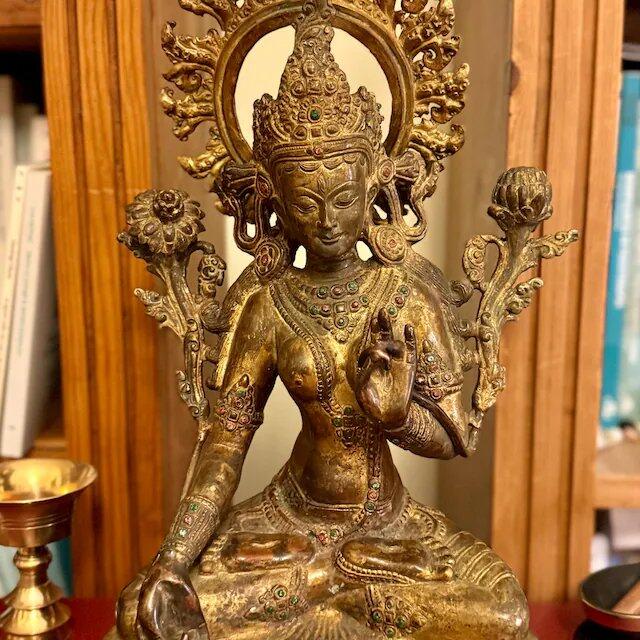
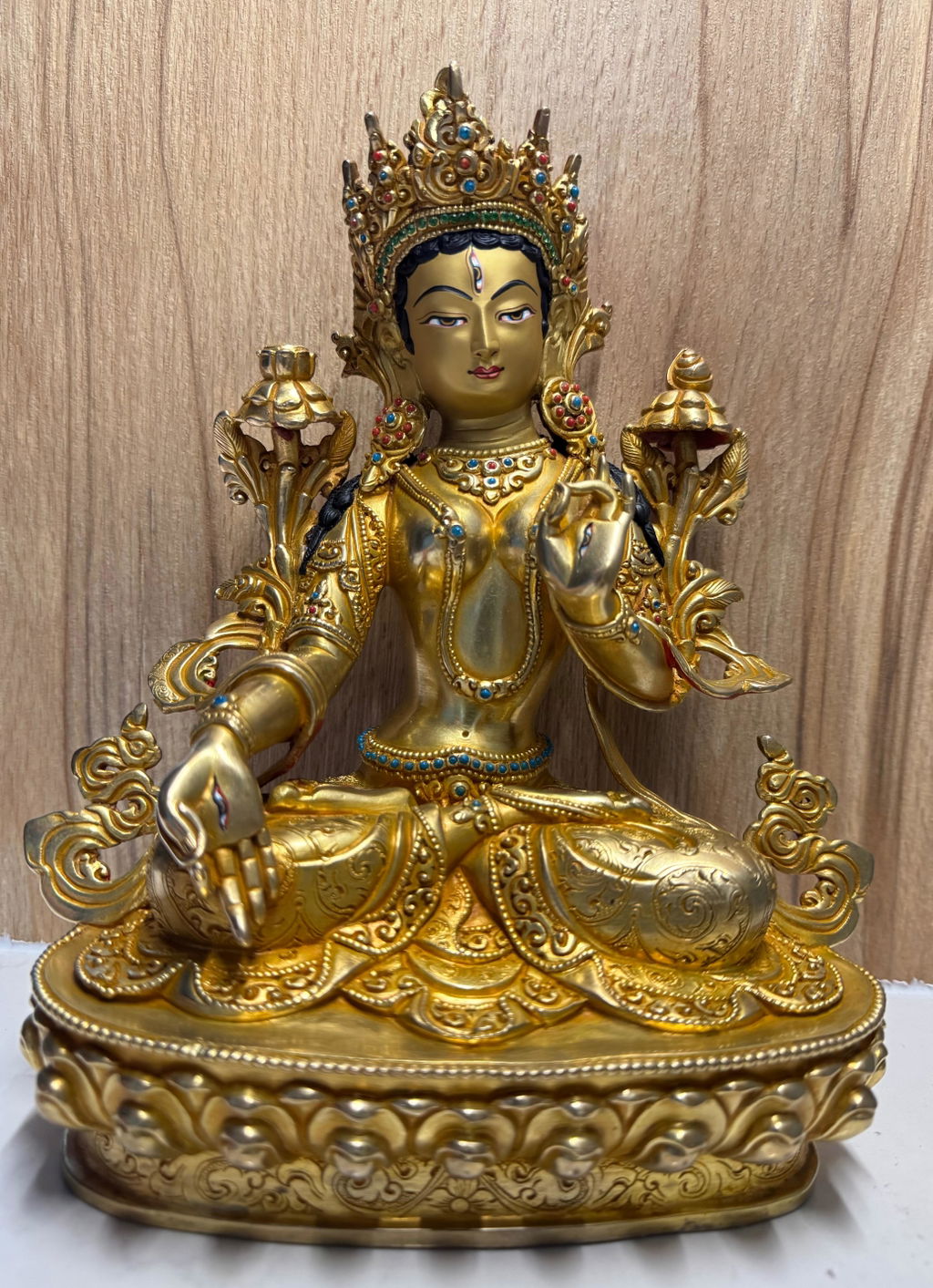
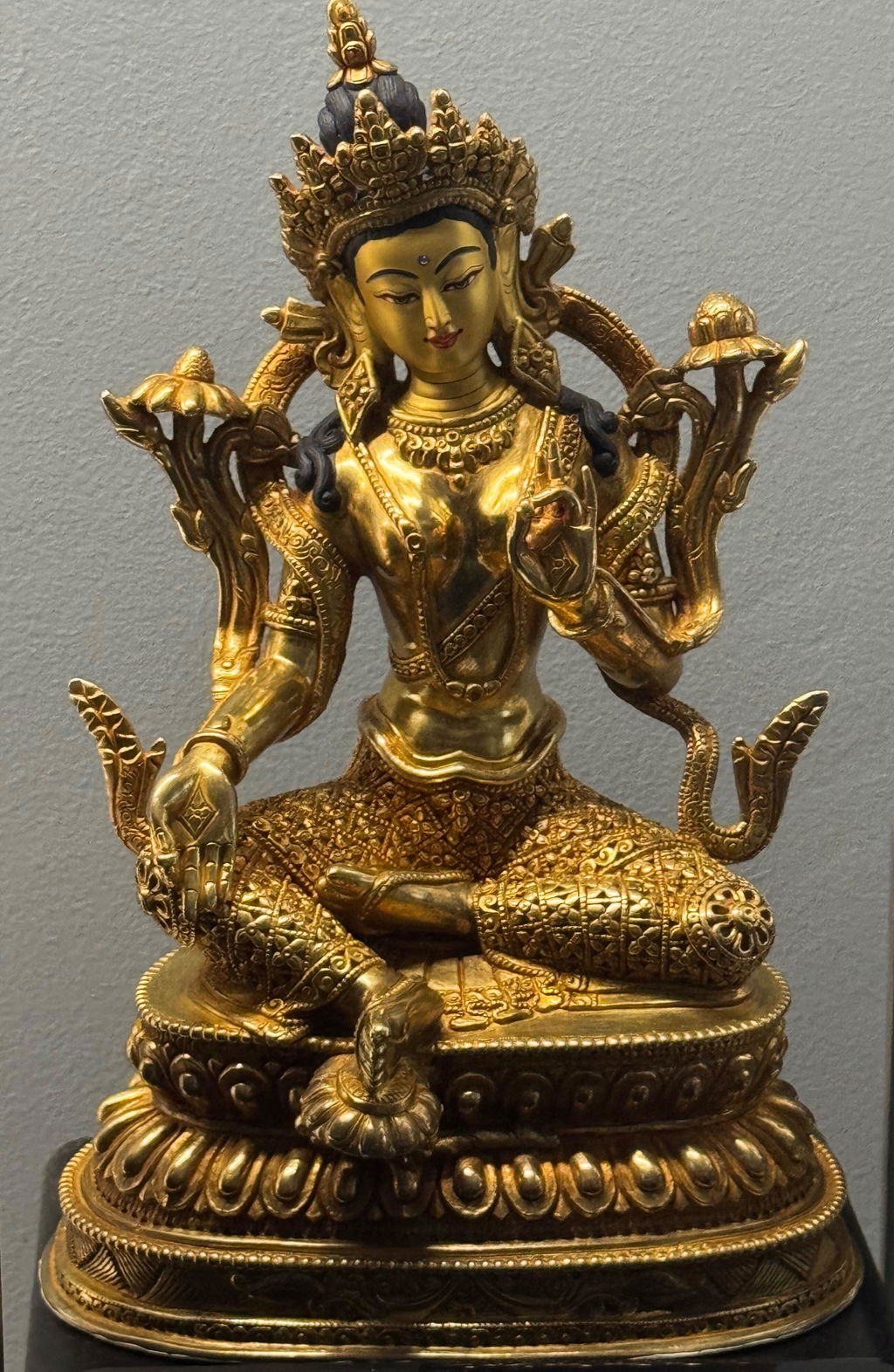
A Prajnaparamita statue brings together Buddhist philosophy and the artistic traditions of sacred sculpture. Every detail may carry meaning, from the goddess's hand gestures to the objects she holds and the ornaments surrounding her.
The Sacred Book of Wisdom
One of the most recognizable attributes associated with Prajnaparamita is a sacred manuscript, often shown resting on a lotus. The book represents the Perfection of Wisdom teachings and the knowledge that guides practitioners toward awakening.
Its presence reminds devotees that spiritual growth requires more than belief alone. Studying the Dharma, reflecting on its meaning, and applying its lessons to everyday life are important parts of the Buddhist path.
The Vajra
In many Himalayan depictions, Prajnaparamita holds a vajra, a ritual object associated with indestructibility and spiritual realization. The vajra can symbolize the unshakable quality of awakened wisdom and the power of insight to cut through confusion.
Some representations place the vajra on a lotus alongside the sacred book, combining symbols of wisdom and the qualities associated with enlightened realization. The precise meaning depends on the particular Buddhist tradition and the form represented.
The Lotus Throne
The lotus is one of the most familiar symbols in Buddhist art. Growing from muddy water while producing a beautiful flower, it represents the possibility of awakening even in the midst of ordinary worldly difficulties.
When Prajnaparamita sits upon a lotus throne, the flower reinforces the connection between wisdom, spiritual development, and enlightenment. It also provides a graceful foundation for the sculpture, often decorated with carefully carved petals and ornamental patterns.
The Crown and Sacred Ornaments
Many Prajnaparamita statues depict the goddess wearing an elaborate crown, necklaces, earrings, bracelets, and other ornaments. These details reflect the visual language of enlightened and richly adorned Buddhist deities.
The ornaments contribute to the sacred character of the image, while the peaceful expression and balanced posture invite contemplation. Their meaning should be understood within the iconographic tradition of the specific statue rather than assumed to be identical across every representation.
Her Hand Gestures
Prajnaparamita appears in several artistic forms, so her hand gestures and attributes can vary. Some images show her principal hands in a teaching gesture, while others depict her with hands resting in meditation. Additional hands may hold a vajra, a manuscript, a rosary, or other ritual objects.
These differences reflect the rich diversity of Buddhist iconography. When choosing a Prajnaparamita statue, it is worth considering the particular form, its traditional attributes, and the artistic lineage it represents.
The Different Forms of Prajnaparamita
Prajnaparamita is not represented in only one fixed form. Across Buddhist regions and historical periods, artists have portrayed her in different colors, postures, and arrangements of hands and faces.
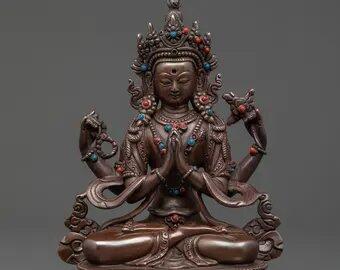
In many Himalayan Buddhist images, she appears as a peaceful, golden-colored goddess with a crown and four arms. Her attributes may include the sacred text and vajra, while her principal hands form a teaching gesture or rest in meditation.
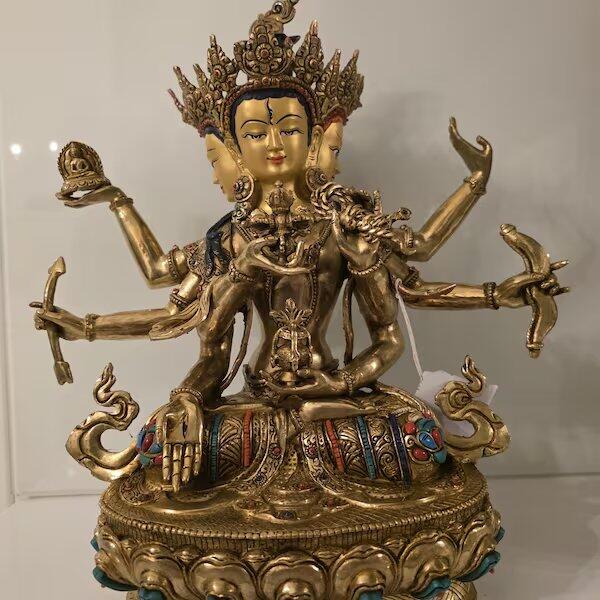
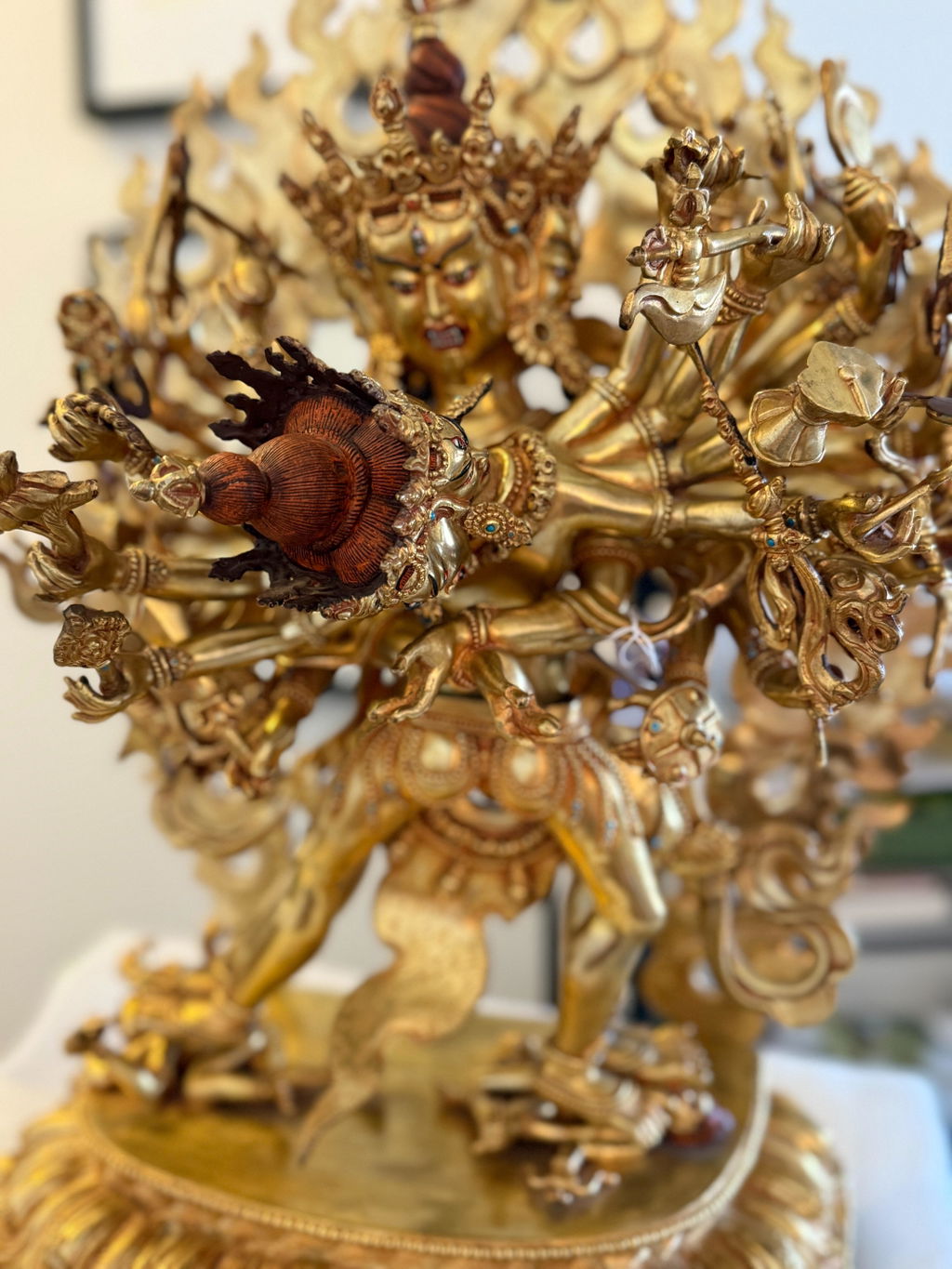
Other historical representations are much more elaborate. A well-known Cambodian sculpture from around the late twelfth century, held by the Smithsonian's National Museum of Asian Art, depicts Prajnaparamita with eleven heads and twenty-two arms. This distinctive form demonstrates how regional traditions developed their own ways of expressing the extraordinary scope of enlightened wisdom.
Because Prajnaparamita has multiple iconographic forms, it is important not to assume that every statue should display the same number of arms or identical attributes. The details are best understood in relation to the specific form being represented.
Prajnaparamita and the Path to Enlightenment
Wisdom plays a central role in Buddhist practice because it helps practitioners understand the causes of suffering and the ways attachment can keep the mind unsettled.
Prajnaparamita represents the wisdom that sees beyond mistaken assumptions and recognizes the interdependent nature of existence. This insight can gradually change how we respond to everyday experiences.
For example, when frustration arises, we can pause before reacting and consider the many conditions that contributed to the situation. When success comes our way, we can appreciate it without assuming that circumstances will remain unchanged forever. When we encounter another person's difficulties, we can look beyond first impressions and respond with greater patience.
These small moments of reflection do not replace formal Buddhist study or meditation. They offer practical ways to bring awareness into daily life.
The teachings associated with Prajnaparamita also emphasize that wisdom and compassion belong together. A deeper understanding of our shared conditions can encourage us to act with greater care toward others. Wisdom is therefore not simply an intellectual achievement. It is something to cultivate through understanding, ethical conduct, and practice.
Why Keep a Prajnaparamita Statue in Your Home or Shrine?
For practitioners who revere Prajnaparamita, a statue can serve as a meaningful focal point for devotion, reflection, and Buddhist practice. Its presence offers a visual reminder of the importance of wisdom and the ongoing effort to understand the Dharma.
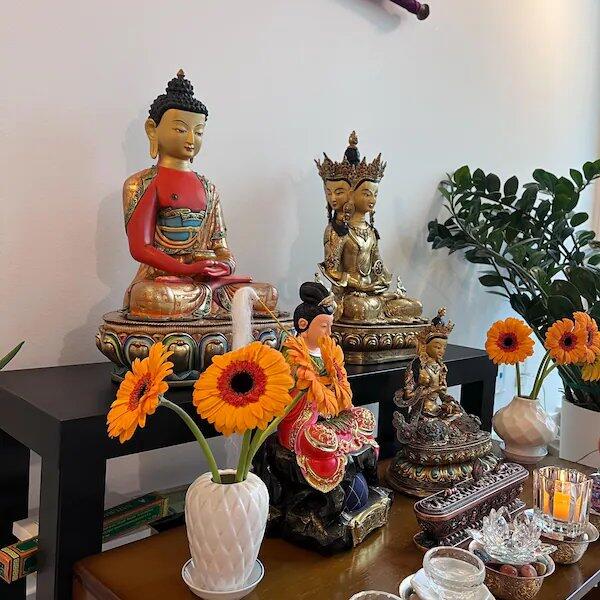
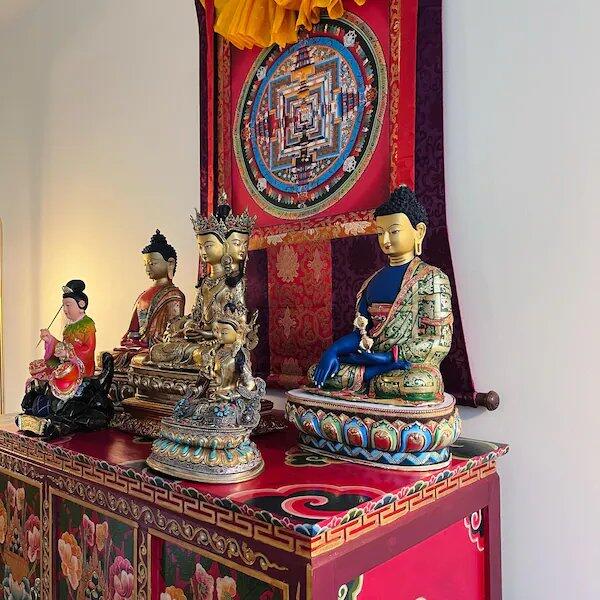
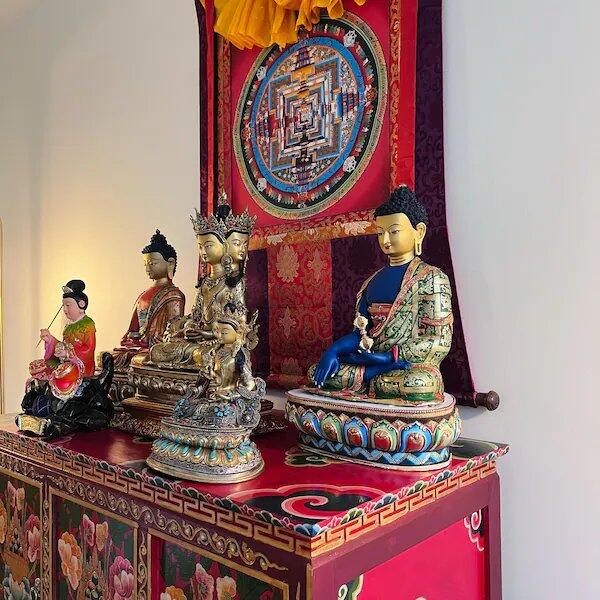
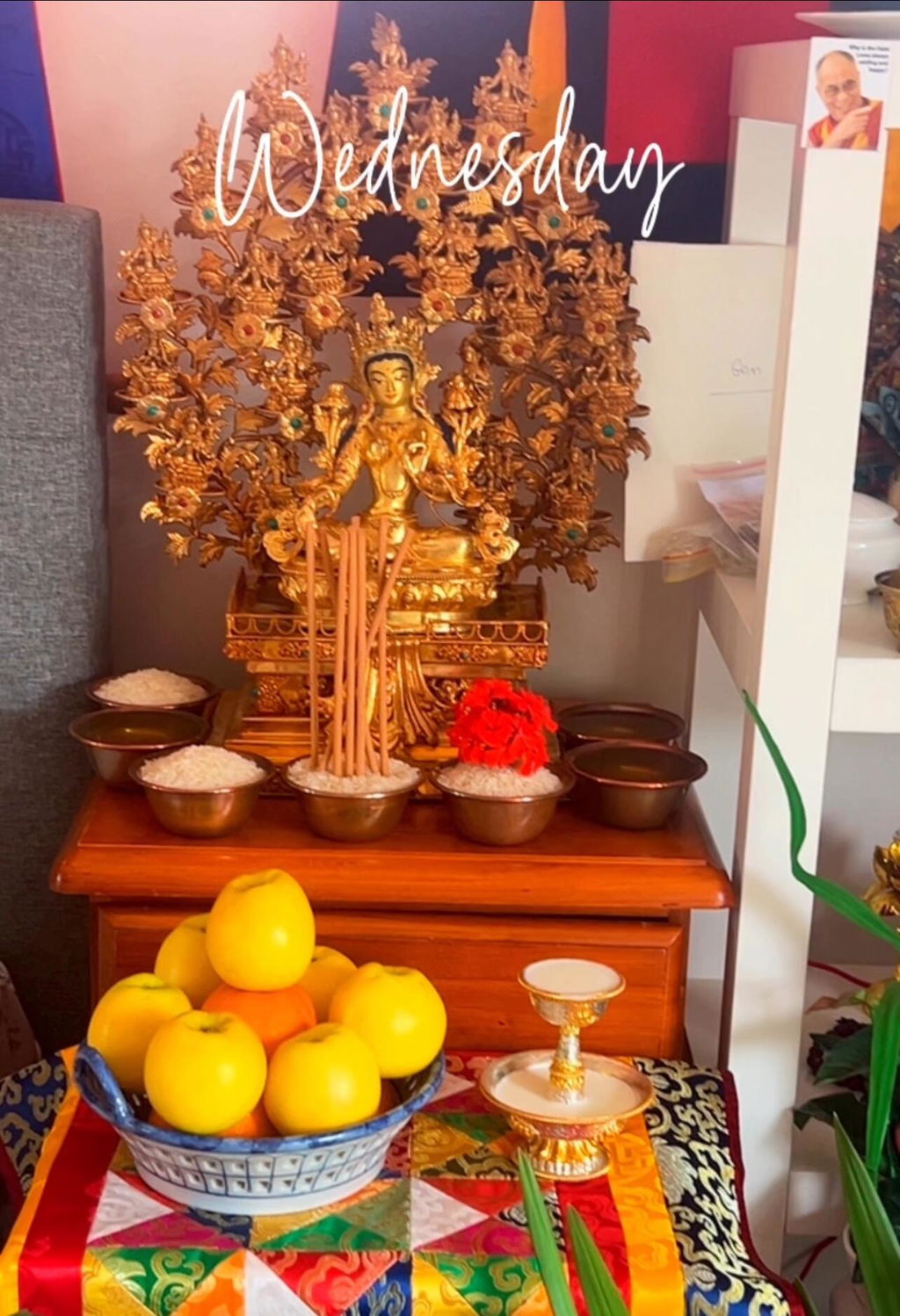
A Prajnaparamita statue may be placed in a home shrine, meditation room, Buddhist temple, or another quiet and respectful setting. The most appropriate location depends on the practitioner's tradition, available space, and personal devotional practices.
Some devotees use the statue as a focus for prayer or meditation. Others appreciate it as a reminder to study Buddhist teachings, reflect before making decisions, and approach daily challenges with a clearer mind.
For art collectors, a Prajnaparamita sculpture can also represent an important part of Buddhist cultural heritage. Its iconography connects philosophical teachings with centuries of artistic expression across the Himalayan region and other parts of Asia.
A statue does not guarantee wisdom, protection, or any particular outcome. Its significance comes from the meaning it holds for the devotee and the way it supports sincere reflection and practice.
The Beauty of Himalayan Buddhist Art
Himalayan Buddhist sculpture is admired for its intricate details, balanced proportions, and the careful relationship between artistic form and religious symbolism. In Nepal, the Kathmandu Valley has a long history of metalworking associated with Buddhist and Hindu sacred art.
Newari artisans, particularly those working in the historic city of Patan, have helped preserve generations of metalworking knowledge. Traditional sculptural practices may include lost-wax casting, detailed chasing, repoussé work, gilding, and the careful finishing of ornamental features.
Lost-wax casting is a process in which a wax model is used to create a mold for metal casting. After the wax is removed, molten metal takes the form of the prepared design. Further finishing brings out the features, garments, ornaments, and symbolic objects of the sculpture.
Depending on the individual piece, a Prajnaparamita statue may feature copper or copper alloy, gold gilding, painted details, or decorative stones. Materials and finishing techniques vary, so the specifications of each sculpture should be checked individually.
These artistic traditions give each statue its own character. Fine details are not merely decorative; they help communicate the sacred identity of the figure while reflecting the knowledge and skill of the artisan.
How to Choose a Prajnaparamita Statue
If you are considering a Prajnaparamita statue for your shrine, meditation space, or Buddhist art collection, a few practical considerations can help you choose a piece that suits your needs.
- Understand the iconography: Look at the goddess's hand gestures, sacred text, vajra, posture, and other attributes to understand which form is represented.
- Consider the size: Measure the available space in your shrine or room and allow enough room for the statue to sit securely.
- Check the materials: Review whether the sculpture is made from copper, copper alloy, or another material, and check the stated finish and decorative elements.
- Look at the craftsmanship: Examine the facial expression, lotus throne, ornaments, hands, and smaller sculptural details.
- Choose a respectful setting: Consider where the statue will be displayed and how it will fit into your devotional practice or collection.
- Buy with clear information: Look for accurate photographs, dimensions, weight, materials, finishing details, and information about the artisan or production method where available.
Choosing a sacred sculpture is a personal decision. Learning about its symbolism and construction can make the experience more meaningful and help you appreciate the artistry behind the finished piece.
How to Honor Prajnaparamita in Daily Life
The wisdom represented by Prajnaparamita can inspire practices that extend beyond the shrine. Even a few minutes of thoughtful reflection can provide an opportunity to examine our assumptions and respond to daily experiences with greater awareness.
You might begin by reading a passage from a Buddhist text, reflecting on the meaning of what you have learned, or spending a few quiet moments observing the mind during meditation. When a difficult situation arises, try to pause and consider what you may not yet understand.
It can also be helpful to listen carefully to others, recognize when your perspective is incomplete, and remain willing to learn. These actions reflect the spirit of inquiry and understanding associated with the Perfection of Wisdom teachings.
For those who follow a devotional Buddhist tradition, prayers, offerings, or recitations may also form part of their practice according to their lineage and guidance from qualified teachers.
Ultimately, Prajnaparamita reminds us that wisdom is not simply something to admire in a sacred image. It is a quality to cultivate through study, reflection, and the way we live.
Discover Prajnaparamita Statues at Nidhiratna
At Nidhiratna, we celebrate the enduring connection between Himalayan Buddhist art, sacred symbolism, and traditional Nepalese craftsmanship. Our collection brings together Buddhist statues and ritual objects that reflect the cultural heritage of the region and the devotion behind these meaningful works of art.
If Prajnaparamita's teachings inspire your spiritual practice or your appreciation of Buddhist sculpture, we invite you to explore our collection and discover a statue that speaks to you. Take time to appreciate the iconography, materials, and craftsmanship of each piece as you choose something meaningful for your home shrine, meditation space, or collection.
Explore our Buddhist statues collection to discover more sacred figures from the Himalayan Buddhist tradition.
At Nidhiratna, every sculpture offers an opportunity to appreciate the artistic traditions and spiritual ideas that continue to connect generations. We welcome you to explore this heritage with curiosity, respect, and an appreciation for the wisdom it represents.
Frequently Asked Questions About Prajnaparamita
What is Prajnaparamita the goddess of?
Prajnaparamita personifies the Perfection of Wisdom in Mahayana and Vajrayana Buddhist traditions. She represents the wisdom that helps practitioners understand the nature of reality and progress toward enlightenment.
Why is Prajnaparamita called the Mother of All Buddhas?
She is called the Mother of All Buddhas because perfect wisdom is considered essential to the attainment of Buddhahood. The title expresses the role of wisdom in giving rise to enlightened understanding.
What does a Prajnaparamita statue symbolize?
A Prajnaparamita statue symbolizes wisdom, spiritual understanding, and the teachings that guide practitioners toward enlightenment. Common attributes, such as a sacred manuscript, vajra, and lotus throne, communicate aspects of her identity and Buddhist philosophy.
What book does Prajnaparamita hold?
She is often depicted holding or accompanied by a manuscript representing the Prajnaparamita or Perfection of Wisdom Sutras. These Buddhist scriptures explore wisdom, emptiness, and the bodhisattva path.
Where should a Prajnaparamita statue be placed?
A Prajnaparamita statue may be placed in a clean, respectful home shrine, meditation room, or other dedicated devotional space. Follow the customs of your Buddhist tradition when arranging a shrine.
Is Prajnaparamita the same as Tara?
No. Prajnaparamita personifies the Perfection of Wisdom, while Tara is a distinct revered figure associated with compassion and the activity of helping beings. Their artistic forms can sometimes share visual features, so identifying a particular sculpture may require examining its attributes and iconography.
What is the difference between Prajnaparamita and Manjushri?
Both are closely associated with wisdom in Buddhist traditions, but they represent it in different ways. Prajnaparamita personifies the Perfection of Wisdom and its sacred teachings, while Manjushri is a bodhisattva associated with wisdom and is commonly depicted holding a wisdom sword and a text.
What is the spiritual significance of Prajnaparamita?
Prajnaparamita represents the wisdom that helps practitioners see beyond mistaken assumptions and understand the interdependent nature of existence. Her teachings encourage study, reflection, and the cultivation of insight on the path toward enlightenment.
Share:
The Hidden Meaning of Lotus Thrones, Halos, and Pedestals in Buddhist Art