

When looking at a traditional Buddhist statue, the first thing you may notice is the peaceful expression, graceful posture, or intricate ornaments. Yet some of the most meaningful details appear around and beneath the figure. Lotus thrones, decorative halos, and carved pedestals are not simply artistic additions. They help communicate the spiritual qualities, teachings, and significance of the figure they support.
In traditional Himalayan Buddhist art, these details reflect centuries of religious symbolism and artistic knowledge. Nepalese artisans carefully shape each element to create sculptures that bring together sacred meaning and exceptional craftsmanship.
Understanding these features offers a deeper appreciation of Buddhist statues and the traditions preserved through their creation.
The Meaning of the Lotus Throne in Buddhist Statues
The lotus is one of the most recognizable symbols in Buddhist art. It grows from muddy water yet produces a beautiful flower that rises above the surface. This natural process has made the lotus a powerful symbol of purity, spiritual development, and the possibility of awakening.
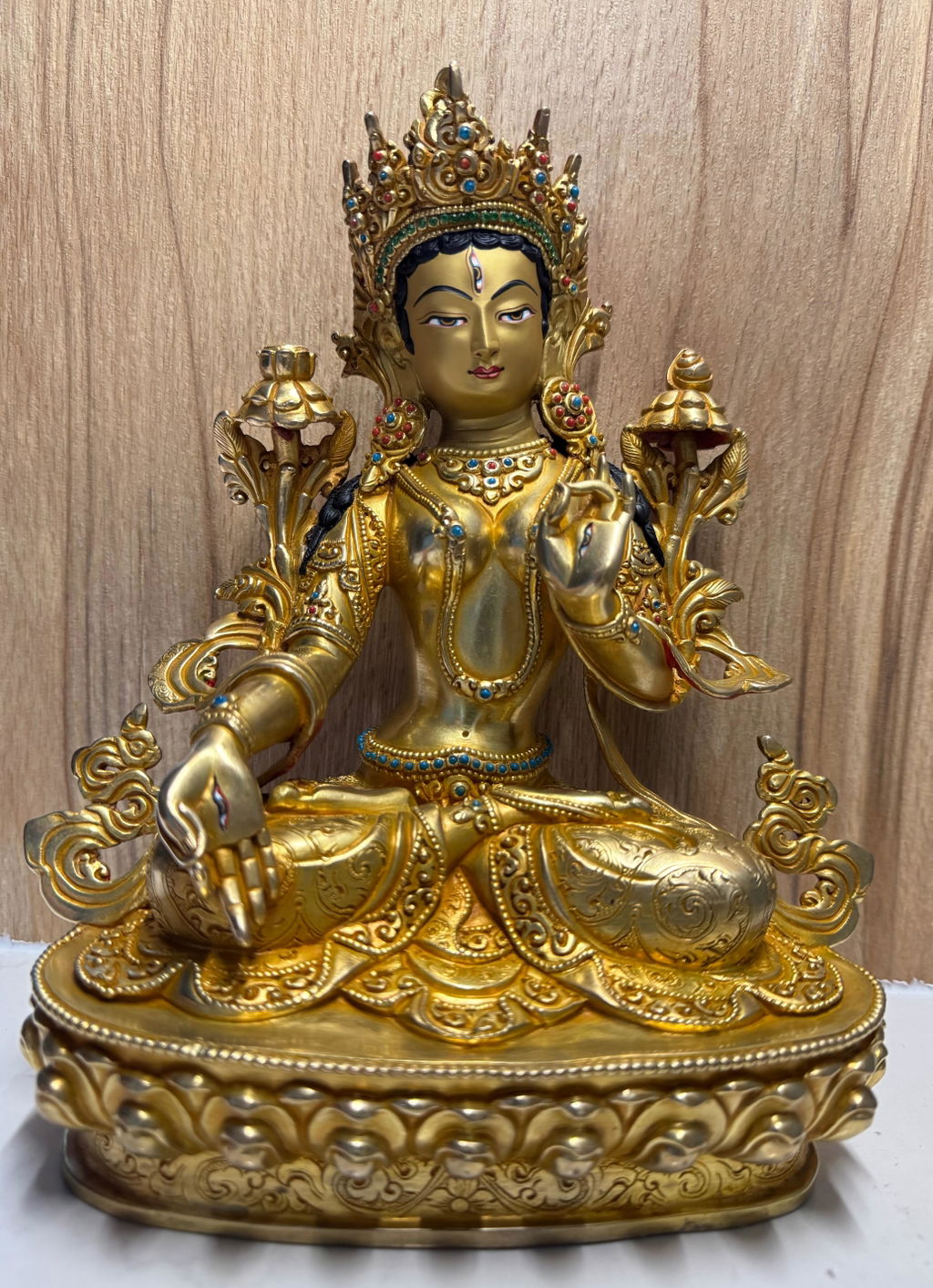
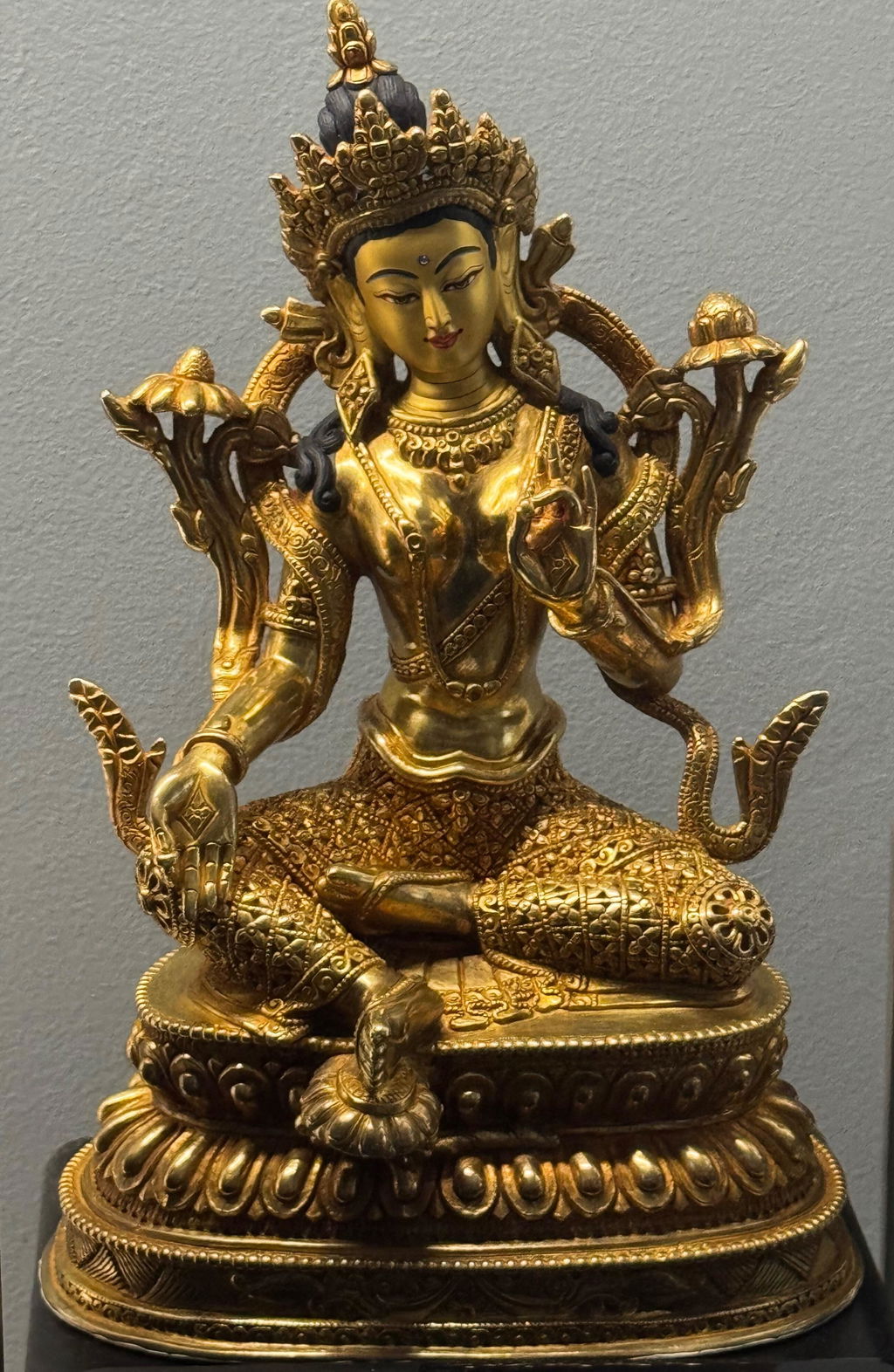
A lotus throne provides a sacred seat for a Buddha, Bodhisattva, or other enlightened figure. Its open petals suggest the unfolding of spiritual understanding and the freedom to rise above ignorance and attachment.
Why Are Buddhist Deities Seated on Lotus Flowers?
The lotus throne represents more than beauty. It reminds practitioners that wisdom and compassion can develop even in the midst of ordinary life's difficulties.
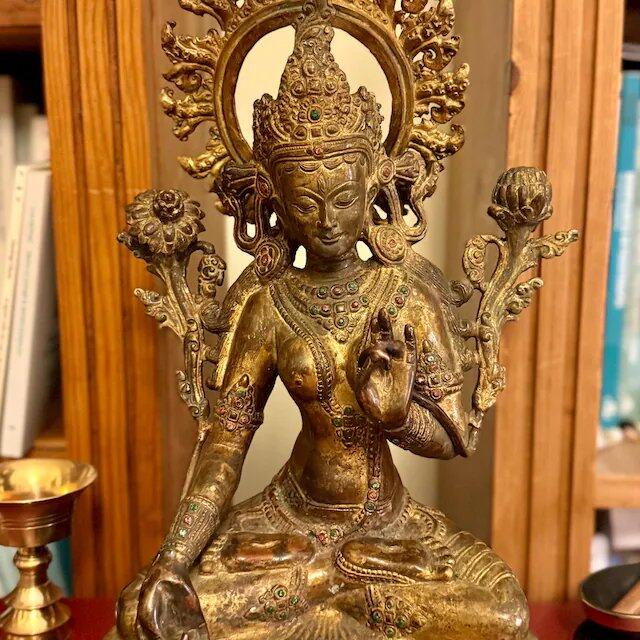
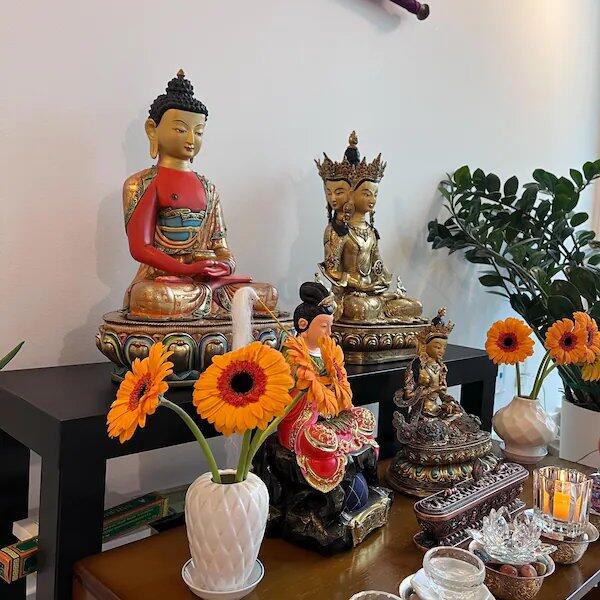
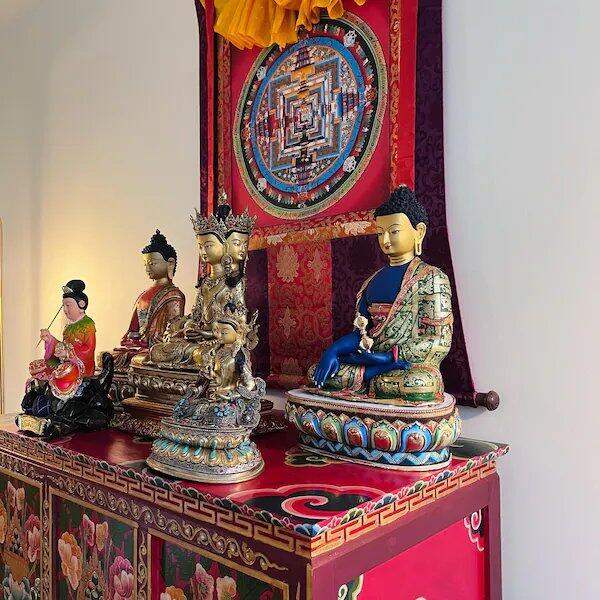
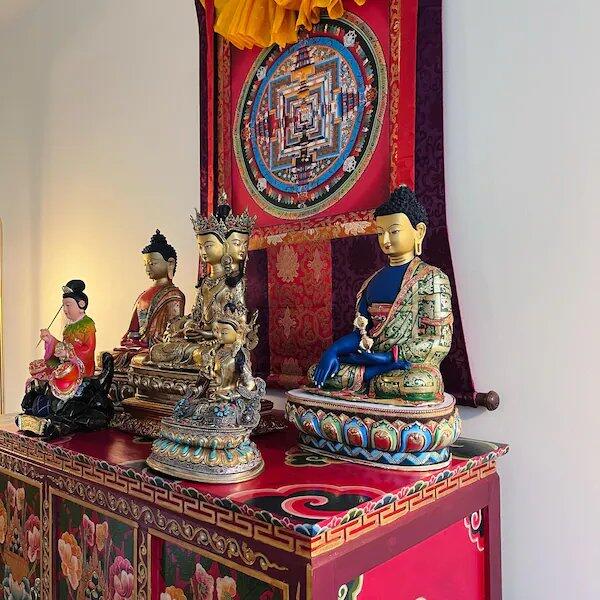
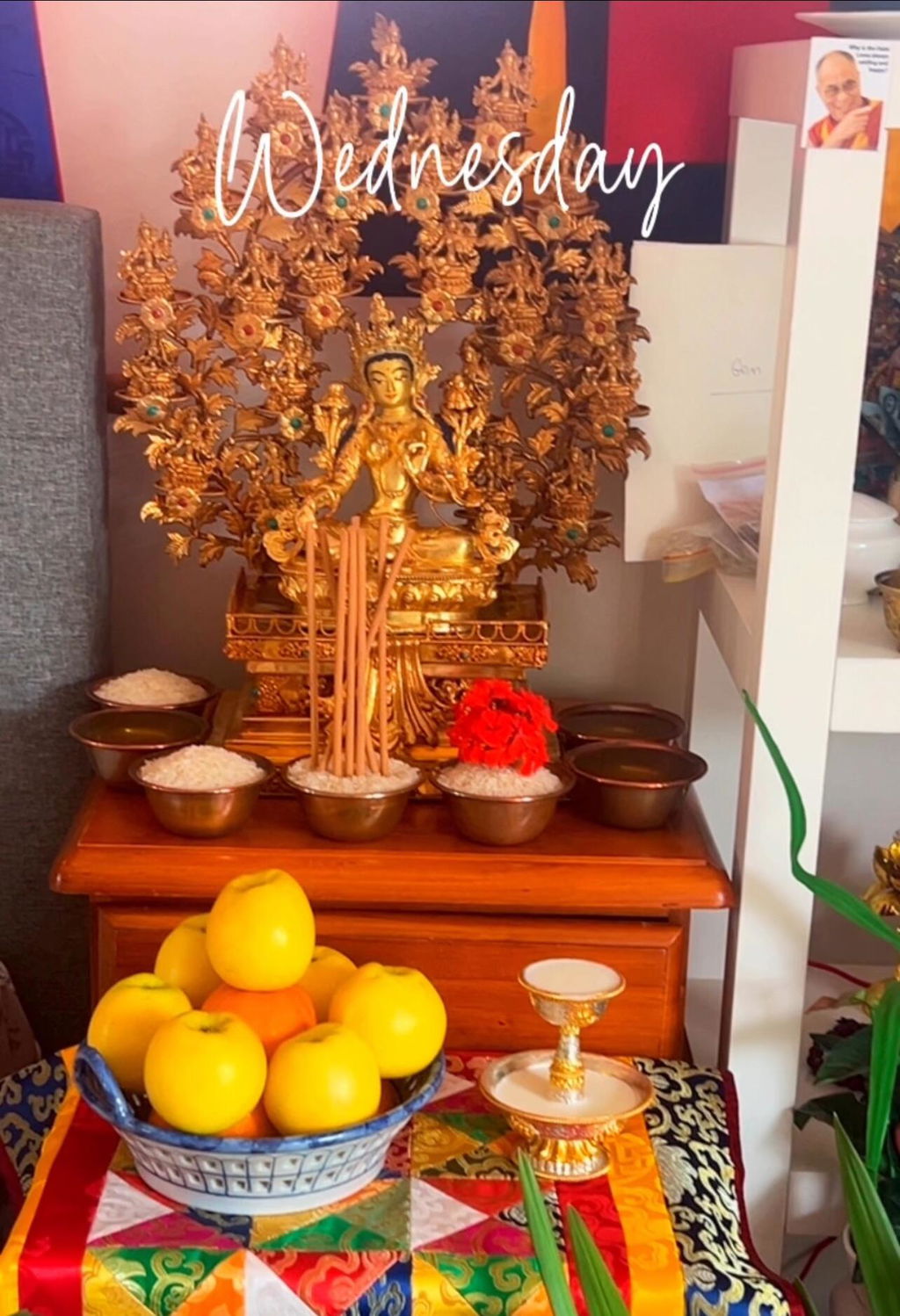
Different Buddhist figures may sit on lotus pedestals in different ways, depending on their iconography and artistic tradition. A Buddha seated in meditation, Green Tara in a posture of readiness, and Manjushri holding the sword of wisdom may all appear on lotus seats, yet their individual attributes communicate different aspects of Buddhist teachings.
The lotus provides a shared symbolic foundation while the figure's posture, hand gestures, and sacred objects help distinguish its identity.
Single and Double Lotus Pedestals
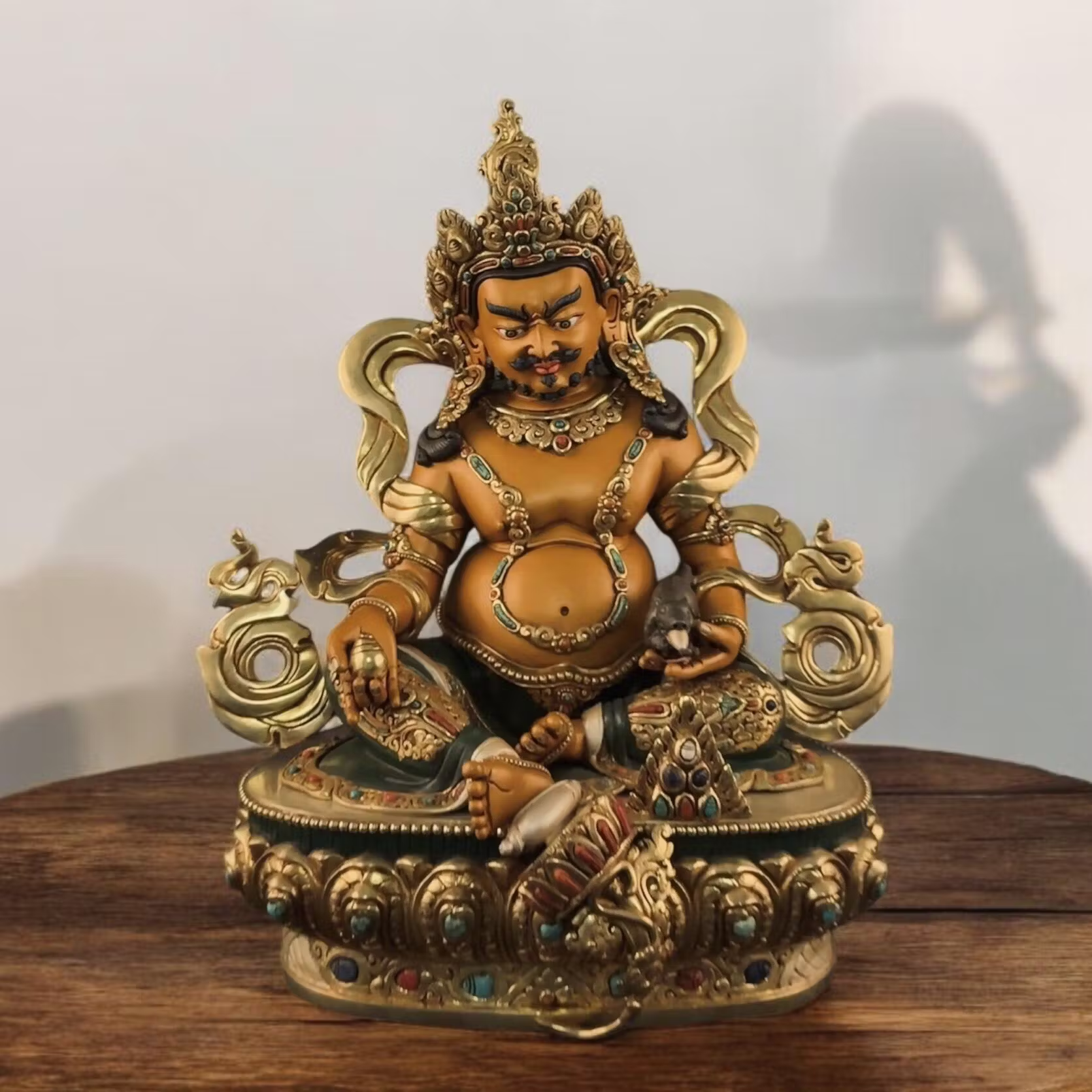
Some Buddhist statues feature a single row of lotus petals, while others rest on elaborate double-layered lotus pedestals. These designs vary according to the figure, artistic tradition, and intended composition.
A double lotus base creates a more elaborate foundation and gives the sculpture a balanced, elevated appearance. The carefully modeled petals also demonstrate the artisan's ability to work with symmetry, proportion, and fine decorative details.
In Nepalese metalwork, lotus petals may be individually refined and finished with gold gilding, colored accents, or gemstone inlays. These details enhance the sculpture without changing the fundamental symbolism of the lotus.
The Meaning of Halos Behind Buddhist Figures
A halo is a circular, oval, or otherwise shaped decorative form positioned behind a sacred figure's head or body. In Buddhist art, it often represents spiritual radiance, awakened wisdom, and the qualities of enlightenment.
Halos also play an important visual role. They frame the central figure, draw attention to the face, and create a sense of balance between the sculpture and its surrounding ornamentation.
Head Halos and Body Halos
A head halo surrounds the head and emphasizes the enlightened mind. A larger body halo may extend around the shoulders and torso, highlighting the figure's full form.
Some statues feature both elements, creating a layered composition that gives the sculpture depth and visual richness.
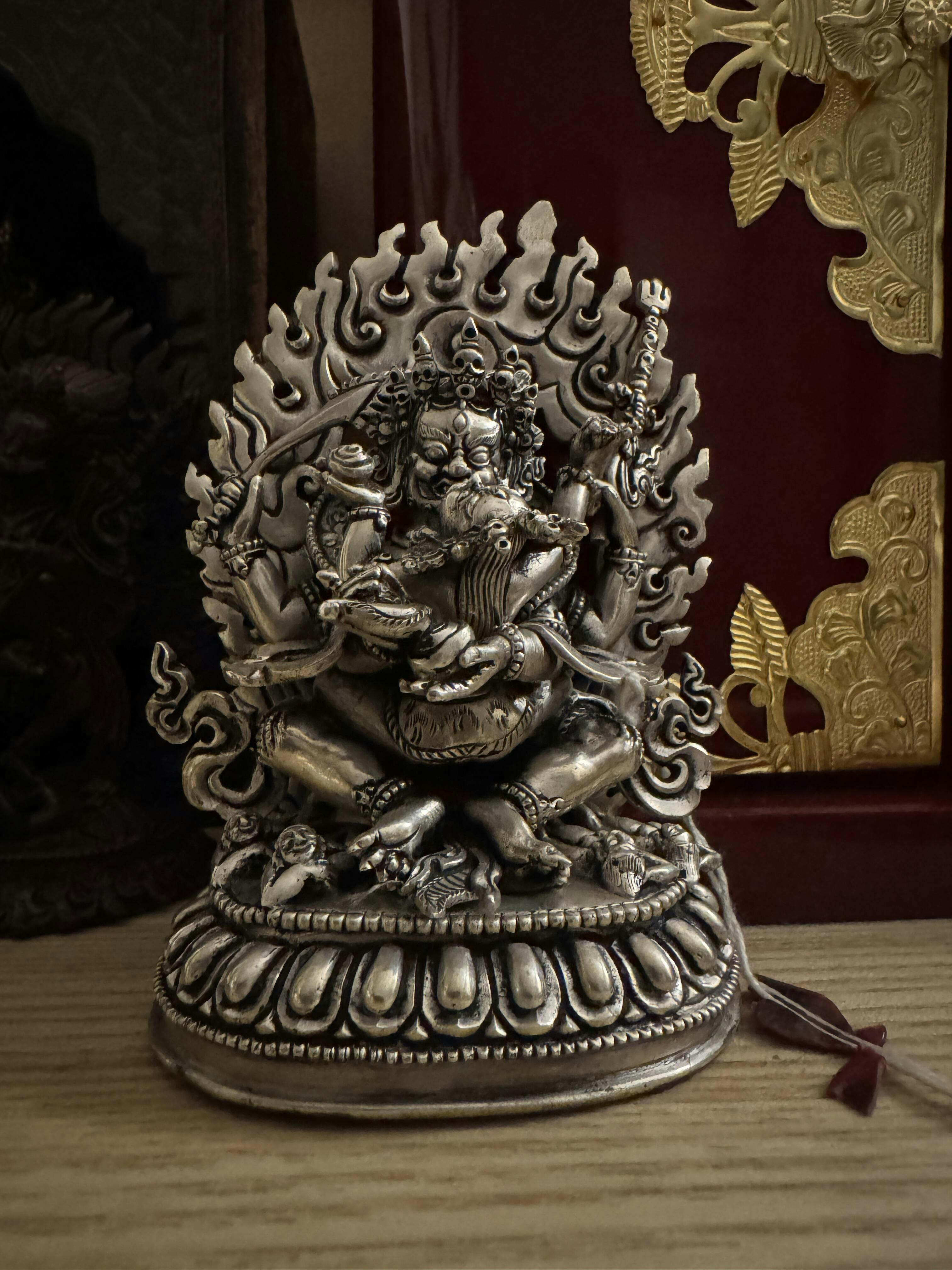
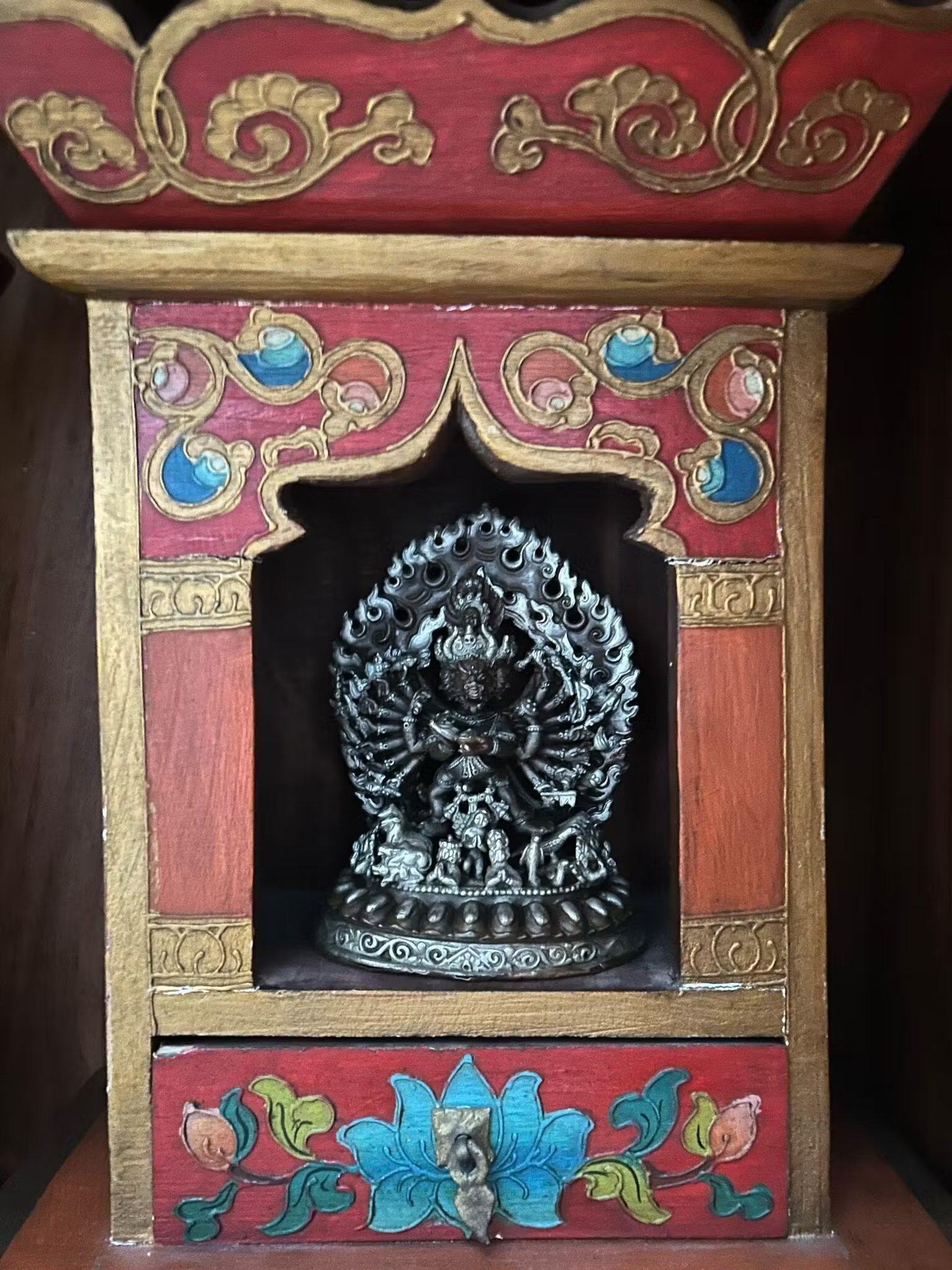
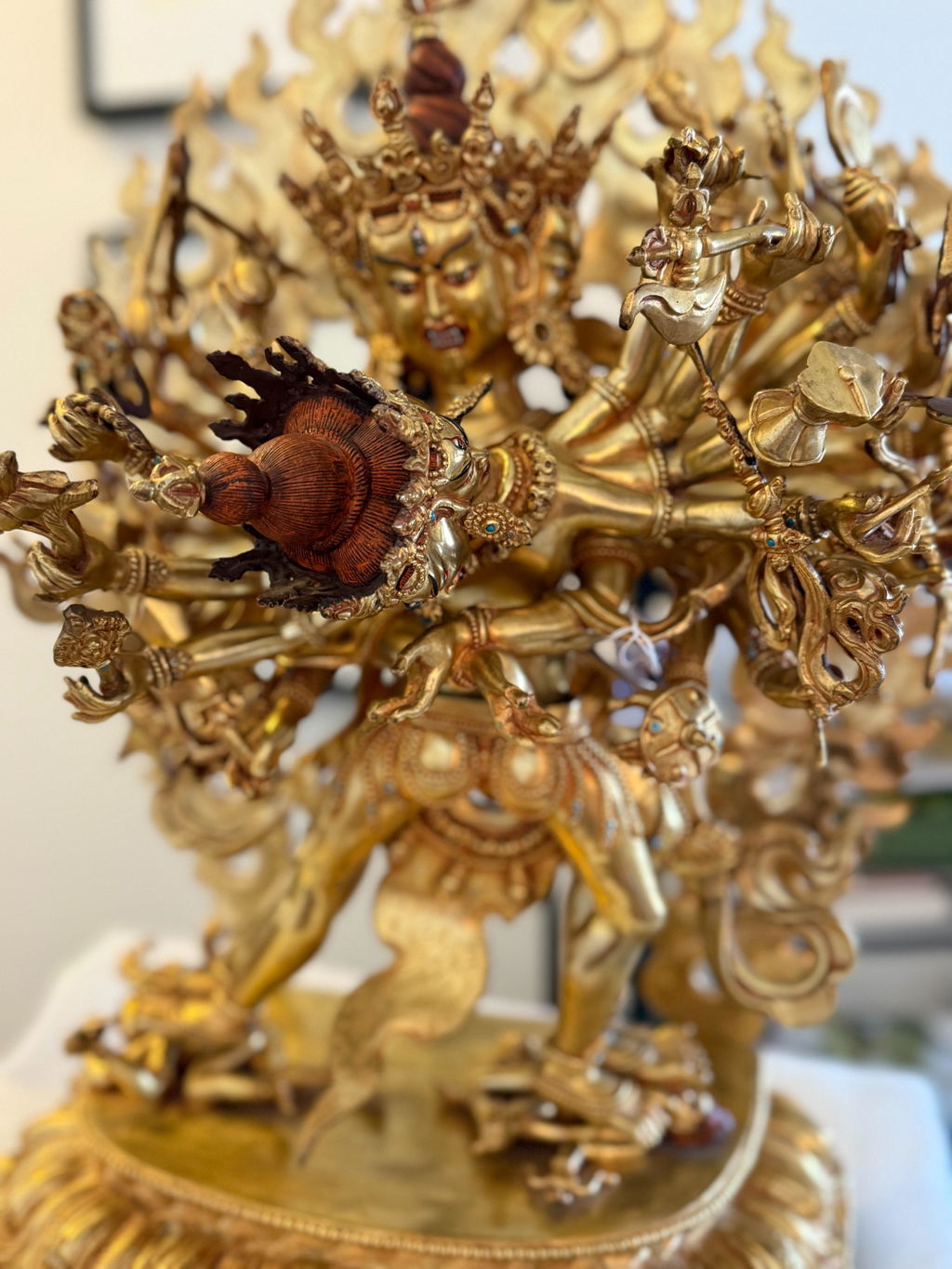
The shape and decoration of a halo can vary considerably. Circular halos, flame-shaped designs, shell-like forms, and elaborate pierced metalwork appear across different Himalayan Buddhist artistic traditions.
These variations should not be treated as a universal code. Their interpretation depends on the figure, the broader iconographic setting, and the tradition in which the sculpture was created.
What Do Sunburst Patterns and Radiating Designs Mean?
Many Buddhist statue halos feature rays, floral patterns, flame motifs, or symmetrical ornamental designs. Radiating forms can evoke the brilliance of awakened wisdom and the illumination of spiritual understanding.
Floral scrollwork and carefully arranged decorative patterns also reflect the aesthetic traditions of the artists who create these sculptures.
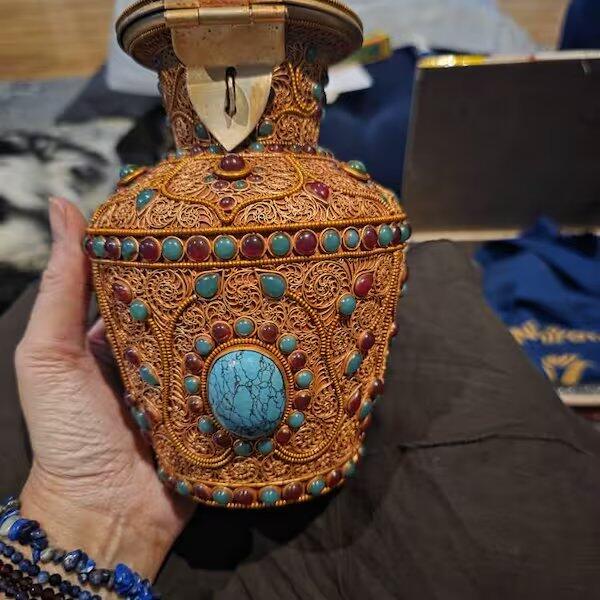
In finely crafted Nepalese statues, artisans may combine pierced metalwork, engraved lines, gold fire-gilding, and semi-precious stone inlays to produce halos with remarkable detail. The result is both a meaningful visual frame and an expression of traditional metalworking skill.
The Symbolism of Ornate Thrones and Pedestals
A Buddhist statue's foundation can be as elaborate as the figure above it. Thrones and pedestals provide structural support while contributing to the sculpture's symbolic meaning.
In Buddhist iconography, a throne may express dignity, spiritual authority, and the elevated qualities of the figure seated upon it. Its decorative elements can also communicate particular teachings or protective associations.
Lion Thrones and Their Symbolism
Lion thrones appear in Buddhist art as a symbol of strength, majesty, and the power of enlightened teaching. The lion is traditionally associated with the Buddha's fearless proclamation of the Dharma, often described through the image of the lion's roar.
When lions appear beneath a Buddha or Bodhisattva, they are not merely decorative animals. They help establish the dignity of the figure and connect the throne to the authority of the teachings.
The exact design may vary. Some thrones feature sculpted lions at the front, while others incorporate them into a larger architectural structure with floral motifs, ornamental panels, and additional symbolic figures.
Floral Motifs and Ornamental Carving
Flowering vines, symmetrical scrollwork, and other decorative patterns are common features of Himalayan Buddhist thrones. These designs demonstrate the artisan's attention to proportion, rhythm, and detail.
These patterns also complement the central figure. Rather than competing with the deity's face or attributes, they create a unified composition that guides the viewer's attention from the pedestal upward.
In traditional Nepalese metalwork, these ornamental elements may be shaped, engraved, chased, or refined by hand. Their quality reveals the time and skill invested in the sculpture.
Kirtimukha and Other Protective Motifs
Some Buddhist thrones incorporate kirtimukha, a stylized protective face found in Himalayan and wider South Asian religious art. It may appear among floral designs or at the center of an ornamental panel.
Its interpretation depends on the artistic and religious context, but it is commonly associated with protection and the powerful guardianship of sacred spaces.
Not every Buddhist statue features this motif, and not every decorative face carries the same meaning. Examining the complete design helps place an individual sculpture within its particular artistic tradition.
How Lotus Thrones, Halos, and Pedestals Work Together
These three elements often form a carefully coordinated composition.
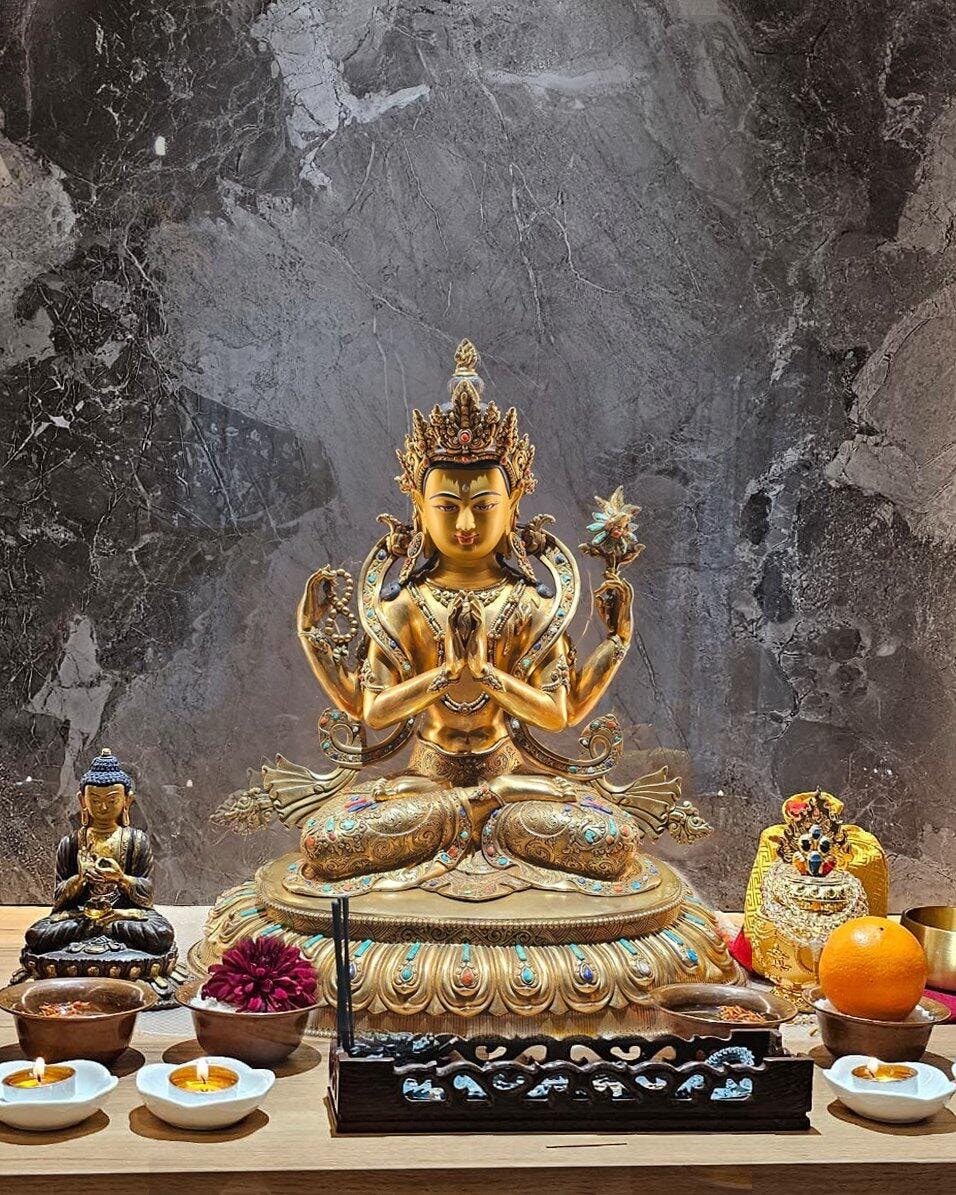
The lotus throne provides a symbolic seat associated with purity and spiritual awakening. The halo frames the figure and evokes the radiance of enlightened wisdom. The larger pedestal or throne establishes the figure's dignity while providing space for additional motifs and decorative craftsmanship.
Together, they create a visual structure that helps viewers understand and appreciate the sculpture.
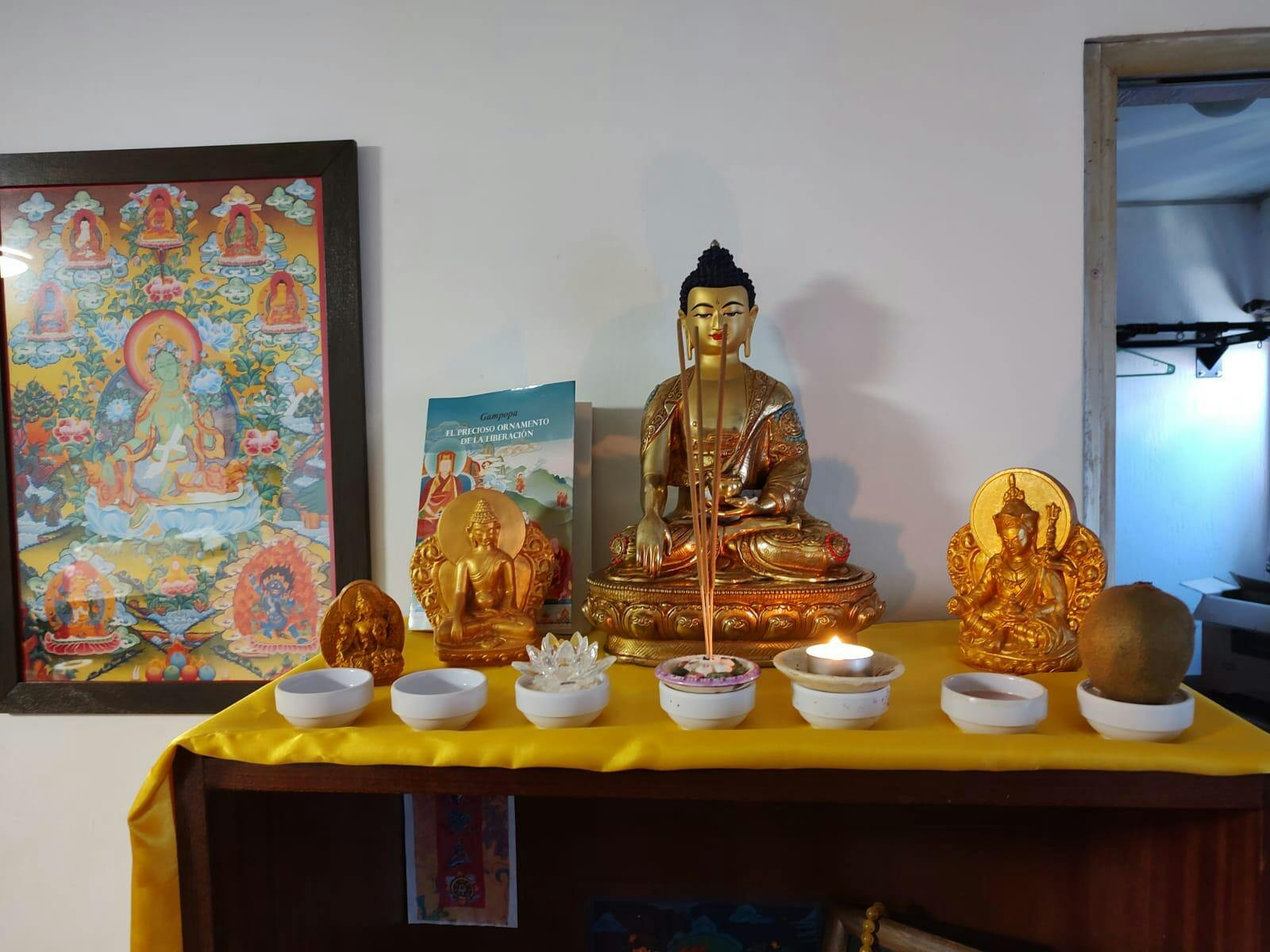
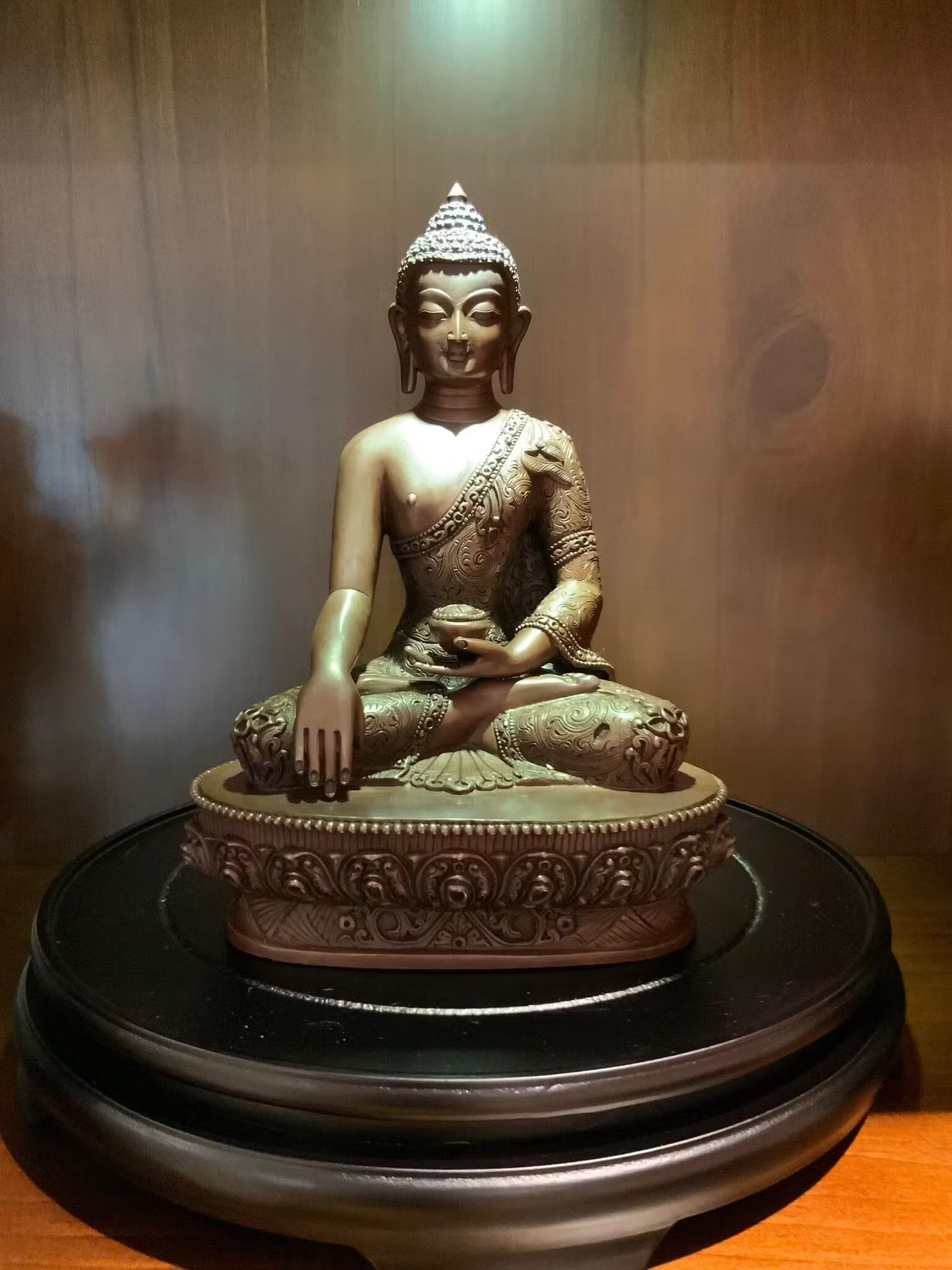
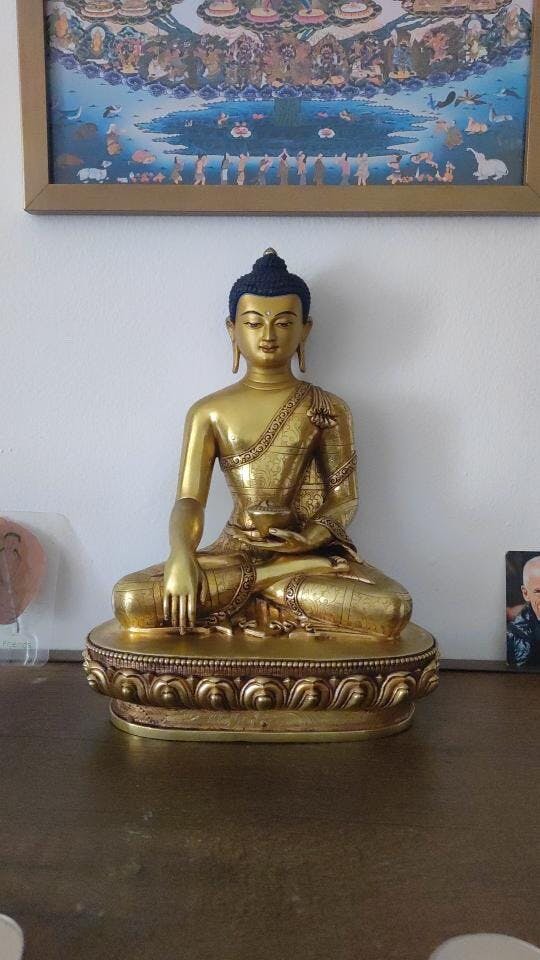
Consider a traditional statue of Buddha Shakyamuni. The figure may be seated on a double lotus pedestal, framed by a radiating halo, and supported by an ornate throne decorated with floral motifs or a Dharma Wheel.
Each feature contributes something different to the composition. The lotus evokes purity, the halo suggests spiritual radiance, and the throne emphasizes the dignity of the Buddha and his teachings.
The meaning becomes even more specific when these details are considered alongside the Buddha's hand gestures, posture, and other attributes.
This is why studying a Buddhist statue as a complete work of art offers a richer understanding than focusing on a single decorative feature.
What These Details Reveal About Nepalese Buddhist Craftsmanship
The symbolism of Buddhist sculpture is closely connected to the skill required to create it. In Nepal, particularly in the historic metalworking communities of the Kathmandu Valley, artisans have preserved specialized traditions of sacred sculpture across generations.
Traditional lost-wax casting is one method used to produce detailed metal statues. After casting, artisans may refine the surface, assemble separate components, chase ornamental patterns, apply gold gilding, paint selected details, and set decorative stones.
The halo, lotus petals, and pedestal often require particular care because their repeated patterns and symmetrical forms make small inconsistencies easy to notice.
A well-executed lotus base needs balanced petals and clear contours. A detailed halo requires careful spacing and a coherent design. An ornate throne must support the central figure while maintaining the proportions of the overall sculpture.
These qualities allow craftsmanship and symbolism to work together. The sculpture becomes a lasting expression of both religious tradition and artistic knowledge.
How to Appreciate the Details of a Buddhist Statue
You do not need to be an expert in Buddhist iconography to begin appreciating these features. Taking time to observe a sculpture closely can reveal details that might otherwise go unnoticed.
- Examine the lotus petals. Notice their arrangement, symmetry, and the way they support the central figure.
- Study the halo. Look at its shape, engraved patterns, radiating lines, and any decorative stones or figures.
- Observe the throne. Identify lions, floral motifs, protective faces, wheels, or other elements that contribute to the composition.
- Consider the entire figure. Read these details alongside the deity's posture, hand gestures, and sacred attributes rather than interpreting them separately.
- Appreciate the finishing. Look for the precision of the carving, the quality of the gilding, and the balance between ornamentation and the central figure.
When purchasing a Buddhist statue, it is also helpful to look for clear information about its materials, production methods, iconography, and place of origin. Detailed photographs can help you appreciate the workmanship of the actual piece.
Discover the Artistry of Himalayan Buddhist Statues
Every element of a traditional Buddhist statue contributes to its overall character. The lotus throne evokes purity and spiritual growth. The halo reflects the radiance associated with awakened wisdom. The pedestal and throne bring together dignity, symbolic imagery, and the skill of the artisan.
For devotees, collectors, and admirers of Himalayan art, these details offer a deeper connection to the traditions represented by each sculpture. For artisans, they provide an opportunity to preserve a rich artistic heritage through careful work and enduring forms.
At Nidhiratna, we celebrate the artistry and cultural heritage behind traditional Nepalese Buddhist sculptures. Explore our collection to discover Buddha and Bodhisattva statues featuring detailed lotus pedestals, ornamental halos, and beautifully crafted thrones.
Each sculpture offers an opportunity to appreciate the relationship between sacred symbolism and the enduring tradition of Himalayan metalwork.


Share:
Dashain and Tihar 2026 | Nepal Festivals, Traditions & Culture