

Vajrasattva: Meaning, Mantra, Symbolism and Spiritual Significance
Vajrasattva is one of the most important figures associated with purification in Vajrayana Buddhism. Recognized by his radiant white form, peaceful expression, vajra, and bell, Vajrasattva represents the clarity and purity of awakened mind. His practice is traditionally connected with acknowledging harmful actions, cultivating sincere remorse, restoring one's ethical intention, and purifying obscurations that can hinder spiritual development.
For centuries, practitioners across the Himalayan Buddhist tradition have turned to Vajrasattva meditation and mantra recitation as part of their spiritual discipline. The famous Vajrasattva 100-Syllable Mantra is particularly associated with this practice and is widely regarded as a profound method for purification and transformation.
A Vajrasattva statue can therefore serve as more than a beautiful sacred sculpture. For practitioners, it can become a meaningful reminder of compassion, accountability, wisdom, and the aspiration to cultivate a clearer and more awakened mind.
Who Is Vajrasattva?
Vajrasattva, whose name can be translated as "Vajra Being" or "Diamond Being," is a major figure in Vajrayana Buddhism. He is especially associated with purification practices and is an important figure within tantric Buddhist traditions.
The vajra symbolizes indestructibility, clarity, and awakened wisdom. Like a diamond, awakened awareness is traditionally understood as something that cannot be destroyed by ordinary confusion or obscuration. Vajrasattva's name therefore reflects qualities of spiritual strength, purity, and unwavering awakened awareness.
Vajrasattva is commonly depicted as a youthful, peaceful figure seated in meditation posture upon a lotus throne. His white body symbolizes purity and the luminous nature of awakened consciousness. In his hands, he holds two important ritual objects: the vajra and the bell.
His peaceful appearance distinguishes him from many of the fierce protective deities found in Vajrayana Buddhist art. Rather than representing wrathful power, Vajrasattva embodies purification, clarity, compassion, and the transformation of obscured states of mind.
What Does Vajrasattva Represent?
The central significance of Vajrasattva is purification. In traditional Buddhist practice, purification is not simply the removal of something physically impure. It involves recognizing harmful actions and mental patterns, taking responsibility for them, developing the intention to change, and cultivating wisdom and compassion.
Vajrasattva therefore represents several interconnected spiritual qualities.
Purification
Vajrasattva practice is traditionally associated with purifying negative karma, harmful actions, and mental obscurations. Practitioners reflect upon their actions and develop the aspiration to avoid repeating behavior that causes suffering.
Wisdom
The vajra held by Vajrasattva symbolizes indestructible awakened wisdom. It represents the penetrating clarity capable of cutting through ignorance and confusion.
Compassion
Purification is not intended to produce self-condemnation. Instead, Buddhist practice encourages awareness, compassion, and transformation. Vajrasattva's peaceful form reflects this compassionate approach.
Ethical Transformation
Vajrasattva practice encourages practitioners to examine their thoughts, words, and actions. This reflection can strengthen the intention to act with greater awareness and compassion.
The Pure Nature of Mind
His luminous white form is often understood symbolically as representing purity and the radiant nature of awakened awareness. It serves as a visual reminder that confusion and obscuration do not define the ultimate potential of the mind.
Why Is Vajrasattva White?
One of the most recognizable features of Vajrasattva is his brilliant white body. In Buddhist symbolism, white frequently represents purity, clarity, peacefulness, and the removal of obscurations.
The white appearance of Vajrasattva can therefore be understood as a visual representation of purified awareness. It contrasts with the confusion and negative mental patterns that practitioners seek to transform.
When viewing a Vajrasattva statue, the luminous white form can serve as a reminder of the aspiration to cultivate a mind that is clear, compassionate, and free from harmful patterns.
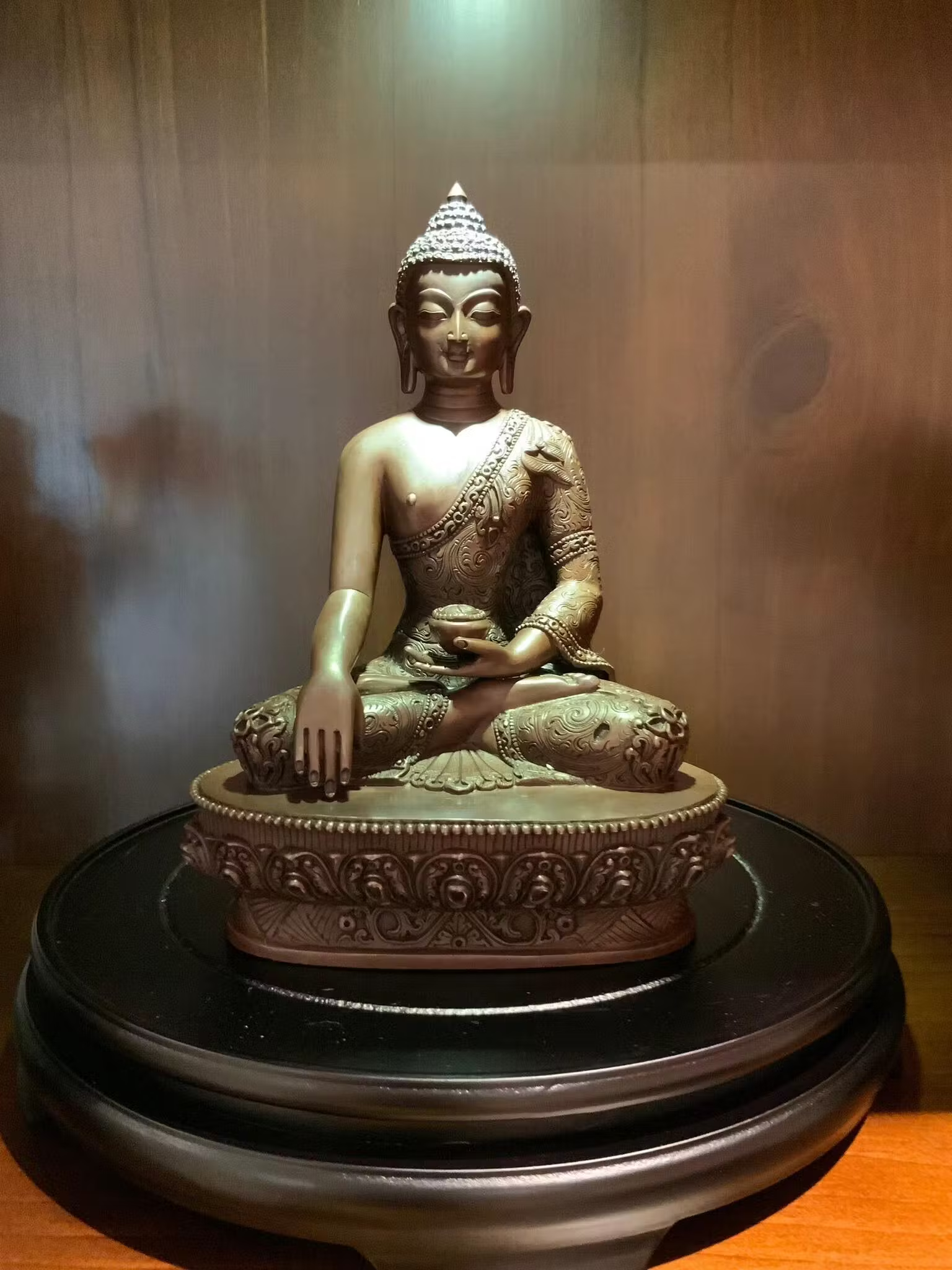
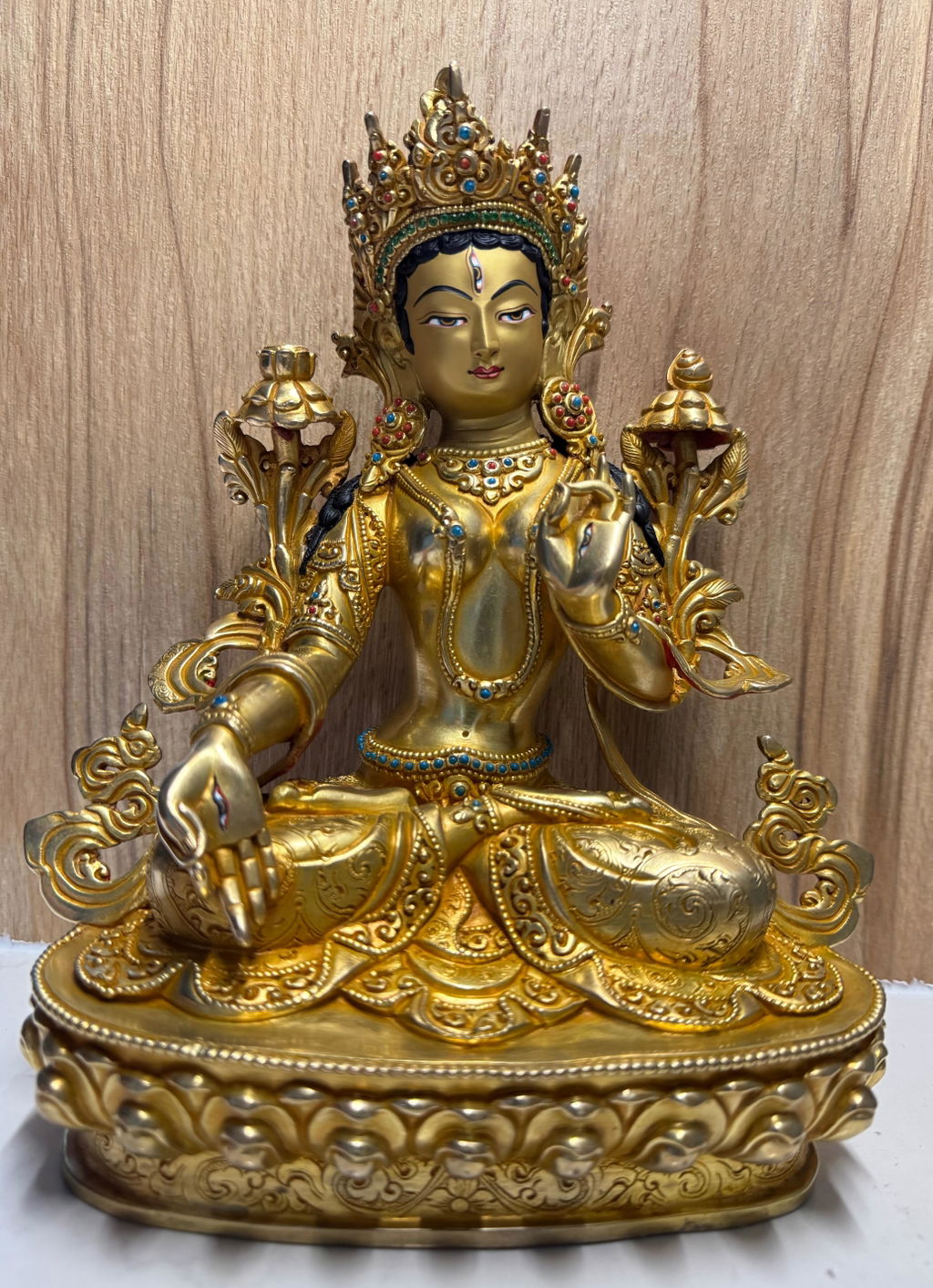
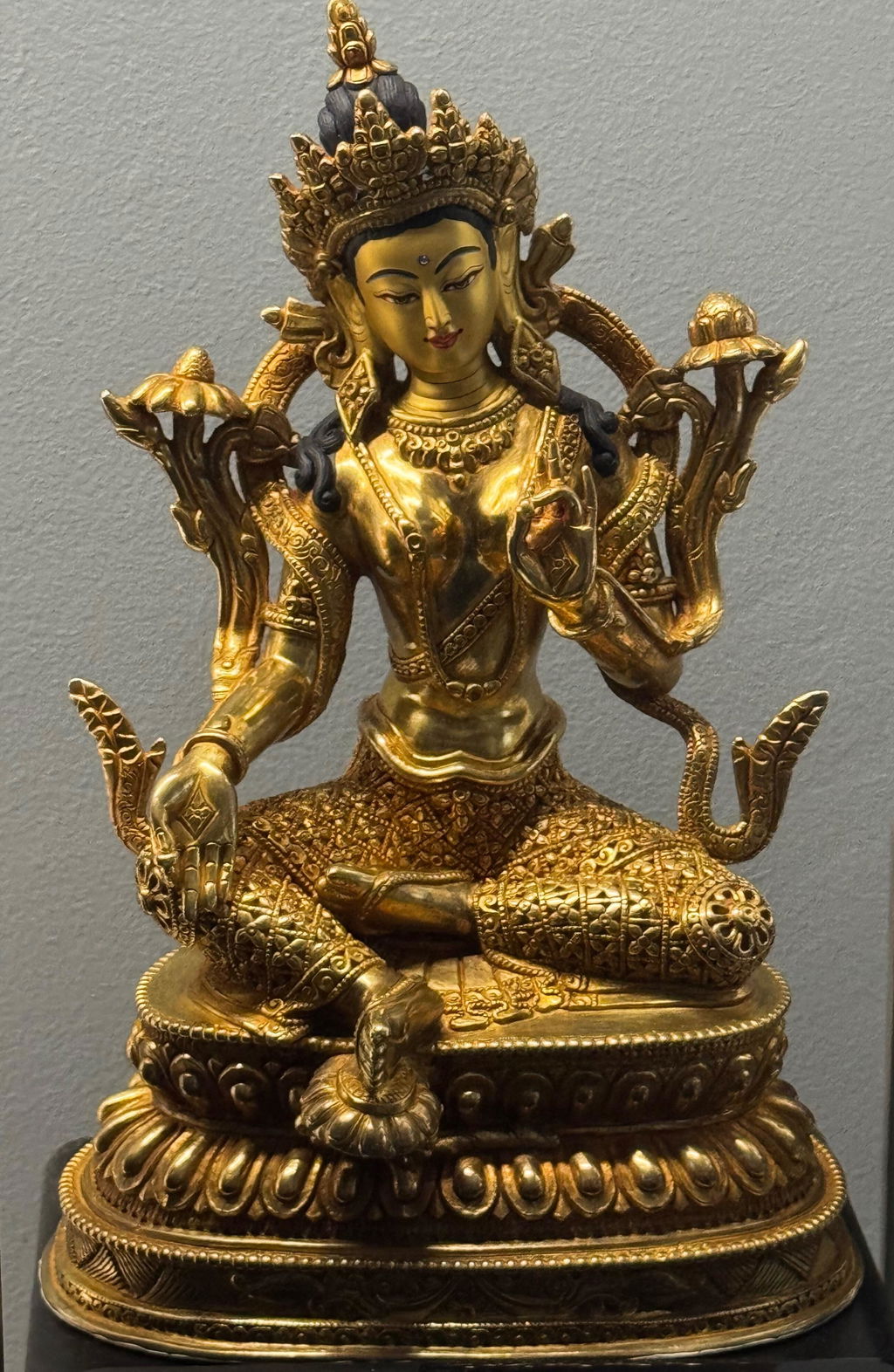
In Himalayan Buddhist sculpture, this symbolism is often enhanced through meticulous craftsmanship. A handcrafted Vajrasattva statue may combine finely modeled anatomy, detailed ornaments, sacred attributes, and carefully applied finishes to communicate the deity's peaceful and enlightened nature.
What Does Vajrasattva Hold?
Vajrasattva is traditionally shown holding a vajra in his right hand and a bell in his left.
These two objects are among the most important symbols in Vajrayana Buddhism.
The Vajra

The vajra is a ritual object associated with indestructibility, clarity, and awakened wisdom. Its name is related to meanings such as thunderbolt and diamond, emphasizing both powerful penetrating force and indestructible nature.
In Vajrasattva's right hand, the vajra represents the inseparable nature of awakened wisdom and compassionate activity.
The Bell

The bell held in Vajrasattva's left hand represents wisdom. In Vajrayana symbolism, the vajra and bell are frequently understood together, representing complementary aspects of the path.
Their union points toward the integration of wisdom and compassionate method, rather than treating them as separate qualities.
Understanding Vajrasattva's Iconography
A Vajrasattva statue contains many symbolic details. Each element contributes to the overall meaning of the sacred image.
White Body
His white body represents purity, clarity, and the luminous nature of awakened mind.
Vajra
The vajra symbolizes indestructible wisdom and awakened spiritual power.
Bell
The bell represents wisdom and is traditionally associated with the understanding of emptiness.
Lotus Throne
Vajrasattva is commonly seated upon a lotus. The lotus is a powerful Buddhist symbol because it grows from muddy water while producing an unblemished flower. It therefore represents the possibility of awakening within the conditions of ordinary existence.
Crown and Jewelry
Vajrasattva is generally depicted wearing a crown, necklaces, bracelets, armlets, and other ornaments. These are characteristic of the appearance of many Buddhist bodhisattvas and tantric deities.
The ornaments should not simply be interpreted as symbols of worldly luxury. Within Buddhist iconography, they can represent the qualities and attainments of awakened beings.
Peaceful Expression
His serene expression emphasizes the contemplative nature of Vajrasattva practice. Instead of depicting aggression or domination, his appearance communicates calmness, clarity, and compassionate awareness.
What Is the Vajrasattva 100-Syllable Mantra?
The Vajrasattva 100-Syllable Mantra is one of the best-known mantras associated with Vajrasattva practice. It is traditionally recited as part of purification practice within Vajrayana Buddhism.
A commonly transliterated version begins:
Om Vajrasattva Samaya Manupalaya Vajrasattva Tvenopatishta...
The complete mantra is considerably longer, and its pronunciation and interpretation can vary according to Buddhist lineage and transliteration system.
Rather than treating the mantra as merely a collection of words, practitioners traditionally approach it as a profound spiritual practice involving visualization, intention, confession, commitment, and meditation.
Because Vajrasattva practice belongs to Vajrayana Buddhism, formal practices can involve specific instructions and empowerments depending on the lineage. Those interested in undertaking an advanced tantric practice should therefore follow the guidance of a qualified teacher within an authentic Buddhist tradition.
What Is the Purpose of the Vajrasattva Mantra?
The Vajrasattva mantra is traditionally connected with purification. Practitioners may use mantra recitation while reflecting on harmful actions, developing sincere regret, and renewing their commitment to ethical conduct.
The purpose is not simply to repeat a sacred formula while expecting unwanted consequences to disappear automatically. Instead, purification practice involves an active process of recognizing harmful behavior and cultivating the causes of transformation.
This makes Vajrasattva practice especially meaningful as a discipline of mindfulness and self-reflection.
The mantra can be accompanied by visualization of Vajrasattva and the contemplation of his qualities. Through repeated practice, practitioners cultivate the aspiration to transform negative patterns and develop greater clarity, compassionately, and awareness.
What Are the Benefits of Vajrasattva Practice?
Traditional Buddhist teachings associate Vajrasattva practice with purification and spiritual transformation. The practice may support practitioners in several ways.
1. Encourages Self-Reflection
Vajrasattva practice creates an opportunity to examine one's actions, intentions, thoughts, and speech.
2. Supports Ethical Awareness
By acknowledging harmful behavior and developing the intention not to repeat it, practitioners can strengthen their commitment to ethical conduct.
3. Cultivates Compassion
Purification practice can encourage a compassionate relationship with oneself and others. Rather than remaining trapped in guilt, practitioners work toward understanding and transformation.
4. Develops Mindfulness
Repeated mantra recitation and visualization require attention and concentration, making the practice an opportunity to cultivate greater mental awareness.
5. Supports Spiritual Transformation
Within Vajrayana Buddhism, purification is an important component of preparing and progressing along the spiritual path. Vajrasattva practice is therefore deeply connected with the aspiration to overcome obscurations and develop awakened qualities.
It is important to understand these benefits within their traditional Buddhist context rather than treating Vajrasattva practice as a substitute for professional medical or psychological care.
How Is Vajrasattva Practiced?
The exact form of Vajrasattva practice differs according to Buddhist lineage and the instructions of one's teacher. Traditional purification practices can involve several elements.
Taking Refuge and Developing Bodhicitta
Practitioners may begin by taking refuge in the Three Jewels and generating bodhicitta, the aspiration to attain awakening for the benefit of all sentient beings.
Visualization
Vajrasattva may be visualized above the practitioner or in another prescribed position, depending on the practice tradition.
Confession and Recognition
Practitioners reflect upon harmful actions and acknowledge them honestly. This is traditionally accompanied by sincere regret rather than destructive self-hatred.
Mantra Recitation
The Vajrasattva mantra is recited repeatedly as part of the purification practice.
Renewing Intention
A practitioner develops the determination to avoid repeating harmful actions and to cultivate more beneficial thoughts, speech, and behavior.
Dedication
The practice may conclude with dedication of the merit toward the awakening and benefit of all sentient beings.
These components demonstrate why Vajrasattva practice is much more than simply reciting a mantra. It combines contemplation, ethical responsibility, visualization, devotion, and aspiration.
What Does a Vajrasattva Statue Symbolize?
A Vajrasattva statue can serve as a powerful visual reminder of purification and spiritual transformation.
For someone who practices meditation or Buddhist contemplation, seeing Vajrasattva on an altar can encourage reflection on personal actions and intentions. His peaceful white form represents clarity, while the vajra and bell remind practitioners of the importance of wisdom and awakened understanding.
A sacred statue can also provide a focal point for meditation and devotional practice.
Handcrafted Himalayan Buddhist statues carry an additional cultural significance. In Nepal, Newari metalworkers have preserved sophisticated sculptural traditions for centuries. Traditional methods such as lost-wax casting allow artisans to create intricate sacred sculptures with detailed iconography and finely modeled ornaments.
A carefully crafted Vajrasattva statue can therefore bring together spiritual symbolism, Buddhist heritage, and Himalayan craftsmanship.
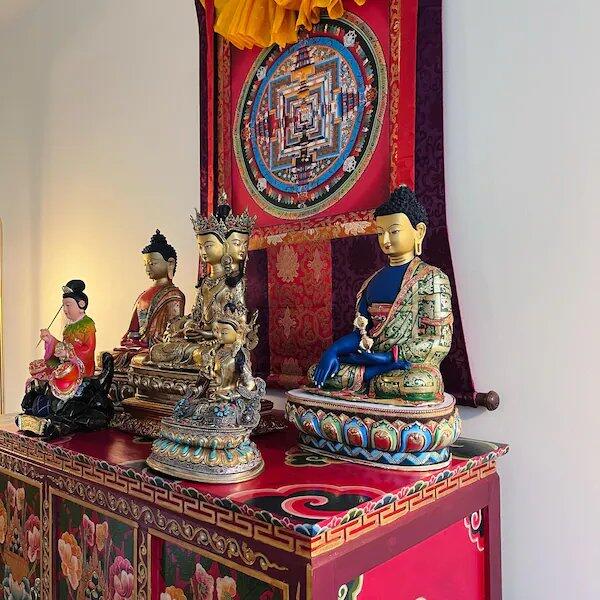
Vajrasattva Statue for a Buddhist Altar
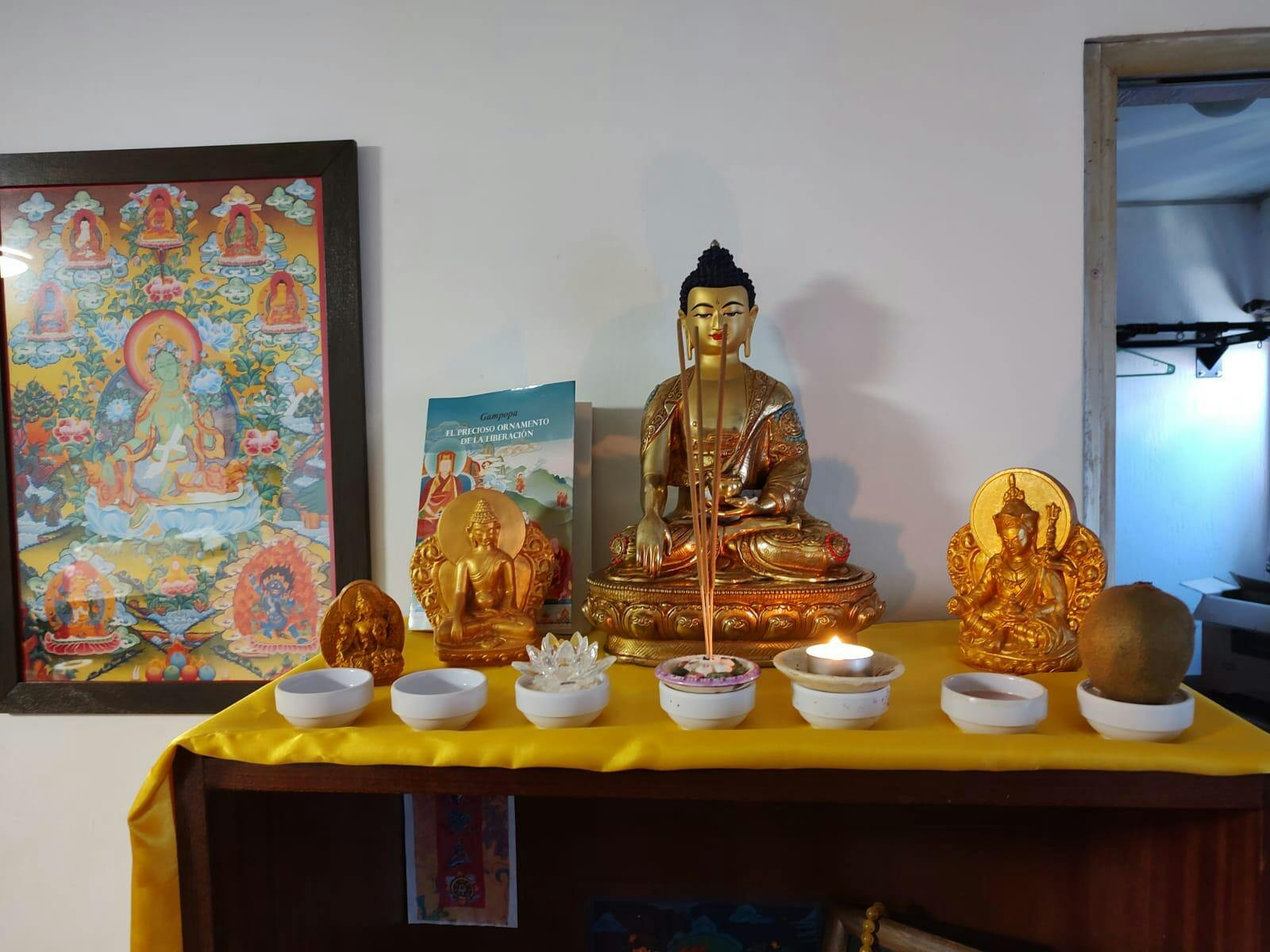
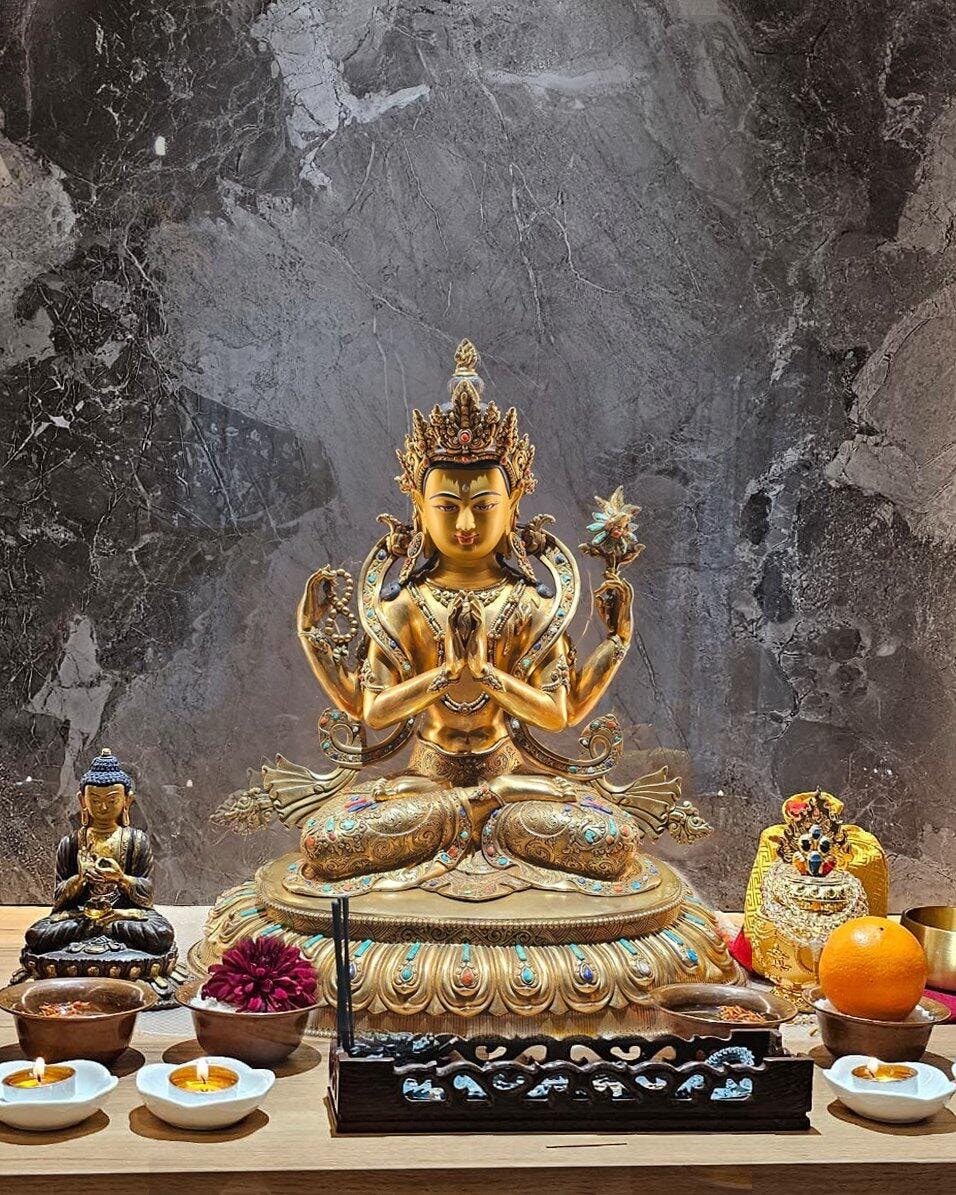
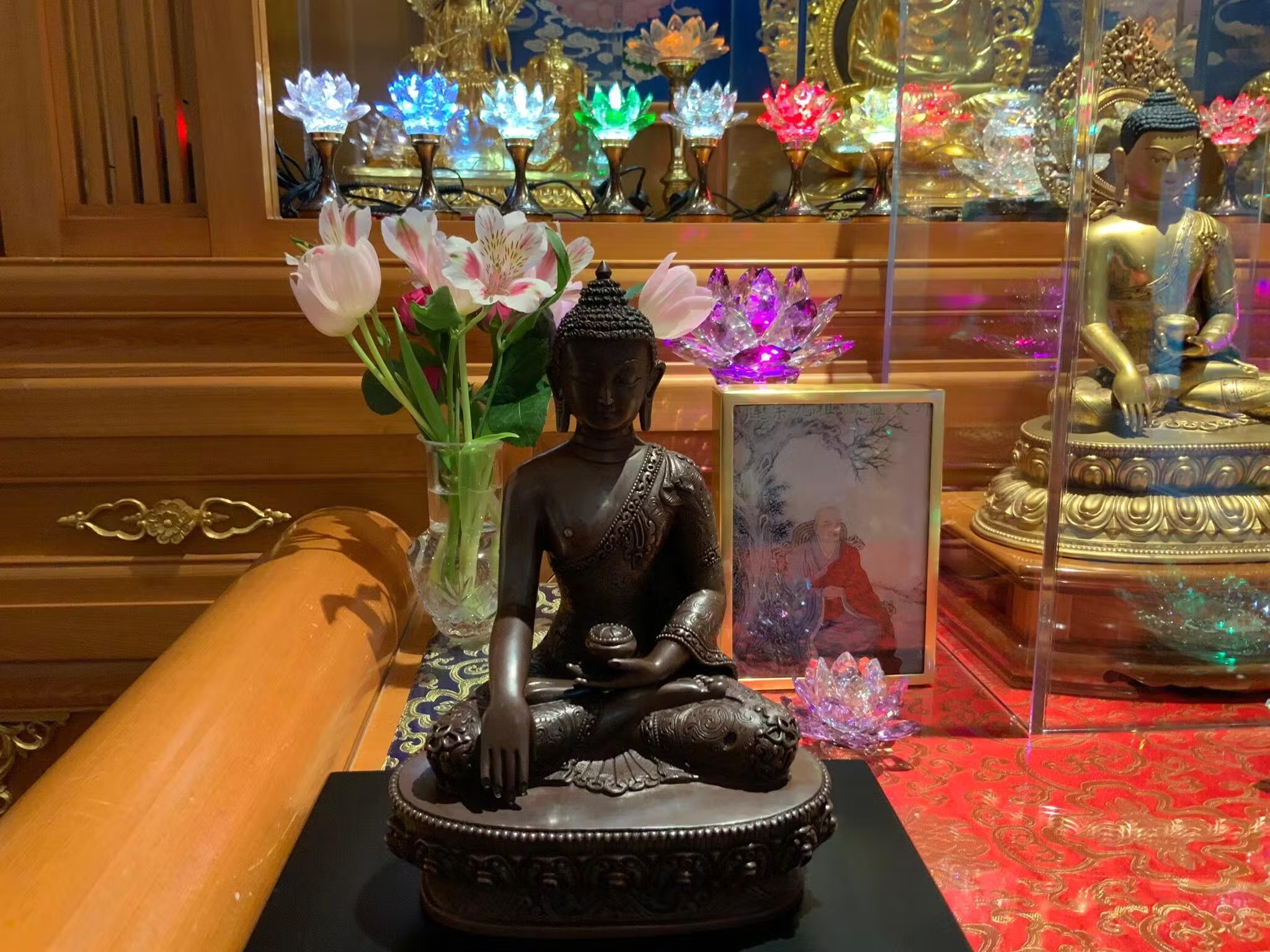
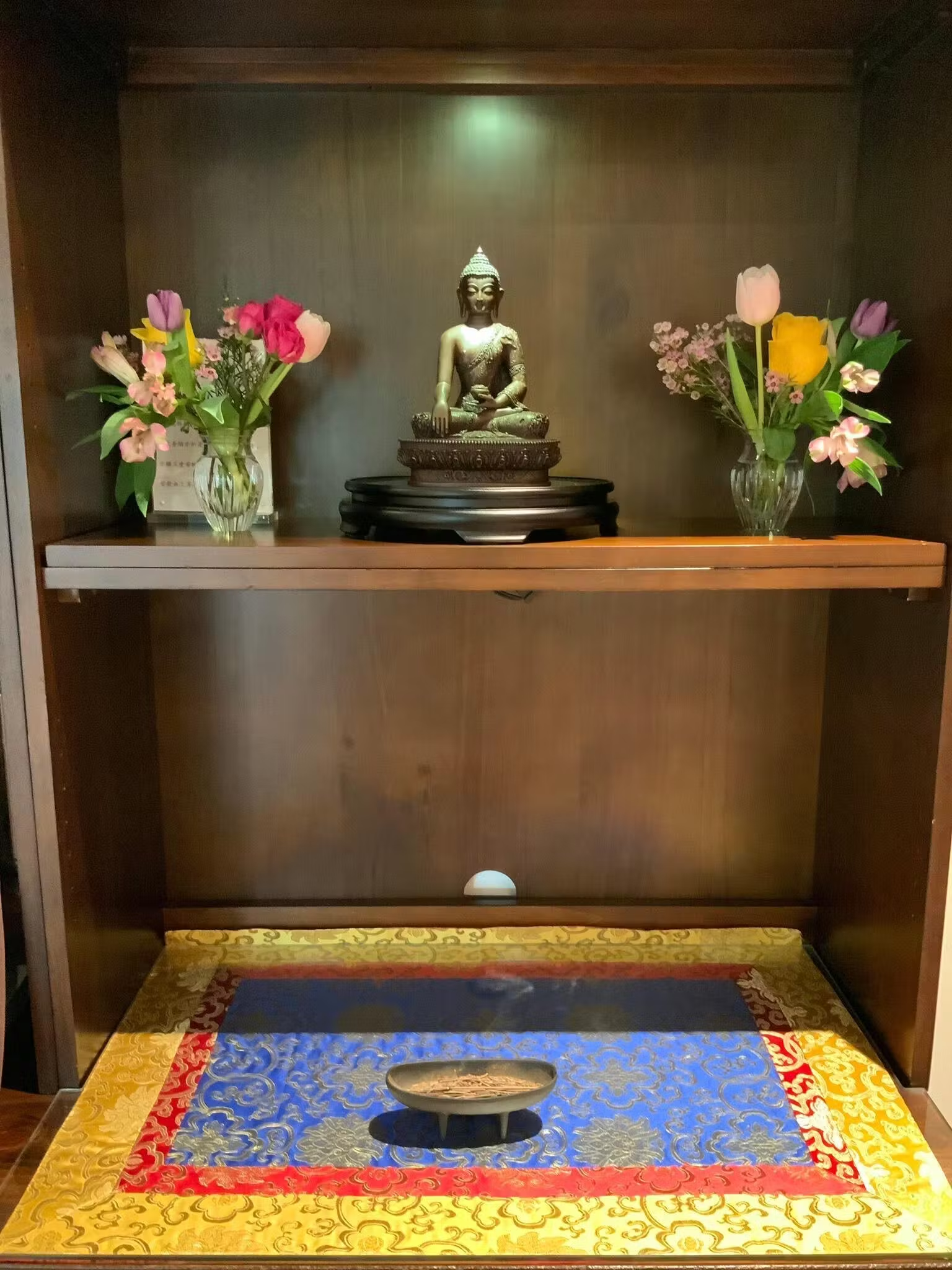
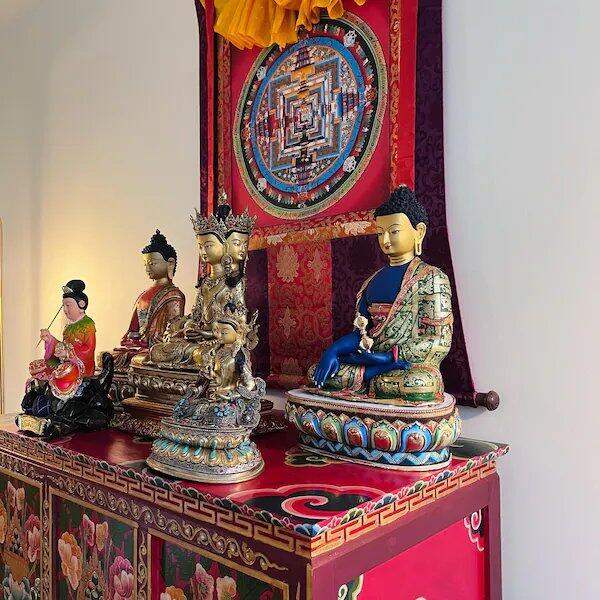
A Vajrasattva statue can be placed on a Buddhist altar, meditation space, shrine, temple, or Dharma center according to the practitioner's tradition and personal circumstances.
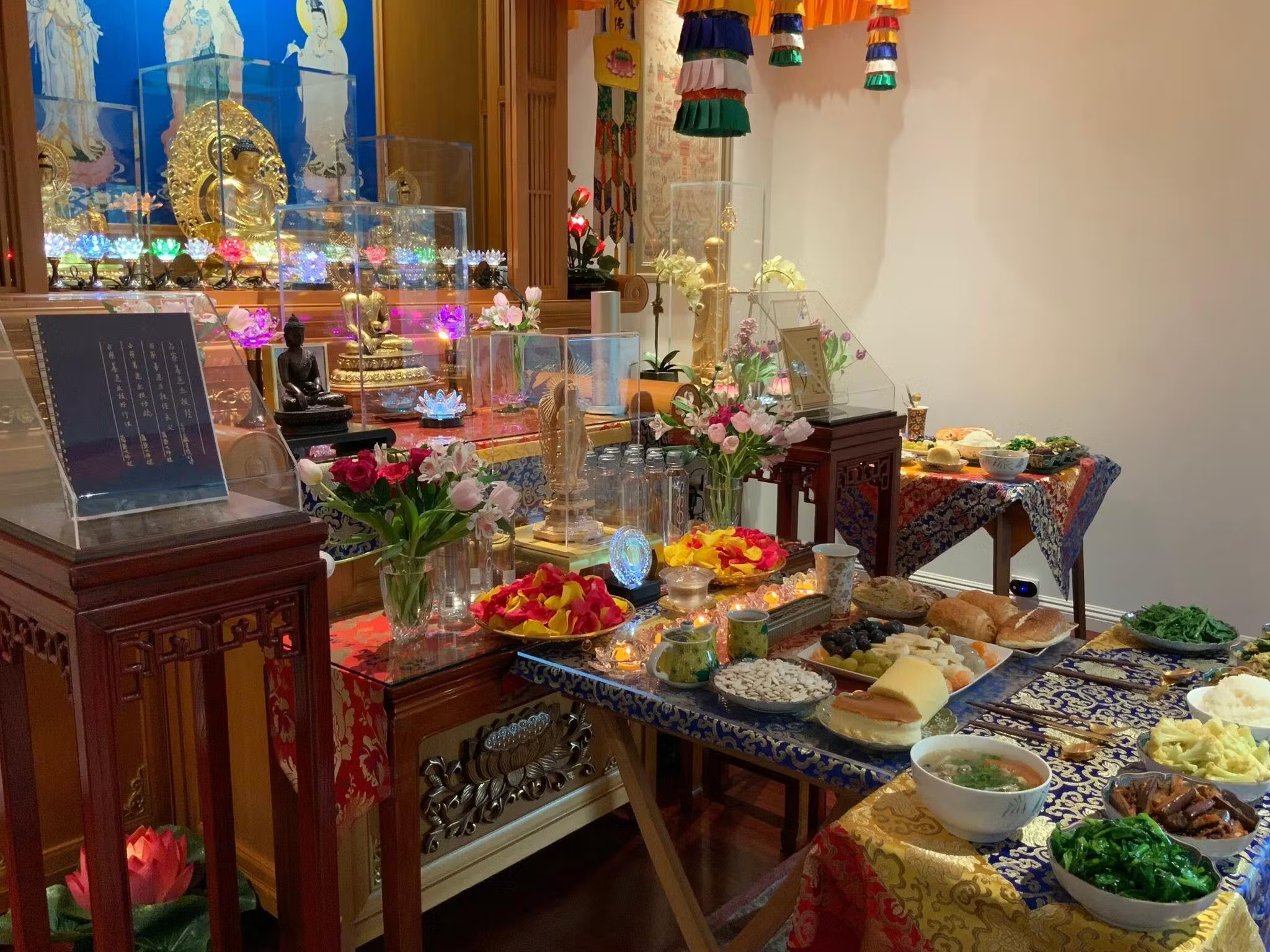
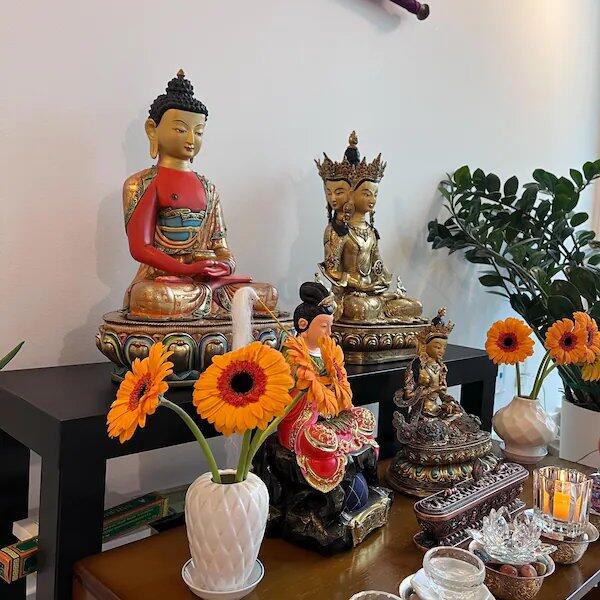
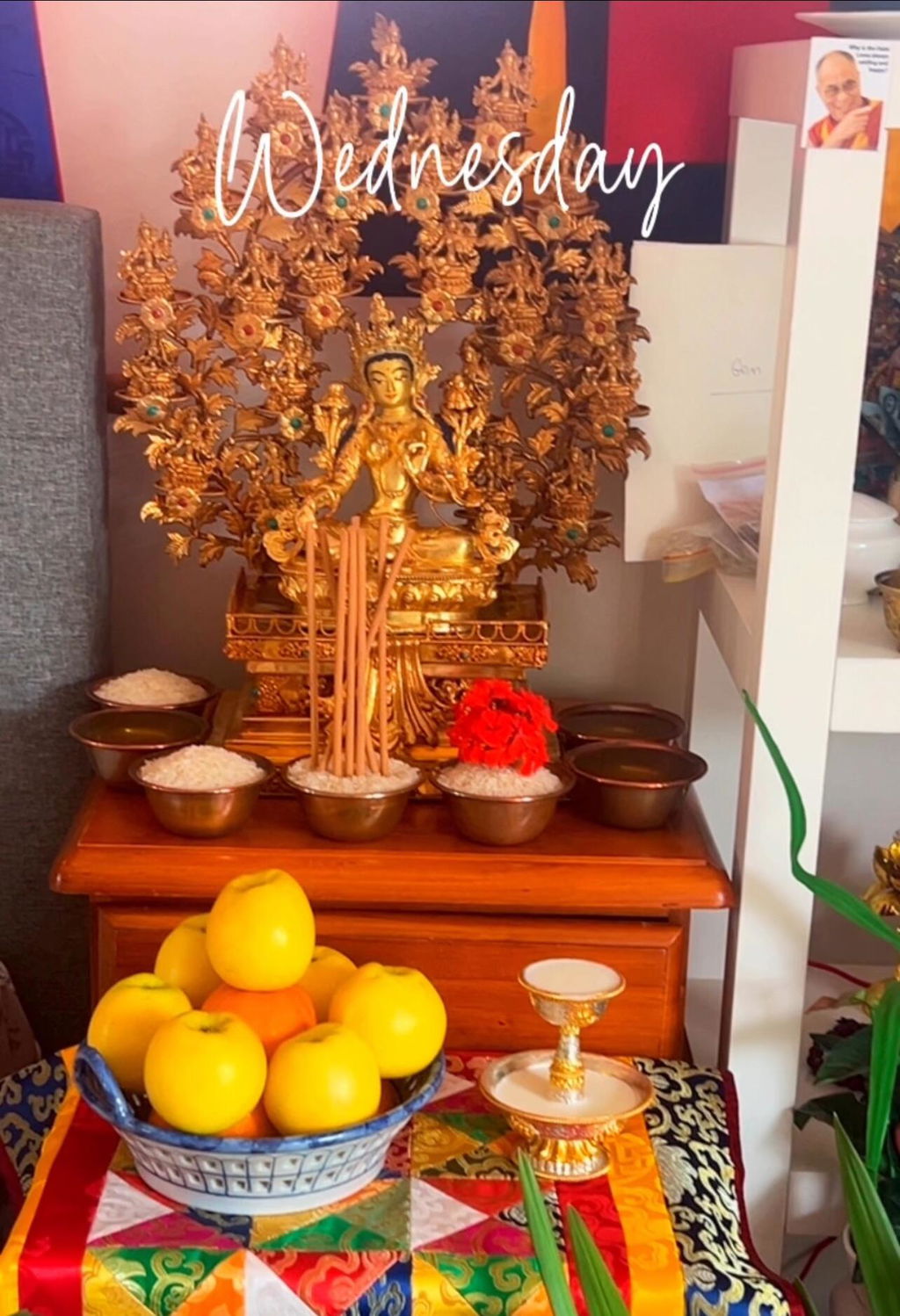
The altar should ideally be kept clean and treated respectfully. A statue can be accompanied by traditional offerings such as flowers, incense, lamps, water bowls, or other appropriate offerings.
The purpose of the altar is not simply decoration. It can create a dedicated environment for contemplation, meditation, prayer, offerings, and spiritual practice.
For practitioners who regularly engage in Vajrasattva meditation, placing the statue where it can be seen easily can provide a daily reminder of purification, ethical awareness, and the aspiration to cultivate awakened qualities.
How to Choose a Vajrasattva Statue
When choosing a Vajrasattva statue, it is useful to consider both iconographic accuracy and craftsmanship.
Look for the traditional attributes of Vajrasattva, including the vajra and bell, peaceful expression, white or light-colored appearance, lotus throne, and appropriate bodhisattva ornaments.
The craftsmanship is also important. A traditionally handcrafted statue may feature carefully modeled details, intricate ornaments, finely finished surfaces, and iconographic elements created according to established Himalayan Buddhist artistic traditions.
For collectors and practitioners, materials can also be an important consideration. Nepalese Vajrasattva statues may be made from copper or copper alloy and finished using techniques such as gold fire gilding, painting, and semi-precious stone inlay.
A handcrafted statue is therefore not only a representation of Vajrasattva but also an expression of the artistic heritage of Himalayan Buddhism.
Vajrasattva and Tibetan Buddhism
Vajrasattva holds an important position within Tibetan Buddhist traditions, particularly in purification practices associated with Vajrayana.
The practice is found across different Tibetan Buddhist lineages, although specific visualizations, liturgies, instructions, and interpretations may vary.
Vajrasattva is especially important in the context of preliminary practices, commonly known as ngöndro. In several traditions, practitioners undertake extensive purification practices involving Vajrasattva before progressing through further stages of Buddhist practice.
This reflects a central principle of the Vajrayana path: spiritual development involves not only cultivating wisdom and compassion but also addressing the obscurations that interfere with their full expression.
Vajrasattva and Karma
The relationship between Vajrasattva and karma is an important part of understanding his practice.
In Buddhist teachings, karma generally refers to intentional actions and their consequences. Vajrasattva practice does not mean that a practitioner can simply recite a mantra and erase every consequence of past actions without transformation.
Instead, purification involves recognizing harmful actions, generating sincere regret, developing a determination to change, and cultivating positive qualities.
This makes Vajrasattva practice particularly relevant to the Buddhist understanding of personal responsibility. The practitioner is encouraged to actively participate in transformation rather than passively expecting purification to happen.
Vajrasattva as a Symbol of Transformation
One of the most meaningful aspects of Vajrasattva is the idea that confusion can be transformed into wisdom.
Everyone experiences harmful habits, difficult emotions, mistakes, and moments of poor judgment. Vajrasattva practice provides a traditional framework for acknowledging these experiences while maintaining the possibility of change.
His white form represents clarity. His vajra represents indestructible wisdom. His bell represents wisdom and insight. His peaceful expression represents compassionate awareness.
Together, these elements create a powerful visual teaching: recognizing one's shortcomings does not have to lead to despair. Instead, awareness can become the starting point for transformation.
Frequently Asked Questions About Vajrasattva
Who is Vajrasattva in Buddhism?
Vajrasattva is an important figure in Vajrayana Buddhism associated particularly with purification, clarity, wisdom, and spiritual transformation.
What does Vajrasattva symbolize?
Vajrasattva symbolizes purification, indestructible wisdom, ethical transformation, compassion, and the clear nature of awakened mind.
What is the Vajrasattva mantra?
The Vajrasattva 100-Syllable Mantra is a traditional Vajrayana Buddhist mantra associated with purification practice. Different Buddhist lineages may use different transliterations and practice instructions.
Why is Vajrasattva white?
Vajrasattva's white body traditionally symbolizes purity, clarity, peacefulness, and the luminous nature of awakened awareness.
What does Vajrasattva hold?
Vajrasattva traditionally holds a vajra in his right hand and a bell in his left. Together, these objects represent important aspects of Vajrayana Buddhist symbolism, particularly indestructible wisdom and the understanding of emptiness.
What is Vajrasattva purification practice?
Vajrasattva purification practice traditionally involves recognizing harmful actions, generating sincere regret, reciting the Vajrasattva mantra, visualizing Vajrasattva, renewing one's ethical intention, and dedicating the practice.
Can I keep a Vajrasattva statue at home?
Yes. Many practitioners place Vajrasattva statues on home Buddhist altars, meditation spaces, or personal shrines. The statue should be treated respectfully and kept in a clean, appropriate location.
What is the 100-Syllable Mantra used for?
Within Vajrayana Buddhist tradition, the 100-Syllable Mantra is used primarily in connection with purification practice. Its recitation is traditionally combined with visualization, reflection, ethical intention, and dedication.
The Enduring Meaning of Vajrasattva
Vajrasattva represents one of the most profound ideas in Buddhist practice: transformation begins with awareness.
His peaceful white form reminds practitioners of clarity and purity. The vajra symbolizes indestructible wisdom, while the bell represents wisdom and insight. His connection with purification encourages practitioners to acknowledge harmful actions, develop sincere regret, and cultivate the determination to act differently.
For this reason, Vajrasattva remains an important figure in Himalayan and Vajrayana Buddhist traditions.
Whether encountered through meditation, mantra recitation, Buddhist teachings, or sacred Himalayan art, Vajrasattva offers a powerful reminder that spiritual practice is an ongoing process of awareness, responsibility, compassion, and transformation.
A beautifully handcrafted Vajrasattva statue can embody these teachings in visual form, creating a meaningful focal point for a Buddhist altar, meditation room, Dharma center, or sacred space while honoring the centuries-old artistic traditions of Himalayan Buddhist sculpture.


Share:
Kukkuripa: The Compassionate Mahasiddha of Vajrayana Buddhism
Troma Nagmo: The Fierce Dakini of Wisdom and Transformation