
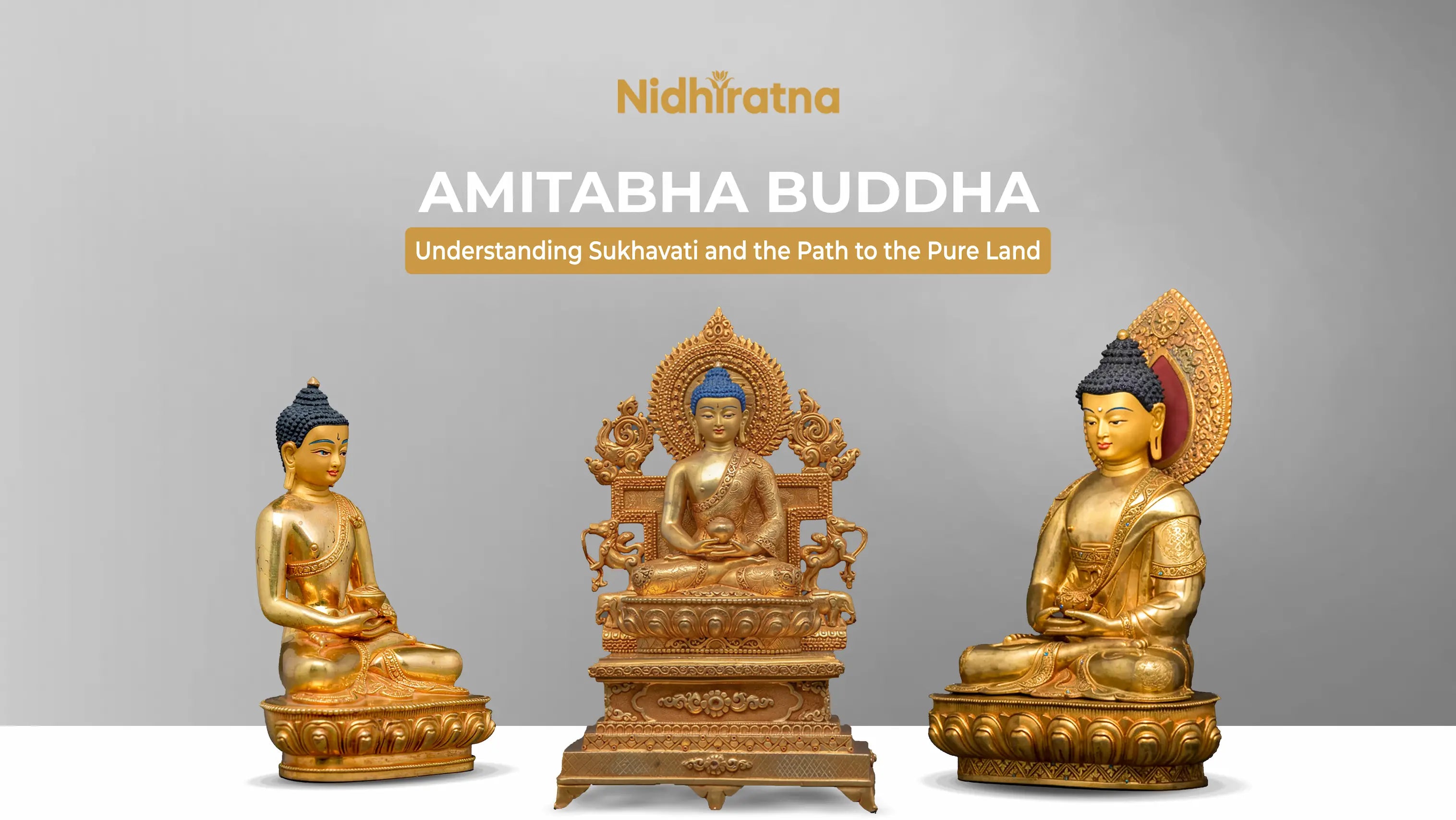
Amitabha Buddha: Understanding Sukhavati and the Path to the Pure Land
Have you ever come across a happy place? Sukhavati is one such blissful paradise formed by Amitabha Buddha in Buddhist mythology. This Western paradise of Sukhavati is devoid of any kind of pain. With a firm faith in your heart, anyone can have rebirth in the pure world of Amitabha Buddha. We will see today how the Pure Land is realized by Amitabha Buddha with his vows.
Where is Sukhavati?
According to the Mahayana belief system, Sukhavati is said to be located in the western direction. This is not something that is simply witnessed; rather, it is something that can be attained through faith, commitment, and actions, similar to how Amitabha Buddha lived. He was the one who abandoned his throne, along with all the possessions in the world, in order to permanently alleviate people of their worldly problems.
Sukhavati is the manifestation of the 48 vows made by Amitabha Buddha. Once, an ideal concept became reality when he was enlightened and guided by the teachings of Lokeshvararaja Buddha. These commitments were made for humanity, without any regressions or spiritual obstacles, and were very compassionate ones.
Amitabha Buddha-Beacon of Spiritual Healing
The Amitabha Buddha is among the many deities of spiritual healing. Known as the presiding Buddha of Sukhavati, he is regarded as the deity that represents purity with his infinite light. Amitabha Buddha's energy includes peace of mind, soothing emotional wounds, and a loving approach to enlightenment.
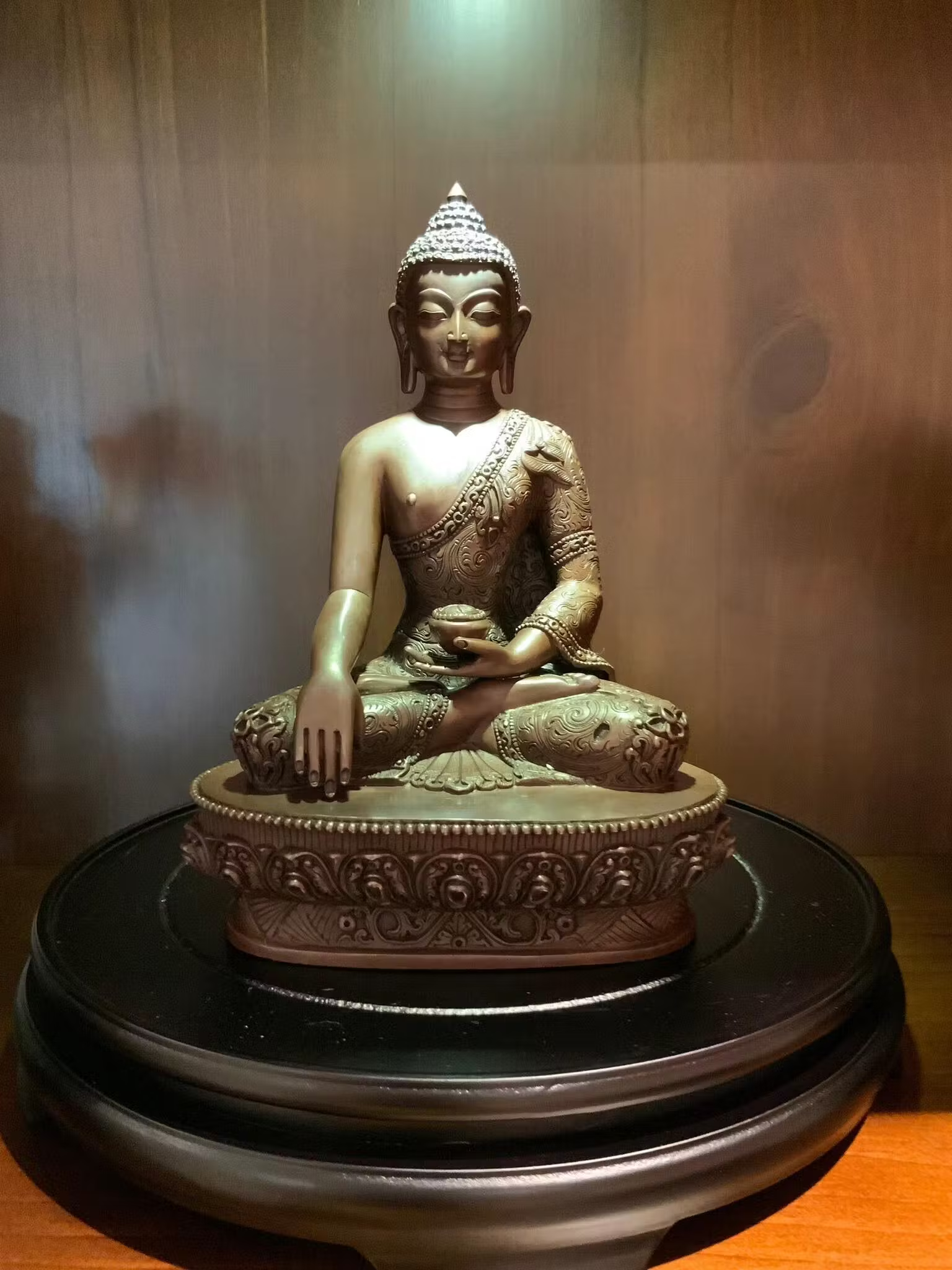
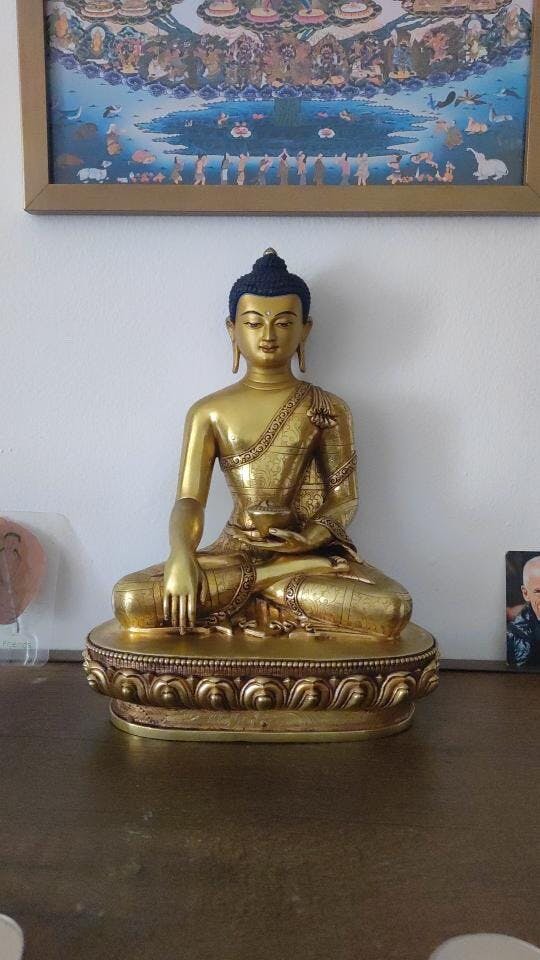
In terms of symbolism, his sitting posture, along with the possession of an alms bowl, shows that he is peaceful, wise, and spiritually fed. In terms of his features, the lotus, ushnisha, and elongated earlobes represent purity, enlightenment, and detachment, respectively. It is truly amazing to learn about the symbolism connected with him. He rides on the back of the peacock, the animal known for carrying the burden of pain of other people.
His closest companions include two bodhisattvas, namely Avalokiteśvara and Mahasthamprapta. His divine companion, Pandura, also sits beside him. She is the fourth deity in the family of Tara and has a special gift of the ability to taste anything using her tongue.
The Story: How Did a King Become a Buddha?
Long back, Amitabha was a rich king having everything within reach. However, one thing attracted his attention: the beauty of life is transient. Nothing could stop him and his people from facing the misery arising from loss, illness, and sorrow. He then abandoned the royal throne and took up the monkhood as Dharmakara.
As Dharmakara, he engaged himself in deep contemplation and study about the idea of pure land and its creation. Lokeshvararaja Buddha came out as his teacher on the road to virtue to offer relief to humanity. As Dharmakara, he uttered some profound pledges of 48 in number. This was a soft emergence of compassion towards humanity that thrives through him. He spent numerous lives meditating, studying, and performing good deeds.
Before taking on the role of Buddha, he started thinking of an idealistic entity that could bring relief to people from their sorrows. He wished to make a realm where people would have a path leading towards awakening. This particular path later on came to be known as the path to the pure land.
Pure Land Buddhism
Chanting and leading a morally upright life are fundamental aspects of Pure Land Buddhism, but it is not the only way to follow the teachings. In ancient India, the followers of the teachings often visualize the Pure Land in their meditation, including the Buddha Amitabha and the peaceful environment of Sukhavati.
There are wonderful descriptions of the Contemplation Sutra that describe how followers could visualize themselves and others in thirteen different ways, including beautiful lotus ponds, shining trees made from precious stones, and the figure of the Buddha Amitabha. Other simple actions, such as making prostrations, also became ways to show reverence. All of these methods are highly appreciated by the followers in Asia, especially when developing clear thought, confidence, and mental focus.
The Path to the Pure Land
1. Faith (Sincere Belief):
People who have the conviction in their hearts that the Sukhavati realm exists will come close to obtaining it. All things are possible when one meditates alone in his/her heart without having worldly cravings, especially the desire to accomplish something meaningful in one’s practice.
2. Vow (Firm Aspiration):
The strong and reflective desire is what makes one take rebirth in the Pure Land of Amitabha Buddha. It is Amitabha who, as a guiding light, sets the example through his 48 vows that everyone needs a strong determination to achieve something substantial in their lives.
3. Practice (Action):
Similarly, while faith and good intentions play significant roles, regular discipline plays an essential role in one's quest for the path of the Pure Land. The land is distant from any suffering associated with this world and is characterized by harmony, purity, and spiritual liberation. To be born into the Pure Land, it is best to practice or recite the name of Amitabha Buddha, for example, Om Ami Dewa Hrih.
Nepalese-Crafted Amitabha Buddha at Nidhiratna

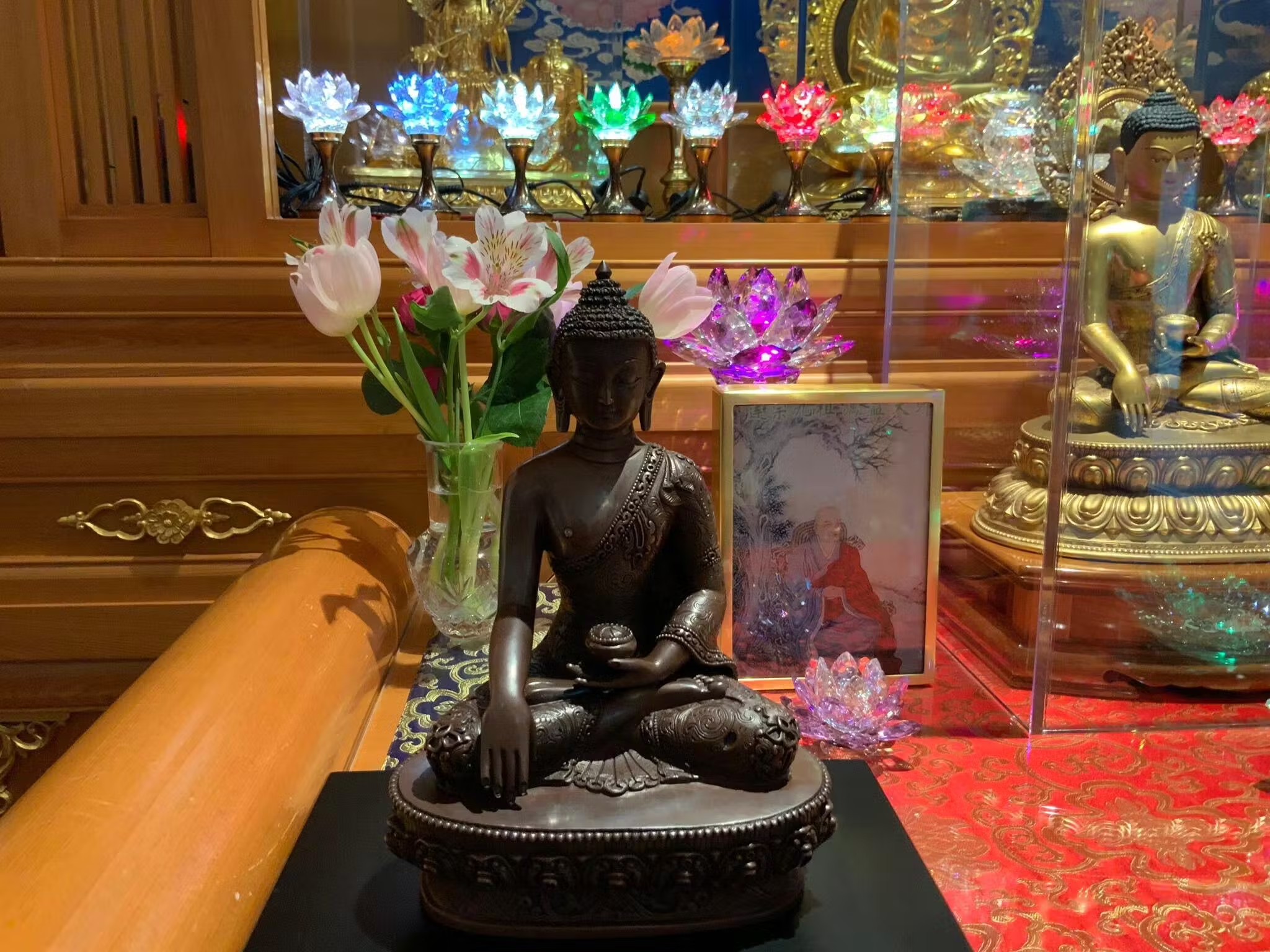
An excellent Amitabha Buddha statue can be obtained at Nidhiratna by utilizing the real talents of the Nepalese sculptors. The statue is a high-quality copper statue that has been gilded with 24k gold and is placed in the dhyana mudra posture, wherein Amitabha Buddha holds an alms bowl. The statue can be consecrated for having a continuous presence during your meditation practice sessions.
Conclusion
In other words, Amitabha Buddha is a path that does not depend on the notion of perfection but, on the contrary, on trust, sincerity, and kindness. Dharmakara’s vow is a reassurance that there exists a chance for all of us and that enlightenment may be available not only to some chosen few but also to all those who would sincerely believe.
Sukhavati is proof that liberation does not have to be difficult and exhausting; on the contrary, it can be achieved using the gentle power of recollection, faith, and moral conduct. Therefore, this philosophy is very much a matter of human nature. Not being perfect or complete on its own, a human being can achieve great things through Amitabha Buddha’s teachings.
Explore authentic spiritual treasures at Nidhiratna or contact us today to deepen your journey toward the Pure Land.
FAQs
1. Are Amitabha Buddha and Gautam Buddha the same?
Amitabha Buddha is frequently associated with Gautam Buddha. However, there is a difference between the two. While Gautam Buddha was an earthly being, Amitabha Buddha was a celestial Buddha characterized by vastness, patience, and hospitality.
2. What is the atmosphere of Sukhavati like?
This is a totally nurturing place without any element of fear or decay. The air around Sukhavati is conducive for meditation, compassion, and a state of awareness in its very nature
3. What do the 48 vows of Amitabha Buddha mean?
The 48 vows taken by Amitabha Buddha have been profound vows, which were taken when he used to be the monk Dharmakara. These vows convey his desire to create a pure land where sentient beings could attain enlightenment easily.
4. How can one be reborn in the Pure Land?
Historically, rebirth into Sukhavati has been associated with pure faith, recollection of Amitabha Buddha, and a strong desire to be reborn in such a place. While pursuing these three paths, one is believed to be eligible to be reborn in the Pure Land.


Share:
Vajrayogini Ucheyma: The Wrathful Fire of Purification in Tantric Buddhism
Understanding Asanas and Mudras in Buddhist Statues: Meaning and Symbolism