

Thousand-Armed Avalokiteshvara (Chenrezig): Meaning, Symbolism, and the Power of 1000 Arms in Buddhism
Among all sacred forms, Avalokiteshvara is deeply revered as the embodiment of mercy and boundless compassion. As a Bodhisattva, he has taken a sacred vow to guide all beings toward freedom from worldly suffering, remaining present for as long as there is pain in the world. In Mahayana Buddhism, it is believed that he responds to every cry for help with wisdom, care, and unwavering compassion.
He is believed to listen with a kind and open heart. His spiritual energy is about offering gentle guidance through life's difficulties, helping to ease suffering and bring clarity amidst confusion. He is powerfully active in teaching patience and perseverance to his followers.
Who is the Thousand-Armed Avalokiteshvara?
The Thousand-Armed Avalokiteshvara is one of the most iconic and spiritually significant forms of Avalokiteshvara. In Sanskrit, he is known as Sahasrabhuja Avalokiteshvara, meaning “One with a Thousand Arms.”
This form is considered the most profound and magnificent expression of Avalokiteśvara’s compassionate power. It represents boundless compassion, unbounded wisdom, and the infinite ability to assist all sentient beings.
Each of his numerous arms and eyes symbolizes his capacity to perceive and respond to the suffering of countless beings simultaneously. Through these manifestations, he guides, protects, and heals every being with compassion that knows no limits.
Origin Story of the Thousand-Armed Avalokiteshvara
The Thousand-Armed Avalokiteshvara arises from a profound vow of compassion. It is said that he promised Amitabha Buddha never to rest until all beings were freed from suffering. Overwhelmed by the immense pain of the world, his form shattered, yet his dedication remained unwavering.
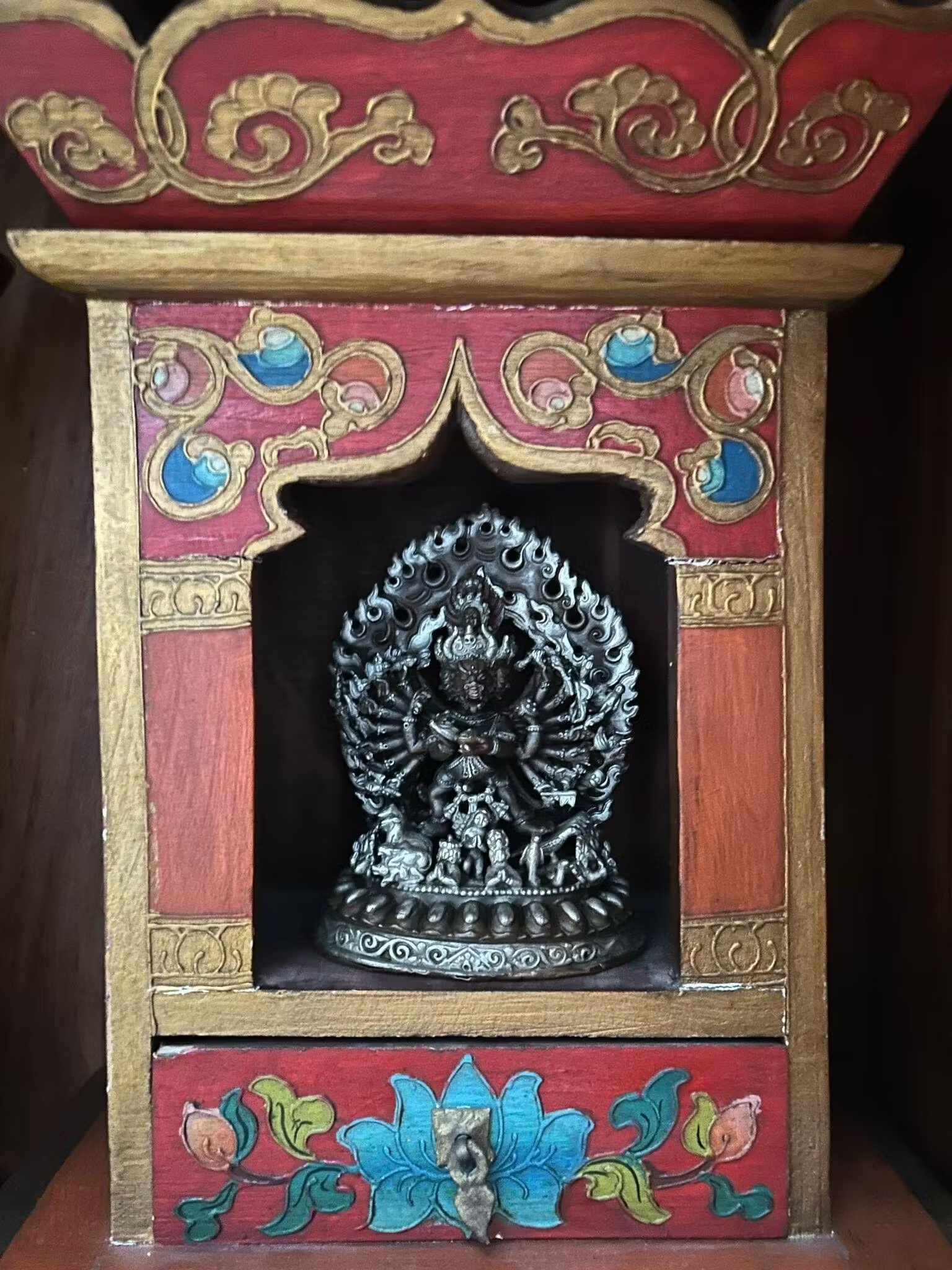
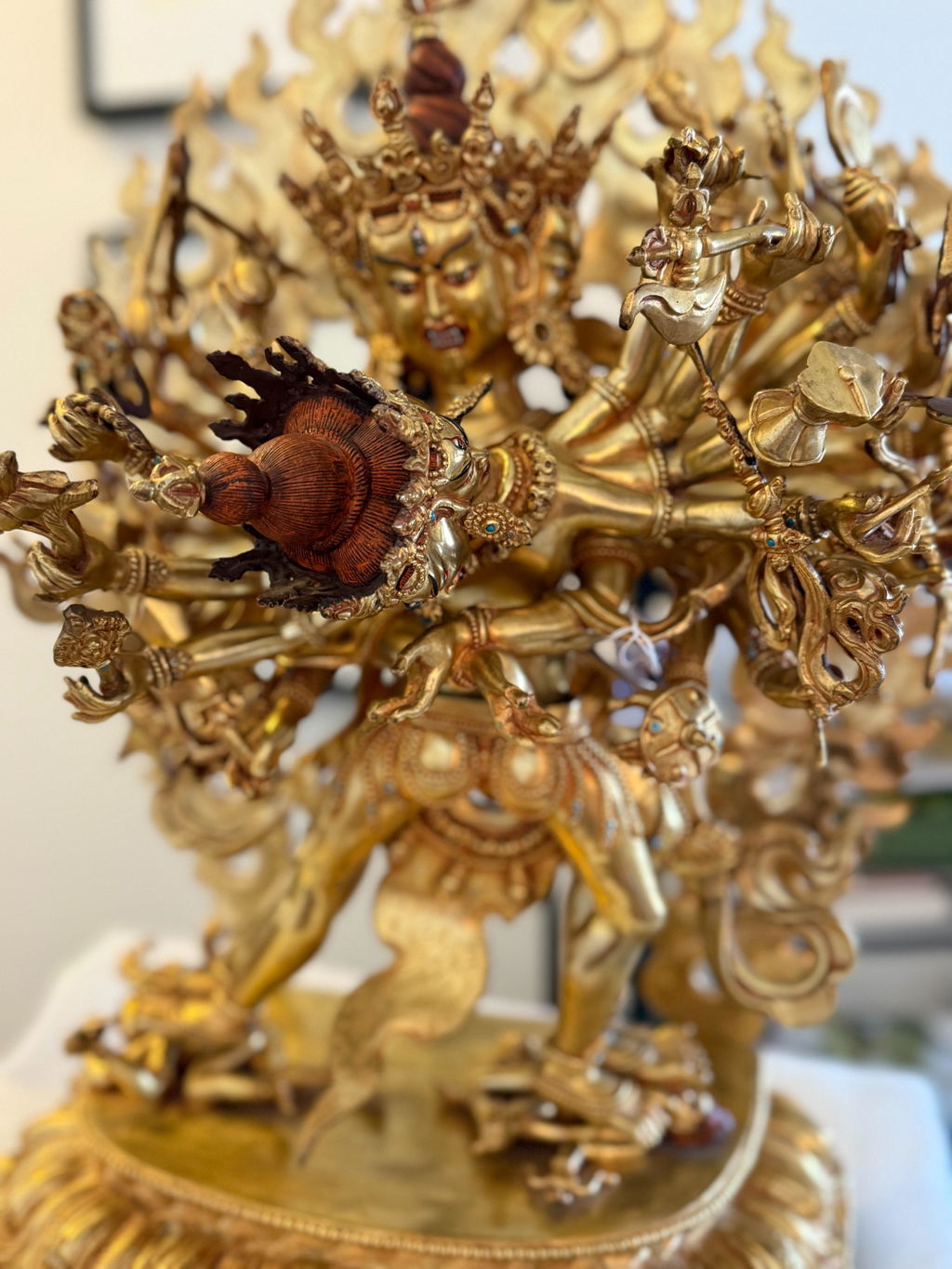
Moved by his resolve, Amitabha Buddha restored him, giving him eleven heads to perceive suffering in all directions and a thousand arms, each with an eye in the palm, to see and respond to every being’s need. This form reflects the boundless nature of true compassion, combining awareness and action to reach all corners of the world.
Iconography & Symbolism of Thousand-Armed Avalokiteshvara

1. Eleven Heads
The eleven heads represent different states of compassion, wisdom, and awareness. They signify his ability to perceive and understand the suffering of beings across all realms, reflecting an expanded awareness that leaves no suffering unnoticed.
2. 1000 Arms
The thousand arms symbolize the infinite ways Avalokiteshvara reaches out to help beings. Each arm represents compassionate action in countless forms, demonstrating his limitless capacity to respond to the needs of all sentient beings.
3. Eyes on Each Palm
The eyes in each palm represent all-seeing wisdom combined with compassionate action. Through these eyes, the Thousand-Armed Avalokiteshvara perceives suffering clearly and responds skillfully, guiding, protecting, and healing beings wherever help is needed.
4. Lotus Flower
The lotus flower signifies purity and spiritual awakening, rising above the challenges and impurities of the world while remaining unstained.
5. Hands in Prayer (Anjali Mudra)
Hands held in prayer symbolize the union of wisdom and compassionate method, reminding devotees that true compassion is always guided by awareness and skillful action.
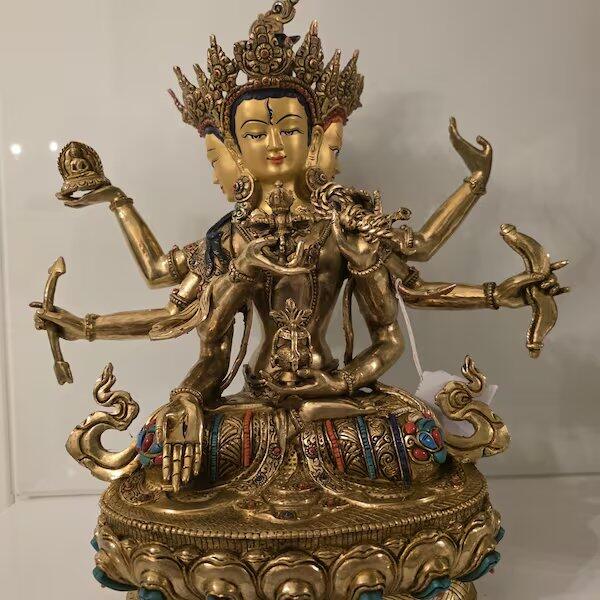
Masterpiece 1000 Avalokiteshvara Statue at Nidhiratna
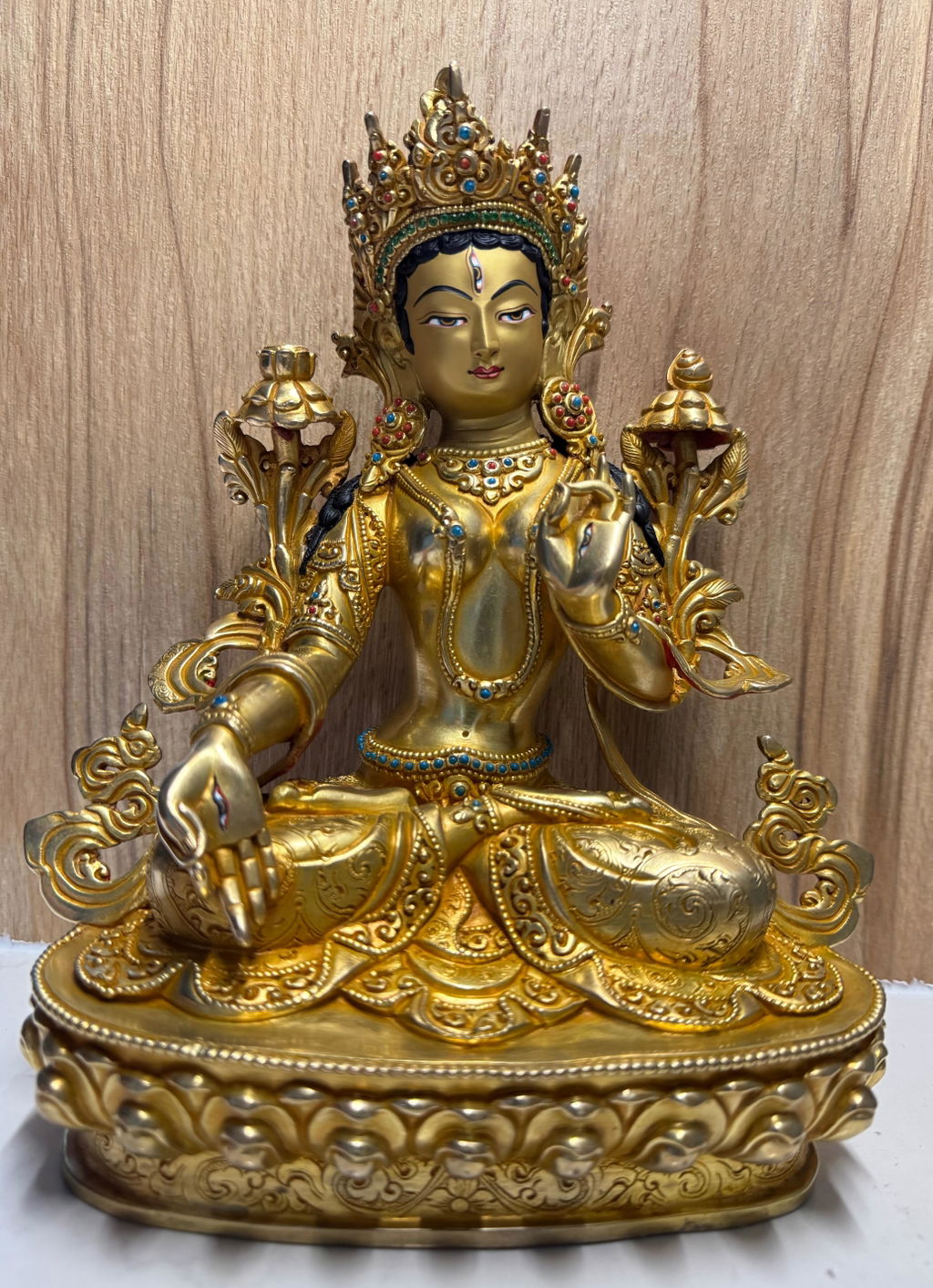
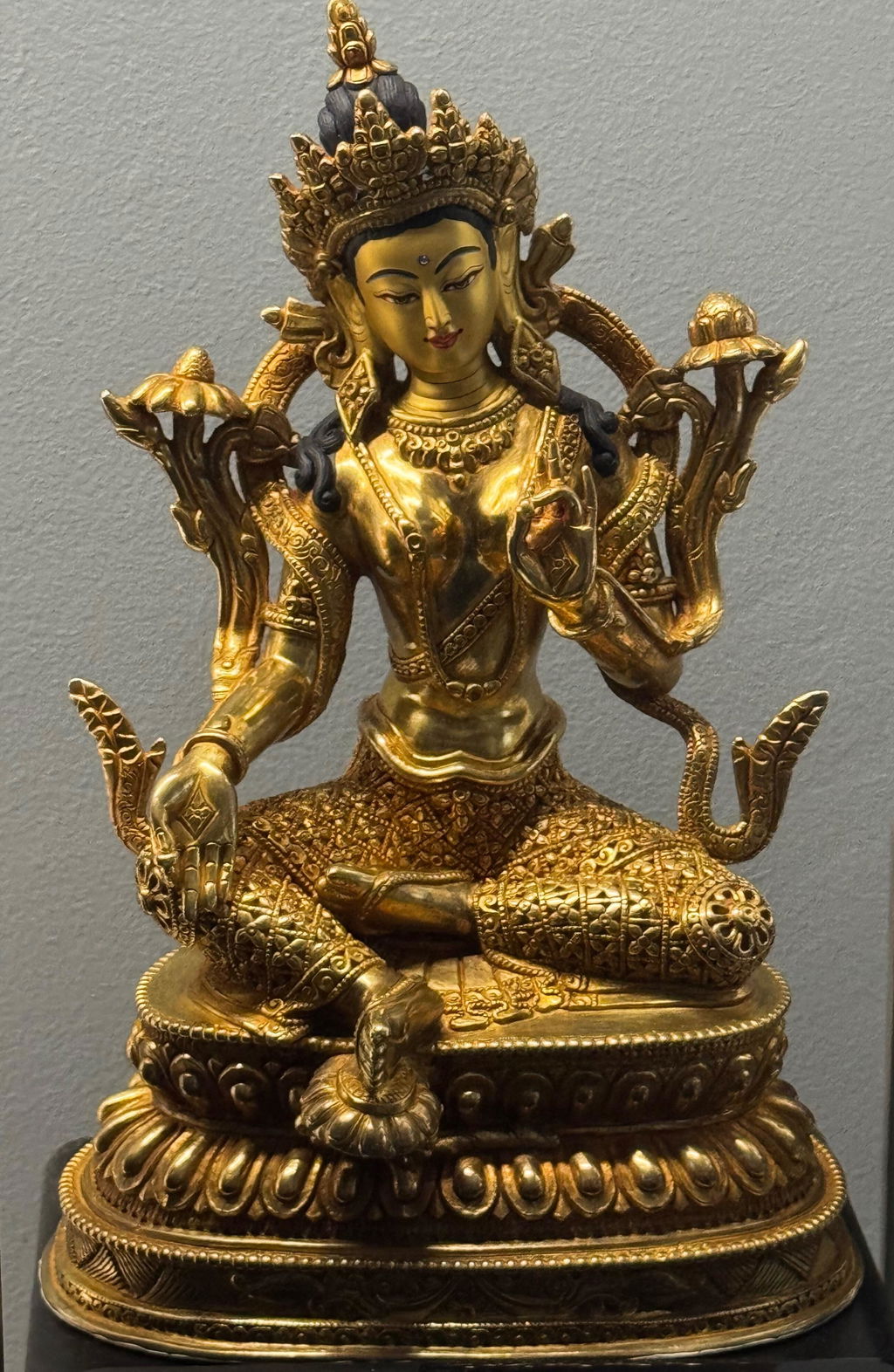
This exclusive Thousand-Armed Avalokiteshvara statue is a masterfully handcrafted piece created by skilled Nepalese artisans using the traditional lost-wax casting technique. Made from a high-quality copper alloy, it features a radiant 24K gold-gilded face and a richly fire-gilded body, resulting in a luminous and enduring finish. The surface is adorned with intricate carvings, fine filigree details, and carefully set semi-precious gemstones, reflecting exceptional craftsmanship and attention to detail.
The eternal Bodhisattva statue at Nidhiratna is traditionally curated to bless your space.

The Power and Blessings of Avalokiteshvara
The presence of Avalokiteshvara is deeply rooted in an unwavering vow to remain with all beings until every form of suffering is transformed. This sacred commitment reflects a compassion that knows no limits, embracing all beings with patience, care, and boundless presence.
Beyond symbolism, Avalokiteshvara represents a protective and nurturing presence in spiritual life. Devotees often regard his energy as a gentle shield easing negative emotions such as anger, jealousy, and pride, while cultivating peace, clarity, and inner balance within one’s surroundings.
His compassionate activity is also expressed through sacred stories, including the origin of Green Tara and White Tara, who are believed to have arisen from his tears, symbolizing that even in the face of immense suffering, compassion gives rise to healing and enlightened action.
Practices such as chanting the mantra "Om Mani Padme Hum" are understood to embody his compassionate essence, helping practitioners return to a state of inner calm, clarity, and awareness. In traditional belief, Avalokiteshvara is also associated with protection from the “Eight Great Fears,” offering guidance and reassurance in times of uncertainty.
Ultimately, the power of Avalokiteshvara is a living reminder that compassion is both a path and a practice, one that can be cultivated within ourselves, expressed through our actions, and shared with the world around us.
Nidhiratna Featured Collection
At Nidhiratna, you can find truly handmade, curated, crafted pieces made from premium quality in our collection.
Explore our handcrafted statues, thangka prints, and ritual items crafted with authentic handmade artwork by Nepalese artists.
FAQs
-
Who is Avalokiteshvara, and why is he important in Buddhism?
Avalokiteshvara is the Bodhisattva of Compassion, revered across Mahayana and Vajrayana Buddhism as the embodiment of mercy and loving-kindness. He is important because he represents the ideal of selfless compassion, choosing to remain in the world to guide all beings toward liberation from suffering.
-
What is the meaning of the Thousand-Armed Avalokiteshvara form?
The Thousand-Armed form of Avalokiteshvara symbolizes his limitless ability to help all beings. His thousand arms represent compassionate action, while the eyes in each palm reflect wisdom, showing that true compassion arises from both understanding and action.
-
What distinguishes the 1000-armed Avalokiteshvara from the four-armed Avalokiteshvara?
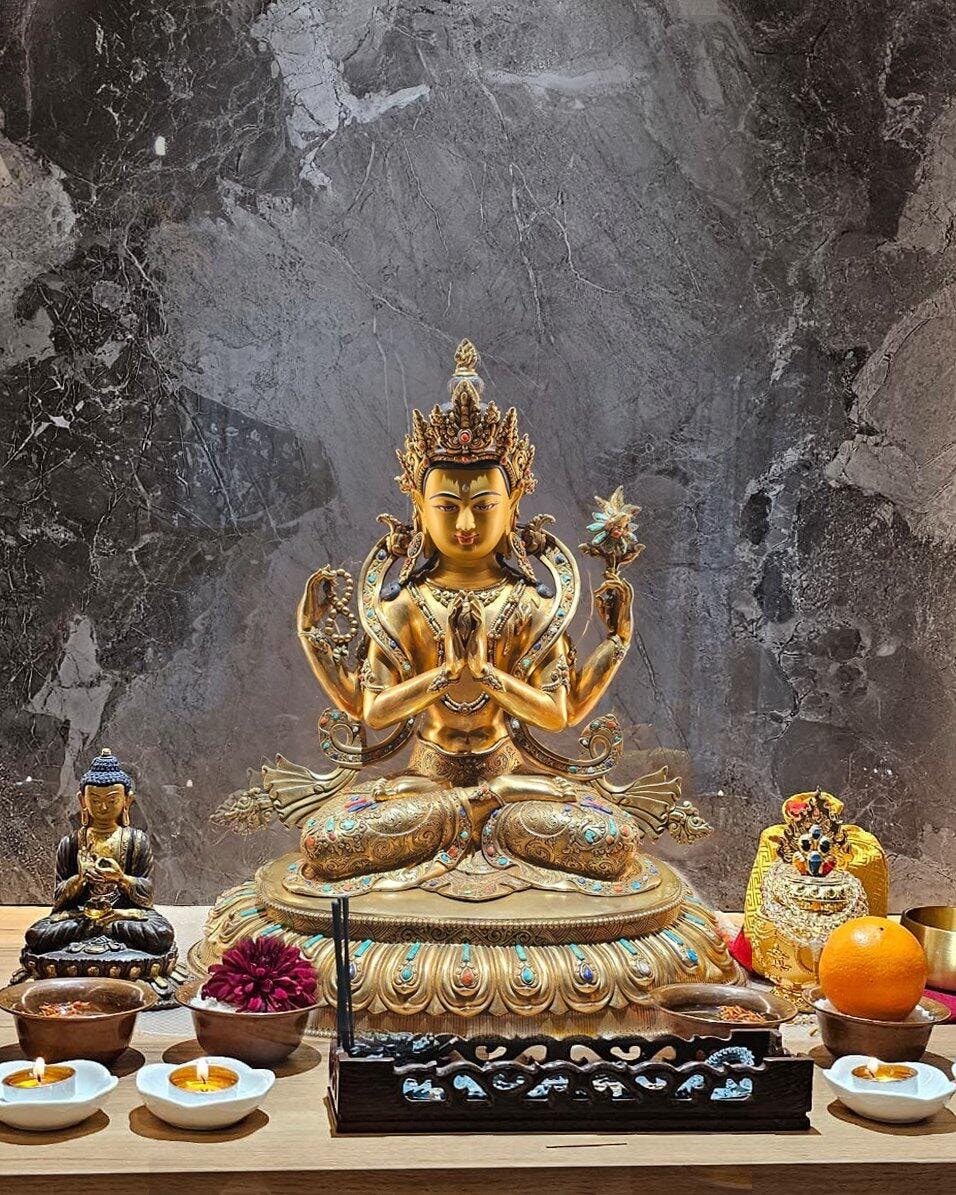
- Four-Armed Avalokiteshvara represents the essential and meditative aspect of compassion. This form symbolizes the core qualities of loving-kindness, compassion, joy, and equanimity, reflecting inner balance and spiritual calm.
- 1000-Armed Avalokiteshvara represents the fully expanded and active expression of compassion. His thousand arms show the limitless ways he helps all beings, while the eyes in each palm symbolize wisdom guiding compassionate action across all realms.


Share:
What makes a Buddhist Statue truly sacred? Craftmanship, Ritual and Consecration
Vajrayogini Ucheyma: The Wrathful Fire of Purification in Tantric Buddhism