

Green Tara and White Tara
Meaning, Symbolism, and Iconography
A guide to the two most revered forms of Tara in Vajrayana Buddhism, and the compassion each one embodies.
Among the twenty-one manifestations of Tara, Green Tara and White Tara are the two most widely revered — and the two most commonly commissioned as copper statues. Both emanate from the tears of Avalokiteshvara, yet each carries distinct iconography and is invoked for a different purpose.
 Who Is Tara in Vajrayana Buddhism?
Tara is the female Buddha of compassion and swift, active liberation. According to legend, she was born from a lotus that grew in a lake formed by Avalokiteshvara's tears of compassion as he wept for the suffering of sentient beings. She vowed to always be reborn in female form to help beings cross the ocean of samsara. Tara appears in 21 primary forms distinguished by color and activity, with Green Tara and White Tara remaining the two most widely practiced.
Green Tara: The Tara of Swift Action
Symbolism and Meaning
Green Tara (Syamatara) is considered the original, root form of Tara and represents active compassion — the swiftness to respond to suffering the moment it arises. Green is associated with the wind element and with enlightened activity, which is why Green Tara is invoked for protection from the eight great fears, removal of obstacles, and rapid intervention in times of crisis.
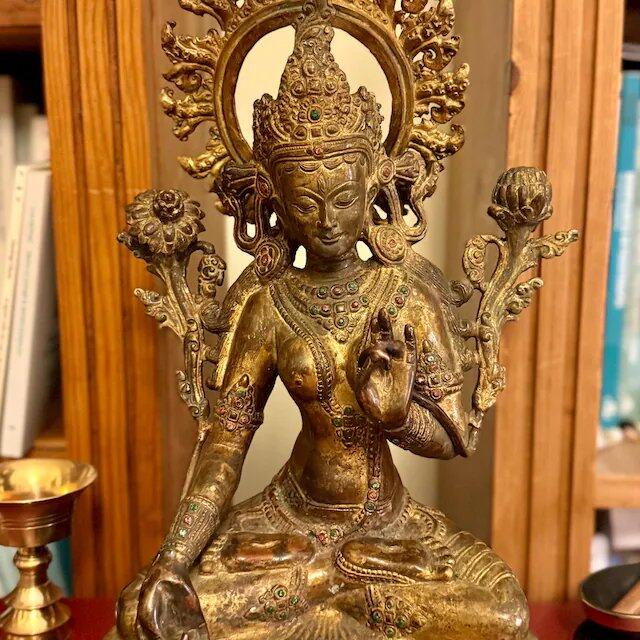
Iconographic Features
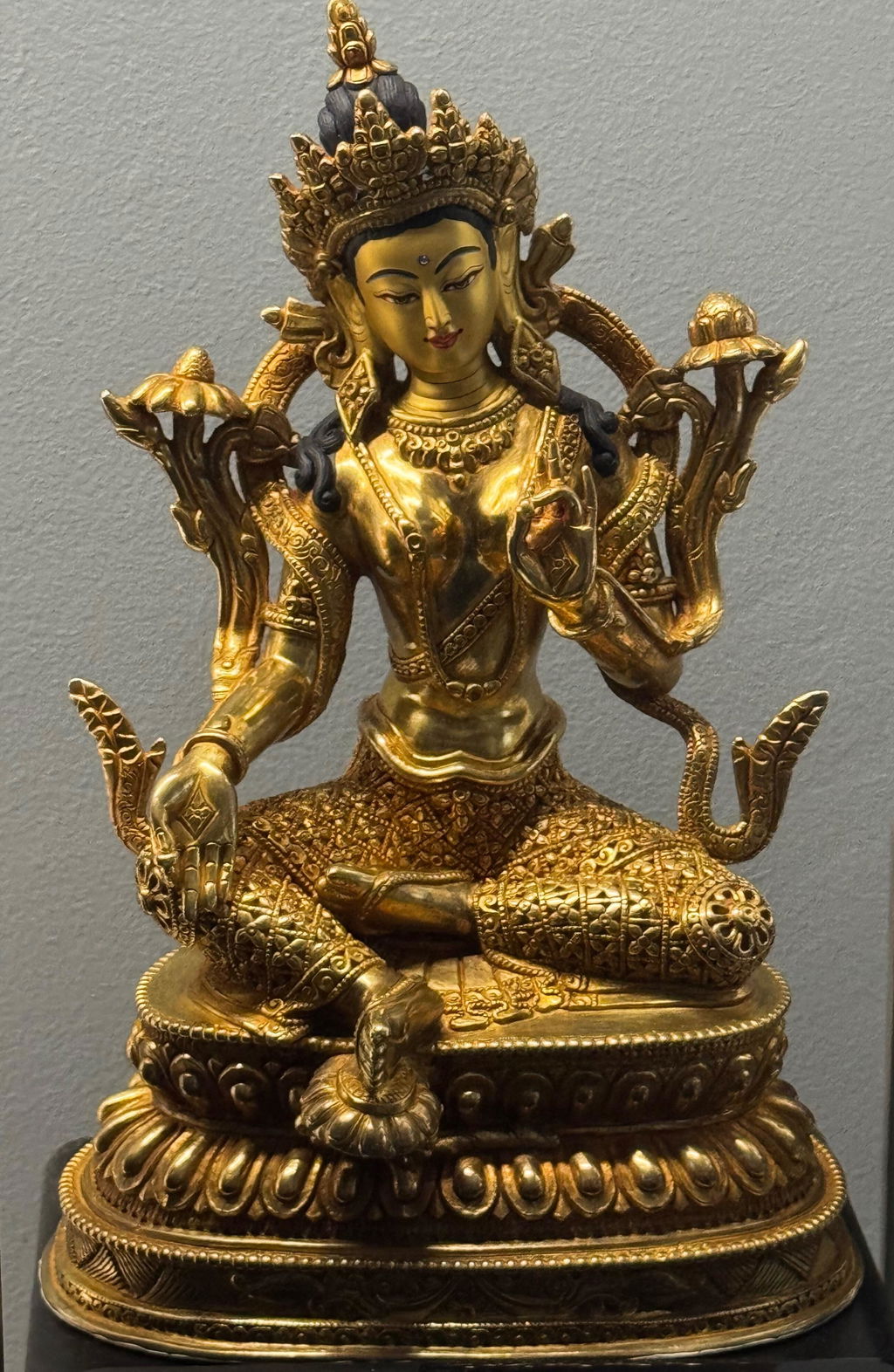
- Posture: Seated in lalitasana (royal ease), with her right leg extended and left leg drawn in — a posture that signals readiness to rise and act immediately
- Mudras: Right hand in varada mudra (boon-granting gesture), left hand in vitarka mudra (teaching gesture) holding the stem of a blue utpala lotus
- Color: Deep emerald or forest green
- Third eye: Present, along with the traditional eyes on her palms and soles — she is sometimes called "Tara of the Seven Eyes"
Mantra
When Practitioners Invoke Green Tara
Green Tara is called upon for immediate protection, overcoming fear, removing obstacles to practice, and general life challenges. She is the Tara of urgency and momentum.
 Statue Detail
White Tara: The Tara of Healing and Longevity
Symbolism and Meaning
White Tara (Sitatara) embodies purity, compassion, and maternal nurturing. Where Green Tara acts swiftly, White Tara heals patiently. She is most closely associated with long life, health, and serenity, and is one of the three deities of the "Long Life Trinity" alongside Amitayus and Ushnishavijaya.
Iconographic Features
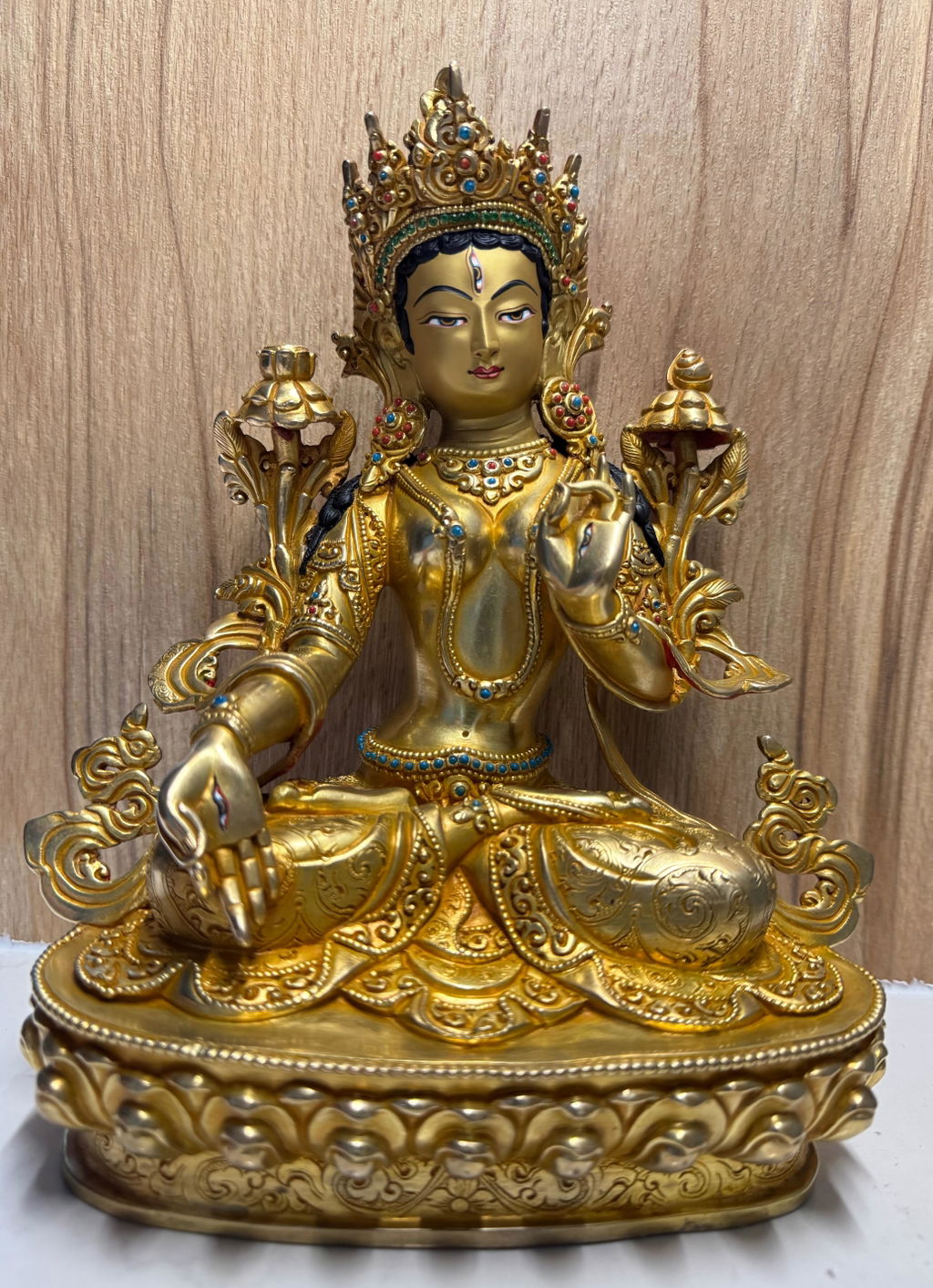
- Posture: Seated in full vajra (lotus) posture, symbolizing stillness, stability, and meditative depth
- Mudras: Right hand in varada mudra, left hand at the heart in vitarka mudra holding an utpala lotus in full bloom
- Color: Pure white, symbolizing purity and pacifying enlightened activity
- Seven eyes: White Tara is always depicted with seven eyes — one on her forehead, one on each palm, and one on each sole of her feet — representing her all-seeing compassion
Mantra
When Practitioners Invoke White Tara
White Tara is invoked for healing, longevity practices (tsewang), calming the mind, and dedicating merit toward long life for oneself or loved ones. She is the Tara of patience and restoration.
 Statue Detail
Comparing Their Iconography
| Aspect | Green Tara | White Tara |
|---|---|---|
| Posture | Lalitasana (one leg extended) | Full vajra / lotus posture |
| Element | Wind / Air | Water / Earth |
| Core quality | Swift, active compassion | Patient, healing compassion |
| Primary invocation | Protection, obstacle removal | Longevity, health, serenity |
| Eyes | Palms and soles | Seven eyes including forehead |
| Associated trinity | — | Long Life Trinity |
Choosing a Tara for Your Practice
Many practitioners keep both on their altar, since the two represent complementary aspects of compassion — one urgent, one restorative. If your practice centers on protection, courage, or removing immediate obstacles, Green Tara is the traditional choice. If your intention is healing, longevity practice, or bringing calm and stability into your life, White Tara is more aligned.
Commissioning an Authentic Tara Statue
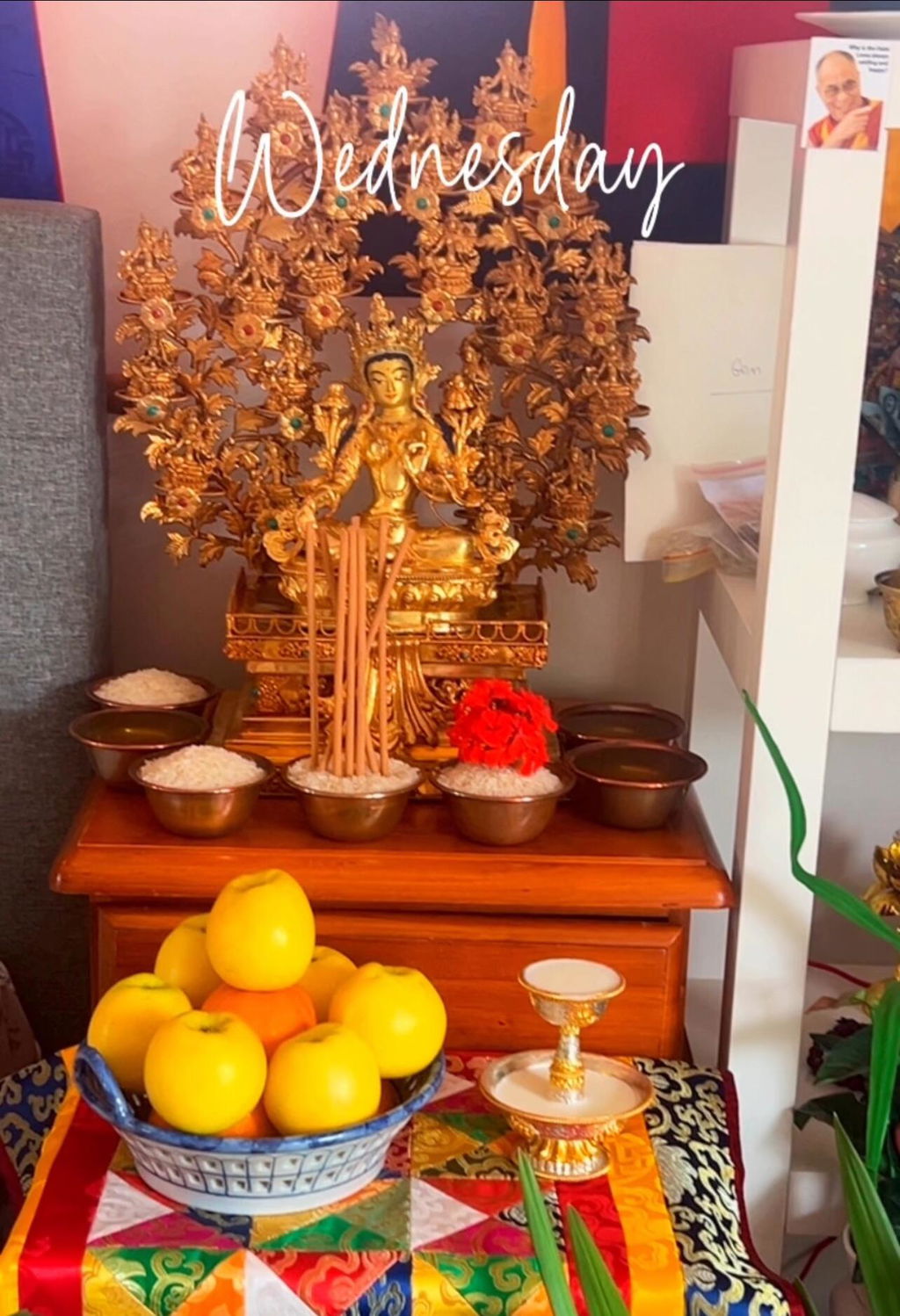
Whether you choose Green Tara or White Tara, iconographic accuracy matters. Every Nidhiratna Tara statue is hand-cast using traditional lost-wax casting by Newari artisans in Patan, Nepal, with 24K fire gilding and iconography verified against classical Vajrayana texts — with an optional Rabne consecration before it reaches your altar.
Explore the Tara CollectionFrequently Asked Questions
Neither is "more powerful" — they represent different enlightened activities. Green Tara acts swiftly; White Tara heals and extends life. Practitioners choose based on their specific intention.
Yes. Many lineages include both in daily practice, and it's common to have statues of both Taras on the same altar.
Both use the varada (boon-granting) mudra with the right hand. The key difference is posture and the lotus gesture — White Tara's left hand rests near the heart, while Green Tara's is positioned lower, near the knee.
The seven eyes — forehead, two palms, two soles, plus her two regular eyes — represent her complete, all-seeing vigilance over the suffering of all beings, reinforcing her role as a healer who misses nothing.


Share:
Who is Goddess Saraswati? Hindu Goddess of Knowledge
Milarepa: Tibet's Greatest Yogi & Saint