


From ancient Vedic scriptures to modern-day worship- a complete guide to one of Hinduism's most beloved goddesses.
Goddess Saraswati is one of the most revered deities in Hinduism. Worshipped by students, artists, musicians, and scholars alike, she is the divine embodiment of knowledge, wisdom, learning, music, art, and speech. Whether you are a devout Hindu, a student seeking blessings, or simply curious about Indian mythology, understanding Goddess Saraswati offers profound insight into one of the world's oldest religious traditions.
In this comprehensive guide, we will explore who Goddess Saraswati is, her origins, her symbols, her significance, and why she continues to be worshipped by millions across the globe.
Who is Goddess Saraswati?
Goddess Saraswati (Sanskrit: सरस्वती) is the Hindu goddess of knowledge, learning, wisdom, music, arts, and speech. She is one of the principal deities of Hinduism and forms part of the Tridevi — the divine feminine trinity alongside Goddess Lakshmi (wealth) and Goddess Parvati (power).
She is the consort of Lord Brahma, the creator of the universe, which further reinforces her role as the goddess associated with all forms of creation, particularly intellectual and artistic creation.
Saraswati is mentioned in the Rigveda, one of the oldest Hindu scriptures (dating back to 1500–1200 BCE), making her one of the most ancient goddesses in recorded human history.
"Yā Kundendutusāra Harāvalī" — She who is as white as the jasmine flower, the moon, and the garland of snow. Saraswati is the goddess of all that is pure, luminous, and enlightening.
Origins of Goddess Saraswati
The origins of Saraswati trace back to the Vedic period. In the earliest scriptures, she was primarily personified as a sacred river — the Saraswati River — which was believed to purify those who bathed in her waters and inspire wisdom in those who dwelled near her banks.
Over time, as Vedic religion evolved into classical Hinduism, Saraswati transitioned from a river goddess into a full deity of knowledge and arts. By the time of the Puranas and the Mahabharata, her identity was firmly established as the divine patron of education, literature, and music.
How is Goddess Saraswati Depicted?
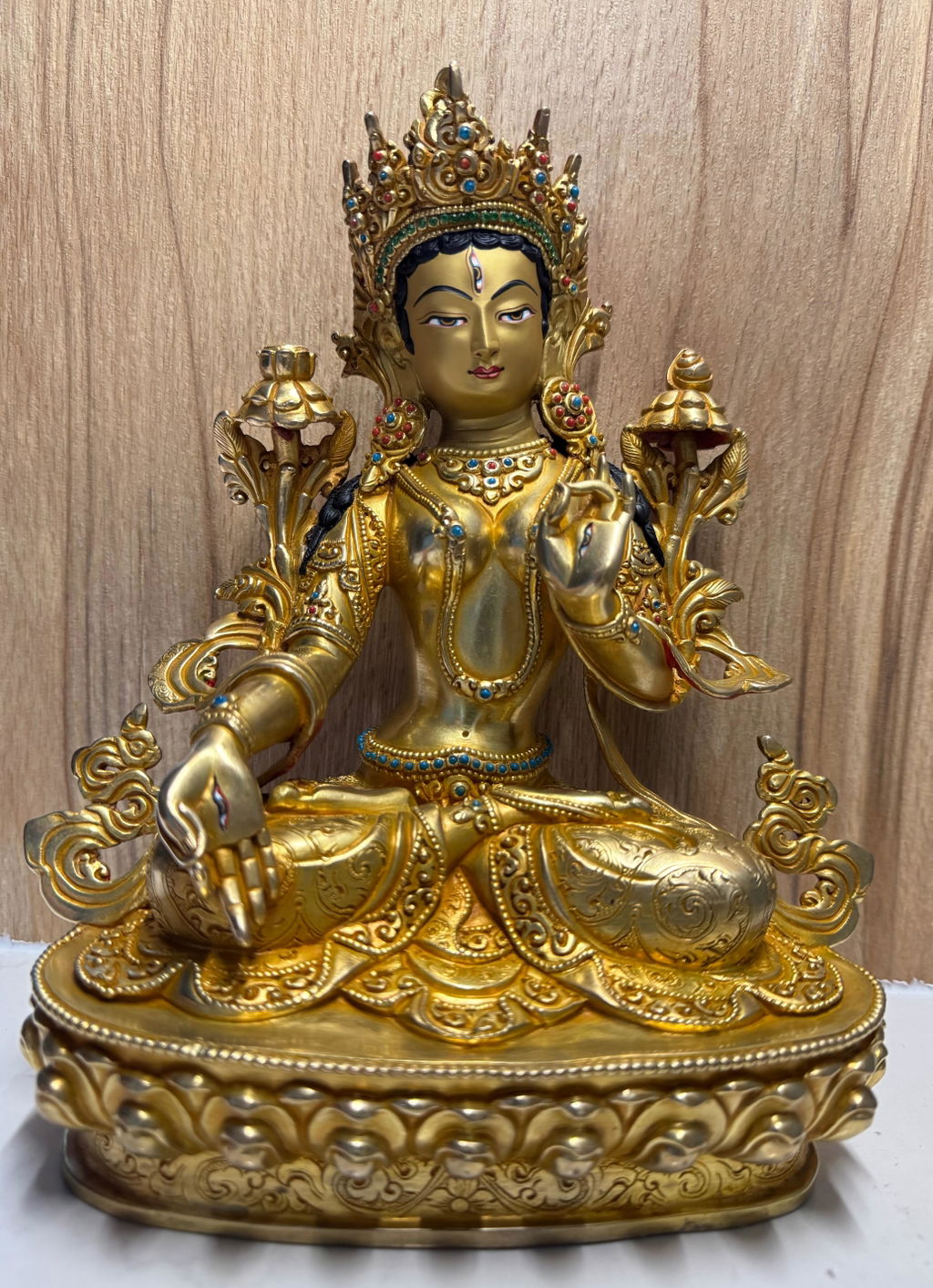
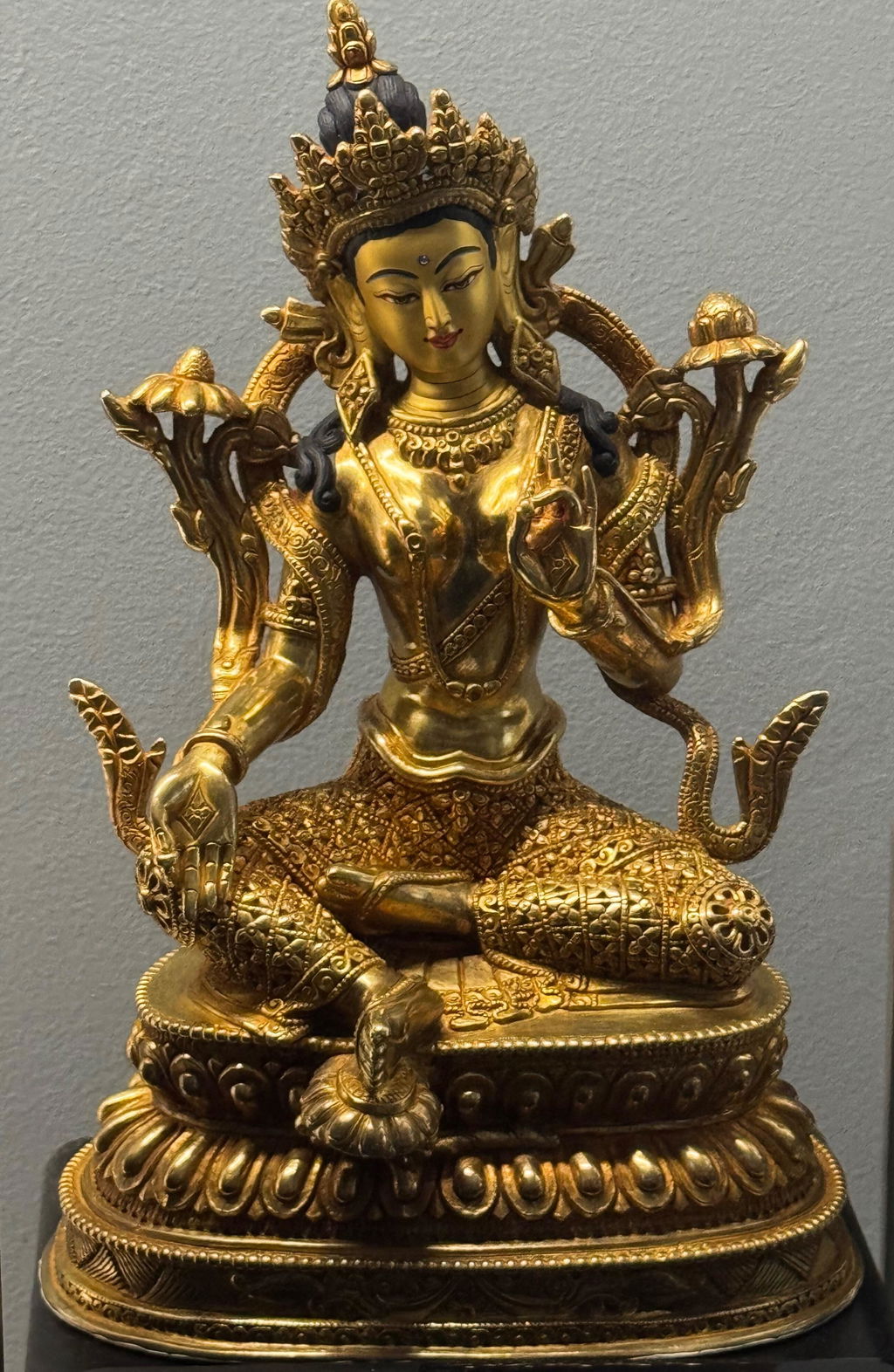
Saraswati is most commonly depicted as a beautiful, serene woman dressed in pure white, seated on a white lotus or a swan. Her appearance carries deep symbolic meaning:
White clothing & white lotus: Symbolize purity, truth, and knowledge untainted by ego or desire.
Four arms: Represent her omnipresence and ability to bestow blessings in all directions.
Veena (musical instrument): Represents the arts, music, and creative expression.
Book (scripture): Represents sacred knowledge, learning, and the Vedas.
Japamala (rosary/prayer beads): Represents meditation, concentration, and spiritual power.
Water pot (kamandalu): Symbolizes purification, the creative force, and the sacred Saraswati River.
Swan (Hamsa): Represents wisdom, discrimination between good and evil, and the ability to separate the eternal from the temporary.
Peacock: Sometimes associated with Saraswati, representing the beauty of true knowledge when it blossoms.
What Does Goddess Saraswati Represent?
Saraswati is the divine force behind every form of intellectual and creative achievement. She is worshipped as the patron goddess of:
Students and scholars — for academic success and sharp intellect
Musicians and artists — for creative inspiration and mastery
Writers and poets — for the gift of eloquent expression
Spiritual seekers — for the wisdom to discern truth from illusion
Teachers and scholars — for the light of knowledge to guide others
In a broader philosophical sense, Saraswati represents the idea that true power comes from knowledge, not wealth or physical strength. Her pure white attire contrasts with Lakshmi's golden hues, suggesting that wisdom is greater than material prosperity.
Saraswati in Hindu Scriptures
Saraswati is mentioned in some of Hinduism's most sacred texts:
In the Rigveda
The Rigveda praises Saraswati as a mighty, flowing river that nourishes the land and a divine force that inspires wisdom. Several hymns are dedicated to her in this ancient text.
In the Puranas
The Puranas expand Saraswati's identity to include her role as Brahma's consort and the goddess of all creative arts. The Devi Bhagavata Purana, in particular, gives detailed accounts of her nature and powers.
In the Mahabharata
Saraswati is invoked as a goddess who grants eloquence, intelligence, and clear thinking to warriors, poets, and scholars seeking divine favor before great endeavors.
Why is Saraswati So Important in Hinduism?
Saraswati holds a central place in Hinduism because she represents the spiritual dimension of knowledge. In Hindu philosophy, knowledge (Jnana) is considered the highest pursuit of human life — the path to liberation (Moksha). Saraswati is the divine source of this liberating wisdom.
She is also associated with Vak, the sacred power of speech and language making her the source of all sacred scriptures, prayers, and mantras. Without her grace, learning becomes shallow and speech becomes meaningless.
Saraswati Across Cultures
Saraswati is not only worshipped in India. She is venerated in Nepal, Sri Lanka, Indonesia, Japan (as Benzaiten), Myanmar, Cambodia, Thailand, and Bali, demonstrating her profound influence across Asian spiritual traditions.
Conclusion
Goddess Saraswati is far more than a religious figure — she is the timeless symbol of humanity's highest aspirations: the pursuit of knowledge, the love of art, and the power of wisdom. Whether you worship her devoutly or simply admire her philosophy, Saraswati reminds us that the greatest wealth we can possess is the light of understanding.






Share:
Yidam Kalachakra: Meaning of the Tantric Deity in Vajrayana Buddhism
Green Tara and White Tara: Meaning, Symbolism & Iconography | Nidhiratna