

Saga Dawa 2026: The Spiritual Meaning, Sacred Rituals & Power of Buddhism's Holiest Month

A month when every prayer, every act of kindness, every moment of mindfulness is multiplied 100,000 times in merit.
Saga Dawa Düchen — May 31, 2026There are moments in the spiritual calendar that carry a weight unlike any other days and months when the veil between the ordinary and the sacred seems to thin, when devotion feels closer, more immediate, more alive. In Tibetan Buddhism, Saga Dawa is that month.
Known as the "Month of Merits," Saga Dawa is the holiest period in the entire Tibetan Buddhist year. It falls during the fourth month of the Tibetan lunar calendar — the month when the sacred star Saga rises in the sky, and it reaches its luminous peak on the full moon of the 15th day, known as Saga Dawa Düchen.
But Saga Dawa is not merely a date. It is not simply a festival. It is a living invitation — an entire month in which every prayer, every act of kindness, every moment of mindfulness carries a weight that Buddhist tradition says is multiplied 100,000 times in spiritual merit. In this extraordinary month, how you think, how you speak, and how you act matter more than at any other time of year.
To understand Saga Dawa is to touch the very heart of what it means to walk a Buddhist path.
The Three Sacred Events Saga Dawa Honors
Saga Dawa is called the "Triple Blessed Festival"—and with good reason. It commemorates not one, but three of the most transformative events in the life of Gautama Buddha, all believed to have occurred within this single sacred lunar month:
First Sacred Event
The Birth of the Buddha — The Arrival of Light

In the gardens of Lumbini, in what is now Nepal, a prince named Siddhartha Gautama was born — and with him, the possibility of liberation for all sentient beings entered the world. His birth was recognized as the arrival of a Bodhisattva who had trained across countless lifetimes to return and show humanity the way out of suffering.
Saga Dawa asks us: What is being born in me? What seed of awakening am I nurturing?
Second Sacred Event — Saga Dawa Düchen
The Enlightenment of the Buddha — The Awakening Under the Bodhi Tree

After years of seeking, Siddhartha Gautama sat beneath a Bodhi tree in Bodh Gaya, India, and resolved not to rise until he had found the answer to suffering. As the full moon rose, he attained complete enlightenment. The Four Noble Truths crystallized within him. The cycle of suffering had a cause — and it had an end.
Saga Dawa asks us: What illusions are you ready to release? What truth are you ready to see clearly?
Third Sacred Event — Saga Dawa Düchen
The Parinirvana of the Buddha — Liberation Beyond Death

Also on the full moon, Tibetan Buddhists honor the Parinirvana of the Buddha — his final passing into the complete nirvana from which there is no return. In Kushinagar, surrounded by his disciples, the Buddha passed away peacefully. His final words are among the most powerful in all of spiritual literature:
"All conditioned things are impermanent. Work out your salvation with diligence."
Saga Dawa asks us: Am I using this life well? Am I moving toward liberation?
The Spiritual Power of the "Month of Merits"
Why does Saga Dawa carry such extraordinary spiritual power? The answer lies in a foundational Buddhist understanding of karma and merit — the law of cause and effect as it applies to the mind and spirit.
In Tibetan Buddhist teaching, merit (Sanskrit: puṇya; Tibetan: sonam) is the positive energy accumulated through virtuous thought, speech, and action. Merit is not a reward handed down from above — it is a natural consequence, like warmth following sunlight. Every compassionate act, every sincere prayer, every moment of genuine mindfulness generates merit that shapes the mind, influences future conditions, and moves the practitioner closer to liberation.
During Saga Dawa, the karmic potency of every action is multiplied astronomically — good deeds 100,000-fold — making the month a time of both extraordinary opportunity and serious mindfulness.— Tibetan Buddhist Teaching
This is why Saga Dawa is not merely a time for celebrating the Buddha externally. It is above all a time for radical inner practice — for bringing one's full heart and attention to the path.
Sacred Spiritual Practices During Saga Dawa
Deepened Meditation and Prayer
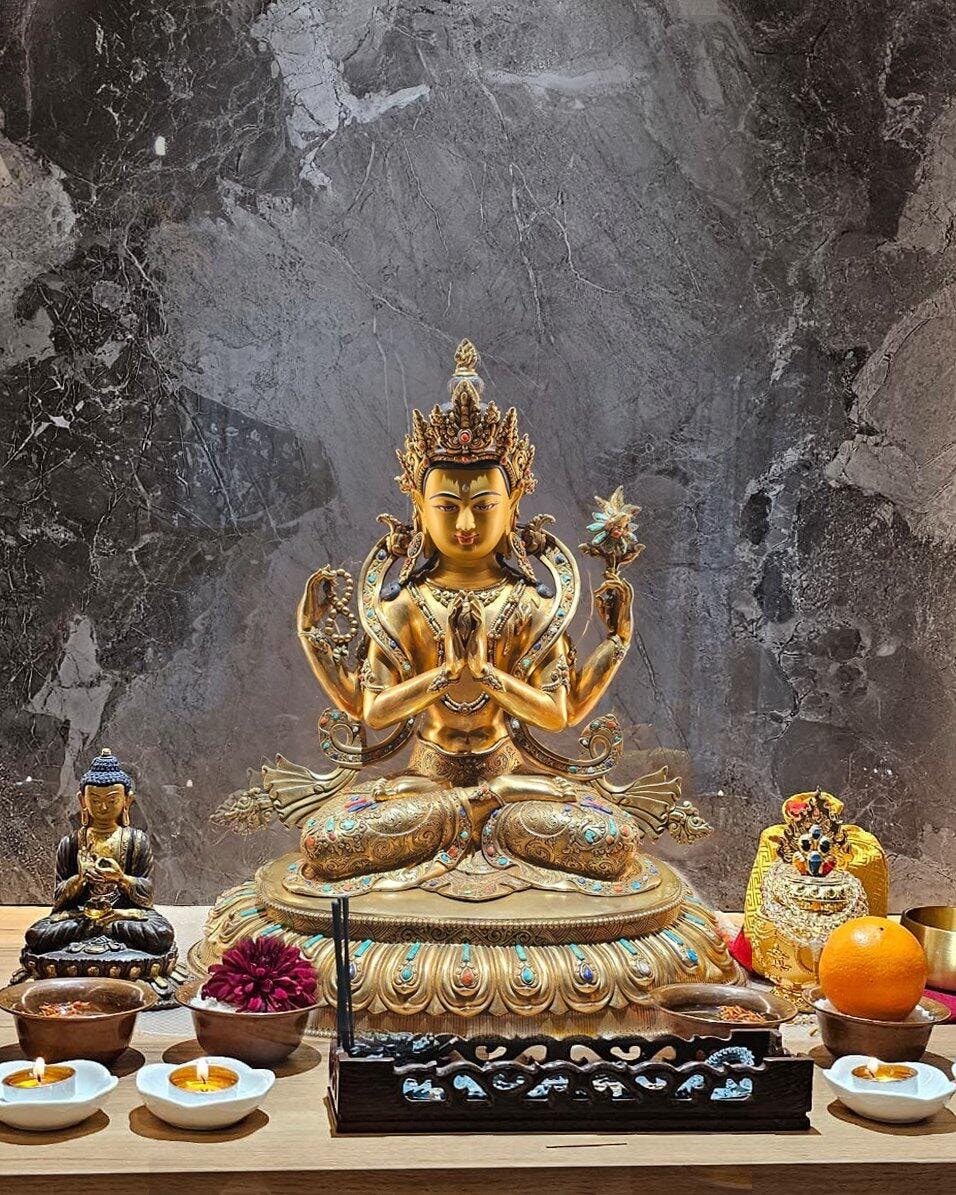
Saga Dawa is the month when serious practitioners intensify their meditation retreats, extend their daily sitting practice, and commit to deeper study of the Dharma. The most commonly recited mantra — Om Mani Padme Hum — the mantra of Avalokiteshvara, the Bodhisattva of Compassion — fills the air of every sacred site. Each repetition purifies the mind, generates compassion, and contributes to the liberation of all sentient beings.
- Establish or deepen a daily meditation practice
- Engage in mantra recitation with focused intention
- Study the Four Noble Truths and the Eightfold Path
- Dedicate the merit of all practice to the liberation of all beings
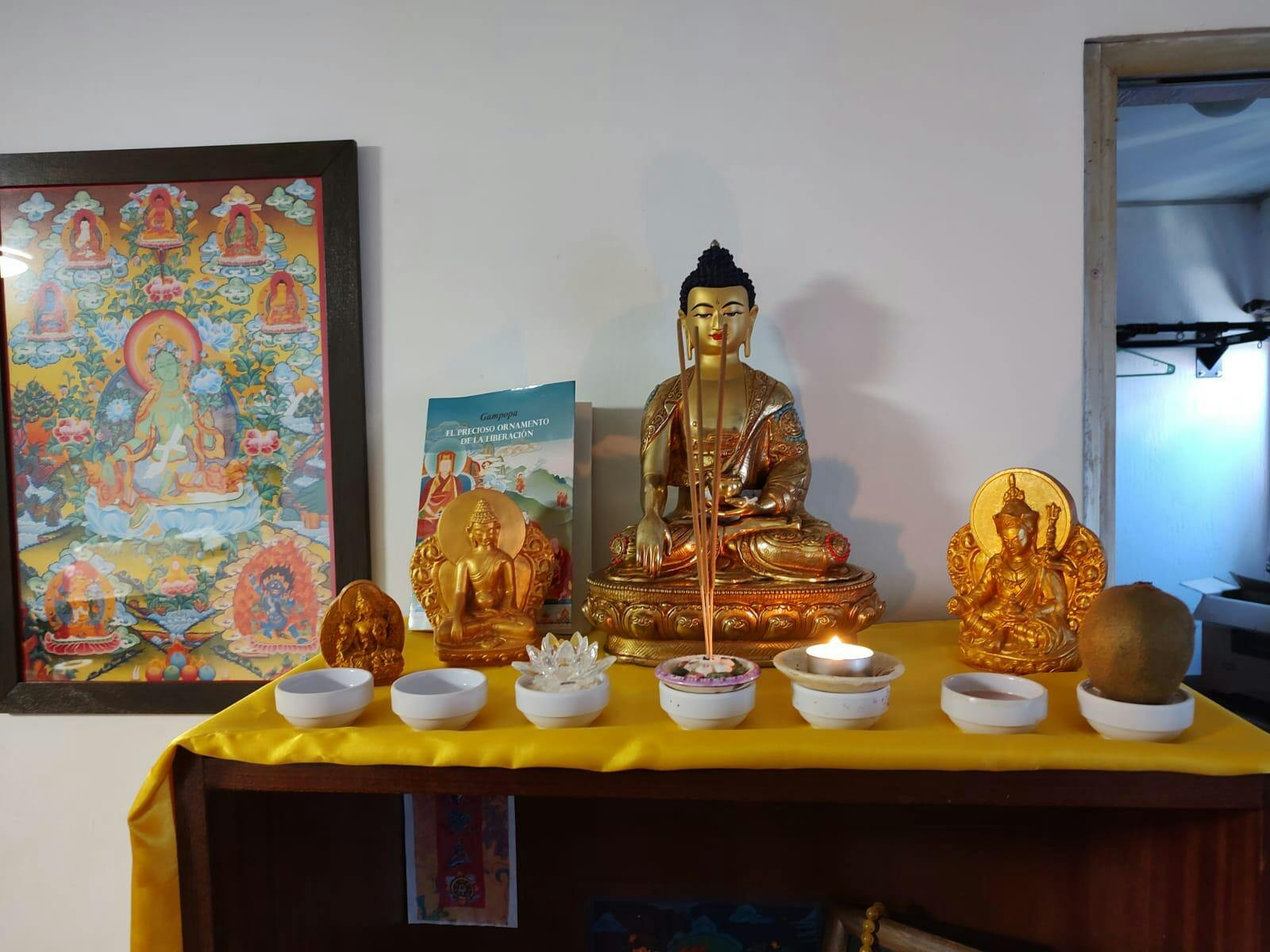
Lighting Butter Lamps — Illuminating the Darkness of Ignorance
One of the most central and beautiful rituals of Saga Dawa is the offering of butter lamps. The butter lamp is not simply a pretty offering. It carries profound symbolic meaning rooted in Buddhist philosophy. The darkness the lamp dispels represents ignorance (avidyā) — the fundamental confusion about the nature of self and reality that lies at the root of all suffering. The flame itself represents wisdom (prajñā) — the clear seeing that liberates.
When you light a butter lamp during Saga Dawa, you are enacting a vow: to bring the light of understanding into the darkness of your own mind, and by extension, to illuminate the world for others.
Releasing Animals — The Practice of Radical Compassion
During Saga Dawa, one of the most moving spiritual practices is the release of animals — fish returned to rivers, birds freed from cages — as an explicit act of compassion toward all sentient beings. This practice flows directly from Buddhism's foundational ethical commitment: ahimsa (non-harming).
To release an animal during Saga Dawa is to make compassion physical and immediate. It is to look into another being's eyes and recognize: You, like me, wish to live. You, like me, wish to be free from suffering.
Almsgiving and Generosity — Dana Practice
Generosity (dana) is among the highest virtues in Buddhist practice, and Saga Dawa is the most powerful time to practice it. Many Tibetan Buddhists make offerings to monasteries, give alms to the poor, donate food to the hungry, and support those in need throughout the month.
The spiritual logic is simple but profound: attachment is one of the primary roots of suffering. Giving — especially giving without expectation of return — directly confronts attachment, loosens its grip, and expands the heart. Generosity during Saga Dawa does not require great wealth. It requires only an open hand and an open heart.
Abstaining from Harm — Ethical Purification
Many Tibetan Buddhists observe vegetarianism or complete fasting during Saga Dawa as an expression of their commitment to non-harming. Beyond diet, Saga Dawa is a time for ethical purification across all areas of life:
- Refraining from harsh, divisive, or dishonest speech
- Avoiding actions that cause harm to others
- Practicing patience in moments of frustration
- Choosing kindness in every interaction
This ethical discipline is the natural expression of a mind that has glimpsed the interconnectedness of all beings — a mind that recognizes: When I harm you, I harm myself. When I help you, I help myself.
Kora — The Spiritual Walking Meditation
Kora (circumambulation of sacred sites) is one of the most ancient and central spiritual practices of Tibetan Buddhism. During Saga Dawa, practitioners walk clockwise circuits around temples, monasteries, and sacred sites — not as exercise, but as embodied prayer.
Each step generates merit, purifies negative karma, and deepens the practitioner's connection to the sacred. The act of moving around a sacred center embodies a fundamental spiritual understanding: the sacred is not a fixed point we arrive at, but a living reality we circle toward, again and again, through all the turns of our life.
The Significance of the Full Moon — Saga Dawa Düchen
In Buddhist cosmology, the full moon holds unique spiritual significance. It is the time of greatest lunar luminosity — when the reflected light of the sun reaches its fullest expression — and it is understood as a time of heightened spiritual receptivity and power.
Saga Dawa Düchen is considered the most spiritually charged night of the entire year. On this night, monks chant through the darkness. Butter lamps glow in every monastery. Practitioners sit in meditation, dedicating the merit of their practice to all sentient beings across all realms of existence.
For practitioners, this is a night to be awake — not merely awake in body, but awake in spirit. To sit, to breathe, to open to the awareness that the Buddha described: the luminous, spacious, compassionate nature of mind itself.
May 31, 2026 — Saga Dawa DüchenHow to Observe Saga Dawa Wherever You Are
You do not need to be in a monastery or on a pilgrimage to observe Saga Dawa meaningfully. The sacred month is an inner season as much as an outer one, and its practices can be taken up wherever you are.
Daily Practice — The Whole Month
- Begin each morning with meditation or silent prayer
- Recite Om Mani Padme Hum 108 times, dedicating merit to all beings
- Perform one intentional act of generosity or kindness each day
- Abstain from harming any living being through action, words, and thought
- Light a candle as a symbolic offering of wisdom into the darkness
- Study the Dhammapada or other Buddhist teachings
- Before sleep, reflect: What moved me toward liberation today?
Saga Dawa Düchen — May 31, 2026
- Set aside extended time for meditation or prayer
- Make a meaningful offering — to a monastery, charity, or person in need
- Release something you are attached to — even symbolically
- Observe vegetarianism or fasting if possible
- Sit in meditation as the full moon rises
- Dedicate all merit of your day to the liberation of all sentient beings
- Rest in gratitude for this rare and precious human life
The Universal Teaching of Saga Dawa
What makes Saga Dawa extraordinary is not simply that it honors the Buddha — it is that the Buddha's story is a mirror for our own.
He was born into confusion and longing, just as we are. He sought happiness in the wrong places, just as we do. He turned inward, faced his own mind with honesty and courage, and found — beyond all the noise and grasping — a peace that cannot be shaken.
His birth, enlightenment, and parinirvana are not distant historical events. They are the arc of every sincere spiritual life — arriving into consciousness, awakening to what is true, and ultimately releasing what we never truly were.
Saga Dawa is the month that whispers this truth more loudly than any other. It is the month that says: You, too, have Buddha-nature. You, too, can wake up. Begin now.
Frequently Asked Questions: Saga Dawa Spiritual Meaning
What does Saga Dawa mean spiritually?
Saga Dawa is the holiest month in Tibetan Buddhism, during which the merit of every virtuous action is believed to be multiplied 100,000 times. It honors the birth, enlightenment, and parinirvana of Gautama Buddha — making it a month of intensified spiritual practice, compassion, and inner purification.
How does Saga Dawa multiply merit?
Tibetan Buddhist teaching holds that during Saga Dawa, the karmic power of all actions — positive and negative — is amplified. Good deeds generate vastly more merit, and harmful actions also carry heavier consequences. This understanding motivates practitioners to be especially mindful, compassionate, and generous throughout the month.
What is the most important spiritual practice during Saga Dawa?
All virtuous practices are amplified, but the most emphasized are: meditation, mantra recitation (especially Om Mani Padme Hum), compassionate action, generosity, abstaining from harm, and dedicating one's merit to all sentient beings.
Can non-Buddhists observe Saga Dawa spiritually?
Absolutely. The values at the heart of Saga Dawa — compassion, mindfulness, generosity, non-harming, and the contemplation of impermanence — are universal human values. Anyone seeking to deepen their inner life can engage meaningfully with this sacred month.
What is Buddha-nature, and why is it relevant to Saga Dawa?
Buddha-nature (Tathāgatagarbha) is the Mahayana Buddhist teaching that every sentient being possesses the inherent potential for full awakening. Saga Dawa — by honoring the Buddha's journey from ordinary human to fully enlightened being — affirms this potential in all of us.
A Month to Remember What Matters
In a world that moves fast and demands much, Saga Dawa offers a rare and precious invitation: slow down. Look inward. Act from the heart.
The Buddha was born, awoke, and passed — and in doing so, left behind a lamp that has illuminated the darkness of human confusion for over 2,500 years. Every Saga Dawa, that lamp is held up again, and its light is offered to anyone willing to see.
May this Saga Dawa 2026 bring you clarity in confusion, compassion in hardship, and the quiet, unshakeable peace that lies at the center of all awakening.
Om Mani Padme Hum


Share:
Akasha Vajrayogini: Meaning and Symbolism in Tibetan Buddhism
Yidam Kalachakra: Meaning of the Tantric Deity in Vajrayana Buddhism