

Vajrayogini: The Fierce Goddess of Wisdom, Transformation, and Liberation
Vajrayogini is one of the most fascinating icons of Tibetan Buddhism-an embodiment of feminine enlightened energy and the fiercest guide to wisdom, transformation, and liberation. Sculpted in bold curves with sacred symbols, she is much more than an object of devotion; she is honoured as a Tantric Goddess of Transformation, worshipped for her blazing radiance as the embodiment of supreme wisdom and destroyer of time and illusion.
For centuries, her worship has drawn monks, yogis, and spiritual seekers from Nepal's sacred Sankhu Valley, where her presence is deeply etched in heritage, through meditation halls and altars in every corner of the world. Her red, dynamic form activates the inner fire of awareness in the hearts of practitioners, awakening them to the fact that liberation can be achieved only by realizing oneself without fear.
Even under the cloudy atmosphere of ego and attachment, the Vajrayogini statue reveals the Great Unchanging through which each soul traverses the unchanging formlessness and duality into the gleaming freedom of pure consciousness.
Who is Vajrayogini?

A Tantric Goddess of Transformation
As far as Tibetan Buddhism is concerned, Vajrayogini is at the heart of it all. She is regarded as a Dakini, a celestial being who embodies the wisdom of transformation. Her name itself carries profound meaning:
- "Vajra" stands for indestructibility, diamond-like clarity,
- "Yogini" refers to a female practitioner, a female embodiment of yoga, or union.
So, together, Vajrayogini means "Indestructible Goddess of Inner Union."
Her icon, naked, red, and powerful, must mean the freedom of pure consciousness from fear and convention.
She represents the destruction of illusion and cuts through ignorance and ego with even more fierce compassion. Her appearance of terrifying beauty reminds practitioners that the path of liberation sometimes requires them to look deep into their own shadows. Her blessings transform all passionate attachment into pure, discerning awareness and ecstasy.
A Central Figure in the Path to Liberation
Vajrayogini embodies the ultimate goal of all Tantric practice-a realization of reality that is truly beyond attachment and illusion. In the Anuttarayoga Tantra, the ultimate form of Vajrayana practice, she is conceptualized as the ultimate level—the highest level of enlightenment—which brings everything to a luminous spiritual freedom.
Historical Origins and Lineage Transmission
Vajrayogini practices are believed to originate from Indian mahasiddhā, such as Naropa and Maitripa (10th-11th Century CE). From their visions of experience, her practice spread to Tibet and has been preserved in lineages of the Sakya, Kagyu, and Gelug traditions. Such a lineage transmission focuses on the initiation, visualization, mantra, and meditation being directly from the teacher to the student.
Why Vajrayogini Matters in Modern Spirituality
In this time of distractions and emotional turbulence, Vajrayogini teaches us that the first change has to happen inside. She wants practitioners to utilise every feeling—anger, desire, confusion—as fuel for enlightenment. Her exercise helps present-day seekers to gain courage in the face of their inner chaotic turbulence and is filled with compassion toward themselves as they do it.
The Power of Fierce Feminine Wisdom
Unlike the passive traits of the divine feminine, Vajrayogini stretches out fierce compassion. Her fiery energy burns illusions, transforming ignorance into clarity. To be truly engaging in wisdom is not walking away fearfully from reality, but confronting it fearlessly.
Symbolism of the Vajrayogini Statue
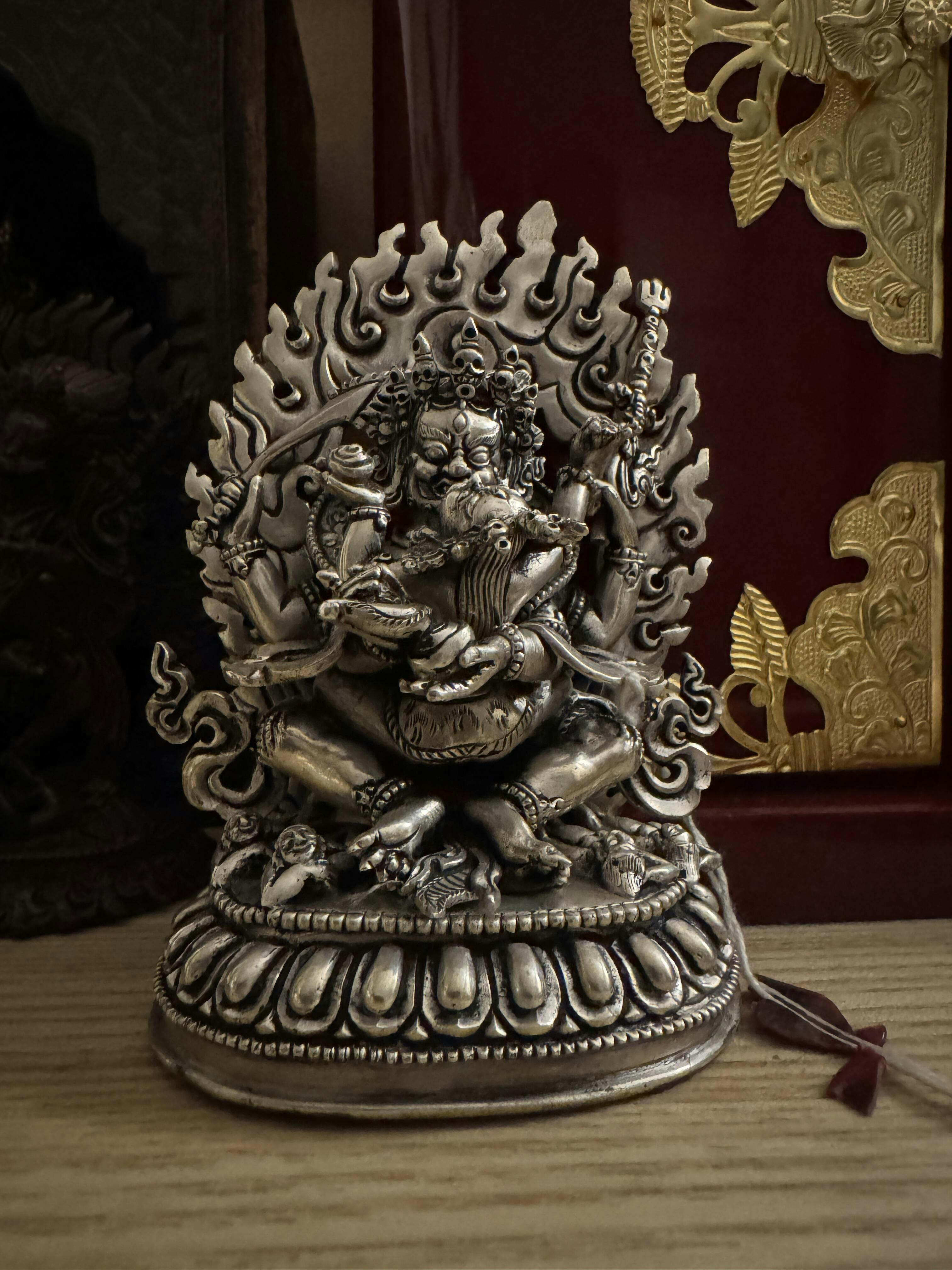
The statues of Vajrayogini are filled with deep symbolism, which depicts the profound philosophical ideas associated with Tibetan Buddhism. Everything about from her posture down to her ornaments-delivers a message of transformation.
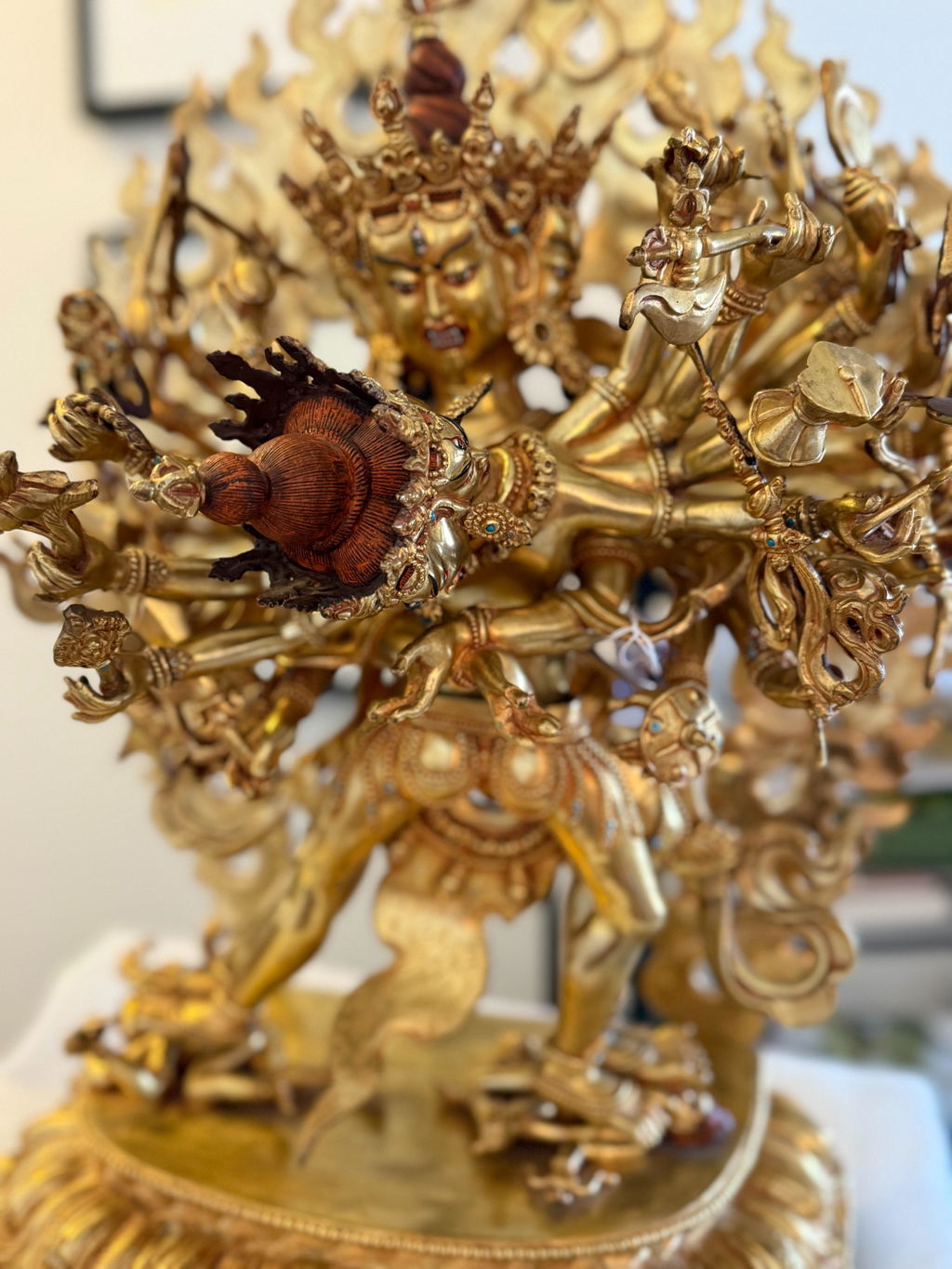
1. The Dancing Posture
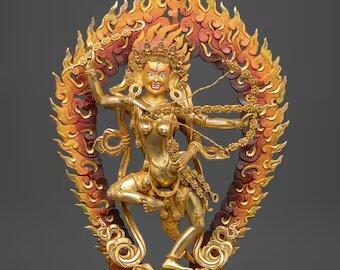
Vajrayogini is made to dance in an active but upright way- symbolizing freedom from worldly constraints. Her dance on a corpse symbolizes transcending the ego and the two main obstacles standing in the way of enlightenment.
2. The Kapala (Skull Cup) and Kartika (Curved Knife)
-
The Kapala (Skull Cup), which is filled with either ‘nectar or blood,’ symbolizes the absorption of negative emotions, which are transformed into wisdom.
-
The Kartika (Curved Knife) symbolizes cut-through attachment, illusion, and egoic delusion.
-
The Khatvanga (Tantric Staff) symbolizes union with Chakrasamvara, the masculine counterpart symbolizing method.
Together, these instruments illustrate Vajrayogini's fearless embrace of truth and her ability to transform suffering into insight.
3. The Red Color
Her red body symbolizes wisdom with passion-the fire that burns ignorance and purifies the mind. Red is a color of power, life, and compassion- indicating that the path of Vajrayogini is active and alive.
4. The Garland of Skulls
She wears a necklace of fifty human heads, representing the purification of the fifty syllables of the Sanskrit alphabet, which in turn signifies the transformation of all forms of speech and expression into enlightened communication.
Vajrayogini as the Dakini of Wisdom
Vajrayogini is considered the supreme Dakini, the embodiment of feminine wisdom in its most awakened form. Dakinis are considered messengers of transcendence who channel the worldly into the spiritual.
Wisdom of Transformation
Vajrayogini, as the Dakini of Wisdom, brings about the transforming power of awareness. Its energy is not destructive in a negative way; it destroys ignorance to reveal the pure consciousness within.
Within her form, practitioners come to awaken their own innate wisdom by turning her energy toward their own spiritual advancement and mental clarity.
Vajrayogini: The Symbol of Feminine Strength
Vajrayogini radiates an image of fierce feminine strength, a force interlaced with compassion and determination. She embodies the awakened feminine principle, nurturing and fearless in equal measure.
The Role of Female Wisdom in Tantric Buddhism
‘In Tantric tradition, female energy, or Shakti, plays a crucial part in achieving spiritual enlightenment.’ As a symbol, ‘Vajrayogini symbolizes the integration of wisdom, which is female, and method, or male, a balance that brings about enlightenment.
Instead, the strength lies in transformation by awareness and compassion. Men and women can achieve a state of self-equilibrium and empowerment by accessing the energy present in this character.
Crucial Role in Tantric Practices
Vajrayogini has a predominant role in Anuttarayoga Tantra most exalted state of meditation practice in Vajrayana Buddhism. She is mostly envisioned as the consort of Chakrasamvara, and their merging is a symbol of the union of wisdom and the very heart of enlightenment.
The Significance of Vajrayogini in Tibetan Buddhism
The role and significance of Vajrayogini are intricately intertwined with Tibetan Buddhism as a whole. She is perceived as the female Buddha, worshipped as a symbol of compassion and transformative power.
Revered as a Female Buddha
In the temples and monasteries of Tibet, Vajrayogini is worshipped as the very essence of the enlightened mind in female form. The presence of enlightenment in gender-neutral terms reaffirms the equality and strength of feminine realization.
Vajrayogini Teachings on Transformation
The teachings of Vajrayogini are centred around cultivating pure consciousness out of the ordinary mind. She teaches how every experience, whether happiness, pain, or desire, can be a fueling agent for enlightenment.
Mantra and Meditations
The practice involves visualizing oneself as the goddess of light-who embodies the qualities of fearlessness and wisdom. This act of visualization trains the mind to manifest those enlightened qualities while in everyday life.
Her Sacred Mantra:
“OM VAJRAYOGINI HUM PHAT”
Each syllable has a purifying frequency:
OM – represents the universal purity
VAJRAYOGINI – embodies timeless feminine wisdom
HUM – unifies wisdom and compassion
PHAT – immediate cutting of illusion
Meditating on the mantra energizes, elevates awareness, and links the practitioner with hundreds of years of blessings from an unbroken lineage.
Path of Fearless Awakening
Vajrayogini inspires practitioners to, instead of resorting to suppression, face fear, passion, and attachment, and transform them into wisdom. She represents the greatest courage to look inward and examine the self, and to set ignorance ablaze with the fire of awareness.
For those seeking an authentic Vajrayogini statue crafted in sacred tradition, Nidhiratna offers guidance, contact us to learn more.
How the Vajrayogini’s Statue Aids Meditation and Healing
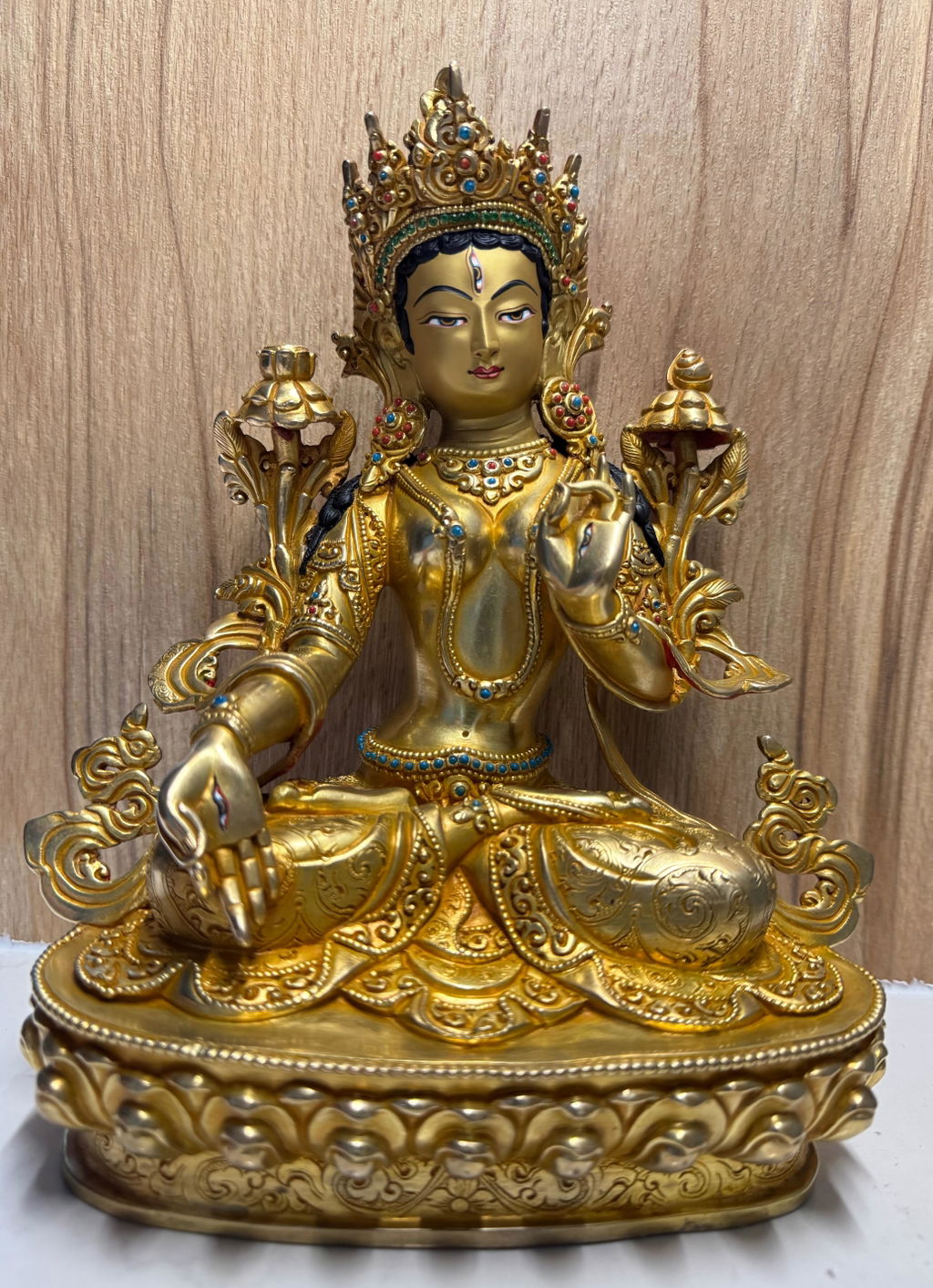
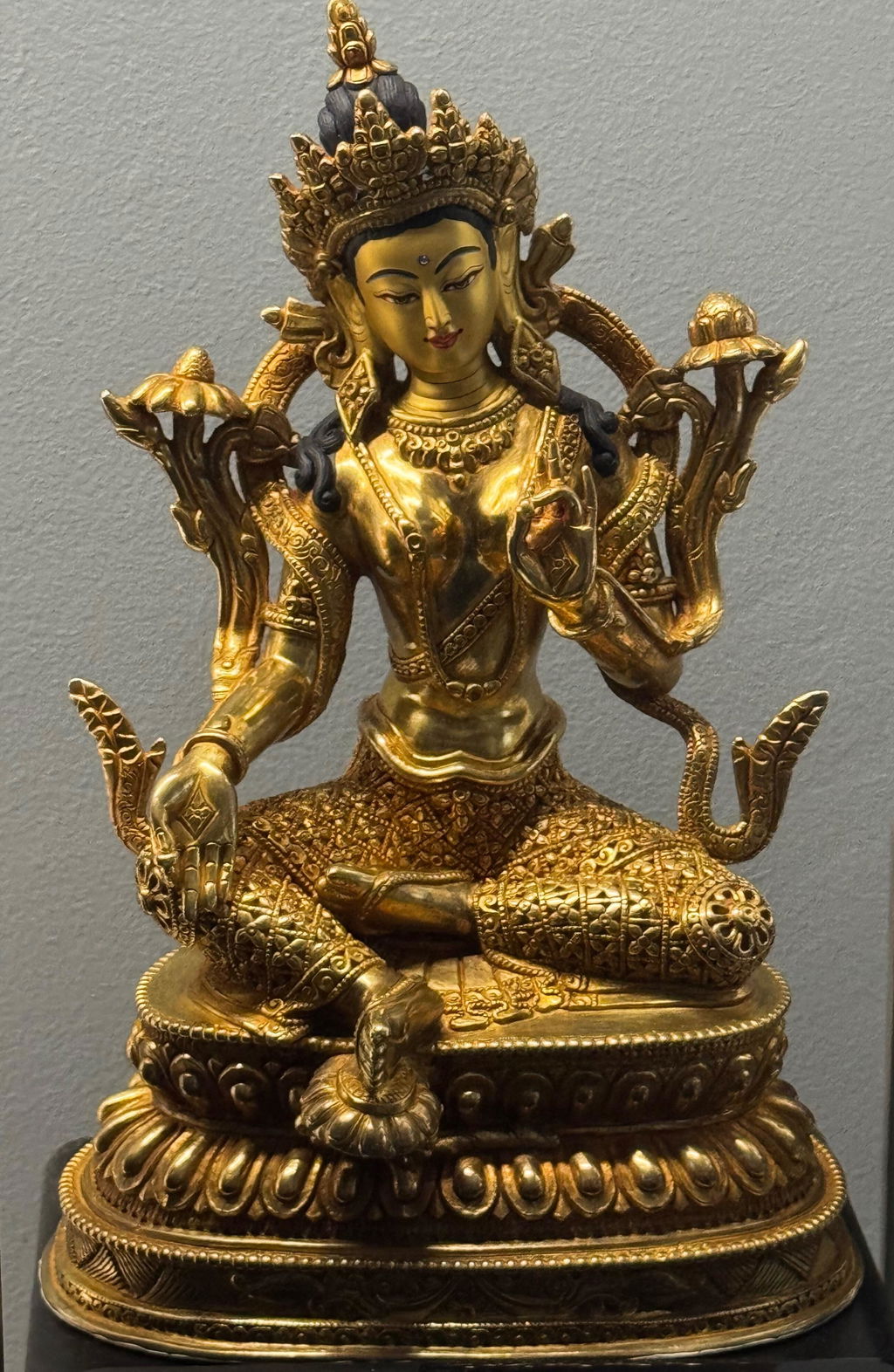
The statue of Vajrayogini is more than just a piece of artistic work; it is a pragmatic charter for meditation and for creating a sacred ambience.
-
Visual Meditation: Meditating on her appearance attracts the transformation power, as this helps the practitioner achieve clarity and compassion.
-
Emotional Healing: Her images dissolve emotional disturbance, establishing inner harmony.
-
Devotional Symbol: Putting her statue in one's sacred space is a daily inspiration to everyone for courage, transformation, and freedom.
Conclusion
The Vajrayogini statue is more than just a sacred icon; it is an active embodiment of fearless wisdom and divine feminine energy. Her burning energy urges practitioners to burn illusion, embrace truth, and recognize the indestructible essence of their own consciousness.
For the aspirants on this spiritual path, Vajrayogini acts as a mirror, as well as a mentor, projecting transformation into the potentiality of every human heart.
One can visit Nidhiratna- an e-commerce entity dealing in selling and buying Buddha statues from around the globe, made with devotion and spiritual accuracy-for authentic Vajrayogini statues and Buddhist artworks.
Frequently Asked Questions(FAQs)
1. What is the importance of Vajrayogini in Tibetan Buddhism?
Vajrayogini is the principal deity of the Anuttarayoga Tantra, representing the union of bliss and emptiness. She is also the ultimate wisdom that leads to enlightenment.
2. How does the Vajrayogini mantra assist in self-transformations?
Chanting her mantra helps in the purification of inner obstacles- thereby igniting the fire of awareness for the practitioners to feel transformation from within.
3. What are Vajrayogini's main symbols?
Her corpse pose, skull cup, curved knife, and red body represent the conquest of ego, purification of desire, and ultimate control over illusion.
4. How is Vajrayogini worshipped in Tibetan Buddhism?
Devotees, through visualization practices, making offerings, and reciting mantras, invoke her blessings for the attainment of wisdom, protection, and liberation.


Share:
8 Bodhisattvas in Vajrayana Buddhism: Meaning, Significance, and Spiritual Benefits
Medicine Buddha – The Divine Healer of Body And Mind