

8 Bodhisattvas in Vajrayana Buddhism: Meaning, Significance, and Spiritual Benefits

Bodhisattvas are revered as enlightened beings who have chosen to remain in the cycle of samsara (worldly existence) to guide sentient beings toward liberation. Unlike Buddhas who have attained complete nirvana, Bodhisattvas embody compassion, wisdom, and selfless service, working tirelessly to help others achieve enlightenment. This is why they are called “Bodhisattvas”, which means literally “enlightenment beings”, as their primary purpose is to cultivate and share spiritual awakening with all beings.
In Vajrayana Buddhism, these Bodhisattvas play a central role in Tibetan rituals, meditation, and sacred art, inspiring practitioners to develop inner peace, mindfulness, and spiritual growth. Understanding the 8 most revered Bodhisattvas in Vajrayana Buddhism can deepen your spiritual practice and strengthen your connection to sacred Tibetan statues and thangka paintings, bringing their blessings into your sacred space.
The Eight Bodhisattvas of Vajrayana Buddhism
In Vajrayana Buddhism, the Eight Bodhisattvas hold a central role in meditative practices, rituals, and spiritual guidance. Each of these enlightened beings embodies unique qualities that support practitioners on the path to wisdom, compassion, and liberation. Devotees often meditate on these Bodhisattvas or keep their statues and thangka paintings in sacred spaces to invoke blessings, protection, and spiritual insight.
The Eight Bodhisattvas of Vajrayana Buddhism are:
-
Avalokiteshvara – The Bodhisattva of Compassion
-
Manjushri – The Bodhisattva of Wisdom
-
Vajrapani – The Bodhisattva of Power
-
Samantabhadra – The Bodhisattva of Universal Benevolence
-
Kshitigarbha – The Bodhisattva of the Earth
-
Maitreya – The Future Buddha
-
Akashagarbha – The Bodhisattva of Infinite Space
-
Sarbanivarambiskambin – The Bodhisattva of Removing Obstacles
Each of these Bodhisattvas has a distinct role and personality, and their iconography is rich with symbolic meaning in Tibetan art, rituals, and meditation practices. From Avalokiteshvara’s boundless compassion to Vajrapani’s protective energy, these enlightened beings inspire practitioners to cultivate spiritual qualities and navigate life with wisdom and mindfulness.
1. Avalokiteshvara (Chenrezig) – The Bodhisattva of Compassion

Avalokiteshvara, also known as Chenrezig in Tibetan Buddhism, embodies infinite compassion. Devotees believe Avalokiteshvara hears the cries of all sentient beings and offers guidance toward liberation. His mantra, “Om Mani Padme Hum,” is one of the most famous in Vajrayana. He is invoked by devotees for his blessings, compassion, and guidance.

Click Here To View Our Chenrezig Statue
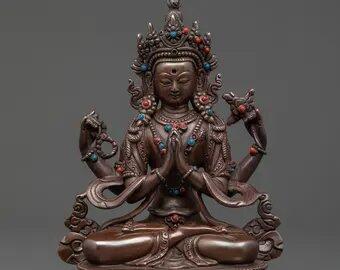
The gold-gilded Four-Armed Chenrezig Statue is a stunning example of Newari artistry, meticulously handcrafted by skilled Nepalese artisans using traditional techniques. Every detail is carefully sculpted and finished with radiant 24K gold gilding, bringing out the statue’s divine presence. This exquisite artwork captures the essence of Avalokiteshvara’s compassion, wisdom, and protective energy, making it a centerpiece for home altars, meditation spaces, or sacred corners, while reflecting the rich heritage of Tibetan Buddhist and Newari craftsmanship.
2. Manjushri – The Bodhisattva of Wisdom

Click to view our Handpainted Manjushri Statue
Manjushri represents transcendent wisdom, often depicted wielding a flaming sword to cut through ignorance. Worshipping Manjushri inspires insight, clarity, and intellectual understanding in spiritual practice. His mantra, “Om Ah Ra Pa Tsa Na Dhih,” is chanted to cultivate wisdom, clarity of mind, and insight, often used during meditation or study sessions.

Click to View our Manjushri Thangka Print
This enlightened presence is beautifully reflected through both Manjushri statues and Manjushri thangka prints. While Manjushri thangka print offers a powerful visual focus for daily practice. The thangka is rendered with meticulous detailing on the crown, ornaments, and flowing silk-like robes, all set against a radiant lotus throne and traditional Buddhist motifs.
This sacred Manjushri thangka print is ideal for study rooms, home altars, and meditation spaces dedicated to the practice of wisdom. Hung on a wall, it becomes a constant reminder of enlightened insight, supporting mantra recitation, Dharma study, and contemplation.
3. Vajrapani – The Bodhisattva of Power

Our Fully Gold-Gilded Vajrapani Statue
Vajrapani embodies the protective power of all Buddhas, shielding practitioners from negative energies. He stands in a fierce posture, holding a vajra (thunderbolt) which symbolises indestructible power and the force of enlightenment. His wrathful appearance is a manifestation of his commitment to protect practitioners from hindrances on their spiritual journey. His mantra, “Om Vajrapani Hum,” invokes his protective energy and inner strength, helping practitioners overcome obstacles and fears on the spiritual path.

Handpainted Vajrapani Dorje Chang Statue
This premium Vajrapani Statue highlights his vivid blue skin, intricate patterns, and wrathful guardianship, symbolising the vast, limitless nature of his power and spiritual protection. It’s perfect for meditation spaces seeking empowerment and protection.
4. Ksitigarbha – The Bodhisattva of Compassion for Souls

Our Premium Gold-Gilded Ksitigarbha Statue
Kshitigarbha, also known as Ti Tsang P’usa, is often portrayed as a young Buddhist monk with a shaved head, wearing simple robes. He holds a staff in one hand, symbolizing the power to open the gates of hell, and a wish-fulfilling jewel in the other, representing the light of wisdom that dispels darkness. The term “Kshitigarbha” means “Earth Treasury,” or “Earth Womb.” He took a Great Vow to help and deliver all beings, especially guiding deceased beings through the intermediate states between death and rebirth and alleviating suffering in the lower realms. His monk’s appearance signifies humility, simplicity, and compassionate guidance for all sentient beings. His mantra, “Om Kshitigarbha Bodhisattva Hum,” is recited for the protection of beings in suffering, guidance for departed souls, and support in times of hardship.

Click Here To View This Statue
The Kshitigarbha Bodhisattva Statue is meticulously handcrafted from copper and finished with a luxurious 24K gold gilding, which portrays him in a peaceful meditative posture, holding his staff and wish-fulfilling jewel, radiating humility, wisdom, and compassionate protection. This premium gold-gilded statue invites blessings, guidance, and protection for family, ancestors, and all beings in need.
Discover authentic 8 Bodhisattvas statues—contact Nidhiratna today.
5. Samantabhadra – The Bodhisattva of Practice and Meditation

The Sanskrit name “Samantabhadra” means “all-pervasive goodness”, highlighting his universal influence across all directions and circumstances. Samantabhadra represents meditation, ethical conduct, and compassionate action. Samantabhadra is known as both a Bodhisattva and a primordial Buddha, depending on the Buddhist tradition. In one form, he is depicted seated on a white elephant, symbolizing steadfastness and spiritual power, while in another, he appears in Yab-yum form with his consort Samantabhadri, representing the union of wisdom and compassion.

Premium Samantabhadra with Consort Statue
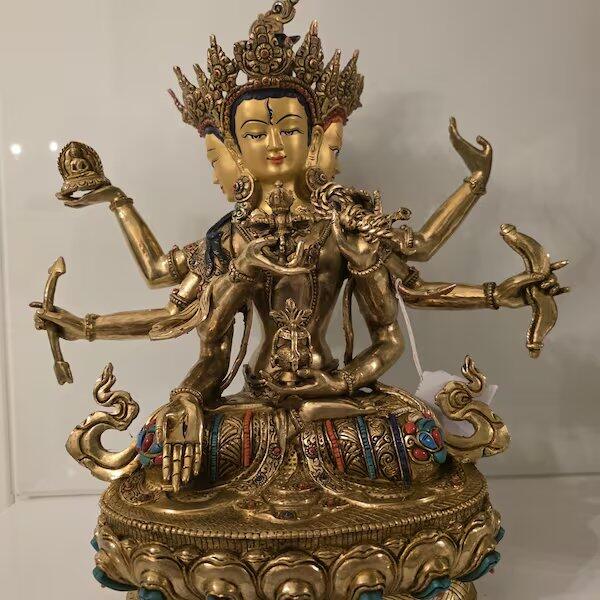
This premium Samantabhadra statue in Yab-yum form is exquisitely gold-gilded, highlighting every intricate detail. The figure radiates divine presence, symbolizing the union of wisdom and compassion. Samantabhadri, his consort, complements the representation of primordial enlightenment as Adi Buddha.
6. Akashagarbha – The Bodhisattva of Infinite Space

Akashagarbha embodies boundless wisdom, vastness, and the capacity to remove obstacles to learning and spiritual growth. His name means “Womb or Treasury of Space”, reflecting his infinite nature. Devotees meditate on Akashagarbha to cultivate wisdom, memory, and clarity of mind, and to gain guidance in overcoming challenges on the spiritual path. His mantra, “Om Akashagarbha Hum,” is chanted for enhanced wisdom, memory, spiritual guidance, and the removal of obstacles.
7. Sarbanivarambiskambin – The Bodhisattva of Removing Obstacles

Sarbanivarambiskambin embodies the power to remove obstacles, hindrances, and negative influences, supporting practitioners on their spiritual journey. Revered in Vajrayana, this Bodhisattva is invoked to overcome challenges in meditation, study, and daily life, ensuring the smooth progress of spiritual practice. His mantra, “Om Sarbanivarambiskambin Hum,” is recited to eliminate obstacles, cultivate inner strength, and gain spiritual protection.
8. Maitreya – The Bodhisattva of the Future Buddha

Maitreya, also called Jampa in Tibetan, is prophesied as the future Buddha who will appear on Earth to restore the teachings of the Dharma when they have faded. He embodies loving-kindness (maitri) and symbolizes hope and compassion for the future, continuing the Buddha’s message and bringing a new golden age for humanity. Devotees meditate on Maitreya to cultivate loving-kindness, hope, and positive aspirations for themselves and all sentient beings.
Maitreya is typically depicted seated on a throne, representing his future role as a fully enlightened Buddha. In his hands, he holds the Dharma wheel and a vase of nectar, symbolizing his readiness to teach and the vitality of the teachings he will offer. His presence in statues and thangka prints serves as a reminder to prepare spiritually for his eventual return and to cultivate compassion, patience, and devotion in daily life.
At Nidhiratna, we honor this spiritual heritage by offering authentic Bodhisattva statues and thangkas, handcrafted by skilled Nepalese artisans using traditional techniques. Each statue reflects the essence of these divine beings, making them perfect for home altars, meditation spaces, or as gifts for spiritual seekers worldwide.
Share:
Guru Rinpoche : The Eternal Guide Who Transforms Darkness into Light
Vajrayogini: The Fierce Goddess of Wisdom, Transformation, and Liberation