

Vajrasattva : The Secrets of Spiritual Purification and Enlightened Mind
Have you ever felt the weight of an invisible burden of past regrets and stress, a cloud that will not lift? Modern life can be a very dusty experience, while mental and emotional "dust" gathers and obscures the light of your being. In Vajrayana Buddhism, that spiritual load may be lightened with tremendous help from an unusual source: Vajrasattva, the Buddha of Purification.
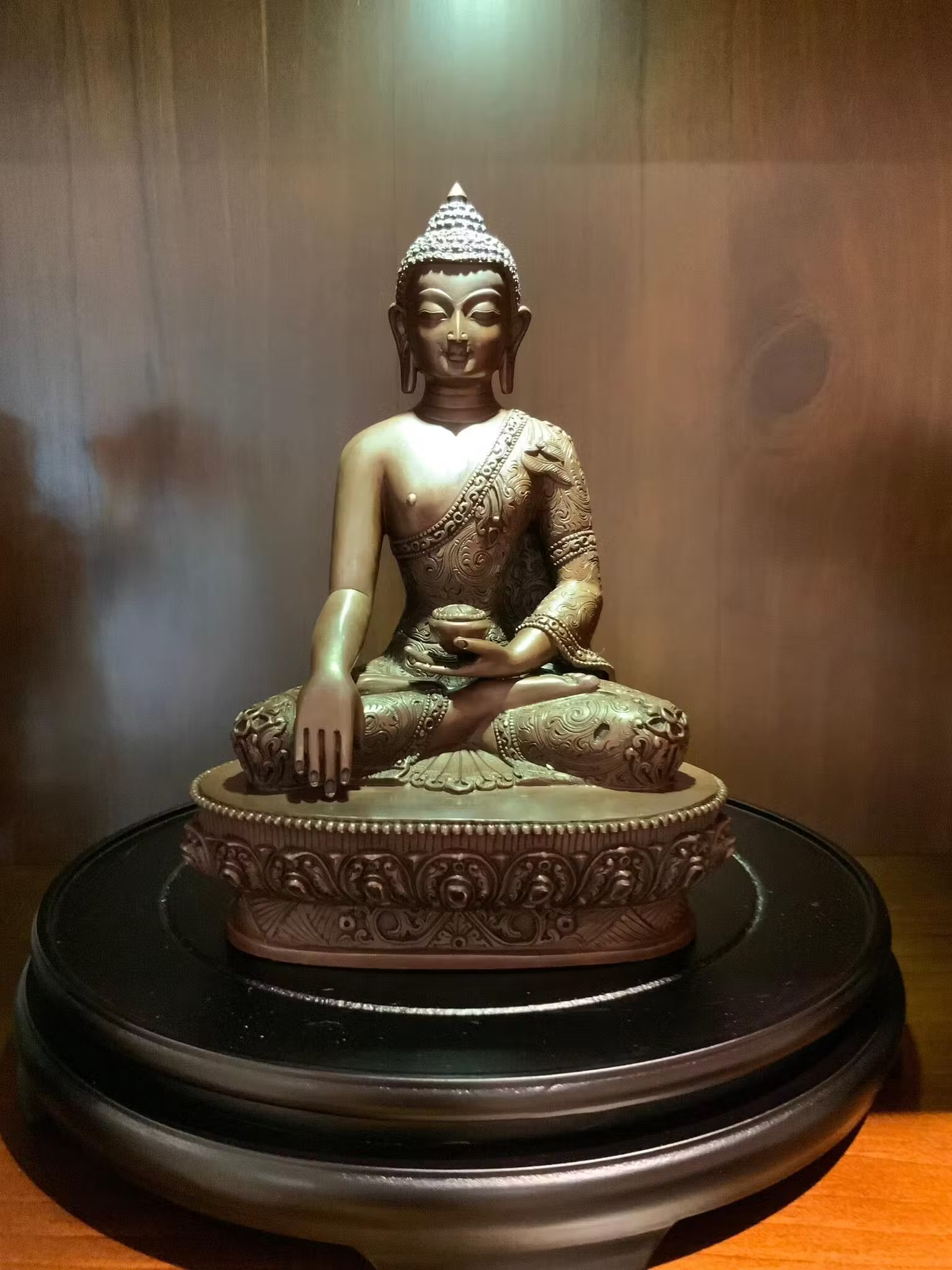
A Vajrasattva statue serves not as an object of just art but rather as a living instrument for transformation. Often called Dorje Sempa in Tibetan, Vajrasattva means "Diamond Being," and represents the ultimate purification of mind, body, and speech. Whether one is a devoted practitioner or an inquisitive observer of Buddhist art, understanding the secrets behind this statue opens a gateway to a profound path of inner peace.
This guide takes you through rich symbolism, spiritual practice, and the transformational power one invites into their life (or witnesses it comes from) through what is surely a worthwhile journey.
Who Is Vajrasattva? The Buddha of Eternal Purity
Unlike historical Buddhas who once walked on Earth, Vajrasattva is a Sambhogakaya (enjoyment body) that exists in the divine realm of pure light to tend to practitioners. He is recognized as the foremost king over all Buddha families, specifically invoked to purify negative karmas and obscurations: the mental blocks preventing the perception of reality as it really is.

Key Attributes of Vajrasattva
-
The embodiment of ultimate purity: symbolises clear awareness free from defilements.
-
Holders of the vajra: that which cannot be shaken, which symbolizes that indestructible truth and spiritual power.
-
Bearer of the Bell (Ghanta): the bell needs to turn as wisdom incarnating as the feminine principle
-
Guide to Enlightenment: One that imparts enlightenment to practitioners by removing karmic baggage that impedes growth.
He is indispensably invoked throughout from Tibetan through Nepal, Bhutan, and so on to Himalayan Buddhism to purify one's mind, body, speech, and actions because he holds an important stake in daily and advanced practices of Vajrayana.
We at Nidhiratna can help you bring the blessings of Vajrasattva into your practice—contact us today.
The Symbolism and Iconography of the Vajrasattva Statue
Understanding and appreciating the iconicity of the Vajrasattva statue is important, as every detail is crafted to convey some rich symbolic significance.
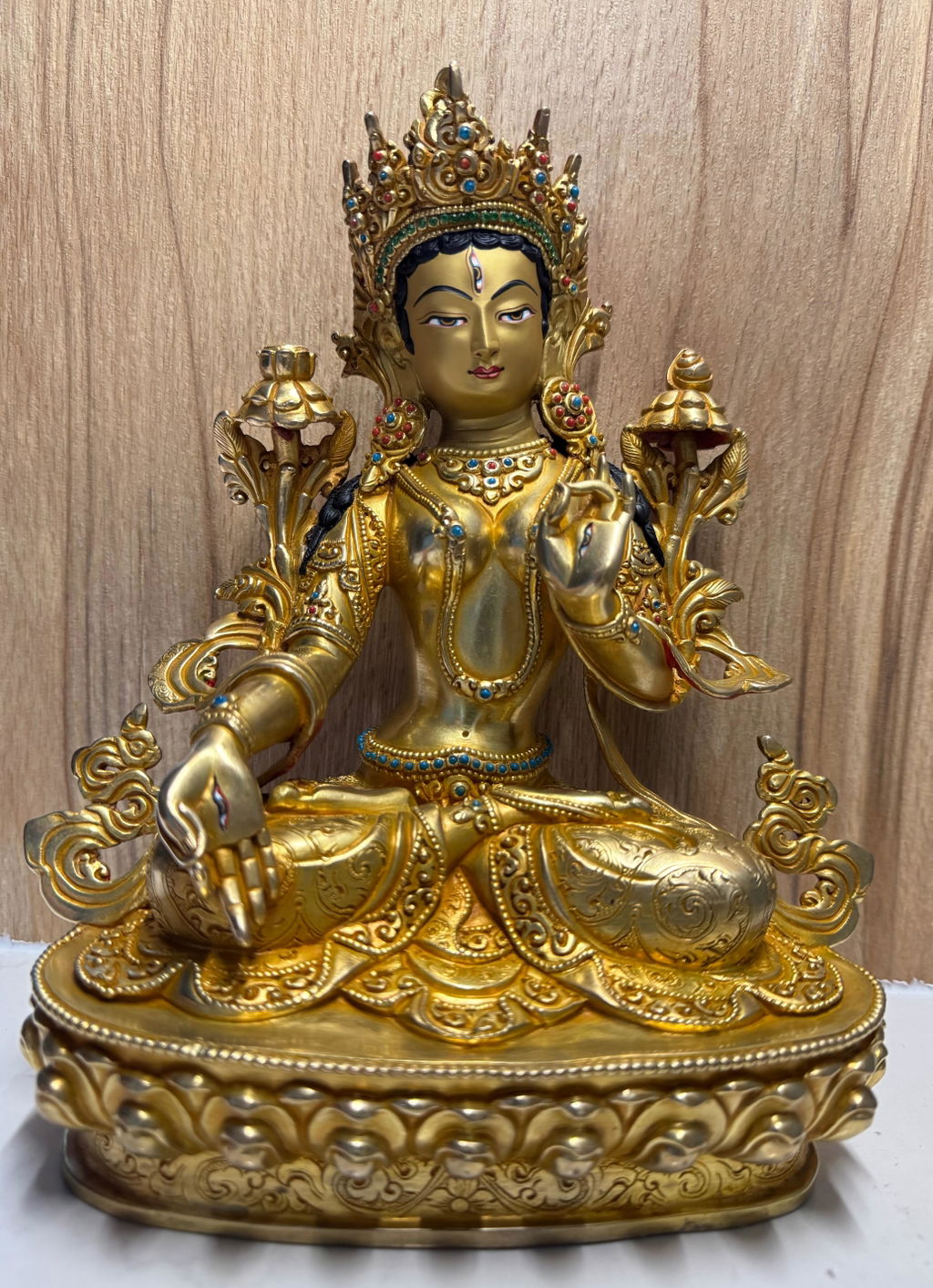
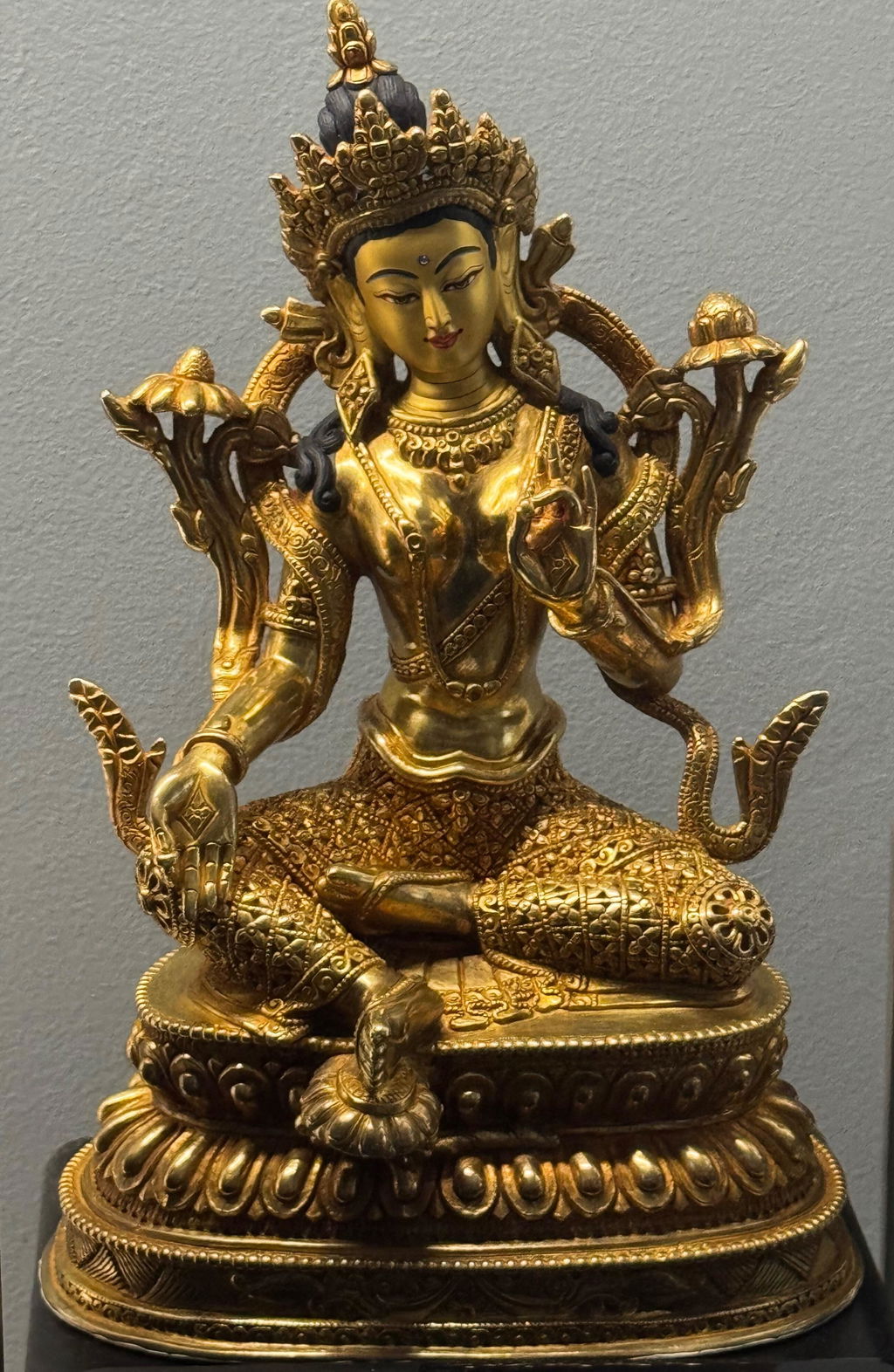
A Vajrasattva statue is a masterclass in visual storytelling. Every line, object, and color has its own kind of spiritual instruction. What you see in this statue is not an idol, but a map to enlightenment.
1. The Vajra (Dorje) – The Indestructible Power of Enlightenment
In his right hand, close to his heart, Vajrasattva holds a vajra. This represents:
-
Unshakeable truth
-
Indestructible purity
-
Skilful means in Buddhist practice
-
The masculine principle of method
Everything else, particularly the vajra, represents this diamond-like quality that awakens consciousness, pure and unblemished.
2. The Bell (Ghanta) – The Wisdom Principle
Vajrasattva carries a ritual bell in one hand, resting along his hip.
The bell represents:
-
Transcendent wisdom
-
The feminine aspect
-
Emptiness (Śūnyatā)
-
Realization of the Non-Duality
Taken together, the vajra and bell are the symbols of the union of wisdom and compassion-the essence of enlightenment.
3. Radiant White Color
Vajrasattva has often been visualized as shining white, representing:
-
Absolute purity
-
It aims to cleanse the karmic obscurations from within
-
Transformations from within
-
Light of awakened awareness
White also symbolizes understanding, true rebirth, and purity and thus strongly resonates with Vajrasattva's purifying role.
4. Peaceful Expression and Meditative Posture
The serene posture of Vajrasattva reflects:
-
Mental Peace
-
Equanimity
-
Acceptance in compassion
-
A mind free from agitation
His peaceful nature encourages practitioners to reconnect with their own inner stillness.
5. The Crown and Ornaments
Vajrasattva wears five crowns symbolizing:
-
The Five Buddha Wisdoms
-
Transformation of the five poisons: anger, attachment, ignorance, jealousy, and pride.
This signifies that all impurities can be transformed into awakened wisdom.
Importance of the Vajrasattva Statue in Spiritual Practice
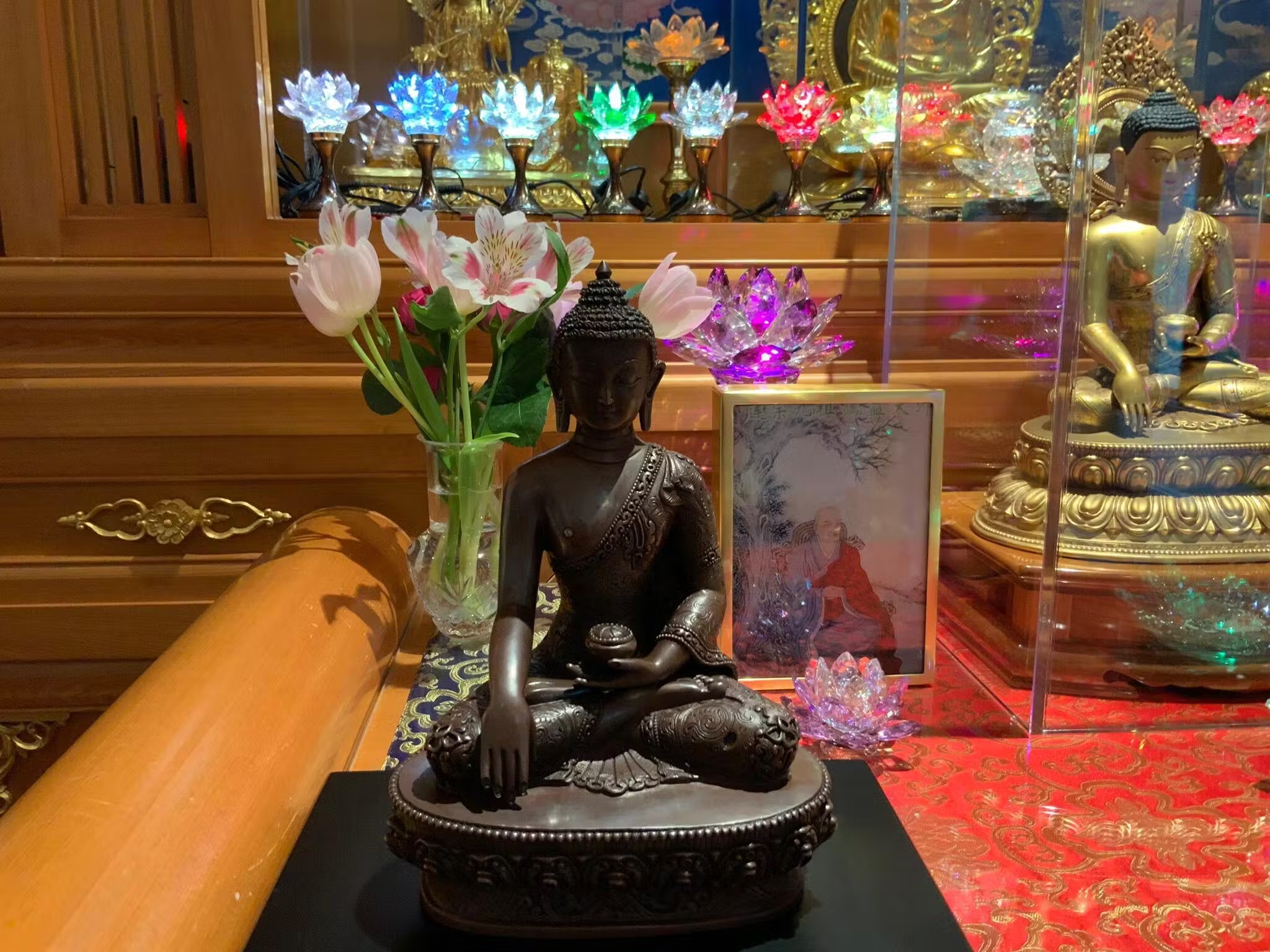
A Vajrasattva statue plays a significant role in Buddhist meditation and ritual practices. The Vajrasattva image is not an ornament, but a spiritual catalyst.
1. Deepening Meditation
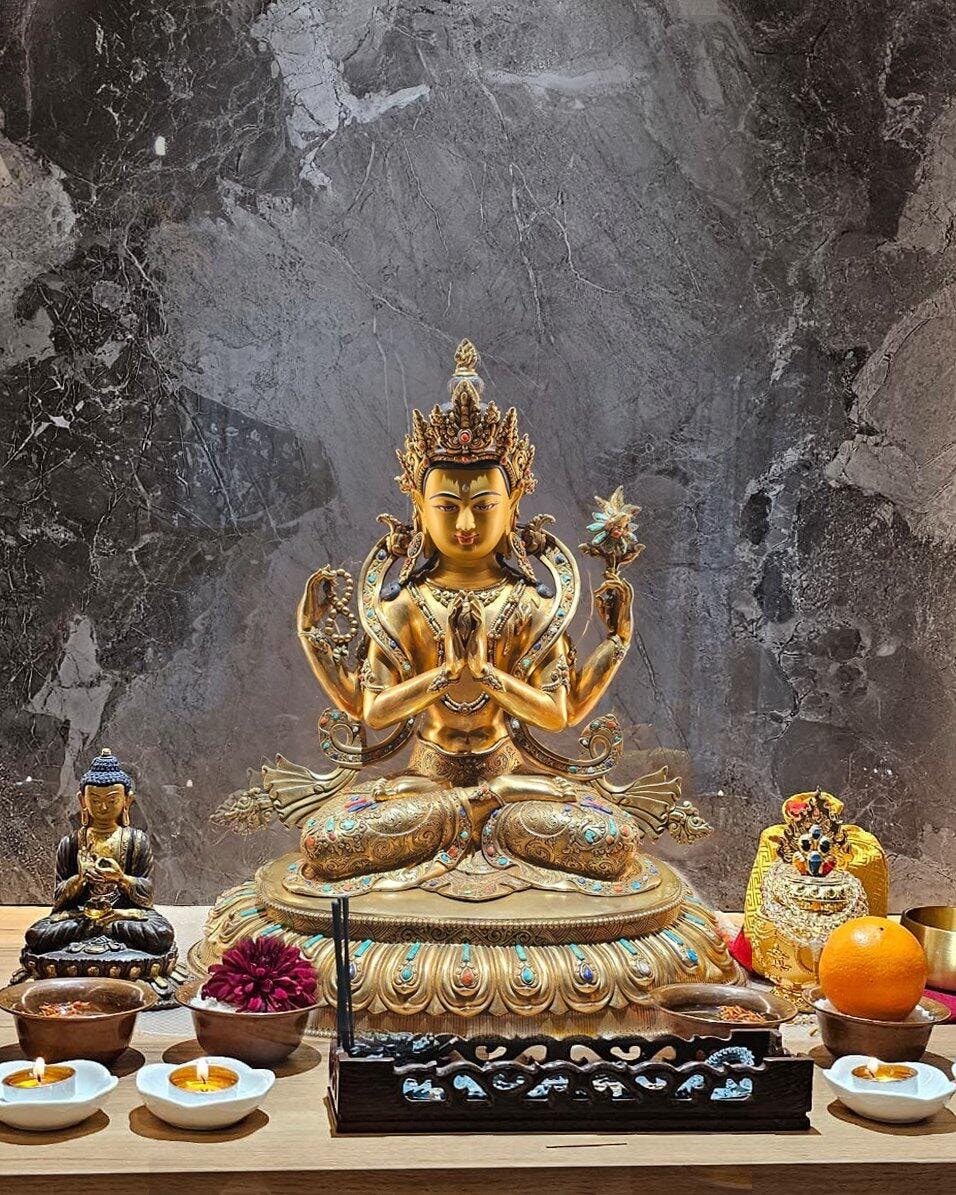
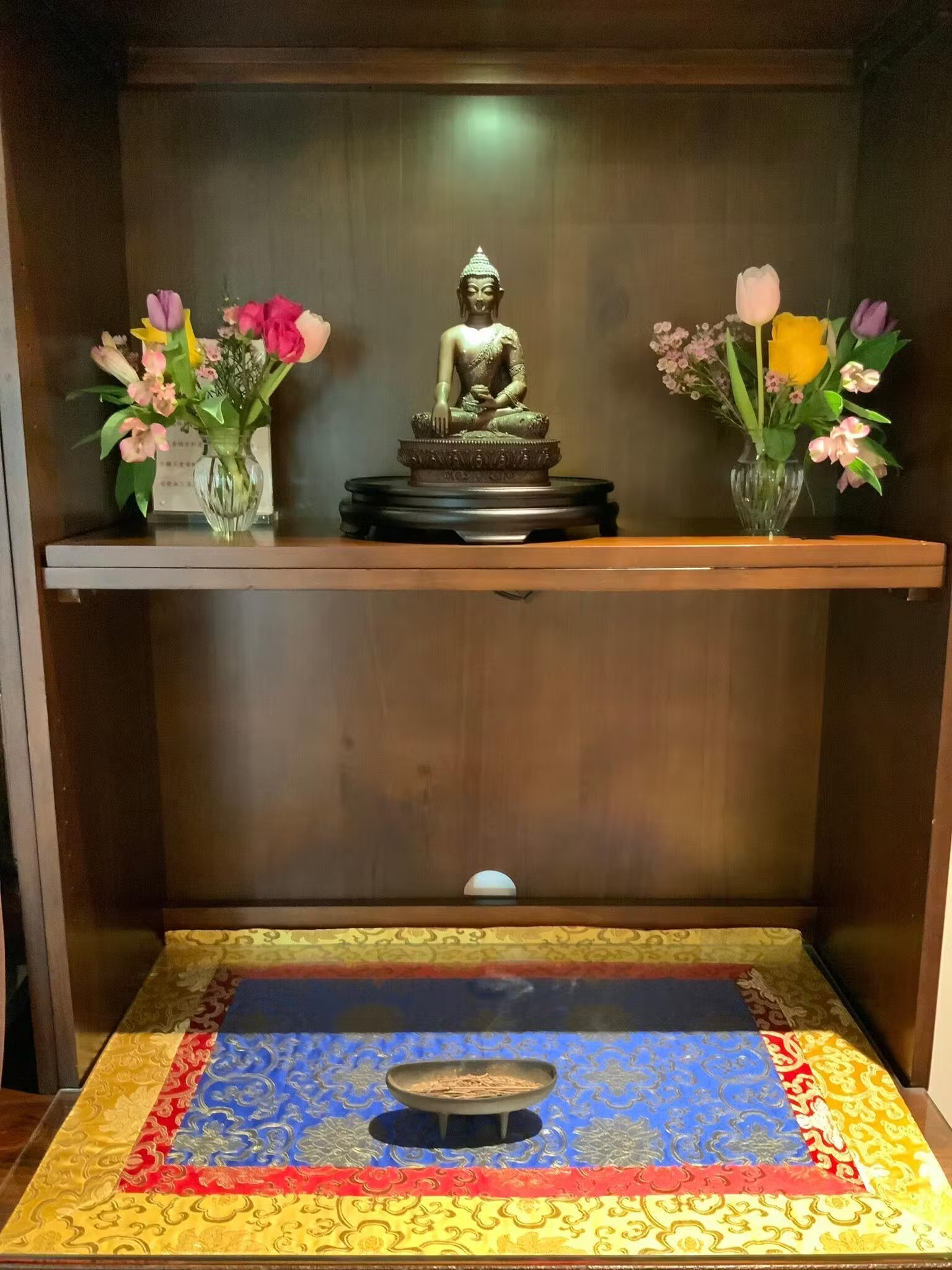
Meditators usually place a Vajrasattva statue:
-
At their altar
-
In front of them, while performing the mantra recitation
-
In a meditation hall, focus the mind
By visual presence, it tends to ground the practitioner in awareness and strengthen concentration.
2. Purification of Negative Karma
The Vajrasattva practice is considered one of the most effective purification methods in the Vajrayana Buddhism.
The statue serves as:
-
A reminder of moving beyond harmful patterns
-
A visual closure to the karmic influence
-
A symbol of fresh spiritual beginnings
The statue's mere presence encourages daily vacillation against the obstacles (detrimental deposits, negativism, and emotional imbroglios).
c. Strengthen Ritual Practices
In higher Vajrayana ritual practice, the Vajrasattva statue is used in:
-
Initiation ceremonies
-
Ngöndro (preliminary practices)
-
Retreats dedicated to purification
-
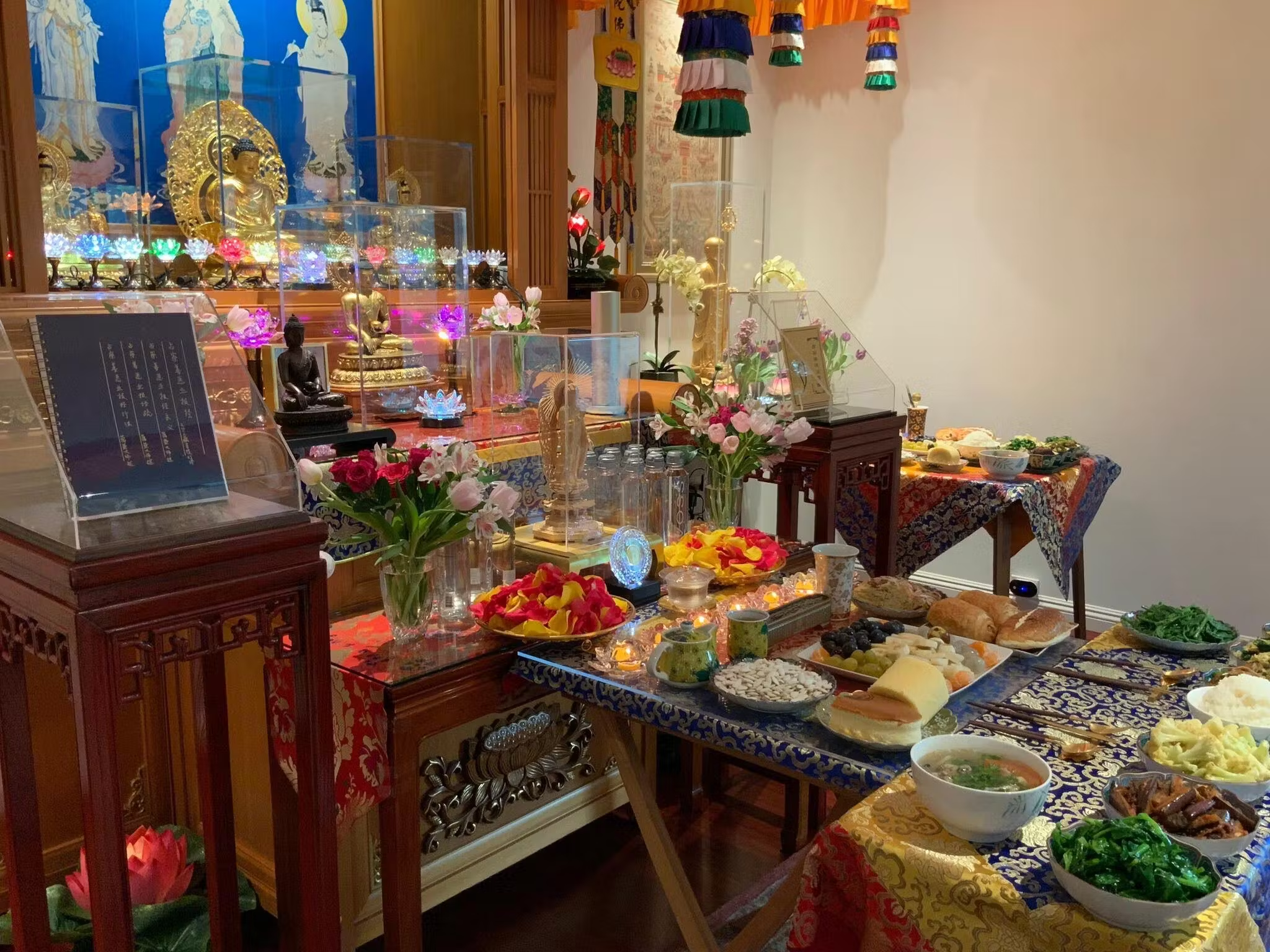
Personal, home puja
All of these energise into something quite special: the energy field into which ritual power is deepened.
The Science of Spiritual Purification: The Four Powers
Possessing or meditating on a Vajrasattva statue means not just passively owning it; it is an active engagement with your own mind. The practice relies on the Four Opponent Powers (Top-zhi), a psychological system of clearing guilt and negativity.
-
The Power of Reliance (Refuge): Acknowledging that we are totally powerless without them and rely on the Three Jewels (Buddha, Dharma, Sangha) to heal us.
-
The Power of Regret (Sun-pa): Heavy guilt but intelligent regret- realising, “I made a mistake, and I don't want to do it again.”
-
The Power of Remedy (Nyen-po): The actual antidote. This is where the 100-syllable mantra and visualization of the Vajrasattva image come into play.
-
The Power of Resolve (Sor-chup): Firmly deciding that one will not engage again in that negative behaviour.
The Vajrasattva Mantra: The Heart Of Purification Practice
A full exploration of the Vajrasattva would be an incomplete illusion without reference to the 100-syllable mantra, the richest and most potent purification mantra of the Vajrayana.
Why Do People Recite the Mantra?
-
Recitation cleanses negative karma
-
To purify oneself from the harmful actions committed in the past
-
To eliminate emotional disturbances
-
To strengthen ethical discipline
-
To go to the deepest levels of purifying one's mind
In the process of chanting, initiation, full mantra-recitation, all the purification obstacles connected with the mind, verbal, and physical levels are supposedly brought to an end.
It is often chanted for 108 recitations, signifying:
-
Completion
-
Cycles of Transformation
-
Cleansing of the 108 defilements
Benefits of the Vajrasattva Statue in Mantra Practice
-
Acts as a point of concentration
-
Strengthens the meditative visualization connection
-
Keeps one anchored in the present moment
-
Unified with visualization, it transforms into a meditation
It becomes one of the most powerful meditations when combined with visualization techniques.
Spiritual Significance of the Vajrasattva Statue
A Vajrasattva statue is believed to possess profound, astounding spiritual potential. Practitioners believe it helps in:
1. Purify Past Actions
Real practice with Vajrasattva is believed to purify what practitioners describe as negative karma (personal and collective).
2. Restore Inner Harmony
The Vajrasattva contributes to the healing of :
-
Stress
-
Emotional imbalance
-
Regret
-
Guilt
3. Enhance Connection with Higher Awareness
Vajrasattva's energy guides the aspirants into these realms of:
-
Clarity
-
Wisdom
-
Insight
4. Assist on the Path toward Enlightenment
Vajrasattva "guides an individual toward spiritual enlightenment," symbolizing the transformation that arises from purity.
Why is the statue of Vajrasattva important to modern practitioners?
Well, even in the stands of modernism, where spirituality is dealt with in such a hurry and practice is shattered at such an early stage, the statue of Vajrasattva still holds its ground.
They serve as a constant reminder to:
-
Slow down
-
Purify the mind
-
Return to compassion
-
Practice awareness
-
Release the negativity.
Thus, the symbolism encourages the lovers of the spirit to be brave and to cultivate a pure, compassionate, and aware spirit amidst their daily challenges.
Choosing a Vajrasattva Statue: Materials, Styles, and Cultural Variations
The following must be kept in mind when selecting a statue of Vajrasattva:
1. Material
-
Bronze: strong and classic, most precious in the monasteries.
-
Copper: Utilized in spiritual altars; the color of warmth.
-
Brass: Affordable yet adds to the perceptual appeal
-
Gold-plated: opulent, visually illustrating divine purity
-
Stone or Crystal: These are known to signify clarity and grounding strength.
2. Artistic Style
-
Nepalese Handicraft Style: Sky-rocketing international appreciation for fine craftsmanship with an elegant, modest design.
-
Tibetan Style: Colorful; rich symbolic value with many cultural motifs
-
Bhutanese Style: Simple, mainly in temple-type design
3. Size
-
Small statues for personal practice
-
Medium statues for home altars
-
Large ones for temples or meditation centres
Conclusion
The statue is not just a spiritual ornament; it symbolizes a gateway to internal serenity, transformation, karmic purification, and enlightenment. Its symbolism, iconography, and mantra practices help practitioners deepen their innate purity in increasingly profound ways. From calming the mind to healing emotional injuries to keeping spiritual discipline, Vajrasattva remains one of the most powerful instruments in Buddhist practice.
The Vajrasattva statue is a powerful companion fr anyone who dreams of a truly transformative addition to their spiritual journey through meditation, self-healing, purification, and so much more.
Thus, Nidhiratna has now become renowned for the most authentic, handmade Vajrayana statues, including Vajrasattva, with complete trust, known worldwide for fibre-based authenticity, cultural integrity, and spiritual craftsmanship. The reawakened warriors of the Himalayas will find nurturing beauty in a collection that treats people of all ages with great respect and passion for life across the world.


Share:
Medicine Buddha – The Divine Healer of Body And Mind
Mahakala: The Source of Spiritual Strength, Fearlessness and Inner Power