

Who Is Maitreya Buddha? The Story of the Future Buddha Explained
A Buddha is someone who has attained complete enlightenment, embodying perfect wisdom and boundless compassion. There is the Future Buddha next in line, whose story is to be uncovered today.
Maitreya Buddha is a philosophical symbol of renewal as per Buddhist scriptures, embodying the pure quality of loving-kindness. His coming might take place in a distant future era, where his role will be to rescue Dharma from complete darkness with his insights.
Maitreya Buddha- The Dharma God of the Future
Maitreya Buddha is the future teacher who shall teach the essence of compassion and constant guidance on their spiritual path. He is believed to spread kindness in a realm where Dharma ceases to appear. Maitreya symbolises harmony, the very thing modern Buddhism intends to pass on. Though he has many names, he is known for his kindness and teachings in all forms.
Maitreya is to be the successor of Siddhartha Gautama, to be born most probably in Bhadrakalpa (auspicious aeon). His destiny is to be the fifth and final Buddha of this era. His future mission as the prophecy includes the following:
-
Restore the Dharma (Buddhist teachings)
-
Guiding beings toward spiritualism
-
Ushering in a golden age of peace, morality, and spiritual flourishing
Ready to bring his loving energy into your space? Explore our collection of handcrafted Maitreya statues!
Maitreya Buddha: Symbolism and Significance
The future Buddha is a royal bodhisattva who is visualised in fine robes and jewels. Across the Asian continent, he is worshipped in a variety of forms, a jovial monk or a future teacher. His significance is related to,
-
Collective awakening of humanity
-
Embodiment of universal love
-
Transmutation of suffering into joy
-
Invincible power of love
-
The lineage of Buddhas and spiritual authority.
-
Hope and spiritual renewal
16-inch 24K Gold Maitreya Buddha at Nidhiratna
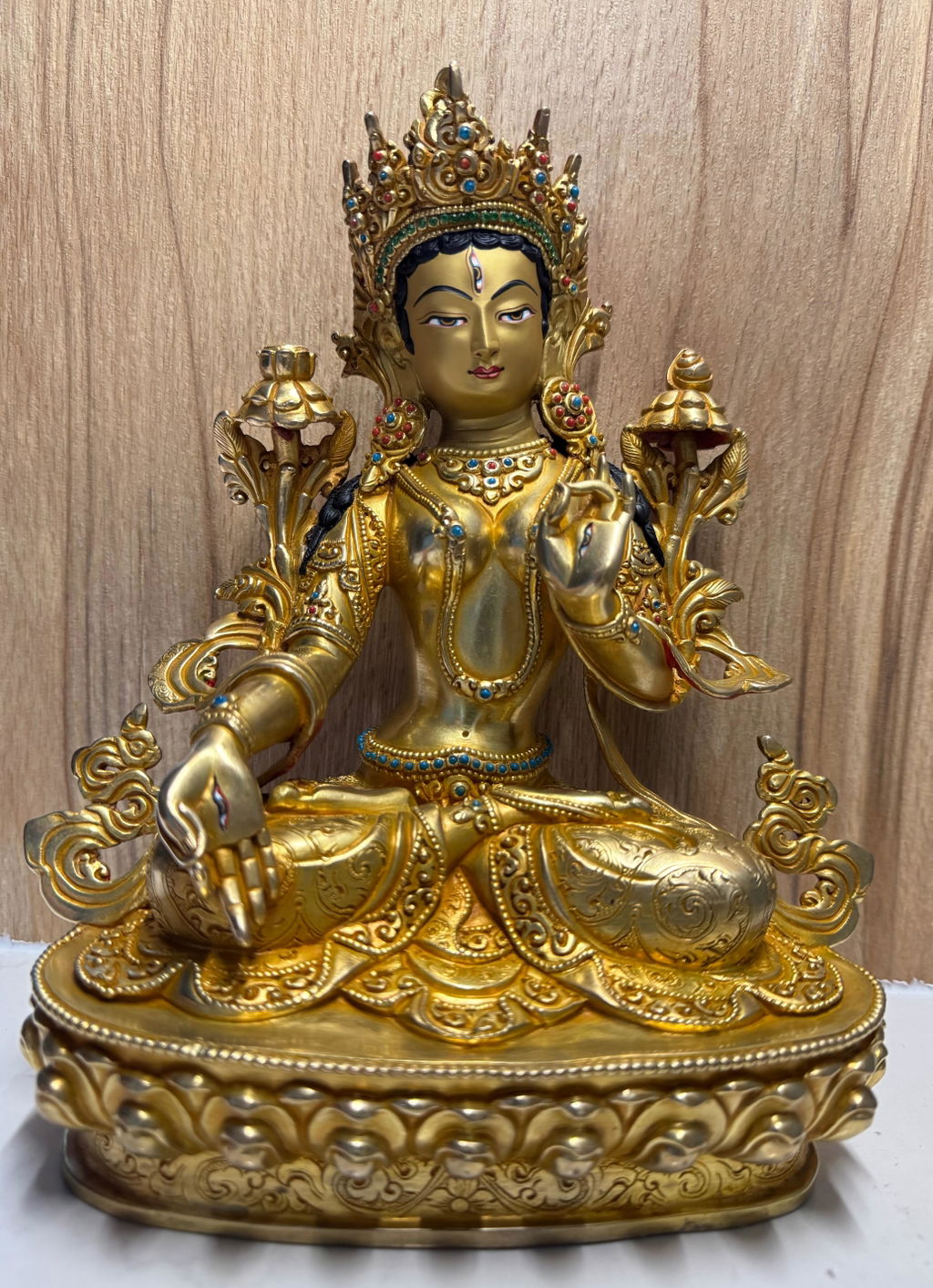
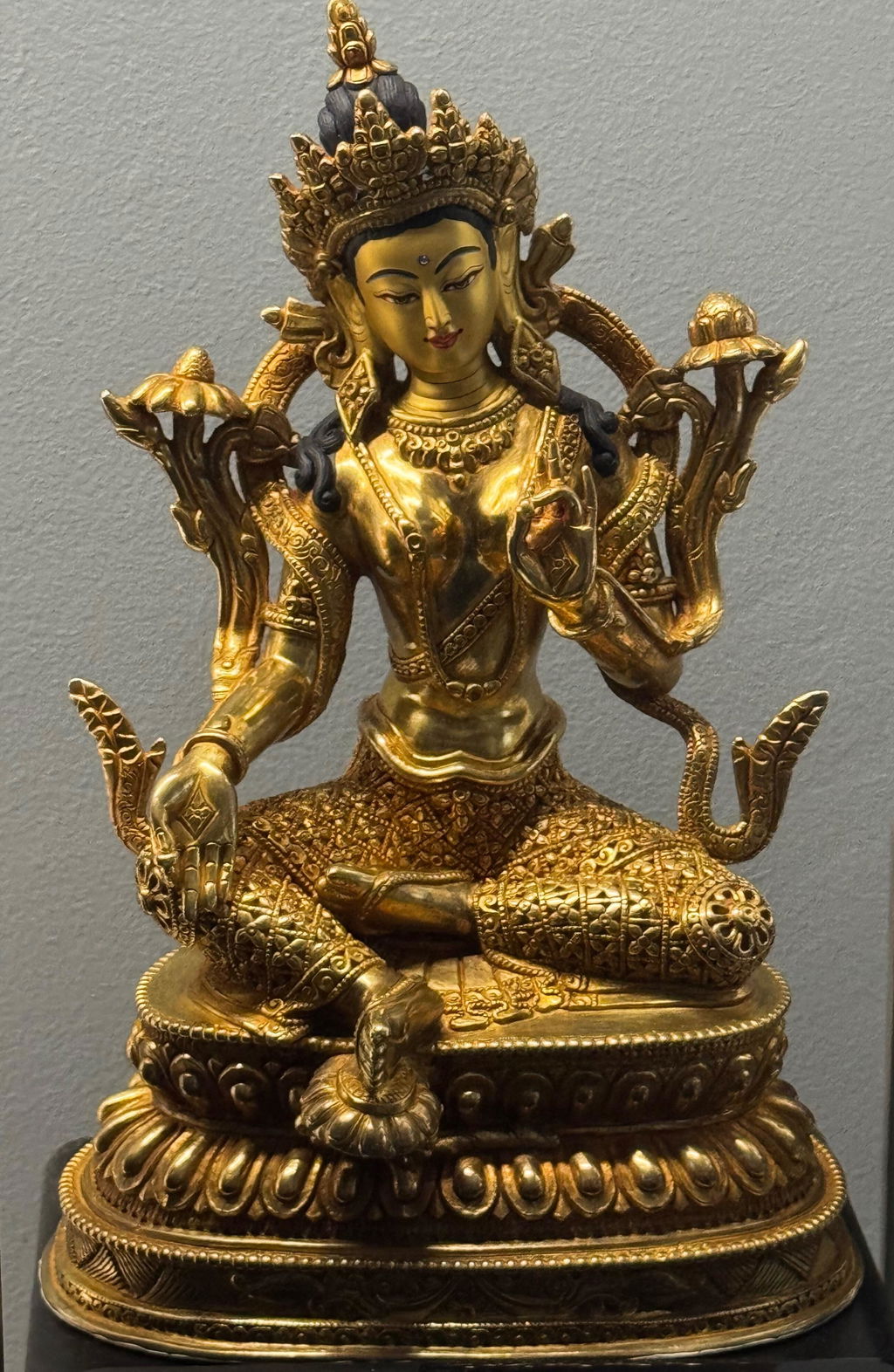
This 16-inch 24K Gold Maitreya Buddha at Nidhiratna is really something. The Maitreya Buddha is a work of art that was made by Newari artisans in Patan using the traditional lost-wax casting method. It is made from good-quality copper and finished with authentic fire-gilding. The face is gold-painted with acrylic details. This statue contains a hollow space that can be consecrated with mantra rolls and herbal powder, giving it spiritual power.

The Maitreya Buddha is sitting on a throne with a special umbrella. This shows that the Maitreya Buddha is a symbol of being royal and spiritual. The statue is made by hand with 24K gold. It weighs 4.44 kg, is 41 cm tall, and is 26.5 cm wide. Its iconography is full of meaning, and skilled artisans at Nidhiratna know that well. On top of that, we have thoughtfully curated our collection of Maitreya Buddha statues to suit different purposes and spaces.
Featured Statues Collection at Nidhiratna
At Nidhiratna, shopping for your favourite Buddha statues has been more convenient than ever. Be it your devotion, crafted preferences, or specific symbolism you are looking for, the Buddha of the Future, who is all about love and compassion, is crafted for you.
Here you can simply look for one for your indoor sitting, whether it's a centre-stage Buddha statue or a compact-sized Future Buddha. You can find a wide range of Maitreya Buddha statues here, inspired by Himalayan art with 24K gold gilding on copper. Our collection also features traditional Nepali craftsmanship and artistry in the form of hand-carving that matches your spiritual hope. Shop from our featured section and learn more about the spiritual essence of every masterpiece.
Current Abode: Tuṣita Heaven
At present, Maitreya is considered a Bodhisattva who resides in Tuṣita Heaven, a spiritual waiting place. Many Buddhist practitioners aspire to meet him in Tuṣita. His major roles there include,
-
He continues to teach advanced beings.
-
Devotees aspire to be reborn in Tuṣita to receive his teachings.
-
He may appear in visions or meditative experiences.
It's magical how Maitreya has spread knowledge even in his unborn stage. Scriptures believe he has taught the famous Indian master Asanga, who led the foundation of the Yogācāra school of Buddhist philosophy. According to scriptures, his birth might have happened in the intermediate era, where there is a spiritual low point.
Maitreya in Buddhist Scriptures
Traditionally, the scriptures say that Maitreya’s role then will be prominent in the renewal of moral values. He will teach the new dharma era, but his teachings will restore truth. You can see him as a Happy Fat Buddha of Kindness in his future birth. Maitreya-vyākaraṇa foretells the future birth of Maitreya, that he will not have an ordinary birth but one in a forest garden. During this birth, the celestial king Indra is said to honour his birth.
The Gandavyuha Sutra texts, on the other hand, believe Maitreya is already on his Bodhisattva path, spreading kindness as his current activity. His Thangka paintings are considered to be lucky in such Buddhist scriptures, as they represent,
-
Hope for humanity’s spiritual future.
-
The enduring power of compassion (mettā)
-
Future saviour who transcends both birth and death
Devotion, Visions, and Spiritual Practice of Maitreya Buddha
Maitreya Buddha is to be born to create a safer spiritual future with zero tolerance for violence and an era of harmony. If you want to celebrate the excellence of Maitreya, start today with devotion, chanting “OM MAITRI MAHAMAYTRI MAITRIYE SVAHA”.
You can sit in your meditative posture in a clean state of body, mind, and soul, and repeat 108 times the name chanting of Buddha. Although mainstream Buddhism does not confirm his arrival, many devotees do believe he is almost here as a sign of hope. They are looking forward to,
-
Do good deeds to gain the merit of Maitreya Buddha
-
Practice chanting of Maitreya’s name and mantras
-
Visualise Maitreya’s presence in his other realm
Maitreya Buddha appears to laugh frequently. He is not a tantric deity; however, his association with Asanga and the Yogācāra tradition brings out his subtle play in tantric activities.
Conclusion
Maitreya is the messenger of loving kindness. When you bring an Ajita-Maitreya statue into your home, compassion walks at your door.
Get 100% ethically sourced and curated artifacts with semi-precious stones and oxidised copper from Nidhiratna. If you're feeling confused, you can always schedule a consultation to help you determine what your space needs. Also, we will provide consecration services for every purchase with a nominal fee.
FAQs
1. Where is Maitreya Buddha residing now?
Maitreya Buddha is an unborn deity who is believed to be living in Tusita Heaven with a pool of other Bodhisattvas. You can revere him with a strong will, devotion, and a feeling of compassion. When you keep his statue at home with pure intention, then you can better connect with his blessings from the upper realm.
2. How can we please Buddha Maitreya?
Buddha Maitreya is a peaceful deity whom devotees can connect to with purity in heart. He will be pleased through gentle spiritual practices such as meditation and visualisation rituals. He is said to value discipline and inner truth in his devotees. One of the most meaningful ways to honor him is by incorporating compassion and kindness in everyday life.
3. When is Maitreya Buddha expected to appear on Earth?
Maitreya Buddha is expected to be born in the distant future, when Dharma is nearly extinct. It is said that he will then descend from Tusita Heaven to renew and restore the path of compassion and wisdom.
4. Is Maitreya a future god for positivity?
Yes, Maitreya is a future god of positivity who symbolises the endless possibility of kindness and compassion. He is believed to be born to fulfil the future promise of kindness and create a more harmonious world.
5. How is Maitreya Buddha traditionally represented?
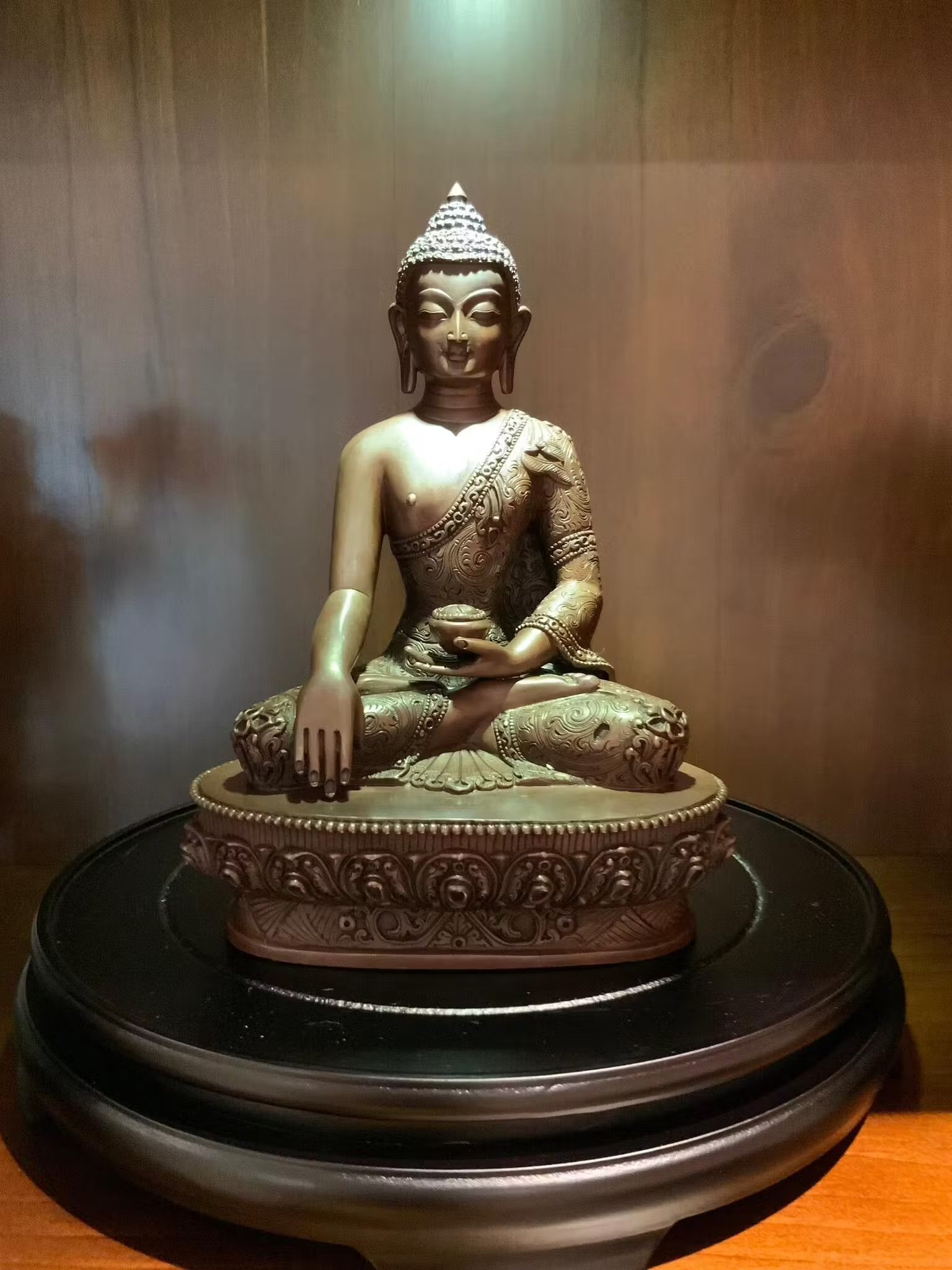
Maitreya Buddha is a princely deity traditionally represented in a graceful seated posture (over a lotus). He is seen holding a water vessel on his left thigh, which is a living symbol of purity. He is represented as the one to bring spiritual abundance to the modern world.


Share:
Handcrafted vs Machine-Made Buddhist Statues: Why Authentic Nepalese Art Matters
What makes a Buddhist Statue truly sacred? Craftmanship, Ritual and Consecration