

Manjushri: The Flaming Sword of Wisdom and Enlightenment
Once upon a time, Kathmandu Valley was filled with water. They say Manjushree, with his flaming sword, chopped the hill of Chovar, making Kathmandu the valley it is today. Manjushree carved a gorge and made history. But do you know who Manjushree is? His contributions, teachings, origin, mantra, and symbolism in meditation.
Who is Manjushree?
Manjushree (Sanskrit: मञ्जुश्री, “Gentle Glory”) is a Bodhisattva in Mahayana Buddhism. He is revered as the Bodhisattva of Wisdom (Prajñā) as he is believed to embody enlightened intellect. Both Buddhists and Hindus honor him.
In Buddhism, Manjushree is seen as the “Meditation deity” who manifested on the Earth. Neither his birth nor his death is considered human-like. He is supposed to be the one who brought forward Buddhism in the provinces of China for his enlightenment.
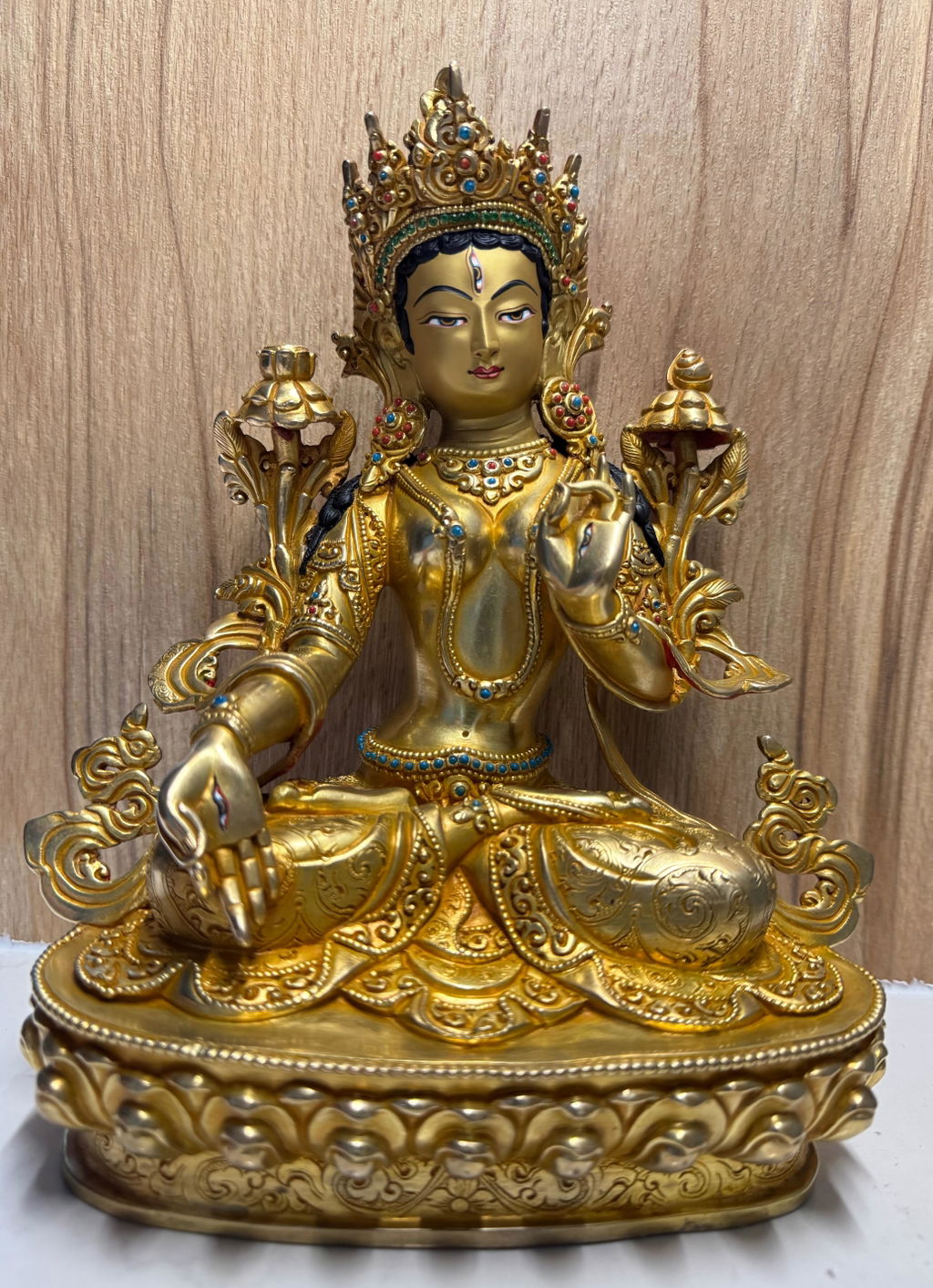
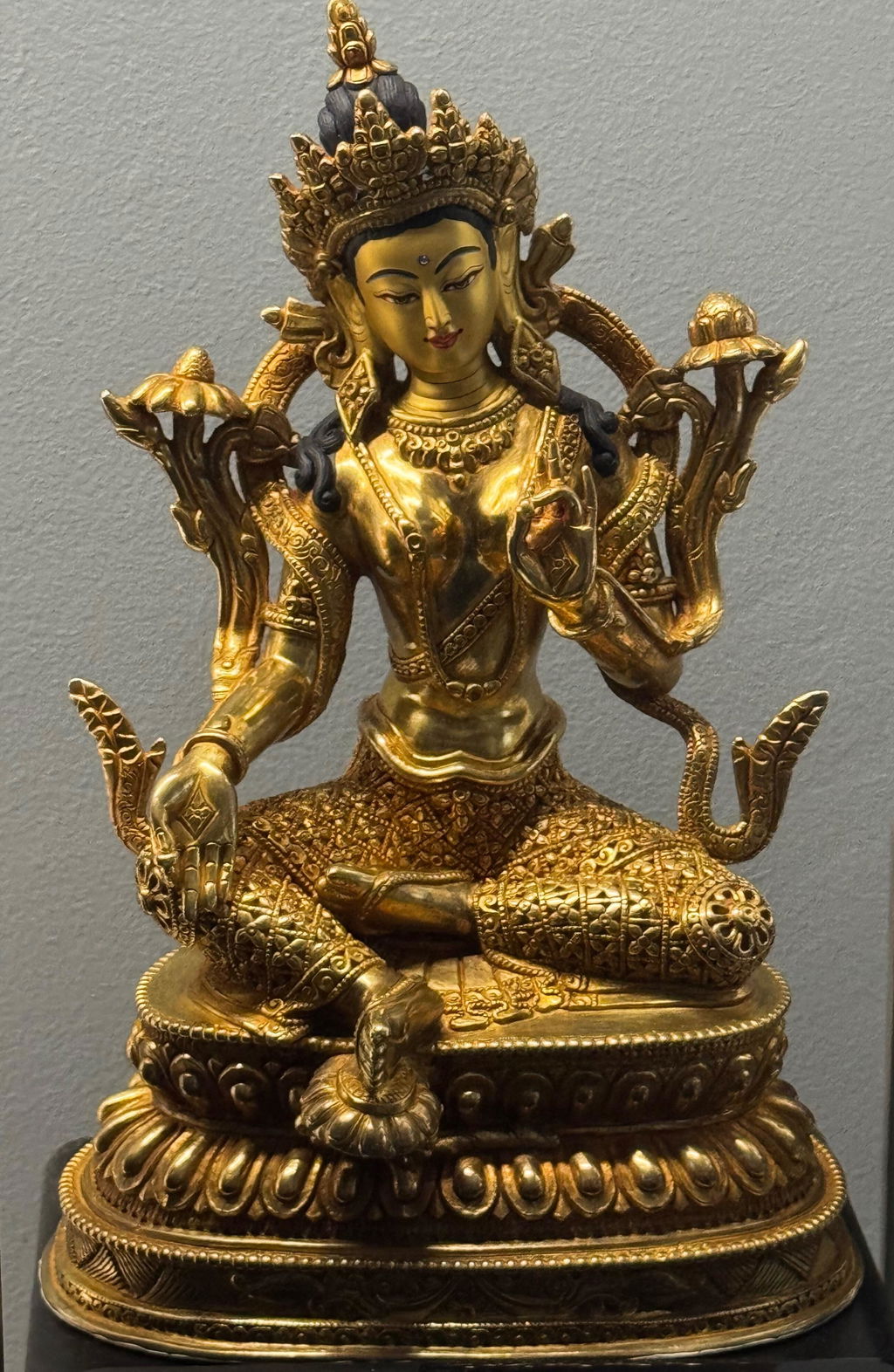
His statues often have swords on right hands and a lotus flower on the left hands. The teachings he had passed on from generation to generation, and thereby, he happened to be one of the most holy monks in the scriptures of Tibetan Buddhists.
Origin of Manjushree
Manjushree's origin was first explained by early Mahayana sutras composed between the 1st century BCE and the 2nd century CE. He is prominently mentioned in foundational texts such as the Prajñāpāramitā Sutras, the Lotus Sutra, and the Avataṃsaka (Flower Garland) Sutra.
While his conceptual origin is Tibetan, Manjushree’s cult expanded widely across Central Asia, India, China, Nepal, Korea, and Japan. He emerges as the personification of transcendent wisdom (Prajñā) rather than as a historical individual. His origin is deeply philosophical, scriptural, and symbolic. He is one of the mythic urban planners and culture builders, as explained by ancient Buddhist texts.
Manjushree in Nepal: The Myth of His Sword
According to ancient Nepalese Buddhist texts, Manjushree has blessed Kathmandu with a transformation. Which was once a vast lake, with self-arisen lotus, Swayambhu is the land of dreams of many. But the Nagas (serpent deities) who inhabited the waters are nowhere to be seen. What he did was,
-
Cut the Chobhar Hill with his mystical sword
-
Removed the water of the primordial lake
-
land for civilization, the capital of Nepal was thereby created
The heroic action was interpreted by societies over the years. They believe the sword of wisdom he possessed has cut the ignorance and transformed chaos into an awakened society (where the new civilization of Kathmandu took place). Some of the sacred sites where Manjushree is worshiped are Manjupatan, Chobhar hill, and Swayambhunath.
Mount Wutai- Home of the Bodhisattva
UNESCO designated Mount Wutai as a World Heritage Site in 2009. But do you know why?
The wisdom taught by the Buddhas and the Bodhisattva are invincible. Learners often want to worship where the sacred association comes from and often regard the place as a pilgrimage.
Mount Wutai (located in China) is the earthly dwelling place of Manjushree. The very place that was enriched with resources, calmness, and helped him choose a path of higher spiritual realization. No doubt, it is one of China's four sacred Buddhist mountains and the hub of enlightenment. Pilgrims often find themself in awe witnessing the mysterious five-colored clouds of Mount Wutai (Wutai Shan) in Shanxi Province. The earthly abode of Manushree still reveals wisdom itself in unexpected ways.
Faith is one of the beautiful aspects that the remote location of Mount Wutai still holds. If you wish to visit, you get to see the wooden halls, temples, and monasteries constructed during the Tang Dynasty (618–907 CE). It has been a pilgrimage site for centuries, and Tibetan, Chinese, and Mongolian traditions believe Manjushree has multiple tantric forms that destroy the ego one possesses. This site is mainly holy for its debate and monastic education.
Mantras related to Manjushree
Followers of Manjushree during their meditation phase also chant mantras like,
“Om Ah Ra Pa Tsa Na Dhi”
Let’s have a look at each syllable.
-
Om (ॐ): primordial sound of the universe
-
Ah (अ): emptiness (śūnyatā)
-
Ra (र): fire and insight
-
Pa (प): supreme knowledge
-
Tsa (त्स): clear expression and correct speech
-
Na (न): discernment and analysis
-
Dhi (धीः), the seed of wisdom
Together, the mantra means:
“May the wisdom of Manjushree awaken my mind, dissolve ignorance, and grant clear understanding of reality.”
This mantra is sophisticated and chanted by those who want to follow the footsteps of Manjushree. It also helps one align their skill with wisdom, as believed by Buddhist philosophy. This Manjushree mantra is also believed to sharpen one's memory, speech, and insight. The Buddhist saint Manjushree is believed to have had a strong influence on Tibetan astrology.
Manjushree and the Vajrayana Buddhism
Manjushree represents the awakening and refinement of consciousness through the language of chakras, namely,
-
Root Chakra (Muladhara)
-
Sacral Chakra (Svadhisthana)
-
Solar Plexus Chakra (Manipura)
-
Heart Chakra (Anahata)
-
Throat Chakra (Vishudda)
-
Third Eye Chakra (Ajna)
-
Crown Chakra (Sahasrara)
Manjushree is realized as one of the awakened minds, and chanting his mantra helps purify the throat chakra. In Vajrayana Buddhism practiced in the Himalayas, his wisdom is thereby deeply connected to the subtle energy centres of the body.
As a meditation deity, Manjushree guides the practitioner on an inner journey from ignorance to awakening. His wisdom awakened the spirit to harmonize with Tibetan subtle-body practices and guide their consciousness toward enlightenment.
Manjushree in Nepalese handicraft traditions
Manjushree, the Bodhisattva, has a profound place in Nepalese handicraft traditions, especially in the Newari Community. Not only in Nepal, but his popularity is all over East Asia who follow ancient Buddhism.
Temple toranas, windows, and monastery doors often display motifs associated with wisdom—lotuses, flames, and lions. The Paubha paintings have the live demonstration of his heroic image with the sword in his hand and the Prajñāpāramitā sutra.
Even today, Nepalese handicrafts reach global markets and audiences. They carry the living spirit of Manjushree: expressed through the ethics, discipline, and wisdom embodied by the artisans themselves. Each piece quietly tells a story of his knowledge and civilizing influence.
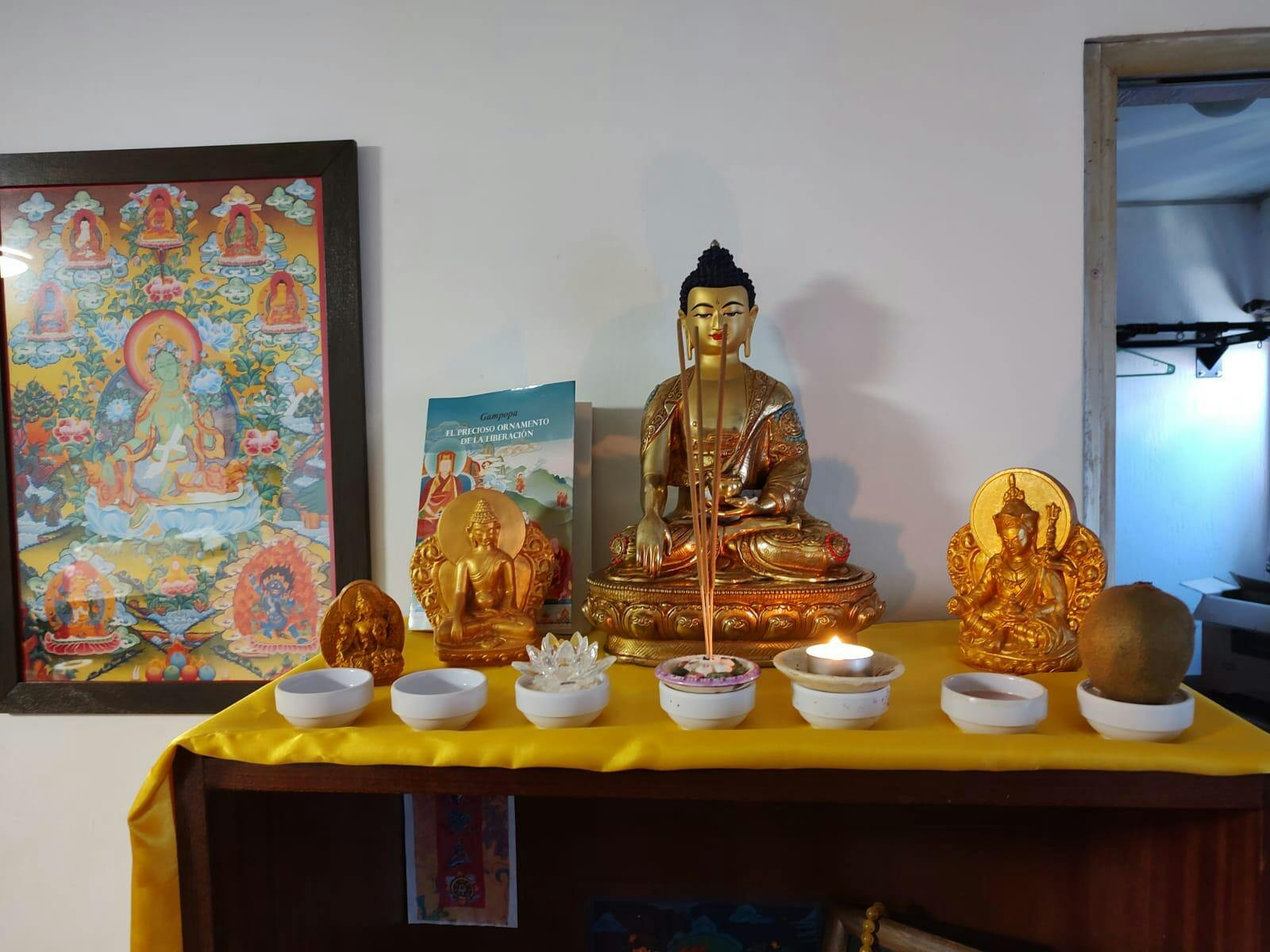
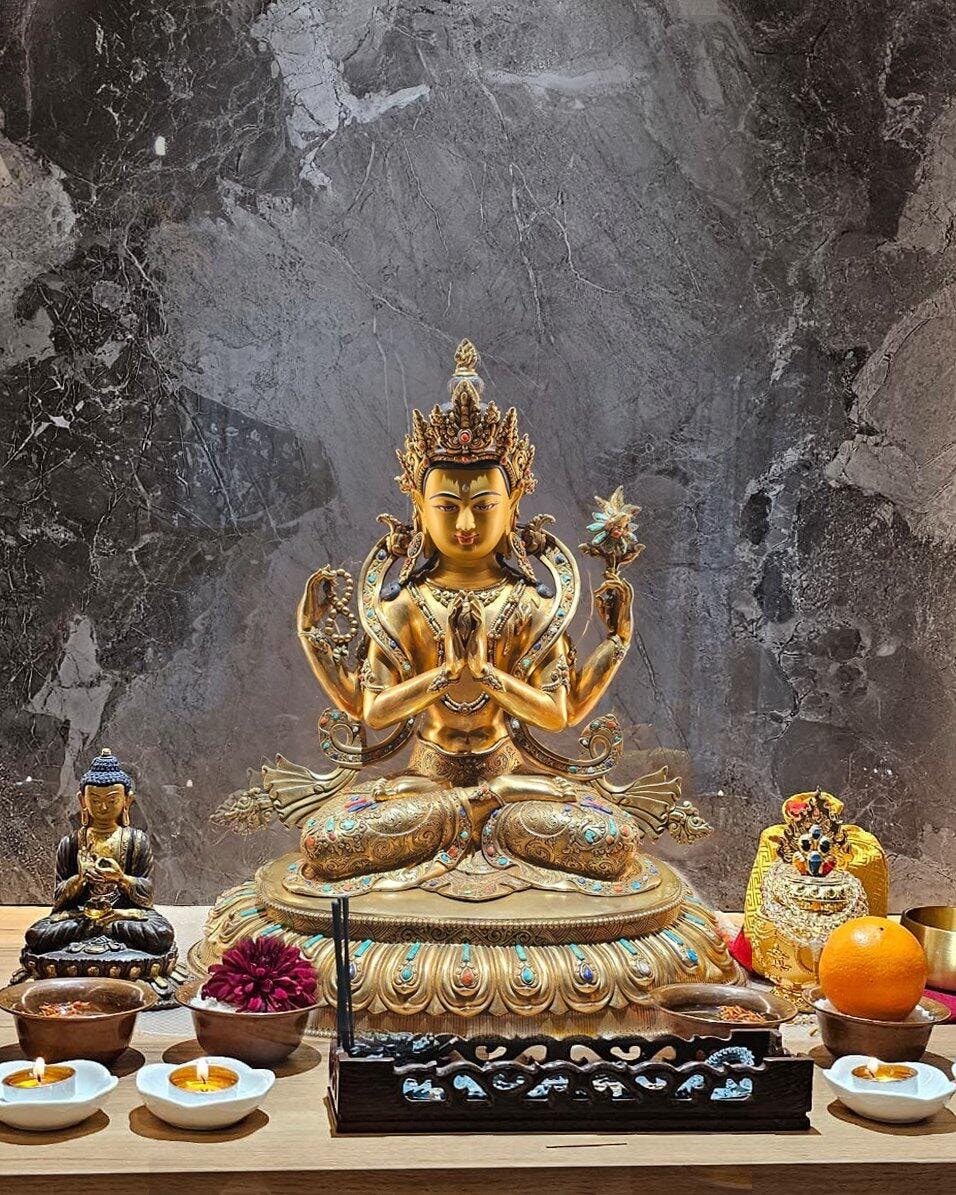
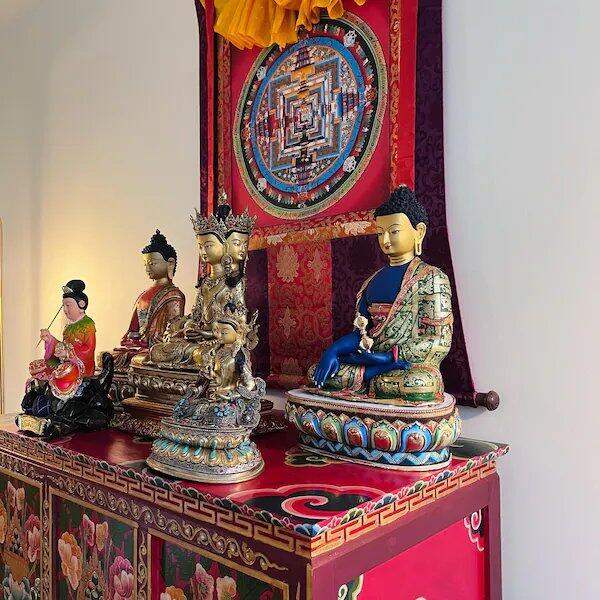
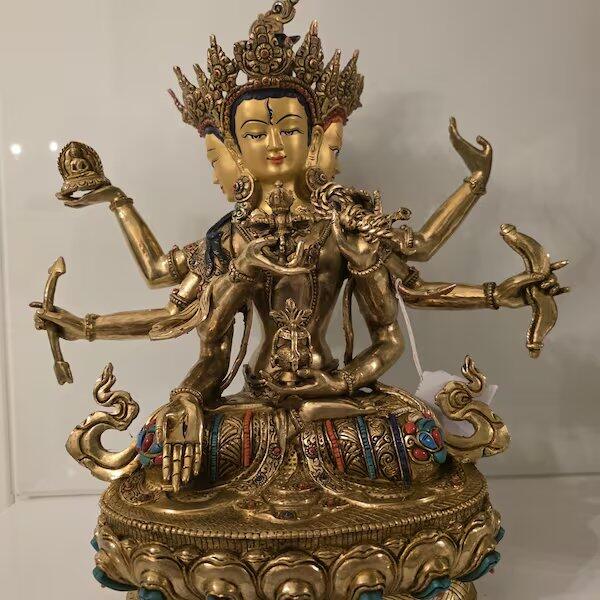
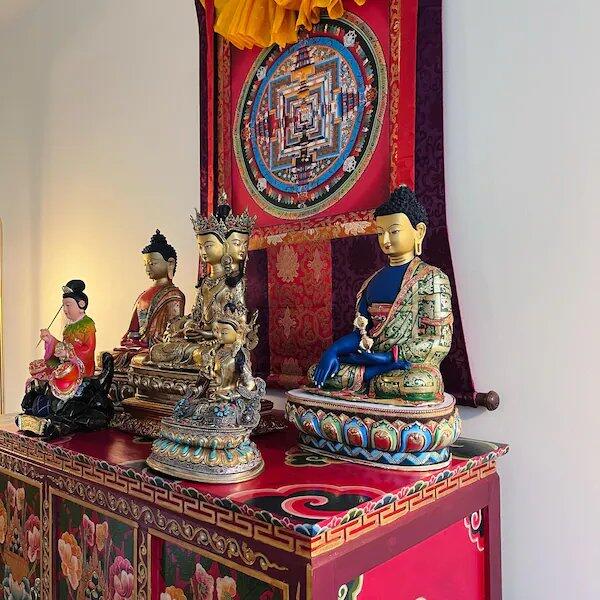
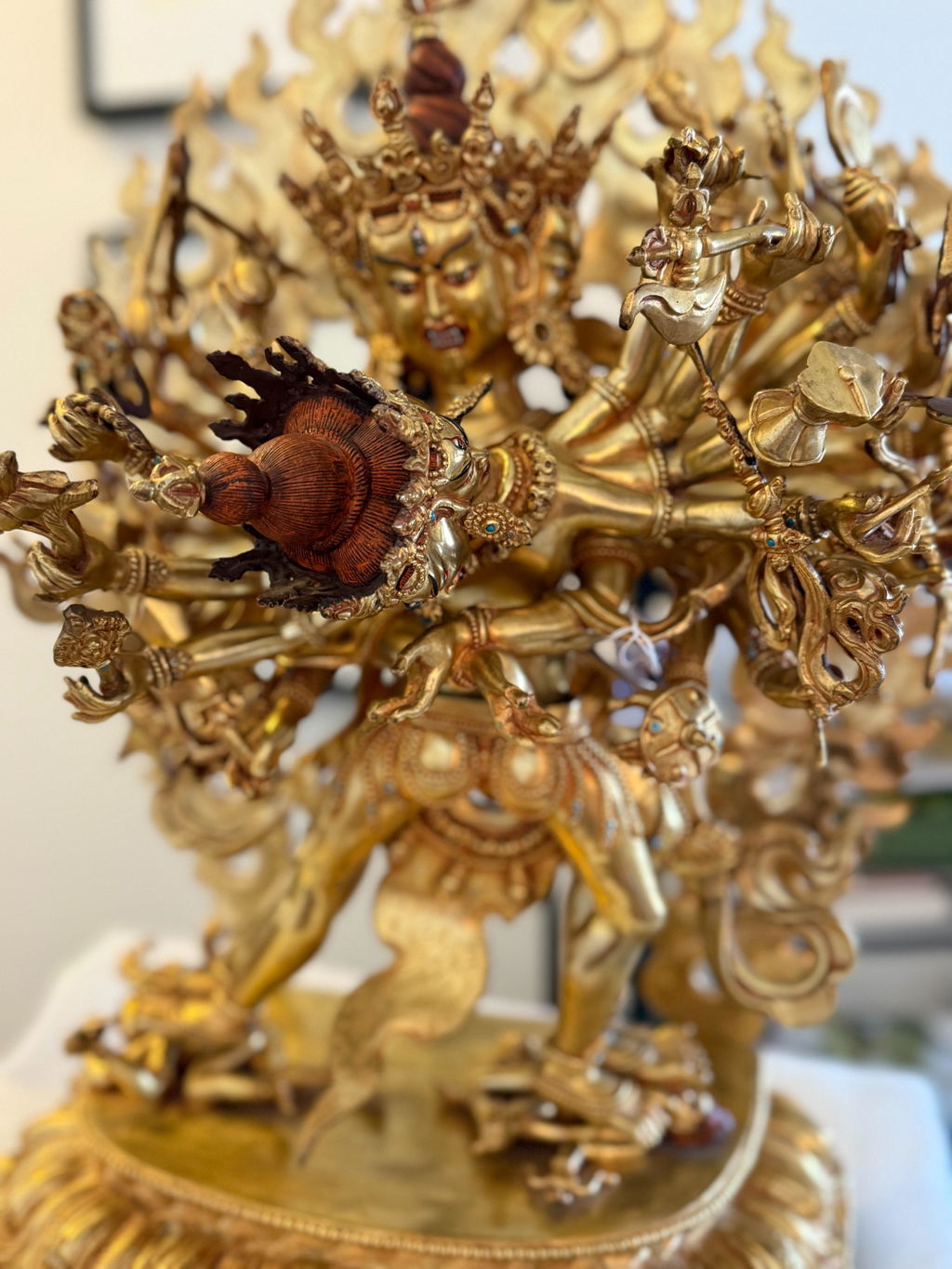
Conscious global consumers can see the use of natural materials, slow craftsmanship, and respect for resources when making the idol. It can be of metal, stone, or wood, as you prefer to keep it in your home. The live rituals to be done can be fasting or silence in front of the idol.
Gifting Manjushree Idol and Paintings
Manjushree thangka paintings hold a special place within this sacred tradition. Carefully hand-painted following precise iconographic rules, each thangka is both a spiritual teaching and a visual meditation.
In 2005, Nepal’s Foreign Minister Ramesh Nath Pandey gifted a monumental statue of Maha Manjushree to the Buddhist community of China as a symbol of shared heritage and spiritual connection. This was kept in the sacred site of Mount Wutai.
Gifting the idol or painting of Manjushree is also supposed to bring good energy. It shall bring good merit and goodwill. In many practices, giving the idol to someone you love symbolizes a wish for clarity, peace, and awakening in the life of the recipient.
Shop with Nidhiratna
Nidhiratna is more than just a shop, where you can pick handcrafted items, thangka paintings, idols, and roots in traditions and soul. Every detail carries a sense of wisdom, bravery, patience, and teachings. If you are also looking for rare craftsmanship, find yourself in a suitable spot.
Stay tuned for authentic stories, and grab your idol today.
FAQs
1. Who is Manjushri?
Manjushri is the Bodhisattva celebrated in Mahayana and Vajrayana Buddhism. He is widely praised worldwide as a seeker of truth, compassion, courage, and clarity.
2. What is the book that Manjushri holds?
The book Manjushri has in his hands is the Prajnaparamita Sutra, which signifies the awakening of the Bodhisattva.
3. What materials are used in the making of Manjushree statues?
Manjushree statues are commonly made of materials like bronze, copper, stone, or wood. Artisans use the ancient lost-wax techniques to mold their desired form and carefully shape details to honor the sacred iconography.
4. Which posture is usually shown by the Manjushri statue?
Manjushree statues are often seen seated in meditation poses. The statues are sometimes in royal ease, symbolizing the wisdom and compassionate action of the Bodhisattva.
5. How is the inner discipline of Manjushree?
Manjushree, through his meditation and study, realizes that ignorance is the root cause of suffering. His inner discipline helps him direct insight into reality free from worldly illusions.
6. What is the significance of the sword of Manjushree?
The flaming sword of wisdom is used to destroy the illusion, confusion, and attachment. It helps one realize what is real and what is there temporarily, enabling one to strive for the higher good.


Share:
Handicrafts in Nepal: Cultural Pride, Artistic Legacy & Timeless Beauty
How to choose the right Buddhist Statue for your Spiritual Intention?