

Vajrayogini: The Red Goddess of Passion, Power, and Enlightenment
Vajrayogini, the red tantric deity, is a common goddess in the Hindu and Buddhist communities. Newar treat her as the Goddess Kali, and Buddhism reveres her as the Red Tara Mata. The tales of her fearless expression, precision, and skill guide artisans, craftsmen, painters, and sculptors.
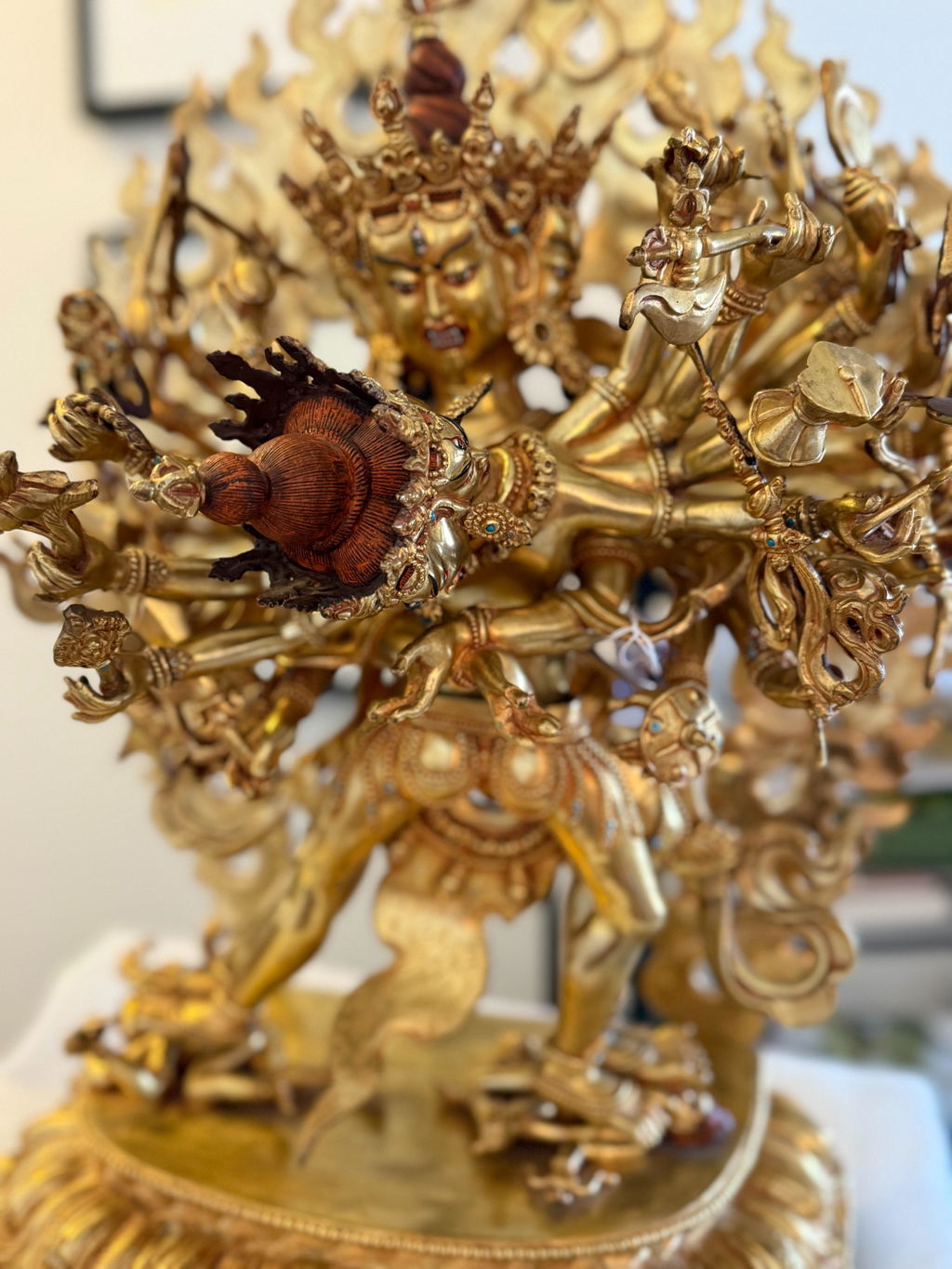
If you observe her statue closely, you see her hands holding a vajra knife and a strand of hair. There are many mysteries addressed in her name that are quite popular in the Tibetan and Newari communities. Today, we discuss the living belief, lineage, and transformation journey with the Red Goddess.
A Living Tantric Presence of Vajrayogini
Vajrayogini is a guardian, a female spiritual deity who connects tantric philosophy with daily life. Those who suffer from grief can call out her name and, within days of selfless devotion, can see a transformation in their life.
According to ancient practices, Vajrayogini awakens on particular lunar dates, her energy peaking at dawn and dusk. Vajrayogini Maa is not approached through fear or force. Unlike deities who guide through calmness, she guides through the inner fire. One can see transformation by sincerity, cleanliness, and humble surrender to the deity.
When one bows to Vajrayogini Maa, they can have an immediate spark of passion, and wisdom is awakened within. Her red form is not a warning but a resemblance of the sacred fire that awakens life forces and consciousness. Her origin in itself is mystical, as explained in the ancient classical texts.
Iconography and Symbolism
|
Elements |
Symbolism |
|
Kartika (vajra knife) |
Free one self from ignorance and ego |
|
Kapala (skull cup) |
Transformation of desire into wisdom |
|
Flowing hair |
Energy of liberation |
|
Flaming aureole |
Free one from delusion |
1. Fierce Form
Maa Vajrayogini has a youthful and fierce face. Her distinct features include her intense smile, which breaks the illusion and amplifies confidence.
2. Dancing Posture
Vajrayogini idols are often seen in a dancing posture. Her motion is not still standing upon a corpse. She manifests through strength and mystical forces to break one's ego and ignorance and shift towards enlightenment.
3. Kartika (Curved Knife)
In her right hand, Vajrayogini holds a kartika, which cuts through hatred, attachment, ego-clinging, and mental obscurations.
4. Kapala (Skull Cup)
In her left hand is a kapala filled with blood or nectar. The blood in her cup shows one's raw emotion and desire. The nectar, whereas, is a transformed awareness. It is also believed that those who learn tantra seek a manifestation in life, not suppression.
5. Bone Ornaments
Her adornments are made of bone, which reminds one that nothing is permanent. It gives one freedom from the fear of death.
6. Flowing Hair
She has loose hair, showing the natural movements. Her teaching suggests that one has to use their fierce energy to fight against any social or mental constraints.
Vajrayogini and Craftsmanship
For sculptors, painters, and metal casters, Vajrayogini is a guardian of skill and lineage. When devotion is sincere, her presence brings steadiness to the hands of artists, and they can create the sculpture they intend to without hesitation.
This belief is especially strong among Patan’s metal artisans. They are the ones who carve the Vajrayogini statues using the lost-wax (cire perdue) method, with detailed engraving, old gilding, and consecration. Such statues are often sold and used for
-
Personal meditation shrines
-
Tantric retreats and empowerments
-
Lineage altars
Her statues are not decorative icons; they are created according to strict tantric prescriptions so they may function as supports for advanced Vajrayana practice.
Vajrayogini of Sankhu
Locals believe that the Vajrayogini of Sankhu (Kharyogini) protects the Kathmandu valley from destructive forces. The Ugra Tara of Sankhu chooses it as one of her shakti pitha (powerful energy points), which has led to the spiritual balance of Kathmandu. The current structure dates from the 17th century under King Pratap Malla. The site, however, is tied to even older traditions of meditation, pilgrimage, and devotional practice.
It is believed that whenever drought, epidemics, disaster, or social unrest have threatened the valley, performing the sacred rituals of the deity helps to restore the harmony.
In Nepalese society, Vajrayogini is often understood as a fierce yet compassionate mother. From her stories, one can learn,
-
How to protect children fiercely?
-
How does Vajrayogini’s wrath purify rather than punish?
-
The true essence of intensity and compassionate guidance
The Main Vajrayogini Mantra
This is the most commonly recited mantra:
“OM VAJRA YOGINI HUM PHAT”
This mantra is significant for the devotees of Mata as it invokes her presence, protection, and transformative energy.
Although her presence is traditionally associated with forests, crossroads, and hilltops, she resides in the heart of her disciple. Her other mantras are,
“OM VAJRAYOGINĪ SARVA-TATHĀGATĀNĀM SIDDHI HUNG”
Its meaning is mother, may all Buddhas’ powers of accomplishment be realized. There are other Dakini mantras as well, and for chanting it in its supreme form, the essence is to repeat it 108 times, visualizing her with calm devotion.
Bajrayogini Jatra: In Honor of the Red Tara Mata
Every year around April, the Newars gather at the Shankhu area to celebrate the Vajrayogini Jatra. This annual celebration in Shakharapur was initiated by King Shankhadev during the Kaligad Sambat year 1801. This festivity is often celebrated with compassion amongst the cline and also shows the significance of Vajrayana Buddhism.
Deities are invoked by offering rice, flowers, incense, and sacred food for the goddess, along with the tantric rites. Mantras are continuously recited by the Newari priest to receive the blessings of Maa Bajrayogini, and a major puja is performed for the betterment of mankind.
The communities thereby come together to honor spiritual protection. Dancers wear colorful masks to ward off negative spirits and display the sacred performance to impress the deity. Even traditional instruments like dhyangro, damphu, and cymbals are played along, and bhaktajan (the followers) dance in joy.
Vajrayana statues
Each statue we sell here is individually handmade, not the factory one. No two pieces are identical. It can be used for modern wellness practices, not only by the Buddhist religions. You can learn how to position the statue and use it as a visual tool for meditation.
By shopping with us, you support ethical and sustainable craft with fair wages to artisans. You can also be part of a lineage that is passed through generations and own a piece of living Buddhist heritage. Stay connected to know more about the myths, festivals, and living traditions behind each statue and how the deity blesses with their mere presence.
Our statues are designed to last generations and can be passed down as spiritual heirlooms. Vajrayana, in relative terms, is more impactful as feminine wisdom and reminds you of intention, presence, and purpose. This simple pause can bring sacredness to your life, which the fast-paced world sometimes misses out on.
Conclusion
In Nepal, Vajrayogini is remembered as a fierce protector, a hidden teacher, and a powerful mother. Her stories are whispered around the corner about how her fierce motherly nature has been safeguarding the town over the centuries. Beyond that, she is also an inspiration for many artisans as they learn perseverance and skill precision through her. For more such interesting blogs, stay connected with Nidhiratna.
Explore authentic Vajrayogini statues crafted for meditation, devotion, and spiritual empowerment—only at Nidhiratna
FAQs
1. What is it like to gift a Vajrayogini idol?
It's not a casual gesture, but gifted with the intent of transformation. Such a gift symbolizes the blessing of fearlessness and clarity from emotional struggle to the recipient.
2. Where can I buy a Vajrayogini idol?
Simply place an order from Nidhiratna, a store where you can shop curated collections of meaningful, culturally rich, and spiritually inspired items.
3. Who is known as the Goddess of Passion?
In Nepal, particularly in Sankhu, Pharping, and the Kathmandu Valley. Vajrayogini is revered as both a protector and initiator. Many Buddhist practitioners give her the respect as the goddess of passion.
Share:
Padmasambhava: The Mighty Lotus-Born Master of Tibetan Buddhism
Red Dakini Kurukulla: The Magnetizing Goddess of Power and Attraction